
Dubai, Abu Dhabi, and GCC Mega-Destinations Deploy AI Microclimate Telemetry, Biometric Corridors, and Ecological Yield Management
Middle East travel hubs deploy algorithmic eco-throttling, thermal comfort AI, zero-wait biometric smart gates, and real-time spatial heatmapping to balance soaring international arrivals with desert ecology.

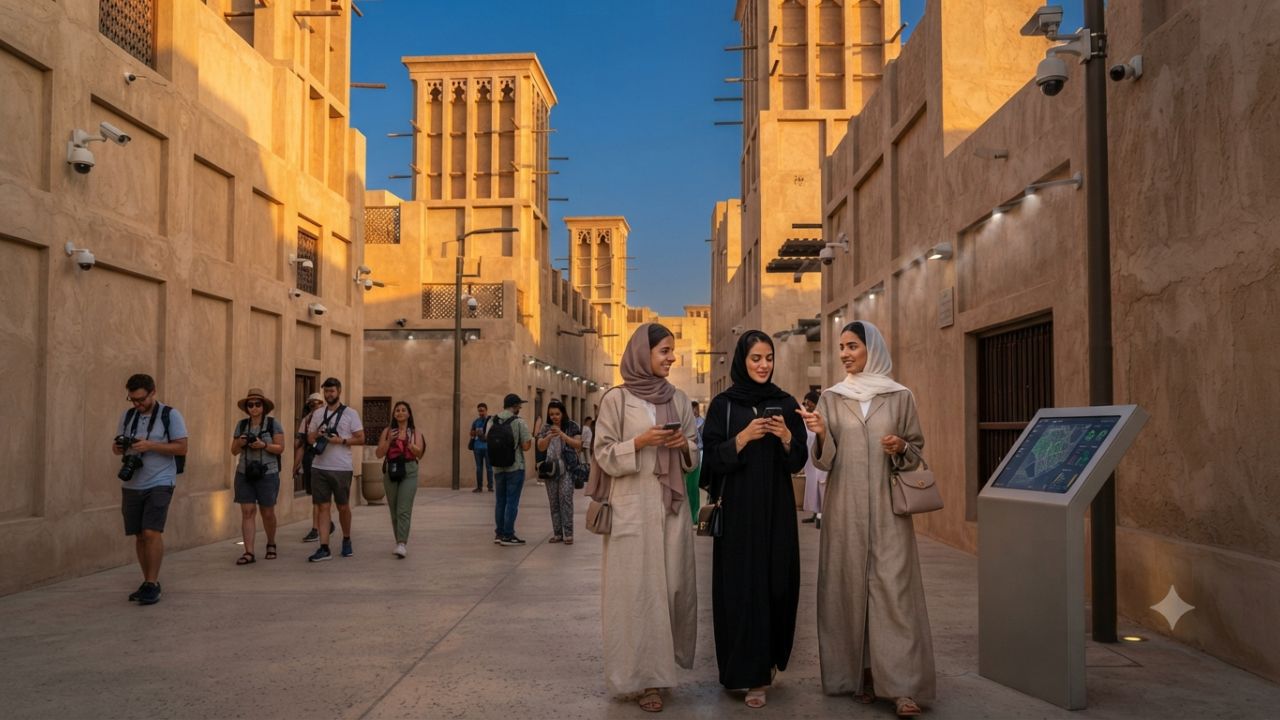
Gulf Cooperation Council destinations harness artificial intelligence, IoT microclimate telemetry, and biometric gateways to govern post-pandemic visitor surges.
Middle East destinations are launching advanced algorithmic crowd regulation, bioclimatic thermal routing, and zero-wait biometric border automation to protect fragile desert ecosystems while absorbing historic volumes of international travelers across the Arabian Peninsula.
[Dubai, Oct 6, 2026] — A quiet technological shift is transforming travel infrastructure across the Arabian Peninsula. In response to record-setting international visitor numbers across the United Arab Emirates and Saudi Arabia, regional destination authorities are shifting away from rigid static quotas toward real-time artificial intelligence controls. By combining microclimate sensors, biometric border corridors, and automated ecological limits, destinations manage pedestrian traffic while preserving fragile arid topographies, marine biomes, and historic heritage monuments.
Data from UN Tourism confirms that international arrivals across the Middle East expanded 3% during 2025, standing 39% above pre-pandemic 2019 levels and maintaining steady upward momentum through the first half of 2026. While European heritage cities frequently resort to day-tripper entry taxes or coach bans, Gulf Cooperation Council (GCC) member states view tourism as a core driver of long-term economic diversification. Dynamic algorithmic capacity systems balance high-density visitor flows with environmental safeguards.
Gulf Cooperation Council Tourism Growth and Conservation Targets
| Destination / Project Entity | Target Visitor Capacity & Milestones | Primary Asset Base Protected | Primary AI Telemetry & Monitoring Architecture |
|---|---|---|---|
| Dubai (DET / D33 Agenda) | 18.72M (2024), 19.59M (2025), targeting higher yield by 2030 | Urban grid, cultural districts, district cooling systems | Cellular heatmaps, Wi-Fi density tracking, DET thermal routing engines |
| Abu Dhabi (DCT 2030) | 39.3M annual visitors targeted by 2030 | Qasr Al Hosn, Louvre Abu Dhabi, Al Ain Oasis Hub | Urban IoT microclimate networks, spatial dispersion nudges |
| Red Sea Global (RSG) | Capped strictly at 1.5M annual visitors | 90+ offshore islands, barrier coral reefs, coastal mangroves | Subsurface acoustic monitors, sea surface temperature sensors, satellite telemetry |
| Royal Commission for AlUla (RCU) | 1.2M by 2030; absolute cap at 2.0M by 2035 (8,500 hotel keys) | Nabataean tombs at Hegra UNESCO site, Dadan, Jabal Ikmah | Sandstone strain gauges, micro-weather telemetry, time-locked AlUla App permits |
| Diriyah Gate (DGDA) | Geofenced spatial throughput within 27M visitor masterplan | At-Turaif UNESCO mud-brick historic district, Wadi Hanifah | Dynamic foot-traffic sensors, thermal degradation monitors, geofenced ticketing |
Thermal Comfort AI and Bioclimatic Route Optimisation
Extreme summer heat in the Gulf historically contracted international leisure travel between May and September, as ambient outdoor temperatures routinely exceeded 42°C. To eliminate this operational bottleneck, destination planners in Dubai and Abu Dhabi use heat-indexed dynamic routing algorithms that continuously monitor ambient environmental metrics against human thermoregulation models.
These algorithms rely on live calculations of the Universal Thermal Climate Index (UTCI) and the Wet-Bulb Globe Temperature (WBGT), synthesizing ambient air temperature, mean radiant temperature, relative humidity, and pedestrian wind speeds. Microclimate simulations indicate that engineered shading, narrow street orientations, and specific building height ratios drop mean radiant temperatures by over 20°C during peak mid-day hours.
When outdoor sensors detect severe thermal stress levels, automated systems re-sequence outdoor walking tours into early morning or late evening windows in heritage sites like Dubai’s Al Fahidi Historical Neighbourhood and Abu Dhabi’s Qasr Al Hosn. Mid-day desert dune safaris are automatically throttled, shifting departures to late afternoon. Algorithmic routing also guides peak-hour footfall into climate-controlled cultural landmarks such as Dubai's Museum of the Future and Abu Dhabi's Louvre Abu Dhabi. District cooling providers like Empower in Dubai receive automated advance alerts, stabilizing municipal chilled water supply and preventing mid-day electrical grid spikes.
Algorithmic Eco-Throttling and Ecological Yield Management
Saudi Arabia’s Vision 2030 mega-projects apply strict carrying-capacity algorithms to protect natural topographies from mass-tourism degradation. Destination authorities turn environmental protection into a high-value asset by creating artificial scarcity through automated booking controls.
Along the Red Sea coast, Red Sea Global enforces a legally mandated ceiling of 1.5 million annual visitors across its 28,000-square-kilometer archipelago of 90 offshore islands and coral reefs. Subsurface IoT monitors track water clarity, salinity, sea surface temperature, and coral polyp health. If marine thermal stress or excessive diving activity is detected near Ummahat or Sheybarah Island, automated reservation engines suspend dive permits for those sectors and dynamically reroute excursion craft to less sensitive reef zones.
In northwest Saudi Arabia, the Royal Commission for AlUla governs a 22,000-square-kilometer landscape under its Journey Through Time Masterplan. Visitor volumes are kept to 1.2 million annually by 2030 and capped at 2.0 million by 2035. The AlUla App issues time-locked digital entry permits to Hegra's sandstone Nabataean tombs, protecting fragile masonry from acoustic vibration and foot-traffic wear.
At Diriyah near Riyadh, the Diriyah Gate Development Authority uses on-site occupancy sensors and geofenced reservation systems to control group sizes through the historic mud-brick citadel of At-Turaif. High average daily room rates across ultra-luxury properties—including The St. Regis Red Sea Resort, Nujuma (a Ritz-Carlton Reserve), Shebara, and desert pavilions in Ashar Valley—directly fund zero-carbon infrastructure and ongoing habitat restoration.
Predictive Airport Operations and Biometric Gateway Metrics
| Airport Hub & Entity | Operating Volume / Passenger Metrics | Automated Processing Mechanism | Verified Operational Performance |
|---|---|---|---|
| Dubai International (DXB / AOCC) | 46.0M passengers in H1 2025; 96.0M annual target | Machine learning predictive passenger flow engines analyzing flight manifests 90 mins ahead | 91% luggage delivered within 45 mins; 98.7% passengers screened under 5 minutes |
| GDRFA Smart Gates (Dubai) | 122 automated smart gates across DXB terminals | Integrated facial and iris recognition sensors linked to biometric passports | 99.2% departing guests cleared in <10 mins; 98.4% arriving guests cleared in <15 mins |
| Hamad International (DOH / Qatar) | Over 700 terminal touchpoints connected via "Fast Pass" | Biometric facial matching at self-service bag drops, security gates, and boarding portals | Zero-wait boarding queues; biometric profiles deleted within 24 hours for privacy |
Aviation hubs serve as the primary gateways for GCC tourism, managing hundreds of thousands of daily travelers without terminal bottlenecks. At Dubai International Airport (DXB), the Airport Operations Control Centre (AOCC) runs predictive machine learning models that analyze radar data, passenger manifests, and historical border clearance patterns 90 minutes before aircraft land. Ground crews and automated tugs deploy to specific baggage carousels ahead of arrival, maintaining a 2.0 per 1,000 passenger mishandled baggage rate.
Immigration processing is managed through 122 smart gates operated by GDRFA Dubai, allowing eligible travelers to clear border checks via facial and iris recognition without presenting physical passports. In Qatar, Hamad International Airport (DOH) operates over 700 facial recognition touchpoints under its "Fast Pass" system. To maintain strict data privacy compliance, facial biometric data registered at DOH self-service kiosks is deleted automatically within 24 hours of flight departure.
Spatial Heatmapping and Suburban Visitor Dispersion
To prevent congestion around iconic landmarks such as the Burj Khalifa, Downtown Dubai, and the Sheikh Zayed Grand Mosque, smart city operations monitor real-time visitor density using anonymized cellular telemetry, connected vehicle tracking, and urban Wi-Fi logs.
When foot-traffic density approaches 80% of spatial capacity at a landmark zone, automated systems push contextual notifications through official apps like Visit Dubai. Travelers receive real-time alerts recommending lower-density cultural corridors, accompanied by incentives such as discounted attraction entries, reduced transit fares, or priority dining reservations.
These digital nudges guide footfall into regional interior corridors:
- Hatta Mountain Precinct: Dubai's Hatta Wadi Hub uses sensor-guided transit buses and digital reservation caps to protect mountain trails and freshwater reservoirs from vehicle congestion.
- Ras Al Khaimah: The Ras Al Khaimah Tourism Development Authority tracks foot traffic across Jebel Jais mountain paths and the historic pearling village of Al Jazirah Al Hamra, dispersing adventure travelers evenly across northern peaks.
- Al Ain Region: Named the Arab Capital of Tourism 2026, Abu Dhabi's Al Ain Oasis Hub enforces timed entry permits to preserve ancient falaj irrigation channels and date palm groves.
Economic Impacts and Regional GCC Travel Outlook
Algorithmic capacity governance ensures long-term asset protection for multi-billion-dollar investments funded by Saudi Arabia’s Public Investment Fund (PIF) and UAE sovereign funds. In Dubai, real GDP expanded 4.7% year-on-year in the first nine months of 2025 to reach AED 355 billion, supported by AED 12.0 billion in accommodation and food services value. Abu Dhabi projects a direct GDP contribution of AED 90 billion under its Tourism Strategy 2030, while Saudi Arabia targets a 10% GDP contribution and one million domestic tourism jobs by 2030.
Over the coming years, rules-based capacity algorithms will transition into autonomous AI concierges. Travel mobile apps will dynamically reschedule hotel bookings, museum entry slots, and ground transport when sudden heatwaves or local crowd surges occur. Furthermore, the upcoming unified GCC tourist visa will enable real-time telemetry exchanges between Saudi Arabia, the UAE, Qatar, Oman, Bahrain, and Kuwait, allowing predictive algorithms to coordinate cross-border traffic before land border or airport choke points emerge.
Frequently Asked Questions
How does AI manage summer travel heat in Dubai and Abu Dhabi?
AI platforms monitor the Universal Thermal Climate Index (UTCI) and Wet-Bulb Globe Temperature (WBGT) using live IoT weather telemetry. When severe thermal stress is detected, itineraries automatically adjust by re-sequencing outdoor heritage tours into morning or evening windows and directing mid-day tourists toward climate-controlled cultural venues.
What visitor caps are in place for Saudi Arabia's AlUla and Red Sea projects?
Red Sea Global enforces an absolute, legally mandated ceiling of 1.5 million annual visitors across its 90-island development. The Royal Commission for AlUla limits visitors to 1.2 million annually by 2030, with a final cap of 2.0 million by 2035, managed through time-locked entry permits on the AlUla App.
How fast do biometric smart gates process passengers at Dubai International Airport?
Equipped with facial and iris scanning sensors across 122 smart gates, GDRFA Dubai processes 99.2% of departing passengers in under 10 minutes and 98.4% of arriving guests in under 15 minutes without requiring physical passport checks for registered travelers.
Related Travel Guides
Disclaimer
This article is for informational and educational purposes only. It does not constitute legal, financial, or professional advice. While we strive to provide accurate and up-to-date information, travel policies, regulations, and conditions change rapidly. Always verify information with official sources before making travel decisions. Nomad Lawyer makes no representations about the accuracy, reliability, completeness, or suitability of the information provided. Readers should consult qualified professionals for advice specific to their circumstances. The views expressed in this article are those of the author and do not necessarily reflect the views of Nomad Lawyer.
Raushan Kumar
Founder & Lead Developer
Full-stack developer with 11+ years of experience and a passionate traveller. Raushan built Nomad Lawyer from the ground up with a vision to create the best travel and law experience on the web.
Learn more about our team →