
Dollar Strength Volatility Reshapes Travel Costs Between Tokyo and the United States
An analysis of how public debt shifts in the United States and Japan are impacting currency valuation and the cost of travel between Tokyo and major American hubs.

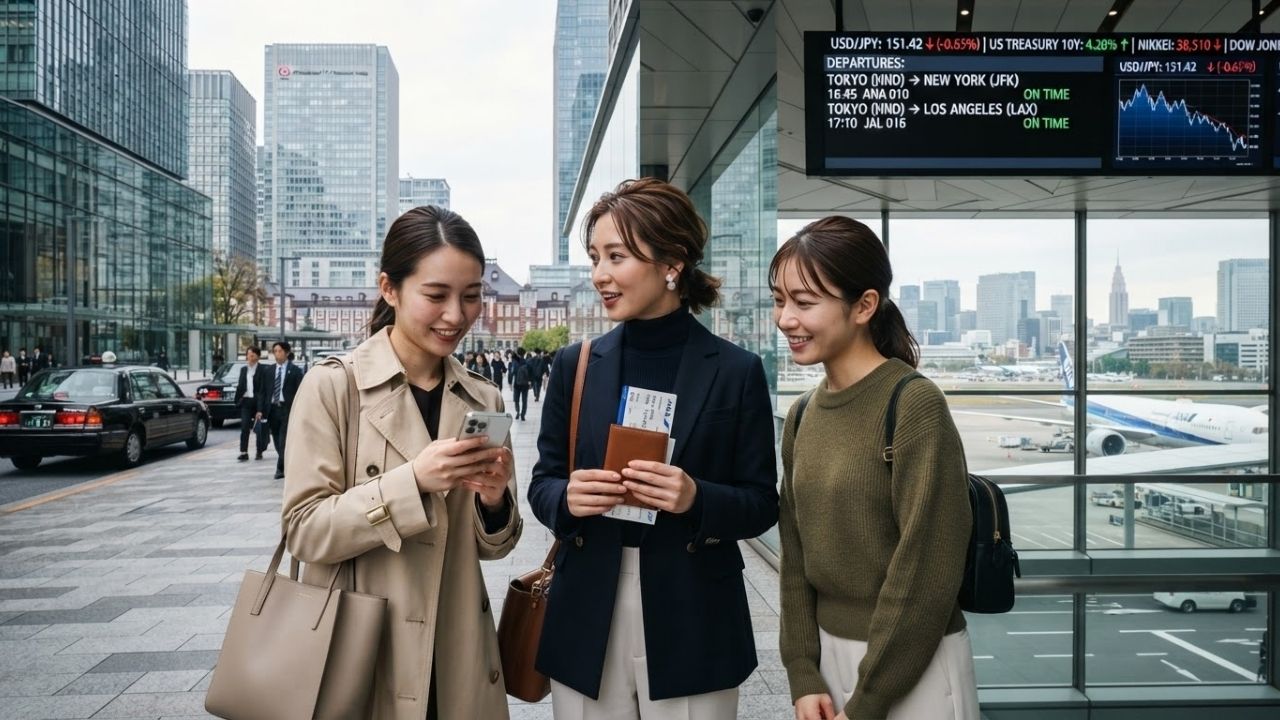
Image generated by AI
Soaring public debt and shifting monetary policies are prompting comparisons between the United States and Japan, directly influencing currency rates for travelers. As Washington’s national debt crosses the $40 trillion threshold, international visitors to major cities like Tokyo and Los Angeles are facing a transformed purchasing power environment.
Tokyo Tourism Surges as US-Japan Economic Dynamics Realign
For transpacific travelers, the relationship between the United States dollar and the Japanese yen is the single most important factor determining the cost of accommodation, dining, and transport. Over the past year, Tokyo has experienced a significant influx of overseas visitors seeking to take advantage of the historically favorable exchange rate. This currency shift has made luxury stays in districts like Ginza and Shinjuku highly accessible to travelers arriving with dollars.
However, financial developments are introducing new uncertainty into this equation. The concept of "Japanisation"—characterized by high public debt, low interest rates, and frequent central bank intervention—is increasingly being referenced in discussions regarding the United States. The federal debt in Washington has crossed the $40 trillion threshold, while the fiscal deficit remains near 6% of gross database product (GDP). This high level of borrowing puts pressure on interest rates, creating a complex equation for policymakers trying to prevent dollar depreciation.
For the traveler, these abstract bond market movements translate directly into the cost of a holiday. A weaker dollar would make international flights, hotels, and attractions in Japan more expensive for Americans. Conversely, it would increase the purchasing power of Japanese tourists visiting key destinations in the United States, such as New York, Los Angeles, and Miami. As currency confidence becomes a central focus, tourists are paying closer attention to foreign exchange updates before booking long-haul journeys.
Treasury Strategies and Yield Control: A Warning from History
The efforts of the US Treasury to manage its debt interest costs have drawn the attention of market analysts. In July, the Treasury concentrated the vast majority of its new debt in short-term securities rather than long-term bonds. Specifically, the government issued $2.57 trillion in Treasury bills, compared with $310.3 billion in notes and $37.3 billion in longer-term bonds. This resulted in 86.4% of total debt issuance being concentrated in short-term bills, a strategy designed to mitigate pressure on longer-term government borrowing costs.
Analysts suggest this approach carries long-term risks for currency stability. Economists like Juan Ramón Rallo argue that the United States is beginning to show signs of "fiscal dominance," where the financing needs of the Treasury increasingly influence central bank decisions. If the Federal Reserve is pressured to use its balance sheet to support bond yields, as suggested by Ryan Swift of BCA Research, the supply of dollars could rise, putting downward pressure on the currency's value.
Japan offers a clear historical precedent for these dynamics. Starting in 2016, the Bank of Japan implemented yield-curve control, committing to purchase unlimited quantities of ten-year government bonds to keep yields around zero. While this policy was supported for years by strong domestic demand for yen assets, the environment eventually shifted. When demand for the yen weakened, the currency faced significant depreciation, demonstrating that policymakers cannot permanently control borrowing costs without affecting the value of their currency.
Shifting Reserves: Treasury Ownership Changes and Traveler Confidence
The global role of the dollar is closely linked to the participation of international investors. Historically, Japan has been one of the largest foreign holders of US Treasury debt. However, official data shows that Japanese holdings stood at $1.24 trillion in February 2026 before falling below $1.12 trillion by July, representing a decline of more than $100 billion in a span of four months.
This reduction is part of a broader trend of declining foreign ownership of US debt. Over the longer term, the foreign share of Treasury securities has fallen to around 32% to 33%, down from more than 45% in the early 2010s. China has also reduced its holdings of US government debt, which dropped from over $1.3 trillion in 2014 to below $700 billion.
This drop in international demand has implications for the stability of the dollar. Academic economists, including Barry Eichengreen, suggest that the dollar's status as the primary global reserve currency should not be taken for granted. If global investors choose to diversify away from dollar-denominated assets, it could lead to increased currency volatility. Robin Brooks has warned that continued intervention in the bond markets could prompt investors to move toward alternative assets such as gold, putting further pressure on the dollar.
Grounding the Trend: Sustainable Tourism and Cultural Preservation in Tokyo
As travel patterns shift in response to exchange rates, the influx of international tourists has highlighted the need for sustainable practices. The Japan National Tourism Organization (JNTO) has placed a strong emphasis on dispersing visitors away from congested areas in central Tokyo and encouraging travel to surrounding regional destinations. By promoting lesser-known cultural sites, authorities aim to reduce the strain on local infrastructure while supporting local economies.
Travelers can directly contribute to these efforts by utilizing Tokyo’s highly efficient public transit network, which relies on low-emission electric trains. Rather than booking large international hotel chains, visitors are encouraged to stay in locally-operated ryokans or boutique guesthouses. This supports family-run businesses and keeps tourism revenues within the community.
Eco-tourism initiatives are also growing in the areas surrounding Tokyo. Regional conservation boards organize guided hikes in the forested valleys of Okutama and promote agricultural tourism in Saitama Prefecture, where visitors can participate in organic tea harvesting. Supporting these conservation efforts helps preserve the natural environment that surrounds the capital.
Cultural Etiquette and Local Tokyo Insider Tips
To ensure a positive experience, visitors to Tokyo should be mindful of local customs and plan their journeys around seasonal demand.
- Off-Peak Visit Windows: To avoid crowd congestion and premium pricing, plan your visit during the late winter months (January and February) or early autumn (September to October). These periods offer mild weather and more stable lodging rates, avoiding the heavy tourist traffic of the spring cherry blossom season.
- Cultural Etiquettes: Tokyo is a community-oriented city where respect for public space is paramount. Avoid eating or drinking while walking; instead, consume food near the stall where it was purchased. Carrying a small bag for your trash is necessary, as public waste bins are rare. Additionally, keep phone conversations silent on trains and escalators.
- Local Dining Specialties: Seek out neighborhood izakayas (informal pubs) and stand-up noodle shops in districts like Yanaka. Trying regional ramen varieties, such as Tokyo-style soy sauce ramen, supports small culinary businesses rather than major multinational chains.
- Under-the-Radar Spots: Visit Yanaka Ginza, a neighborhood that retains the retro charm of mid-century Tokyo. For a natural retreat, walk through Todoroki Valley, a secluded wooded ravine located within the city limits of Setagaya Ward.
Outlook for Transpacific Travelers and Global Destinations
The balance between rising government debt and currency stability will remain a key factor for the global tourism sector. If the dollar experiences a long-term depreciation, the cost of traveling abroad will rise for American households, potentially leading to a shift toward domestic travel or shorter regional trips.
Conversely, a weaker dollar would make the United States a more affordable destination for visitors from Europe and Asia. Major hubs like New York, Los Angeles, and Miami would likely see an increase in inbound arrivals, providing a boost to local hospitality businesses.
Ultimately, currency stability is essential for the long-term planning of both travelers and tourism operators. While the United States retains significant structural advantages, the historical lessons of Japan show that fiscal deficits cannot be separated from currency values indefinitely. Monitoring these economic trends will be necessary for travelers planning long-haul transpacific journeys in the years ahead.
Frequently Asked Questions About Currency Trends and Travel
What is the "Japanisation" of the economy?
It describes a economic situation where high public debt, low interest rates, and frequent central bank interventions can constrain monetary policy and eventually pressure the national currency.
How do changes in US Treasury yields affect international travel?
High debt yields can increase government borrowing costs. If authorities intervene to suppress these yields, it can raise concerns about currency stability, potentially weakening the dollar and making foreign travel more expensive for Americans.
Why did Japanese holdings of US Treasuries decline?
Japanese holdings fell by more than $100 billion between February 2026 and July 2026 as international investors adjusted their portfolios amid shifting interest rates and concerns over long-term debt sustainability.
When is the best off-peak window to visit Tokyo?
The ideal off-peak periods are late winter (January to February) and early autumn (September to October), which offer pleasant travel conditions and lower lodging rates.
Understanding the shifting currents of global finance is key to unlocking authentic and affordable travel experiences across the Pacific.
Related Travel Guides
American Tourist Boom in Europe and Global Travel Trends 2026
Americans Look Abroad for Retirement as Living Costs Climb at Home
The 10 Best Budget-Friendly Hidden Gems in Tokyo, According to Reddit
Disclaimer
This article is for informational and educational purposes only. It does not constitute legal, financial, or professional advice. While we strive to provide accurate and up-to-date information, travel policies, regulations, and conditions change rapidly. Always verify information with official sources before making travel decisions. Nomad Lawyer makes no representations about the accuracy, reliability, completeness, or suitability of the information provided. Readers should consult qualified professionals for advice specific to their circumstances. The views expressed in this article are those of the author and do not necessarily reflect the views of Nomad Lawyer.
Raushan Kumar
Founder & Lead Developer
Full-stack developer with 11+ years of experience and a passionate traveller. Raushan built Nomad Lawyer from the ground up with a vision to create the best travel and law experience on the web.
Learn more about our team →