
Top 10 Historical Landmarks and Spiritual Sites to Visit in Prayagraj (Allahabad) in 2026
Explore the top 10 must-visit attractions in Prayagraj, from the sacred Triveni Sangam to the historic Allahabad Fort, blending spirituality and colonial heritage in 2026.

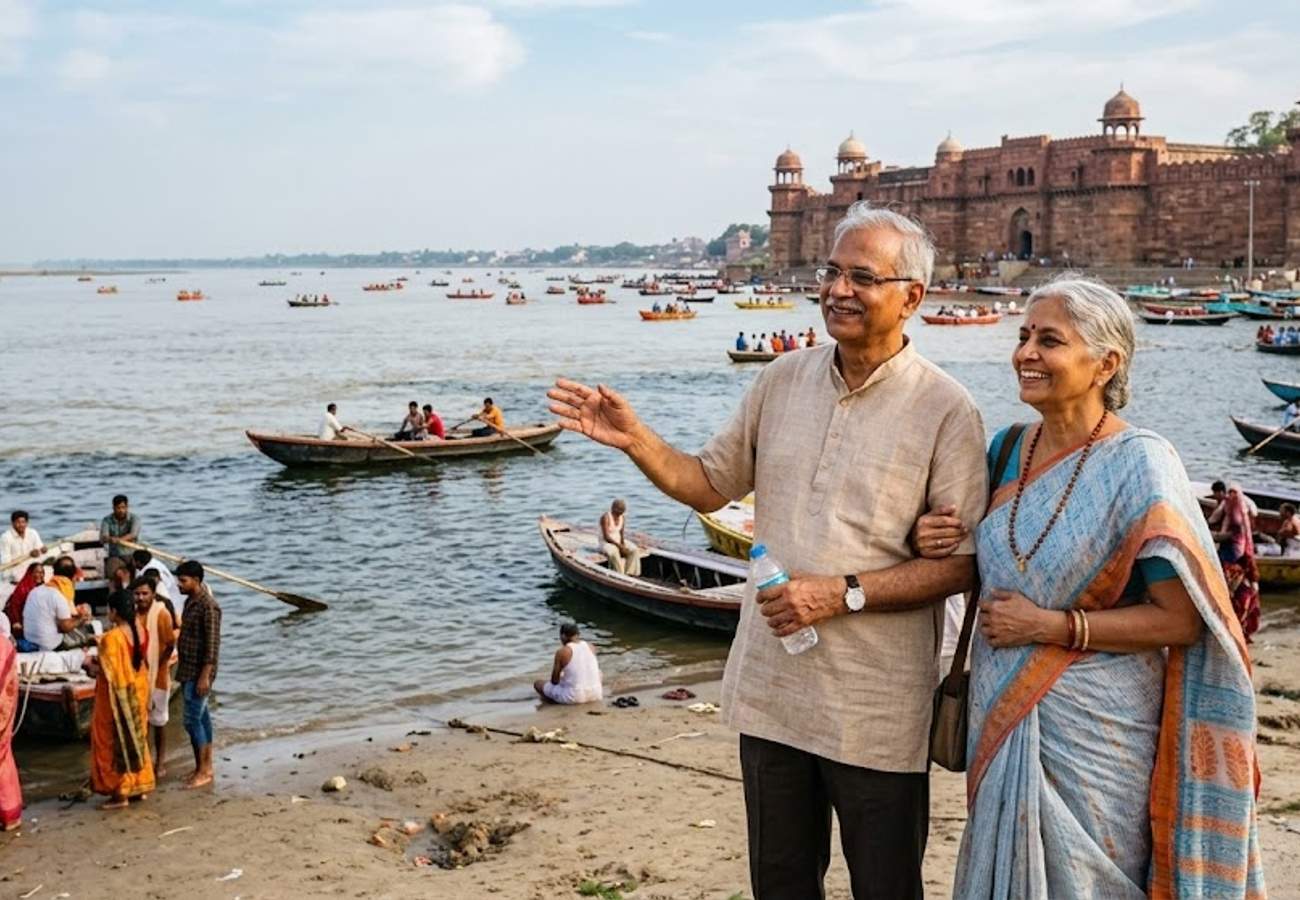
Image generated by AI
[Prayagraj, July 29] — The city of Prayagraj, formerly known as Allahabad, continues to be a primary destination for millions of global travelers and spiritual seekers in 2026. By blending ancient Vedic traditions with Mughal architecture and British colonial remnants, the city offers a comprehensive timeline of Indian history within a single urban center.
For those planning a visit, the city is more than just a religious hub; it is a center of legal administration and political history. Understanding the layout of its key landmarks is essential for any traveler looking to balance the chaotic energy of the riverbanks with the serene atmosphere of its historic gardens and museums.
Spiritual Immersion at the Triveni Sangam
The heartbeat of the city is the Triveni Sangam, the sacred point where the Ganga and Yamuna rivers meet the mythical, invisible Saraswati. In Hindu tradition, this confluence is regarded as one of the most auspicious sites on earth, where a ritual dip is believed to cleanse the soul of all sins.
Visitors typically reach the exact meeting point via local boat operators. The visual contrast between the pale waters of the Ganga and the deeper, darker hues of the Yamuna is a striking natural phenomenon. Beyond daily prayers, this site serves as the epicenter for the Kumbh Mela, the world's largest human gathering, which occurs every 12 years. Even outside the Mela period, the riverbanks remain a center of constant activity, reflecting the enduring nature of Indian faith.
Military Architecture and Ancient Edicts at Allahabad Fort
Constructed in 1583 by the Mughal Emperor Akbar, the Allahabad Fort is a massive fortification situated on the banks of the Yamuna. The structure is a testament to 16th-century strategic engineering, characterized by imposing walls and three monumental gateways.
Inside the walls, the fort houses several high-value historical assets:
- The Ashoka Pillar: An ancient sandstone column featuring edicts from the reign of Emperor Ashoka.
- Patalpuri Temple: A sacred underground shrine that attracts devotees from across the region.
- Akshaya Vat: A revered banyan tree believed to provide eternal salvation to those who visit.
Because the Indian Army utilizes a significant portion of the fort for administrative purposes, public access is limited to specific zones, making the available sections even more prized by history enthusiasts.
Global Scale Events at the Kumbh Mela Grounds
The Kumbh Mela Grounds are not merely a location but a temporary city that rises every 12 years. Recognized by UNESCO as an Intangible Cultural Heritage of Humanity, the grounds transform into a sprawling network of campsites and religious hubs.
During the festival, the area is reorganized with temporary roads and bridges to manage the influx of millions of pilgrims and saffron-robed ascetics. For the traveler, the grounds offer a glimpse into a unique socio-religious ecosystem where traditional discourses and cultural performances happen on a scale unseen anywhere else in the world.
Political Legacy at Anand Bhavan
To understand the trajectory of India's independence, a visit to Anand Bhavan is essential. This former residence of the Nehru family has been converted into a museum that chronicles the life of Jawaharlal Nehru, India's first Prime Minister.
The mansion, built by Motilal Nehru in the early 20th century, served as a strategic nerve center for political planning during the struggle against British rule. Today, the museum displays period furniture, personal archives, and photographs. A notable addition for families is the on-site planetarium, which blends scientific education with the historic atmosphere of the estate's manicured gardens.
The Birthplace of Leadership at Swaraj Bhavan
Located adjacent to Anand Bhavan, Swaraj Bhavan holds a distinct place in the national narrative as the first headquarters of the Indian National Congress. This residence was eventually donated to the nation and became a focal point for the freedom movement.
The site is particularly significant as the birthplace of Indira Gandhi. The museum here focuses on the political and social dynamics of the independence era, utilizing documents and artifacts to illustrate the shift from colonial rule to sovereignty.
Martyrdom and Nature at Chandrashekhar Azad Park
Formerly known as Alfred Park, this 133-acre green space is a site of profound patriotic significance. It is the location where the revolutionary Chandrashekhar Azad fought his final battle against British forces in 1931, choosing self-sacrifice over capture.
The park today serves a dual purpose:
- Memorial: A statue of Azad stands as a permanent reminder of his bravery.
- Intellectual Hub: The Allahabad Public Library, located within the park, houses a massive collection of rare manuscripts and books.
Gothic Grandeur of All Saints Cathedral
The All Saints Cathedral, often referred to as "Patthar Girja" (Stone Church), is a masterpiece of Gothic architecture. Designed by Sir William Emerson and completed in the late 19th century, the structure is crafted from deep red sandstone.
The cathedral is characterized by its towering spires and intricate stained-glass windows. For visitors, the interior offers a stark, peaceful contrast to the city's exterior noise. It remains one of the most significant colonial-era religious buildings in India, particularly during the Christmas season when the architecture is highlighted by festive illuminations.
Legal Heritage at the Allahabad High Court
Established in 1866, the Allahabad High Court is one of the oldest and most influential judicial bodies in India. The architecture is a sophisticated blend of Indo-Saracenic and Gothic Revival styles, featuring grand domes and an imposing facade.
While interior access is strictly regulated due to the ongoing legal proceedings, the exterior remains a primary draw for those interested in the intersection of law and colonial architecture. The court stands as a symbol of the rule of law and the city's historical role as a legal center.
Mughal Artistry at Khusro Bagh
Khusro Bagh is a walled garden that preserves the memory of the Mughal era. It contains the tombs of Prince Khusro, the eldest son of Emperor Jahangir, and other family members.
The tombs are noted for their Persian-influenced design and exquisite stone carvings. The garden provides a serene environment, allowing visitors to appreciate the symmetry and artistic precision of Mughal landscaping and funerary architecture.
Summary of Key Attractions
| Attraction | Primary Theme | Key Highlight |
|---|---|---|
| Triveni Sangam | Spiritual | Confluence of three rivers |
| Allahabad Fort | Military/Ancient | Ashoka Pillar & Patalpuri Temple |
| Kumbh Mela Grounds | Cultural/Religious | UNESCO Heritage gathering |
| Anand Bhavan | Political | Nehru family residence |
| Swaraj Bhavan | Political | First INC Headquarters |
| Chandrashekhar Azad Park | Patriotic | Site of Azad's final stand |
| All Saints Cathedral | Colonial/Religious | Red sandstone Gothic design |
| Allahabad High Court | Judicial | Indo-Saracenic architecture |
| Khusro Bagh | Mughal | Tombs of Prince Khusro |
Why This Matters for the Modern Traveler
For the traveler in 2026, Prayagraj represents a unique "compressed" history. Unlike cities where you must travel far to see different eras, here you can move from a 3rd-century BC edict (Ashoka Pillar) to a 16th-century fort, and then to a 19th-century Gothic cathedral within a few kilometers.
From a logistical standpoint, the city is best experienced by balancing high-energy sites like the Sangam with the quietude of the Nehru museums. For the international visitor, the "Information Gain" here is the realization that Prayagraj is not just a pilgrimage site, but a living museum of India's transition from an empire to a republic.
A journey through Prayagraj is a walk through the very soul of Indian civilization.
Related Travel Guides
Disclaimer
This article is for informational and educational purposes only. It does not constitute legal, financial, or professional advice. While we strive to provide accurate and up-to-date information, travel policies, regulations, and conditions change rapidly. Always verify information with official sources before making travel decisions. Nomad Lawyer makes no representations about the accuracy, reliability, completeness, or suitability of the information provided. Readers should consult qualified professionals for advice specific to their circumstances. The views expressed in this article are those of the author and do not necessarily reflect the views of Nomad Lawyer.
Preeti Gunjan
Contributor & Community Manager
A passionate traveller and community builder. Preeti helps grow the Nomad Lawyer community, fostering engagement and bringing the reader experience to life.
Learn more about our team →