
Destin-Fort Walton Beach Deepens Marine Tourism Portfolio
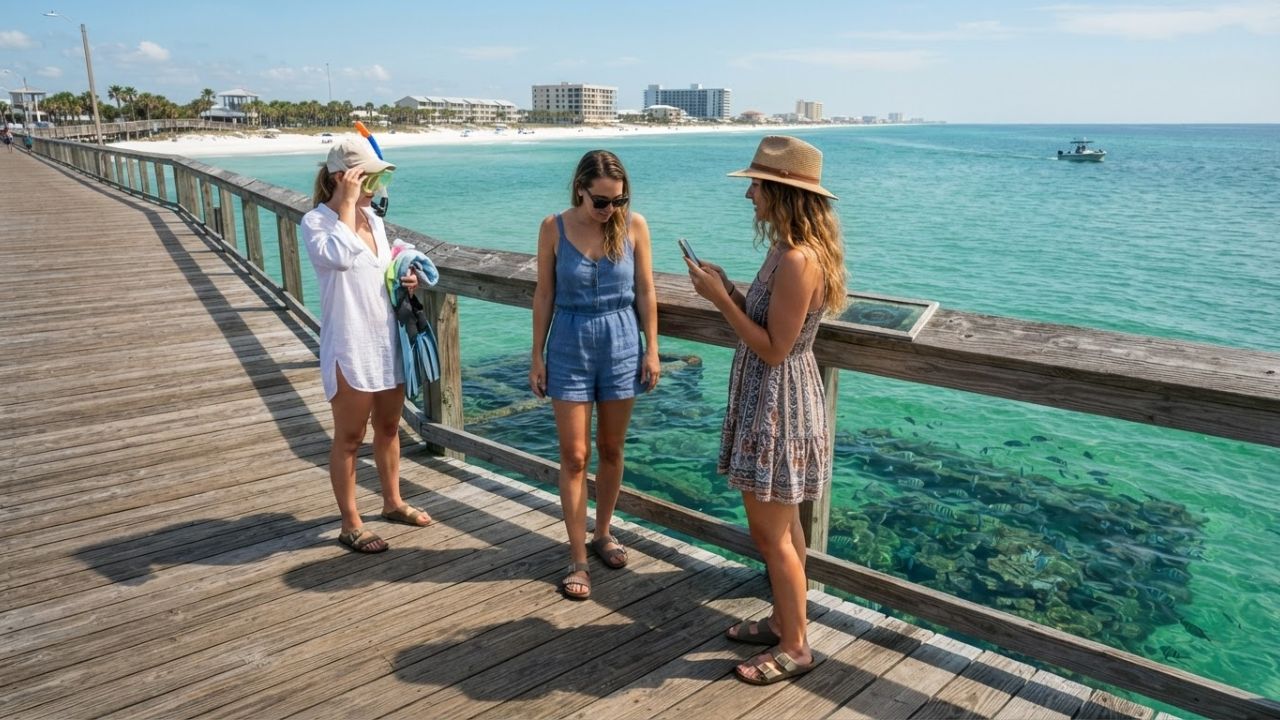
Image generated by AI
Destin-Fort Walton Beach welcomed an estimated 8.2 million visitors in 2025, generating $42.9 million in tourism-tax revenue as the destination transitioned from a conventional beach stop into a highly structured marine-tourism hub. Supported by a network of over 580 artificial reefs, an upgraded underwater pier camera, and new seasonal flight connections, this Florida Gulf Coast region is building a diverse portfolio of nature-based travel experiences.
Rather than relying solely on its clear water to attract crowds, Okaloosa County is investing directly in marine conservation, public safety, and citizen-science programs. This approach expands the region's appeal beyond summer sunbathing, creating year-round activities for divers, anglers, and eco-conscious travelers.
The Local Trend: Structural Marine Tourism in the Gulf
Okaloosa Island’s clear-water appeal is becoming an organized marine-tourism product in 2026. This shift is driven by county investments in underwater infrastructure and real-time public access. The Okaloosa Island Fishing Pier, which extends 1,270 feet into the Gulf after being rebuilt following hurricane damage in the 1990s, serves as a key digital entry point.
On 7 February 2026, county authorities redeployed an upgraded underwater camera at the end of the pier, connected to a fiber network. The live stream allows travelers to monitor marine life and water conditions in real time before booking excursions. This digital access is designed to inspire pre-trip engagement, guiding visitors toward local charter boat operators and guided wildlife tours. By providing immediate visibility of the underwater environment, the pier camera connects casual sightseers to specialized marine activities like snorkeling, deep-sea fishing, and scuba diving.
An Expanding Network of Wrecks and Prefabricated Reefs
The destination’s offshore appeal is supported by more than 580 artificial reef sites managed by the Destin-Fort Walton Beach tourism organization. This network includes modular concrete structures, prefabricated reef domes, and retired ships, providing habitats for local fish populations and sites for diving and angling charters.
To continue this growth, Okaloosa County approved a partnership on 29 June 2026 to deploy a 224-foot vessel, which will become the Sposit Reef in autumn 2026. The ship is scheduled to be sunk approximately 22 nautical miles from Destin East Pass at a depth of 120 feet. This project adds to a system that already includes 48 large vessels positioned across the coastal shelf. Additionally, a $126,000 procurement contract was awarded in June for the 2026 offshore artificial-reef construction program, focusing on smaller prefabricated modules. This continuous investment ensures that marine life is distributed across multiple depths, preventing overcrowding at single dive sites and supporting a tiered diving portfolio that accommodates both beginners and experienced technical divers.
Long-Term Conservation and Participatory Citizen Science
Okaloosa County’s long-term marine strategy includes the preparation of the SS United States for deployment as what is intended to become the world’s largest artificial reef. The vessel remains under remediation, with its deployment date to be determined, though the county has committed to providing at least 30 days of public notice once the schedule is finalized. This project represents a significant resource commitment, building on an FY2025 artificial-reef investment of $8.4 million. Conservation efforts also include active resource management, such as the removal of 20,512 invasive lionfish during the fiscal year, protecting local reef species from predatory pressure.
To involve visitors in these environmental initiatives, the county has expanded its citizen-science programs. On 17 August 2026, the Destin-Fort Walton Beach Natural Resources team, in partnership with Florida Sea Grant, is scheduled to conduct the Great Scallop Search in Choctawhatchee Bay. Participating community-science teams will survey designated 50-meter transects between 08:00 and 12:00 to monitor local scallop populations. These programs transform tourists from passive consumers into active contributors to environmental research, appealing to families and educational groups seeking purposeful travel experiences.
Air Access and Passenger Throughput Statistics
Aviation developments are supporting this tourism growth by making the Emerald Coast more accessible to major metropolitan areas. Destin-Fort Walton Beach Airport began receiving JetBlue services from New York JFK and Boston Logan on 5 March 2026, providing five weekly seasonal flights from each hub.
According to the airport's June 2026 monthly report, passenger volume for the month reached 325,937, representing a 1.63% increase compared to 320,713 in June 2025. Total passenger throughput for the first half of the year (January to June 2026) reached 1,265,820, representing a 4.9% increase over the 1,206,510 passengers recorded during the same period in 2025. JetBlue carried 9,574 passengers during June, while Allegiant remained the largest carrier by monthly market share at 38.66%. American, Delta, and Southwest also maintained significant shares, providing direct links that allow travelers to reach the Gulf Coast without connecting flights.
The Science of the Emerald Coast and Beach Safety
The visual clarity of Okaloosa County's coastal waters is the result of local geological and physical conditions. According to the Florida Department of Environmental Protection (DEP), the area’s signature white sand consists of pure quartz crystals, eroded from the Appalachian Mountains and carried to the Gulf by currents. The color of the water is created by light absorption; seawater absorbs red light waves, reflecting blue and green light back to the surface. Local water clarity is also influenced by seasonal weather patterns, river runoff, and offshore currents.
However, water clarity does not indicate bacteriological safety. The Florida Department of Health in Okaloosa County conducts bi-weekly water testing from March through October at 11 monitored locations, including Marler Park, Wayside Park, Henderson Beach State Park, and James Lee Park. The program measures enterococci bacteria, classifying samples as good (0–35 enterococci per 100 ml), moderate (36–70), or poor (71 or above). Additionally, the Florida Fish and Wildlife Conservation Commission (FWC) monitors red tide conditions daily, with the weekly report dated 7 August 2026 noting background concentrations of Karenia brevis in Northwest Florida, though Okaloosa County remained clear of advisories.
Public Safety and Lifeguard Operations
To manage the high volume of beachgoers during the summer peak, Okaloosa County operates a public safety program across approximately 3.5 miles of guarded shoreline. The county deploys five lifeguard towers during off-peak periods, expanding to seven to nine towers on weekdays and nine to eleven towers on weekends during the Memorial Day to Labor Day peak.
Weekly beach census figures rise from 10,000–15,000 in the winter to 250,000 at the July peak, with the annual census approaching two million visits across guarded zones. Lifeguards performed over 900,000 preventative safety actions and completed 37 rip-current or heavy-surf rescues during the reporting period, maintaining a record of zero drownings on county-guarded beaches.
Traditional Gulf Coast Dining: Local Seafood Specialties
Visitors exploring the Destin-Fort Walton Beach area can experience the region's traditional Gulf-to-table culinary heritage at local seafood shacks and harbor docks.
- Smoked Mullet Dip: Locally caught mullet, slow-smoked over hardwood, flaked, and blended with cream cheese, lemon juice, and spices, served cold with crackers.
- Royal Red Shrimp: Deep-water shrimp harvested from the Gulf of Mexico, known for their sweet taste and lobster-like texture, served steamed with butter.
- Blackened Red Snapper: Locally caught snapper coated in a blend of cajun spices and seared on a cast-iron skillet to lock in moisture.
- Emerald Coast Oysters: Freshly harvested Gulf oysters steamed with garlic and butter, served in communal pots.
- Key Lime Pie: A traditional Florida dessert featuring a tart lime custard filling in a graham cracker crust, topped with meringue or whipped cream.
Visitor Insider Tips: Navigating the Emerald Coast
For travelers planning a visit, these practical guidelines will ensure a safe and enjoyable trip:
- Off-Peak Planning: Visit during the shoulder season from September to October, when the summer crowds disperse, hotel rates drop, and gulf temperatures remain warm.
- Water Quality Monitoring: Check the latest bi-weekly testing results from the Florida Department of Health in Okaloosa County. Do not rely on visual water clarity to judge safety.
- Reef Charter Selection: Match your dive excursions to your certification level. Sposit Reef at 120 feet requires advanced certification, while shallow reefs are suitable for snorkeling.
- Beach Flag System: Follow the beach safety flags displayed at lifeguard towers. Double red flags indicate the water is closed due to dangerous surf or rip currents.
- Invasive Species Support: Support local eco-efforts by dining at restaurants that participate in the Gulf-to-table program, particularly those serving invasive lionfish.
Outlook: Destin-Fort Walton Beach in 2026 and Beyond
The steady increase in visitor numbers to 8.2 million in 2025 shows that Destin-Fort Walton Beach maintains a strong position in the regional travel market. By investing in artificial reefs, public safety infrastructure, and citizen-science programs, the destination is successfully expanding its nature-based offerings.
Future growth will depend on the completion of the Sposit Reef in autumn 2026, the progress of the SS United States reef project, and the expansion of seasonal flight connections. By balancing marketing with environmental resource management and public safety, Okaloosa County is establishing a sustainable tourism model that protects its marine assets for future visitors.
Related Travel Guides
- USA Autumn Tourism 2026: Best Foliage Destinations from New England to the Rockies
- British Virgin Islands Defeats Global Travel Chaos by Winning 2026 CTO Tourism Showcase with Blue and Green Economy Model
- India, Germany, and Indonesia Forge Green Travel Alliance at ITB Berlin 2026 Amid $200 Oil Shock and Strait of Hormuz Blockade: How US-Iran Conflict and Gulf Tensions Pivot Global Tourism to Low-Carbon Wellness
Disclaimer
This article is for informational and educational purposes only. It does not constitute legal, financial, or professional advice. While we strive to provide accurate and up-to-date information, travel policies, regulations, and conditions change rapidly. Always verify information with official sources before making travel decisions. Nomad Lawyer makes no representations about the accuracy, reliability, completeness, or suitability of the information provided. Readers should consult qualified professionals for advice specific to their circumstances. The views expressed in this article are those of the author and do not necessarily reflect the views of Nomad Lawyer.