
Des Moines vs Omaha: Which Midwest City Wins for 2026 Weekend Getaways
Des Moines and Omaha offer distinct Midwest weekend escapes 135 miles apart. Compare attractions, food scenes, neighborhoods and costs to choose your perfect 2026 getaway destination.

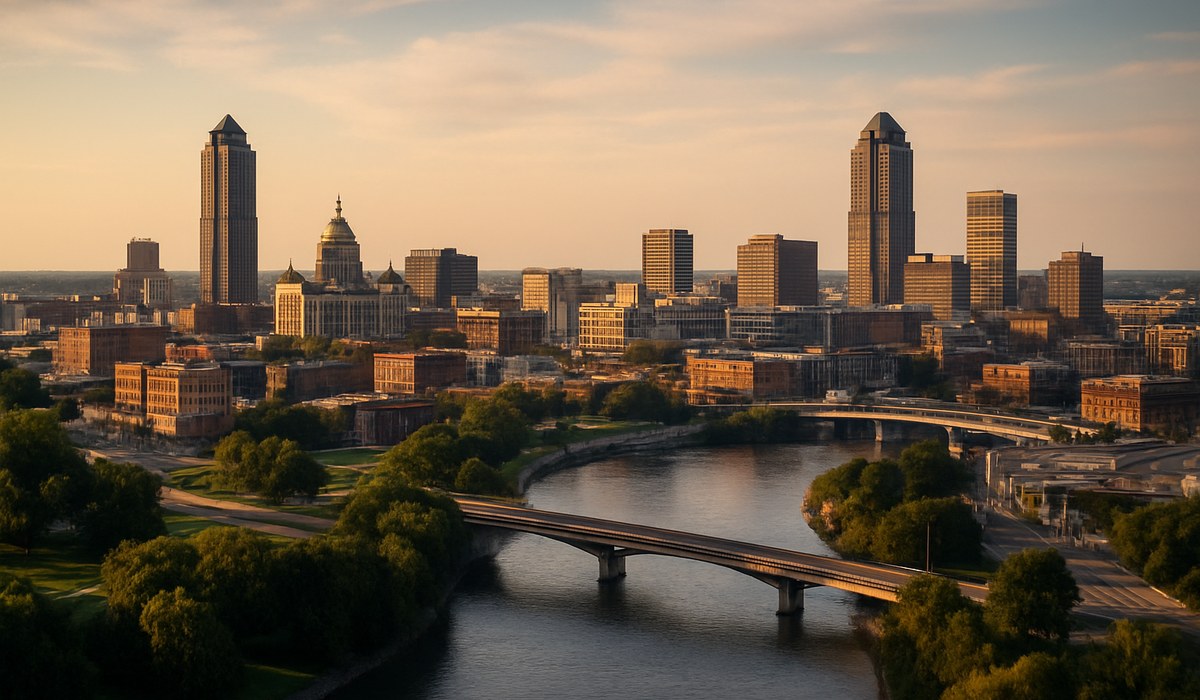
Image generated by AI
Des Moines vs Omaha: Which Midwest City Wins for 2026 Weekend Getaways
Des Moines and Omaha represent two fundamentally different Midwest experiences just 135 miles apart via Interstate 80. Both cities deliver authentic weekend escapes with walkable downtowns, thriving craft beer cultures, family-friendly attractions, and prices that remain significantly lower than coastal alternatives. The critical question facing travelers in 2026: which destination matches your weekend priorities? Des Moines projects a polished, modern capital-city atmosphere, while Omaha embraces industrial riverfront heritage with a grittier urban edge.
Getting There: Flight Access and Logistics Into Both Cities
Both Des Moines International Airport (DSM) and Omaha's Eppley Airfield (ELH) offer nonstop flights from major hubs including Denver, Dallas, and Chicago throughout 2026. Weekend airfare from central U.S. cities typically runs 40-60% lower than comparable coastal flights. Travelers based in Minneapolis, Kansas City, or St. Louis face drive times under six hours to either destination, making both realistic for two or three-day escapes.
The two-hour I-80 corridor between cities creates a unique advantage: fly into Des Moines and depart Omaha (or vice versa) to maximize coverage. Regional carriers including Southwest Airlines and United maintain competitive Saturday-Sunday service from secondary airports. Parking costs downtown remain minimal—most hotel garages charge $15-25 nightly, with free evening and Sunday street parking widely available.
Neighborhood Character: East Village Against Old Market District
Des Moines' Historic East Village occupies the brick-lined blocks immediately downhill from the Iowa State Capitol. Independent boutiques, specialty coffee roasters, and vintage record shops line narrow sidewalks. The Downtown Des Moines Farmers Market operates Saturday mornings during season, featuring local vendors, fresh pastries, and street musicians. This neighborhood captures the aesthetic of renovated Midwest industrial spaces repurposed for contemporary retail and dining.
Omaha's Old Market delivers comparable walkability with stronger 19th-century character. Converted warehouse lofts, wine bars, and jazz clubs occupy three and four-story brick structures arranged on cobblestone streets. Horse-drawn carriage rides, eclectic candy shops, and hidden alleyway wine bars create organic discovery moments. The district maintains grittier authenticity than Des Moines' more polished presentation—warehouses still visibly reference the city's stockyard and railroad heritage.
Both neighborhoods support 10-15 minute walks to major attractions without vehicle dependency. Hotel room rates across either downtown typically range $150-250 nightly for midrange accommodations outside festival periods.
Cultural Attractions and Museum Quality Comparison
Des Moines leverages state capital status through several premium institutions. The Pappajohn Sculpture Park features large-scale contemporary artwork across manicured lawns surrounded by corporate towers and sidewalk dining. The Des Moines Art Center houses American and European collections spanning multiple centuries. Western Gateway Park creates a cohesive downtown plaza ecosystem combining public art, fountains, and casual food service.
Omaha counterbalances with the Henry Doorly Zoo and Aquarium, consistently ranked among America's finest zoological attractions. The Joslyn Art Museum offers comprehensive collections in a historic Romanesque building. The Durham Museum preserves transportation history within a restored 1931 railway station. For visitors prioritizing world-class attractions, Omaha's zoo experience attracts multi-generational families and justifies weekend travel alone.
Food and Craft Beer: Distinct Culinary Personalities
Des Moines showcases farm-to-table dining reflecting Iowa's agricultural identity. The East Village supports intimate restaurants emphasizing seasonal local ingredients. Craft beer patios operate year-round with breweries including Confluence Brewing Company and Toppling Goliath producing highly-regarded regional selections. Live music venues cluster in smaller intimate spaces rather than large concert halls.
Omaha's food culture leans toward elevated steakhouse traditions and eclectic ethnic cuisine. The Old Market supports wine bars, casual pubs, and late-night taco counters. The Blackstone District and Benson neighborhoods house excellent breweries attracting university crowds and locals seeking nightlife beyond downtown. Omaha's dining scene skews slightly louder and later-closing than Des Moines' more measured after-dark activity.
Atmosphere and Mood: Polished Capital vs Industrial Cool
Des Moines projects contemporary sophistication through recent infrastructure investments. Mid-rise towers, clean architectural lines, and modern public art define the skyline. The Principal Riverwalk connects sculpture parks, office developments, and dining venues through landscaped pathways. Evenings find visitors relaxing on manicured lawns watching light change across artwork and buildings—a calmer, locally-focused vibe.
Omaha emphasizes historic authenticity and visible urban texture. Original brick and timber construction dominates the Old Market without heavy restoration veneer. The Missouri River proximity reinforces industrial heritage. Nightlife concentrates in denser clusters of bars and clubs compared to Des Moines' dispersed venue approach. The overall mood feels grittier, more nocturnal, and more historically grounded.
Deciding Factor: Budget and Value Equation for 2026
Both cities maintain impressive value propositions for Midwest weekend travelers. A typical midrange hotel costs $150-250 nightly before parking. Dining spans budget-friendly food trucks through elevated restaurant experiences without premium coastal pricing. Attractions like the Henry Doorly Zoo (Omaha) and Pappajohn Sculpture Park (Des Moines) remain free or low-cost public access. Weekend beer tours, walking guides, and neighborhood exploration cost virtually nothing.
The moines omaha which decision ultimately hinges on preference for contemporary urban development versus preserved industrial character. Family travelers with young children favor Omaha's zoo. Cultural enthusiasts gravitate toward Des Moines' art institutions. Nightlife-focused groups appreciate Omaha's density. Travelers seeking authentic Midwest charm split evenly.
Comparison Data Table: Des Moines vs Omaha At a Glance
| Factor | Des Moines | Omaha |
|---|---|---|
| Distance via I-80 | N/A | 135 miles / 2 hours |
| Average Hotel (Midrange) | $150-250/night | $150-250/night |
| Parking Cost | $15-25 nightly downtown | $15-25 nightly downtown |
| Primary Neighborhood | Historic East Village | Old Market District |
| Top Family Attraction | Pappajohn Sculpture Park | Henry Doorly Zoo & Aquarium |
| Nightlife Character | Craft beer patios, live music venues | Dense bar clusters, jazz clubs |
| Cultural Institutions | Des Moines Art Center, sculpture parks | Joslyn Art Museum, Durham Museum |
| Best For | Art lovers, farm-to-table dining | Zoo visitors, steakhouse enthusiasts |
| Downtown Walkability | 10-15 minutes to major attractions | 10-15 minutes to major attractions |
What This Means for Travelers
Selecting between Des Moines and Omaha requires honest assessment of your priorities:
-
Choose Des Moines if: You prioritize contemporary public art, farm-to-table dining experiences, and prefer quieter evening atmospheres. The city suits culture-focused couples and artists exploring galleries.
-
Choose Omaha if: Family trips
Disclaimer
This article is for informational and educational purposes only. It does not constitute legal, financial, or professional advice. While we strive to provide accurate and up-to-date information, travel policies, regulations, and conditions change rapidly. Always verify information with official sources before making travel decisions. Nomad Lawyer makes no representations about the accuracy, reliability, completeness, or suitability of the information provided. Readers should consult qualified professionals for advice specific to their circumstances. The views expressed in this article are those of the author and do not necessarily reflect the views of Nomad Lawyer.
Kunal K Choudhary
Co-Founder & Contributor
A passionate traveller and tech enthusiast. Kunal contributes to the vision and growth of Nomad Lawyer, bringing fresh perspectives and driving the community forward.
Learn more about our team →