
Denver International Airport Paralyzed: Southwest and United Cancel 5 Flights, Trigger 200+ Delays Across US, Canada, Mexico, Puerto Rico
Major operational meltdown at Denver International Airport as Southwest and United Airlines cancel 5 flights and report over 200 delays affecting North American aviation network.

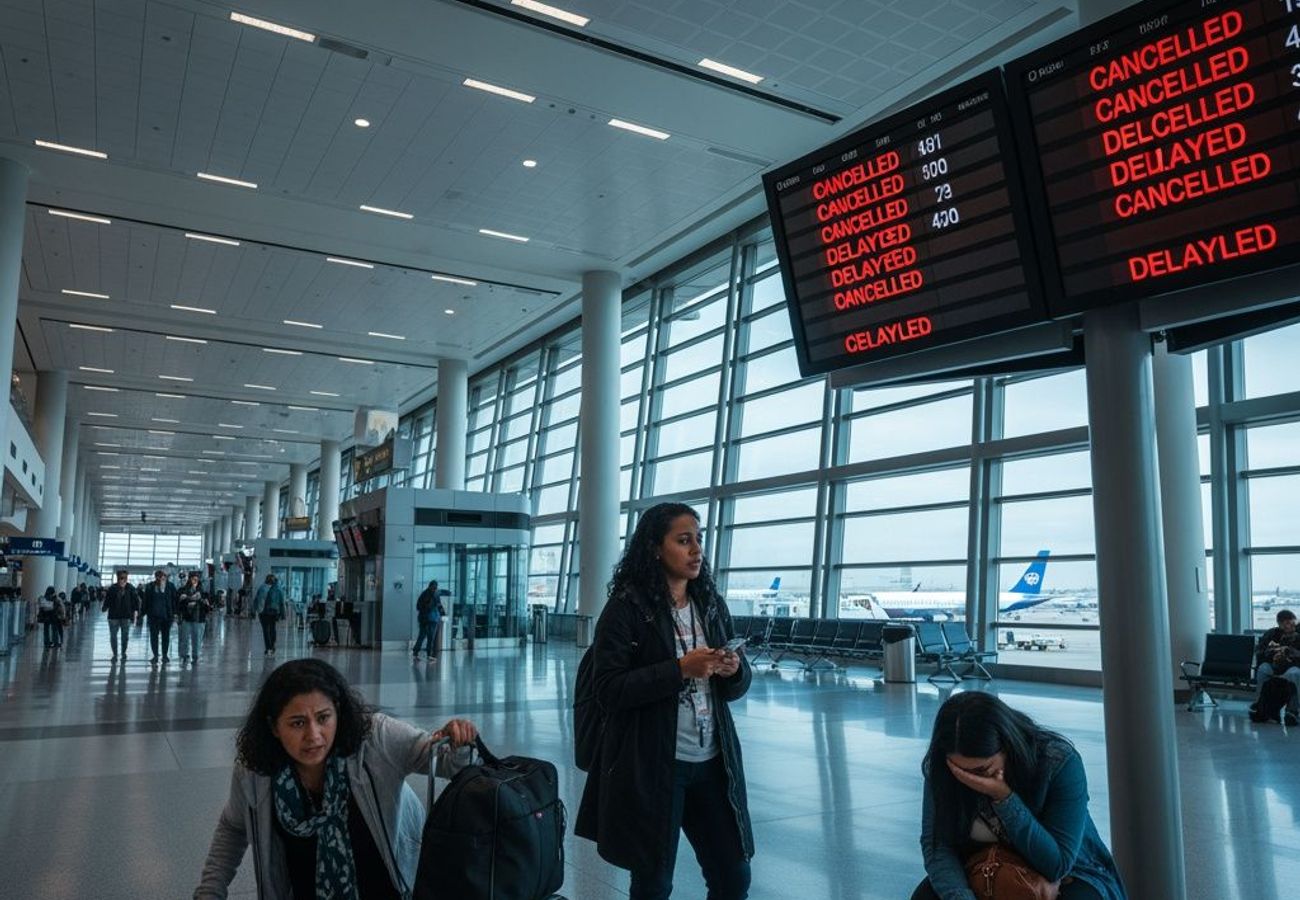
Image generated by AI
The Meltdown at Denver: When 5 Cancellations Trigger Chaos Across North America
It started like any other day at Denver International Airport (DEN)—until it didn't. On June 18, 2026, the Colorado aviation hub became the epicenter of a cascading operational crisis that would ripple across three countries and two U.S. territories.
Southwest Airlines grounded 4 aircraft. United Airlines cancelled 1 additional flight. That's just 5 cancellations on paper. But the ripple effect? Over 200 delays spreading from Denver to every major airport in North America.
Reddit: "Stuck in Denver for 6 hours now. They keep saying 'next available flight' but there IS no next available flight. The entire system is broken." — r/travel
This wasn't a localized problem. This was a domino effect that exposed just how fragile our interconnected airline network really is.
The Geographic Reach: Where the Chaos Spread
What makes this disruption genuinely alarming isn't just the numbers—it's the sheer geographic footprint.
Travelers faced delays and cancellations across major U.S. hubs including Chicago, Dallas, Atlanta, Los Angeles, Phoenix, Seattle, and San Francisco. But the damage extended far beyond America's borders.
Affected cities span:
- Canada: Vancouver and Montreal bore the brunt of cascading delays
- Mexico: Cancun experienced significant operational impact
- Puerto Rico: San Juan's connections were severely compromised
- Hawaii: Honolulu recorded secondary disruptions
Regional airports weren't spared either. Aspen, Bozeman, Spokane, Salt Lake City, Austin, Nashville, and dozens of smaller destinations all felt the pressure as passengers desperately sought alternative routes.
The concentration of these disruptions through Denver—one of America's busiest aviation hubs—proves that a single airport's operational crisis can paralyze an entire continental network in hours.
The Numbers: Southwest Dominates the Cancellation List
Here's what the data reveals:
| Airline | Cancelled Flights | Delayed Flights |
|---|---|---|
| Southwest Airlines | 4 | 149 |
| United Airlines | 1 | 82 |
| Total | 5 | 231 |
Southwest Airlines absorbed the heaviest operational burden, accounting for 80% of the cancellations. With 149 delayed flights on top of 4 cancellations, Southwest's network was essentially gridlocked throughout the day.
United's single cancellation pales in comparison numerically, but the airline still logged 82 delays—evidence that even carriers with fewer direct operational failures felt the squeeze of a crowded, congested airport trying to recover from crisis mode.
The disparity matters. These two carriers dominate Denver's schedule, which means when they struggle, the entire airport suffers.
Why This Matters: Understanding the Cascading Effect
A rational person might ask: Why does 5 cancellations cause 200+ delays?
The answer reveals everything about modern aviation's vulnerability.
Denver serves as a major connection hub for both Southwest and United. Thousands of passengers arrive each hour with tight connections to onward flights. When those connecting aircraft get cancelled, passengers must be rebooked across the network, creating bottlenecks.
Crews that were supposed to operate cancelled flights get reassigned, pushing scheduled flights backward in the queue. Gate conflicts multiply. Fuel trucks can't refuel planes fast enough. De-icing delays cascade if weather was involved. Ground crews become overwhelmed.
One cancelled flight at a major hub doesn't just affect that route—it affects every downstream flight that aircraft was scheduled to operate for the rest of the day.
This is why FlightAware showed such staggering delay counts despite the relatively small cancellation number.
What Passengers Can Actually Do: A Survival Guide
If you're caught in this situation, panic won't help. Here's the actionable strategy:
Immediate Actions
Stay plugged in. Monitor your airline's app, email, and text notifications simultaneously. Airlines often send rebooking confirmations via the app before updating their website. Every minute counts when rebooking windows are competitive.
Contact the airline immediately. Don't wait. Call their customer service line, use the mobile app chat feature, or head to the airport service desk. Phone queues are brutal, but the app's chat feature often has shorter wait times. For international travelers, contact the airline's international customer service line—domestic lines may be overwhelmed.
Know Your Rights
Your entitlements depend on jurisdiction. Under EU regulations, passengers are entitled to compensation of €250-€600 depending on flight distance, plus hotel and meal rebooking at no cost. U.S. airlines have no federally mandated compensation requirement, but they must rebook you on the next available flight at no extra charge or offer a refund.
Canadian travelers should reference Air Canada's policy and the Canadian Transportation Agency's Passenger Bill of Rights for specific compensation details.
Alternative Solutions
- Ask for the next available flight on any airline to your destination
- Consider booking with a competing carrier at your own cost—some airlines will partially reimburse if the cancellation was their fault
- Explore ground transportation: rental cars, buses, or trains for distances under 400 miles may get you there faster than waiting for rebooking
- Flexible travelers should ask about standby options on flights departing within 24 hours
Reddit: "Pro tip: Always ask for hotels and meal vouchers explicitly. They won't offer unless you ask. Got $400 in vouchers by simply asking the gate agent." — r/travel
The Broader Crisis: Is This the New Normal?
June 18, 2026, wasn't unique. This was the third major operational crisis at a U.S. hub in 2026 alone.
What's changed is that airlines are operating at closer to 100% capacity than ever before. There's virtually no buffer. When something breaks—whether it's a system failure, weather, or staffing—the entire system feels it immediately.
Denver International Airport's infrastructure is modern, but the airline industry's operational model leaves almost no room for error. Spare aircraft are fewer. Crew reserves are tighter. Gate availability is maximized to the point of fragility.
The lesson: Summer 2026 travel should include a buffer day before important connections. Build in flexibility. Assume delays will happen—because they will.
What Comes Next
As of publication, Denver International Airport continues normal operations with flights operating as scheduled. However, the cascading effect of June 18's disruption will echo through airline schedules for days.
Passengers on rebooked flights may find their new itineraries involve longer layovers or different airlines than they originally booked. This is normal. Airlines prioritize getting passengers to their final destination—not preserving their original routing.
Monitor FlightAware and your airline's official channels continuously if you have flights through major hubs over the next 48-72 hours. Delays often cluster as airlines work through the backlog created by cancellations.
The most connected airport in North America just proved that connection is fragility in disguise.
Related Travel Guides
Disclaimer
This article is for informational and educational purposes only. It does not constitute legal, financial, or professional advice. While we strive to provide accurate and up-to-date information, travel policies, regulations, and conditions change rapidly. Always verify information with official sources before making travel decisions. Nomad Lawyer makes no representations about the accuracy, reliability, completeness, or suitability of the information provided. Readers should consult qualified professionals for advice specific to their circumstances. The views expressed in this article are those of the author and do not necessarily reflect the views of Nomad Lawyer.
Raushan Kumar
Founder & Lead Developer
Full-stack developer with 11+ years of experience and a passionate traveller. Raushan built Nomad Lawyer from the ground up with a vision to create the best travel and law experience on the web.
Learn more about our team →