
Delta Air Lines São Paulo to Atlanta A330neo Route Hits 99% Capacity Amid Surging Brazil Demand
Delta's Airbus A330-900 service between São Paulo and Atlanta is operating at nearly 99% capacity, signaling a massive rebound in U.S.-Brazil travel and strategic growth.

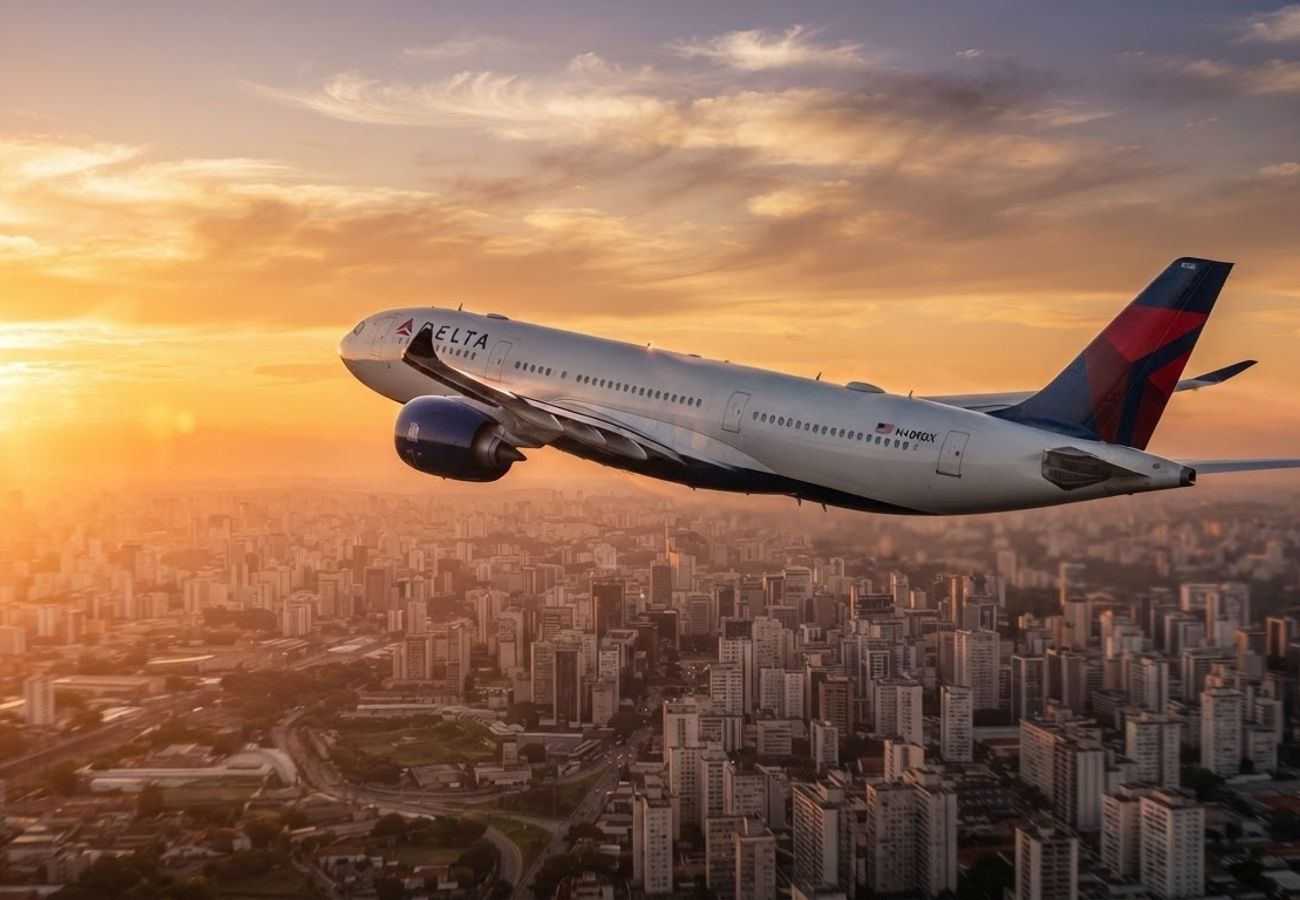
Image generated by AI
Flight data reveals that Delta Air Lines' Airbus A330-900 service between São Paulo and Atlanta is operating at approximately 99 percent capacity, reflecting a surge in transcontinental demand. This near-total occupancy on the DL104 route underscores a strategic shift in North-South American travel patterns and a robust rebound in Brazilian outbound traffic.
The current load factors indicate that nearly every seat is filled on peak departure days, positioning the São Paulo-Atlanta corridor as one of the most successful transcontinental links in Delta's network. This trend is not merely a seasonal spike but appears to be a structural shift in travel demand, driven by a combination of corporate trade, high-end leisure, and strengthened diplomatic and economic ties between the United States and Brazil.
Surging Passenger Volume on the DL104 Corridor
Ticketing and scheduling data confirm that the DL104 service, which connects São Paulo’s Guarulhos International Airport (GRU) with Atlanta (ATL), is consistently hitting capacity ceilings. Industry analytics suggest that this route has become a primary artery for passengers moving between the two continents, with demand remaining firm even outside of traditional holiday windows.
The stability of these high load factors has allowed the carrier to maintain firm pricing across various departure dates. This pricing power suggests that the market is currently undersupplied relative to the appetite for travel between these two hubs. For the airline, the route serves as a critical feed mechanism, funneling passengers from across Brazil into the Atlanta hub for onward connections to Canada, Europe, and Asia.
A330-900 Deployment and Fleet Modernization
The utilization of the Airbus A330-900 (A330neo) on this route is a calculated move within Delta's wider widebody renewal strategy. The A330neo offers a significant reduction in fuel burn compared to older generation aircraft, which is a vital factor for the profitability of long-haul overnight flights.
The aircraft's cabin configuration is specifically tailored to maximize revenue from high-yield segments. By offering Delta One suites and a dedicated premium economy section, the airline is successfully capturing both the corporate executive market and affluent leisure travelers. This tiered seating strategy ensures that high demand is converted into maximum revenue per seat.
As Delta continues to phase out older widebody models, the A330-900 is expected to become the primary workhorse for South American operations. Industry forecasts suggest that similar deployments will likely expand to other major hubs, including New York, to maximize aircraft utilization and passenger comfort.
Strategic Impact of the LATAM Joint Venture
The growth observed on the São Paulo-Atlanta route is heavily influenced by the trans-American joint venture between Delta and LATAM Airlines Group. This partnership has effectively reorganized how traffic flows through the region, allowing for coordinated schedules and seamless connectivity.
Under this joint venture, the São Paulo flight acts as both a high-volume point-to-point service and a massive connection bank. The synergy between the two carriers allows Delta to capture passengers from smaller Brazilian cities who fly LATAM into São Paulo before boarding the DL104 to the U.S.
This network effect is amplified by São Paulo's status as the financial heart of South America. The constant stream of business traffic, combined with U.S. tourists drawn by Brazil's expanding tourism sector, creates a dual-stream demand that keeps cabins full in both directions.
Navigating Infrastructure Constraints at Guarulhos
Despite the soaring demand, growth is hampered by significant infrastructure limitations at São Paulo's primary airports. Reports on the region's aviation network highlight that Guarulhos (GRU), along with Congonhas and Viracopos, is facing severe pressure regarding runway capacity, gate availability, and terminal resources.
Because slot availability is strictly limited, Delta cannot simply add more flights to meet the 99 percent load factor. Instead, the airline is forced to optimize through "upgauging"—using larger, more efficient aircraft like the A330-900 to move more passengers within the same number of allotted flight slots.
This environment creates a high-stakes balancing act for operators at Guarulhos, where profitability depends on maximizing the capacity of every single takeoff and landing.
Safety Review Following March 2026 Incident
While the route is a commercial triumph, it was subject to intense scrutiny earlier this year. In late March 2026, a Delta Airbus A330 operating the São Paulo-Atlanta service suffered an engine failure and subsequent fire shortly after departing Guarulhos. The crew performed an emergency return, landing the aircraft safely with no serious injuries reported.
The incident triggered a comprehensive investigation by Brazilian aviation authorities into engine maintenance and performance protocols for long-haul widebodies. However, safety experts note that such events are statistically rare. The Airbus A330 family maintains a strong global safety record, and twin-engine aircraft are specifically engineered to maintain flight safety even if one engine fails completely.
For the modern traveler, this incident highlighted the rigorous safety margins and regulatory oversight that govern these high-capacity routes, ensuring that commercial success does not come at the expense of operational safety.
Why This Matters: The Traveler's Perspective
For the frequent flyer or business traveler, the 99 percent capacity on the São Paulo-Atlanta route means that "last-minute" bookings are becoming nearly impossible and prohibitively expensive. The shift toward the A330neo means a better onboard experience, but it also means that seats are at a premium.
From a logistical standpoint, the reliance on the Atlanta hub means that any disruption in Georgia can ripple across the entire Brazilian network. However, the integration with LATAM provides a safety net of alternative routing that was not available in previous years. Travelers should expect continued high fares on this corridor as demand continues to outpace the physical capacity of São Paulo's airport infrastructure.
The saturation of the São Paulo-Atlanta route signals a new era of high-density, premium-focused travel between the Americas.
Related Travel Guides
Disclaimer
This article is for informational and educational purposes only. It does not constitute legal, financial, or professional advice. While we strive to provide accurate and up-to-date information, travel policies, regulations, and conditions change rapidly. Always verify information with official sources before making travel decisions. Nomad Lawyer makes no representations about the accuracy, reliability, completeness, or suitability of the information provided. Readers should consult qualified professionals for advice specific to their circumstances. The views expressed in this article are those of the author and do not necessarily reflect the views of Nomad Lawyer.
Kunal K Choudhary
Co-Founder & Contributor
A passionate traveller and tech enthusiast. Kunal contributes to the vision and growth of Nomad Lawyer, bringing fresh perspectives and driving the community forward.
Learn more about our team →