
Delta Flight DL92 Boeing 767 Aborts Berlin Journey, Makes Emergency Landing at JFK
Delta Air Lines Boeing 767-300ER Flight DL92 aborted its transatlantic journey from JFK to Berlin Brandenburg after a mid-air mechanical issue, landing safely within 90 minutes.

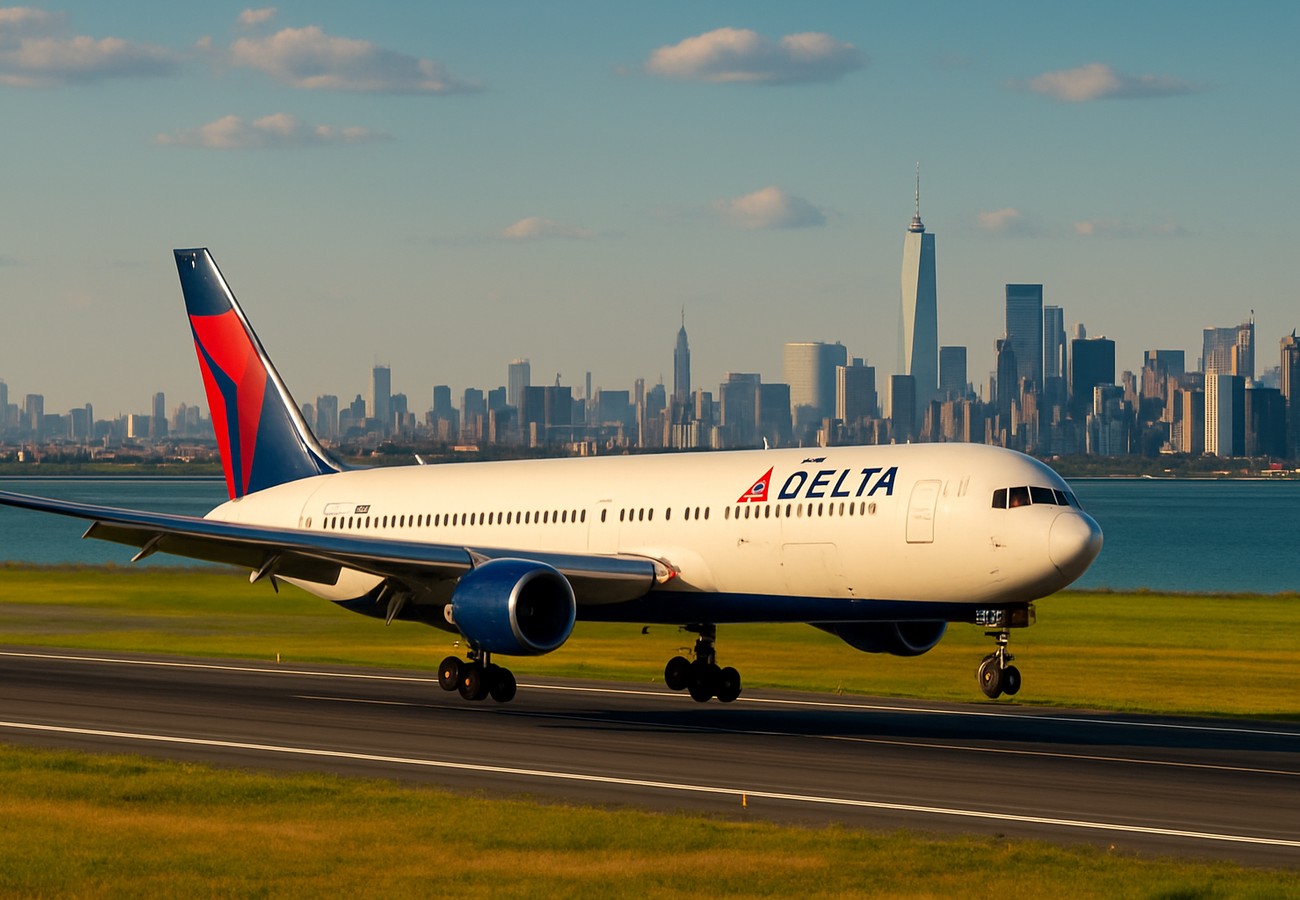
Image generated by AI
Delta Air Lines Flight DL92 Just Aborted Its New York to Berlin Journey — Here's What Happened Mid-Air Over the Atlantic
Quick Summary
- Delta Flight DL92, a Boeing 767-300ER, aborted its transatlantic crossing from JFK to Berlin Brandenburg Airport on April 28, 2026
- A mechanical issue detected less than one hour into the flight forced pilots to execute a controlled return
- The aircraft, registration N185DN, is over three decades old — among the oldest active widebody jets in commercial service
- All passengers landed safely within 90 minutes; no injuries reported; affected passengers were rebooked on alternative flights
A Delta Air Lines Boeing 767-300ER operating as Flight DL92 was forced to abort its transatlantic journey from John F. Kennedy International Airport to Berlin Brandenburg Airport on April 28, 2026, after the flight crew detected a mechanical anomaly less than an hour after departure. The aircraft executed a controlled return to JFK, landing safely within 90 minutes of takeoff, and passengers disembarked without any injuries. The incident has renewed scrutiny over the operational reliability of aging widebody aircraft on demanding long-haul transatlantic routes.
What Happened During Delta Flight DL92?
Flight DL92 departed New York on its scheduled transatlantic crossing under normal conditions. The Boeing 767-300ER climbed steadily to cruising altitude and entered the early oceanic phase of its journey to Berlin.
Less than one hour into the flight, the flight crew detected a technical anomaly in the aircraft's systems. Assessing the risk of continuing a multi-hour oceanic crossing with an unresolved mechanical irregularity, the pilots made an immediate safety-first decision — they executed a calculated U-turn and began a controlled return to John F. Kennedy International Airport.
The aircraft touched down safely at JFK within 90 minutes of its original departure. No injuries were reported among passengers or crew, and the airline's standard safety protocols functioned exactly as designed.
Why Did Pilots Return to JFK Instead of Continuing?
This is the question many passengers asked — and the answer is rooted in basic transatlantic aviation safety logic.
Long-haul oceanic routes are unique among commercial flight paths because they involve extended periods over open water with extremely limited diversion options. Unlike continental routes where an aircraft can divert to a nearby airport within minutes, a transatlantic flight crossing the North Atlantic has very few emergency landing alternatives for much of its journey.
Even a relatively minor mechanical irregularity that might be manageable on a short domestic hop becomes an unacceptable risk over hundreds of miles of open ocean. By detecting the issue early and returning while JFK was still within close range, the crew eliminated the far more serious scenario of managing a technical problem mid-Atlantic with limited options.
This decision directly reflects FAA safety regulatory frameworks, which explicitly prioritize precautionary action over schedule adherence when any system uncertainty exists on extended overwater routes.
The Aircraft: A 30-Year-Old Boeing 767 Still Flying the Atlantic
The aircraft involved — registered N185DN — is a Boeing 767-300ER that has been in active commercial service for over three decades, placing it among the oldest widebody jets still regularly operating transatlantic routes in the global commercial fleet.
Age alone is not a safety disqualifier. Airlines are legally required to maintain aircraft to the same rigorous airworthiness standards regardless of age, and older aircraft go through more intensive maintenance cycles rather than fewer. However, the relationship between aircraft age, operational intensity, and technical interruption frequency is well-documented.
IATA operational safety data indicates that aging fleets globally experience higher rates of precautionary technical returns compared to newer aircraft. Older systems require more frequent component replacements, more complex maintenance inspections, and closer monitoring — all of which translate into higher operational costs and greater scheduling unpredictability.
Delta's Boeing 767 Fleet: A Strategic But Aging Asset
The Boeing 767-300ER remains a core component of Delta Air Lines' long-haul international network, particularly on what the industry calls "thin routes" — transatlantic corridors where passenger demand is steady but insufficient to justify the capacity of larger widebody aircraft like the Boeing 777 or Airbus A350.
The aircraft's operational flexibility allows Delta to maintain connectivity to secondary European markets — including Berlin — where passenger volumes do not support daily widebody flights. This economic logic has kept the 767 in Delta's active fleet well beyond the retirement age of many competitor aircraft.
However, the aviation industry's broader transition is accelerating. Aircraft like the Airbus A330neo and Airbus A350 are progressively replacing older-generation widebody jets across major international carriers. These newer platforms offer significantly improved fuel efficiency, reduced maintenance complexity, lower operational costs, and enhanced passenger comfort — making the economic case for 767 retention increasingly difficult to justify over the medium term.
Delta has been executing a phased fleet modernization strategy, but the pace of 767 replacement remains a subject of ongoing industry discussion, particularly as technical incidents involving the aging platform continue to generate attention.
What Happened to Passengers After Landing?
Following the safe return to JFK, Delta's ground operations team activated standard operational recovery procedures. The aircraft was immediately grounded for a comprehensive technical inspection, with maintenance engineers beginning a detailed evaluation of the mechanical issue that triggered the return.
Affected passengers were rebooked on alternative flights to Berlin and other onward destinations. Delta's passenger services team managed accommodation and rebooking logistics in accordance with the airline's standard disruption recovery protocols.
The airline has not released specific details about the root cause of the mechanical issue pending completion of the maintenance inspection. The aircraft will not return to service until engineers have fully evaluated and cleared the systems in question under FAA airworthiness standards.
What This Means for Travelers
If you are traveling on Delta's long-haul Boeing 767 services — particularly on thinner transatlantic routes to European destinations — here is what you should understand:
- Precautionary returns are a sign the system works, not that it has failed. Today's outcome — safe return, no injuries — is exactly what aviation safety frameworks are designed to produce.
- Check Delta's fleet assignment when booking transatlantic routes. If a newer aircraft type is available for your route or date, it may offer greater scheduling reliability.
- Always purchase travel insurance that covers trip disruption and rebooking costs on long-haul international routes.
- Allow buffer time in your European itinerary if connecting to onward flights, particularly on routes served by older aircraft types.
Conclusion: Safety First, Questions Second
Delta Air Lines Flight DL92's emergency return to JFK on April 28, 2026, ended exactly as it should — with every passenger safely on the ground and no injuries reported. The pilots' decision to abort the transatlantic crossing rather than continue with an unresolved mechanical uncertainty is a textbook demonstration of the safety culture that underpins modern commercial aviation.
The deeper questions — about aging fleet economics, the pace of 767 replacement, and the long-term viability of deploying 30-year-old widebody jets on demanding Atlantic crossings — will continue to be debated within the industry. But for the passengers onboard Flight DL92, the outcome that matters most has already been confirmed: everyone got home safely.
FAQ
What caused Delta Flight DL92 to make an emergency landing at JFK?
The flight crew detected a mechanical issue less than one hour into the transatlantic crossing from JFK to Berlin Brandenburg Airport. Following strict safety protocols for overwater flights, pilots executed a controlled return to John F. Kennedy International Airport rather than risk continuing across the Atlantic with an unresolved technical anomaly.
Was anyone injured during the Delta DL92 emergency landing?
No. All passengers and crew landed safely at JFK within 90 minutes of the original departure time. No injuries of any kind were reported.
How old is the Delta Boeing 767 involved in the DL92 incident?
The aircraft, registered N185DN, is a Boeing 767-300ER that has been in commercial service for over three decades, making it one of the oldest active widebody jets still flying transatlantic routes in the commercial aviation sector.
Will Delta replace its aging Boeing 767 fleet?
Delta has been progressively transitioning toward newer widebody aircraft including the Airbus A330neo and Airbus A350, which offer improved fuel efficiency and reduced maintenance complexity. However, the Boeing 767 remains in active service on thinner transatlantic routes where demand does not justify larger aircraft.
Disclaimer
This article is for informational and educational purposes only. It does not constitute legal, financial, or professional advice. While we strive to provide accurate and up-to-date information, travel policies, regulations, and conditions change rapidly. Always verify information with official sources before making travel decisions. Nomad Lawyer makes no representations about the accuracy, reliability, completeness, or suitability of the information provided. Readers should consult qualified professionals for advice specific to their circumstances. The views expressed in this article are those of the author and do not necessarily reflect the views of Nomad Lawyer.
Kunal K Choudhary
Co-Founder & Contributor
A passionate traveller and tech enthusiast. Kunal contributes to the vision and growth of Nomad Lawyer, bringing fresh perspectives and driving the community forward.
Learn more about our team →