
Delta Connection Miscontacts Wrong Tower at LaGuardia: Safe Go-Around Executed
Delta Connection Flight DL5752 pilots accidentally contacted JFK Tower instead of LaGuardia Tower during approach, triggering a prompt go-around. ATC coordination and safety protocols prevented any safety risk.

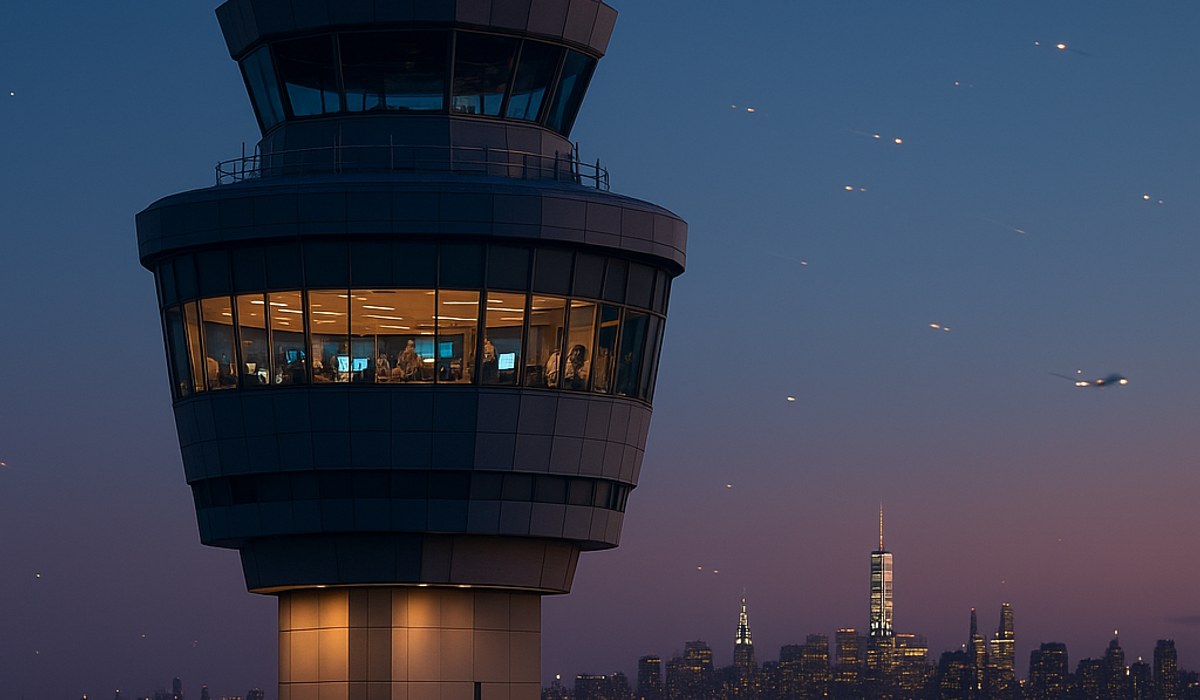
Image generated by AI
Delta Connection Pilots Contact Wrong Tower at LaGuardia: Quick Correction Prevents Issue
Quick Summary:
- Delta Connection Flight DL5752 from Washington D.C. to LaGuardia contacted JFK Tower by mistake
- Pilots mistakenly dialed JFK frequency instead of LaGuardia during final approach
- ATC quickly identified error and directed aircraft to correct tower
- Go-around executed as precaution; aircraft landed safely minutes later
A coordination error in one of the world's busiest airspaces was swiftly corrected when Delta Connection pilots accidentally reached the wrong air traffic control tower during their approach to New York's LaGuardia Airport. The incident demonstrates how established safety protocols and quick-thinking air traffic controllers prevent minor communication mix-ups from escalating into serious problems. Here's what happened and what it reveals about aviation safety systems.
The Tower Mix-Up During Approach to LaGuardia
Delta Connection Flight DL5752, a Republic Airways regional service operating on behalf of Delta Air Lines, was conducting final approach to LaGuardia Airport when pilots mistakenly contacted JFK Tower instead of LaGuardia Tower. The aircraft was aligning with the Instrument Landing System (ILS) for Runway 4R at LaGuardia when the crew was instructed to switch frequencies from approach control to tower control.
The error occurred amid the complexity of New York's airspace. The flight crew inadvertently dialed the frequency for JFK Tower instead of LaGuardia's. JFK Tower initially responded to the aircraft as though it was arriving at Kennedy, issuing routine wind checks and landing clearance for Runway 4R. The similarity in runway designations at both airports—JFK also has a Runway 4R—made the initial contact plausible enough that the error wasn't immediately obvious.
Only moments later, JFK Tower controllers recognized something was wrong. When the controller asked "Who?" in response to the aircraft's callsign "Recaro 5752," the crew began realizing the miscommunication. JFK Tower then queried directly: "At LaGuardia?" Upon confirmation, the controller immediately directed the pilots to switch to the correct LaGuardia frequency.
Why Frequency Errors Happen in Congested Airspace
New York's airspace represents one of aviation's most complex operational environments. Three major airports—LaGuardia, JFK, and Newark—operate within a 12-mile radius, collectively handling over 1.3 million flights annually. This concentration creates inevitable challenges:
Multiple Active Frequencies: Each airport operates multiple frequencies for approach, tower, and ground control. Pilots constantly transition between frequencies during approach sequences.
Similar Runway Designations: LaGuardia's Runway 4R and JFK's Runway 4R have identical names, creating potential confusion during communications.
High-Pressure Environment: Final approach requires pilots to manage aircraft systems, follow checklists, communicate with ATC, and monitor multiple instruments simultaneously. Mental workload peaks during these critical moments.
Rapid Frequency Changes: Pilots transition from approach control to tower control in quick succession, increasing the likelihood of dialing errors during time-pressured situations.
Despite rigorous training, frequency errors occur occasionally in the world's busiest airspaces. The key is that safety systems are designed to catch and correct these mistakes before they compound into serious situations.
How ATC Controllers Prevented the Error From Escalating
The response from JFK Tower exemplifies professional air traffic control. Controllers are trained to identify discrepancies and quickly verify information when something seems unusual. In this case:
- Immediate Recognition: JFK Tower controllers quickly realized the inbound aircraft was supposed to be landing elsewhere
- Verification Communication: Controllers asked clarifying questions to confirm the situation
- Prompt Correction: Once the error was identified, the controller immediately directed pilots to the correct frequency
- Coordination: LaGuardia Tower took charge of the aircraft from that point forward
This example demonstrates why air traffic controllers serve as a critical safety layer beyond pilot training. Controllers work continuously to catch errors, coordinate complex operations, and maintain safe separation between aircraft in congested airspace.
The Go-Around: A Precautionary Safety Measure
Upon realizing the miscommunication, the flight crew acted decisively by declaring a go-around and initiating a climb to safe altitude. This standard procedure is fundamental to aviation safety when the approach environment isn't fully verified.
The aircraft climbed to 2,000 feet initially, then 3,000 feet as directed by LaGuardia controllers. The crew repositioned for a new approach to the correct runway at the correct airport. No further issues arose, and the aircraft landed safely without delays or passenger concerns.
The go-around exemplifies how pilots and controllers work together during unexpected situations. Rather than proceeding with an uncertain approach, the crew prioritized safety through a controlled, well-established procedure.
New York's Complex Airspace: A Challenging Environment
The incident underscores why New York's three-airport complex requires exceptional coordination and communication standards. With LaGuardia, JFK, and Newark operating in close proximity, controller workload is extraordinarily high:
Constant Coordination Requirements: Controllers at each facility must coordinate arriving and departing aircraft to maintain safe separation and efficient flow.
Frequency Management: Multiple overlapping frequencies create opportunities for miscommunication.
Traffic Density: The sheer volume of aircraft—particularly during peak travel periods—leaves minimal margin for error.
International Operations: International carriers, domestic carriers, and regional airlines all operate simultaneously, creating diverse communication requirements.
Despite these challenges, the New York system maintains an excellent safety record through rigorous training, established procedures, and continuous improvements in technology and coordination protocols.
What This Incident Reveals About Aviation Safety
The Delta Connection frequency error—and its swift correction—reveals several important truths about modern aviation:
Safety Systems Work: When pilots make errors, multiple layers of safety intervention prevent escalation. ATC monitoring, standardized procedures, and communication protocols catch mistakes before they become serious.
Human Factors Are Acknowledged: The aviation industry recognizes that pilots, controllers, and maintenance technicians are human and make occasional errors. Systems are designed around this reality.
Culture of Reporting: The incident was promptly identified and reported, allowing the industry to understand potential risks and refine procedures.
Training Emphasizes Response: Pilots train extensively for unexpected situations. The crew's immediate go-around decision reflected hours of required training.
Collaboration Prevents Accidents: Pilots and controllers working together—rather than in isolation—prevent incidents from escalating.
FAQ: ATC Frequency Errors and Aviation Safety
Q: How common are ATC frequency errors? A: Frequency errors occur occasionally in busy airspaces but are rarely serious because ATC monitors for discrepancies and pilots follow established procedures.
Q: Why didn't the pilots notice they contacted the wrong tower? A: During final approach, pilots manage multiple systems and communications simultaneously. JFK's response seemed plausible because both airports have Runway 4R, making the initial contact seem normal.
Q: Could this have been dangerous? A: Only if the error had gone undetected and pilots had attempted to land at the wrong airport. ATC caught the error within moments, eliminating any serious risk.
Q: Are New York airports studying ways to prevent this? A: Frequency errors are rare enough that major system changes aren't typically warranted. However, the industry continuously refines communication procedures and controller training.
Q: Do passengers need to worry about ATC coordination failures? A: No. Multiple safety layers, including ATC monitoring, pilot training, and established procedures, ensure that communications errors don't compromise safety.
Looking Forward: Continuous Safety Improvements
The Delta Connection incident demonstrates that even in the world's most complex airspaces, safety systems function as designed. While the frequency error was unfortunate, the rapid identification and correction showcases the professionalism of both flight crews and air traffic controllers.
The aviation industry continues refining communication procedures, controller training, and pilot training to further reduce such errors. Incidents like this provide valuable lessons that inform improvements across the entire system.
For passengers, the incident should provide confidence rather than concern. The swift, professional response from air traffic control and the flight crew's decision to execute a precautionary go-around demonstrate the multiple safety layers protecting every flight.
Last updated: March 30, 2026. Information sourced from aviation safety reports, ATC communications, and airline accounts. For additional information on New York airspace operations, consult FAA documentation.
Disclaimer
This article is for informational and educational purposes only. It does not constitute legal, financial, or professional advice. While we strive to provide accurate and up-to-date information, travel policies, regulations, and conditions change rapidly. Always verify information with official sources before making travel decisions. Nomad Lawyer makes no representations about the accuracy, reliability, completeness, or suitability of the information provided. Readers should consult qualified professionals for advice specific to their circumstances. The views expressed in this article are those of the author and do not necessarily reflect the views of Nomad Lawyer.
Raushan Kumar
Founder & Lead Developer
Full-stack developer with 11+ years of experience and a passionate traveller. Raushan built Nomad Lawyer from the ground up with a vision to create the best travel and law experience on the web.
Learn more about our team →