
Combating US Domestic Travel Chaos: Delta Deploys Massive Airbus A330-900neo Widebodies on Regional Routes to Shield Passengers from Airport Disruptions
As unexpected delays and cascading flight cancellations violently disrupt domestic travel, Delta Air Lines aggressively deploys international widebody jets on regional routes to guarantee passenger comfort.

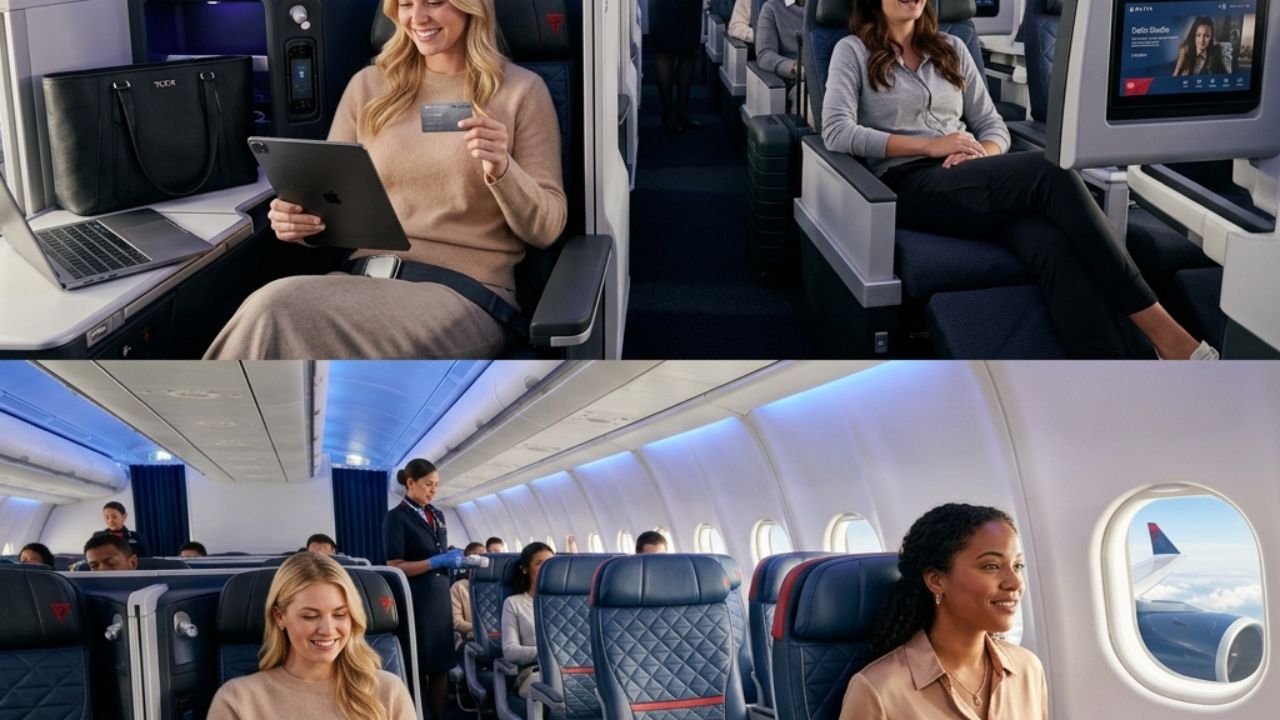
Image generated by AI
A Strategic Operational Victory Against Aviation Gridlock
While massive sectors of the US domestic passenger network frequently battle highly unpredictable weather events and localized scheduling breakdowns, a highly aggressive fleet deployment strategy is offering American tourists a premium, highly reliable escape. Delivering highly urgent, breaking airline news, verified aviation sources confirm that Delta Air Lines is completely rewriting the conventional playbook for domestic flying by aggressively deploying its massive Airbus A330‑900neo widebody jets on key U.S. routes. While desperate travelers elsewhere attempt to navigate sudden, terrifying airport disruptions and massive terminal gridlock caused by cramped, delayed narrowbody operations, these exclusive aviation updates reveal that Delta’s highly calculated move is specifically designed to completely eliminate domestic travel fatigue.
By aggressively integrating these massive, fuel-efficient international workhorses into high-demand domestic corridors, Delta is directly combating the claustrophobic transcontinental bottlenecks that frequently trigger uncontrollable, rolling travel chaos. In an era where sudden flight cancellations on smaller jets can completely sever vital business itineraries, Delta’s deployment of lie-flat business seats and expanded premium economy options on domestic routes represents a highly formidable competitive advantage. This unprecedented maneuver heavily challenges traditional aviation norms and aggressively positions Delta far ahead of its legacy rivals, American Airlines and United Airlines, who rigidly restrict their widebody fleets strictly to international airspace.
Expanded Overview: Redefining Domestic Airline Capacity
The sudden, highly publicized execution of this widebody domestic strategy serves as an undeniable example of how agile fleet management can completely dismantle the physical discomfort that plagues transcontinental travel. Historically, domestic flying in the United States has been exclusively dominated by single-aisle narrowbody jets. When severe summer weather strikes, confining passengers to smaller aircraft during extended tarmac delays exposes travelers to the exact type of severe physical exhaustion that dismantles optimized summer travel schedules.
However, the sheer impact of Delta’s A330-neo intervention has completely bypassed that discomfort. Unlike American and United—who primarily reserve their massive Boeing 777 and 787 fleets strictly for overseas missions—Delta operates a highly versatile fleet. While its older Boeing 767s serve mixed routes, the absolute future of Delta’s premium widebody operations heavily centers on Airbus. The highly advanced A330‑900neo boasts an incredibly young average fleet age of just 3.6 years (compared to Delta’s overall 16.9-year fleet average). By actively viewing these massive widebodies not just as long-haul tools, but as highly flexible domestic assets, Delta drastically increases seating capacity during peak demand without requiring additional runway slots, thereby heavily mitigating the risk of rolling terminal delays.
Section-Wise Breakdown of the Widebody Deployment
Premium Transcontinental Dominance: New York to Los Angeles
Delta’s absolute most prominent domestic utilization of the A330‑900neo is on the fiercely competitive coast‑to‑coast corridor linking John F. Kennedy International Airport (JFK) and Los Angeles International Airport (LAX). For June 2026, Delta has aggressively scheduled 30 round‑trip flights on its A330‑900neos between these two massive hubs.
On the eastbound leg, flight DL713 departs JFK at 8:00 AM and arrives at LAX at approximately 11:05 AM (after roughly six hours and five minutes of flight time). The highly optimized return service, flight DL939, departs LAX at 12:25 PM and lands back at JFK at exactly 9:00 PM. This massive deployment heavily positions the A330‑neo as a true daytime premium experience, allowing highly lucrative business travelers to utilize full lie-flat beds on a domestic route, completely avoiding the exhausting red-eye redirection favored by competing carriers.
Tactical Regional Flying: Atlanta to Tampa
Sending a massive widebody aircraft on a highly congested short hop (typically under two hours) is absolutely unheard of in the modern U.S. domestic market. However, Delta is aggressively scheduled to execute three A330-neo round trips between its massive mega-hub at Atlanta (ATL) and Tampa International Airport (TPA) in June (two on June 14 and one on June 26). While Delta operates a massive 383 total narrowbody rotations on the Atlanta–Tampa route in June, inserting the A330‑neo on select rotations actively provides immense capacity uplift precisely when sudden weather threats or groundings cause regional bottlenecks.
Hub-to-Hub Strategic Redeployment: Atlanta to Minneapolis
Delta’s deployment of the A330‑neo on a highly targeted single overnight rotation between Atlanta and Minneapolis‑St. Paul (MSP)—departing ATL on June 3 and returning from MSP on June 4—further underscores this elite flexibility. This massive aircraft allows Delta to instantly balance fleet assets with highly fluctuating network needs, absorbing massive passenger loads when sudden flight cancellations on competing airlines trigger severe overflow.
Verified Delta Domestic Widebody Route Deployment Table
To fully comprehend the massive operational scale and strategic positioning dictating this highly efficient deployment, the following table explicitly details the exact routing metrics for Delta's June 2026 A330-neo domestic schedule:
| Domestic Route Category | Origin Hub | Destination Airport | June 2026 Frequency |
|---|---|---|---|
| Transcontinental Flagship | New York (JFK) | Los Angeles (LAX) | 30 Round-Trip Flights |
| Regional Short-Haul Peak | Atlanta (ATL) | Tampa (TPA) | 3 Round-Trip Flights |
| Hub-to-Hub Positioning | Atlanta (ATL) | Minneapolis-St. Paul (MSP) | 1 Overnight Round-Trip |
Passenger Impact: Unprecedented Cabin Comfort
For the modern American domestic commuter, the passenger impact of this massive widebody routing is absolutely phenomenal. In a summer season heavily defined by the constant threat of cascading regional delays, the sheer physical space of the A330-neo drastically reduces a passenger's exposure to severe terminal anxiety and physical exhaustion.
The interior configuration heavily reflects absolute premium comfort: 29 elite Delta One business class seats arranged in a staggered 1‑2‑1 layout featuring full lie‑flat beds; 28 Premium Select seats in a highly spacious 2‑3‑2 configuration; and 224 standard economy seats (including 56 extra-legroom Comfort+ seats) in a highly comfortable 2‑4‑2 layout. This massive cabin segmentation allows Delta to absorb hundreds of passengers during peak delays without compromising the absolute premium experience that American and United strictly reserve for international flights.
Industry Analysis: Exposing the Flaws of Rigid Fleet Strategies
From a macroeconomic and industry operations perspective, Delta’s highly calculated domestic widebody expansion heavily exposes the severe vulnerabilities of rigid legacy fleet strategies. Currently operating 39 Airbus A330‑900neo aircraft (with 16 more aggressively on order), Delta holds a massive strategic edge over American and United, whose widebody fleets remain heavily, and perhaps restrictively, Boeing-centric and internationally focused.
Travel analysts heavily emphasize that by actively embracing Airbus widebodies for domestic missions, Delta gains unprecedented operational flexibility. The airline can instantly match massive aircraft capabilities to sudden domestic route demands, rather than being hopelessly locked into fixed mission sets. This aggressive strategy challenges the absolute core of the U.S. aviation industry, forcing competitors to heavily reconsider what is physically possible within domestic skies.
Conclusion: A Highly Resilient Domestic Backbone
The highly publicized domestic deployment of Delta's massive Airbus A330-900neo fleet represents a massive victory for American tourists seeking a highly reliable, frictionless transcontinental escape. By actively replacing cramped narrowbody jets with massive international workhorses on key high-density corridors, Delta guarantees a pristine, incredibly comfortable journey. As the summer of 2026 approaches, travelers are heavily urged to aggressively seek out these specific widebody deployments to completely avoid the highly inevitable, physically exhausting summer travel chaos plaguing traditional domestic networks.
Key Takeaways
- Massive Fleet Deployment: Delta Air Lines is aggressively deploying its international Airbus A330-900neo widebody aircraft on high-density domestic U.S. routes.
- Transcontinental Dominance: Delta operates 30 round-trip A330-neo flights in June 2026 between JFK and LAX (Flights DL713 and DL939), offering full lie-flat beds.
- Defeating Capacity Bottlenecks: By deploying massive widebodies on short regional hops like Atlanta to Tampa, Delta effortlessly absorbs massive passenger loads, shielding them from sudden flight cancellations.
- Elite Cabin Configurations: The A330-neo offers 29 Delta One suites, 28 Premium Select seats, and 224 Economy seats, providing absolute comfort during extended tarmac delays.
- Challenging Legacy Rivals: Delta's highly flexible domestic widebody strategy heavily outmaneuvers American Airlines and United Airlines, both of whom rigidly restrict their widebodies to international operations.
Disclaimer: The specific flight frequencies, operational dates, aircraft deployments, and cabin configurations presented in this report are based on verified Delta Air Lines schedules for June 2026. Official routing allocations, aircraft equipment changes, and booking availability are highly subject to continuous, real-time update based on carrier operations and regional air traffic control. Prospective passengers are urgently advised to monitor their specific booking status and aircraft type directly via the official Delta portal.
Disclaimer
This article is for informational and educational purposes only. It does not constitute legal, financial, or professional advice. While we strive to provide accurate and up-to-date information, travel policies, regulations, and conditions change rapidly. Always verify information with official sources before making travel decisions. Nomad Lawyer makes no representations about the accuracy, reliability, completeness, or suitability of the information provided. Readers should consult qualified professionals for advice specific to their circumstances. The views expressed in this article are those of the author and do not necessarily reflect the views of Nomad Lawyer.
Kunal K Choudhary
Co-Founder & Contributor
A passionate traveller and tech enthusiast. Kunal contributes to the vision and growth of Nomad Lawyer, bringing fresh perspectives and driving the community forward.
Learn more about our team →