
Travis County Pays $92,500 Settlement After Deaf Passenger Arrested Following Delta Flight Mix-Up
A $92,500 settlement paid by Travis County highlights the systemic failure of airline and law enforcement protocols when interacting with passengers with bilateral hearing loss.

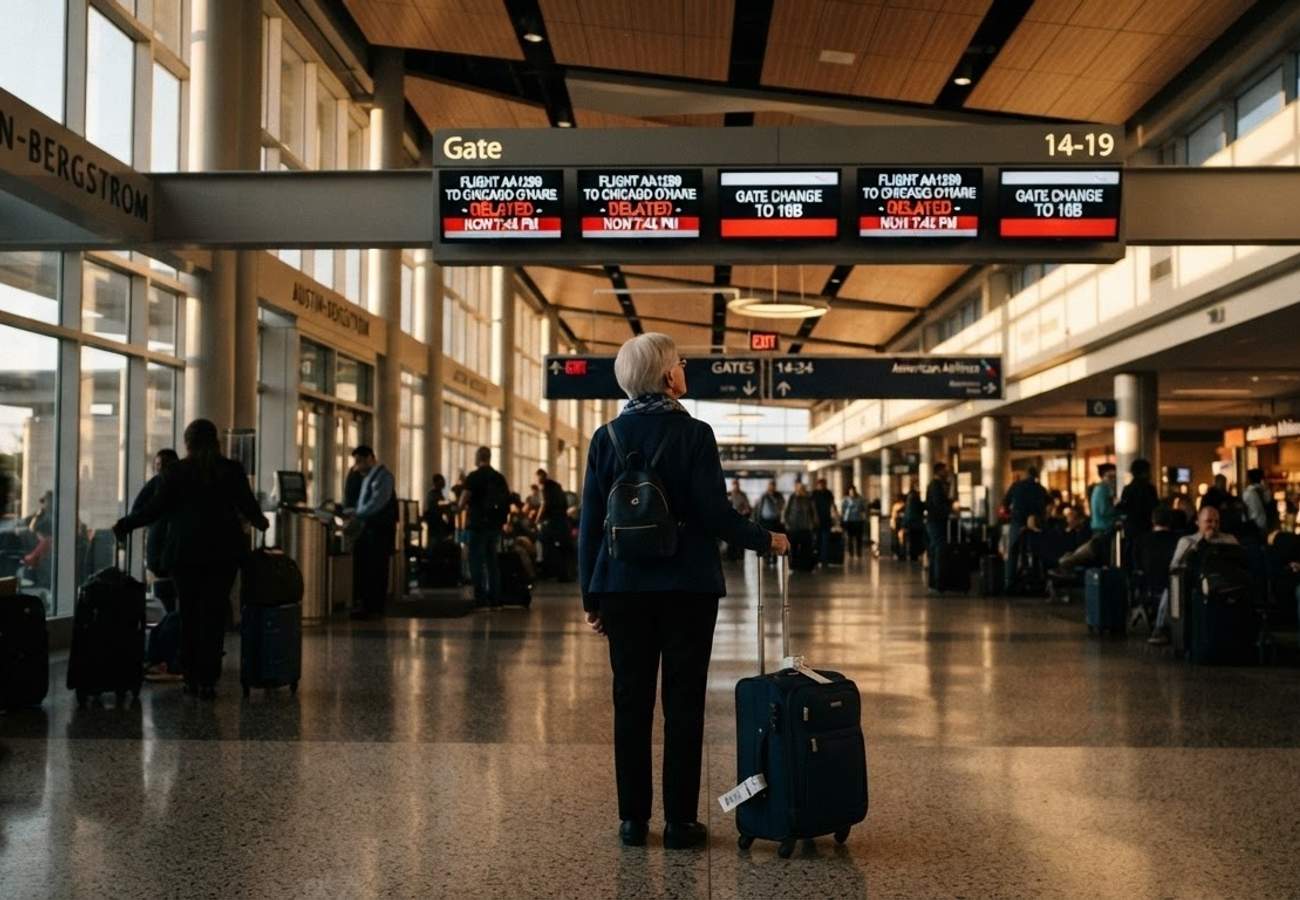
Image generated by AI
A $92,500 settlement paid by Travis County marks the conclusion of a legal battle stemming from a 2022 incident where a passenger with bilateral hearing loss was arrested after a series of communication failures at Austin-Bergstrom International Airport (AUS). The case, involving 71-year-old Florida resident Karen McGee, underscores a dangerous friction point between airline operational rigidity and the legal protections afforded to travelers with disabilities.
The Anatomy of a Communication Collapse
The sequence of events began in September 2022 when McGee flew from Atlanta to Austin via Delta Air Lines. A gate change occurred, but due to a preset configuration on her app-controlled hearing aids, McGee did not receive the notification and subsequently missed her connecting flight to Seattle, Washington.
The situation escalated when Delta rebooked her on an Alaska Airlines flight. In an attempt to mitigate her anxiety—as she was flying alone for the first time—McGee requested to be moved to an earlier Alaska Airlines flight where her cousin was already waiting. This request was denied by gate personnel.
The subsequent interaction became the catalyst for legal action. Alaska Airlines staff characterized McGee as "drunk," misinterpreting her loud speaking volume and visible frustration—both symptoms of her hearing impairment—as intoxication or aggression. This mischaracterization led to the involvement of the Austin police and the Transportation Security Administration (TSA).
Escalation and Incarceration Data
The transition from a customer service dispute to a criminal matter happened rapidly. Despite the presence of hearing aids, law enforcement failed to establish an effective communication channel. McGee was wheeled out of the secure terminal in a wheelchair and issued a warning that she would be arrested if she stood up—a warning she did not hear.
The resulting legal and physical toll is summarized below:
| Event Detail | Fact/Outcome |
|---|---|
| Primary Cause | Missed connection due to hearing aid app settings |
| Misidentification | Airline staff labeled passenger as "drunk" |
| Legal Action | Arrest for criminal trespass |
| Detention Period | Two nights in Travis County Jail |
| Physical Injury | Broken arm sustained during booking process |
| Financial Resolution | $92,500 settlement paid by Travis County |
Following her arrest, McGee's phone—the device required to control her hearing aids—was confiscated, effectively stripping her of her primary means of communication while in custody. While the Travis County Sheriff's Office has disputed the claim that injuries occurred during custody, the settlement was paid to avoid further litigation and "buy peace."
Expert Analysis: The "Self-Identification" Trap
For travelers with disabilities, this case reveals a critical vulnerability in how the U.S. Department of Transportation (DOT) enforces the Air Carrier Access Act (ACAA). The central legal tension in McGee's case was whether a passenger must explicitly request an accommodation to be protected.
The defense argued that McGee failed to request a specific accommodation. However, her legal team successfully argued that under the Americans with Disabilities Act (ADA) and Section 504 of the Rehabilitation Act, a person with an "open, obvious disability" should not be required to formally request help to be treated with dignity and legality.
The direct consequence for travelers is a precarious reliance on the "discretion" of gate agents. When airline staff lack training in deaf culture—specifically the distinction between those who use American Sign Language (ASL) and those with partial hearing loss who rely on assistive technology—they often categorize disability-driven behavior as "disruptive" or "aggressive." This creates a pipeline from a simple travel delay to a criminal record.
The pricing and logistical pressure on airlines to move passengers quickly often leads to a "compliance-first" rather than "assistance-first" mentality. For the passenger, the risk is not just a missed flight, but the potential for criminalization of their disability.
Key Takeaways
- Legal Precedent: The $92,500 settlement reinforces that obvious disabilities may entitle passengers to protections regardless of whether a formal request for accommodation was made.
- Communication Risks: Reliance on app-controlled assistive devices creates a single point of failure; if the device is confiscated or malfunctions, the passenger is left entirely vulnerable.
- Staff Misidentification: There is a documented trend of hearing-impaired passengers being misidentified as intoxicated or belligerent by airline and security personnel.
- Regulatory Gaps: Despite the July 2022 Airline Passengers with Disabilities Bill of Rights, implementation remains inconsistent across different carriers and airport jurisdictions.
FAQ: Disability Rights in Air Travel 2026
Do I have to tell the airline about my disability before the flight? While the DOT suggests self-identifying to activate certain rights, the ADA suggests that obvious disabilities should be accommodated. However, to ensure the fastest assistance, notifying the airline during booking is recommended.
What happens if an airline refuses my assistive device? Under the ACAA, airlines must allow assistive devices as carry-ons free of charge. If refused, you should immediately ask for the Complaint Resolution Official (CRO) at the airport.
Can I be arrested for being "disruptive" if I have a disability? While "disruptive" behavior is prohibited, law enforcement and airline staff are required to make reasonable accommodations. If a disability is causing the behavior, the focus should be on de-escalation and communication, not arrest.
Who pays the settlement if an airport arrest goes wrong? Depending on who was at fault, settlements can come from the airline, the airport authority, or the county/city government (as seen in the Travis County payment).
When the system fails to hear the passenger, the cost is measured in more than just dollars—it is measured in dignity.
Related Travel Guides
Disclaimer
This article is for informational and educational purposes only. It does not constitute legal, financial, or professional advice. While we strive to provide accurate and up-to-date information, travel policies, regulations, and conditions change rapidly. Always verify information with official sources before making travel decisions. Nomad Lawyer makes no representations about the accuracy, reliability, completeness, or suitability of the information provided. Readers should consult qualified professionals for advice specific to their circumstances. The views expressed in this article are those of the author and do not necessarily reflect the views of Nomad Lawyer.
Kunal K Choudhary
Co-Founder & Contributor
A passionate traveller and tech enthusiast. Kunal contributes to the vision and growth of Nomad Lawyer, bringing fresh perspectives and driving the community forward.
Learn more about our team →