
Delta Air Lines Flight DL3143 Diverts to Chattanooga from Lexington Due to Severe Weather on 27 July 2026
A Boeing 717-200 flight from Lexington to Atlanta diverted to Chattanooga on 27 July 2026, highlighting the strict fuel reserve mandates and safety protocols governing US regional aviation.

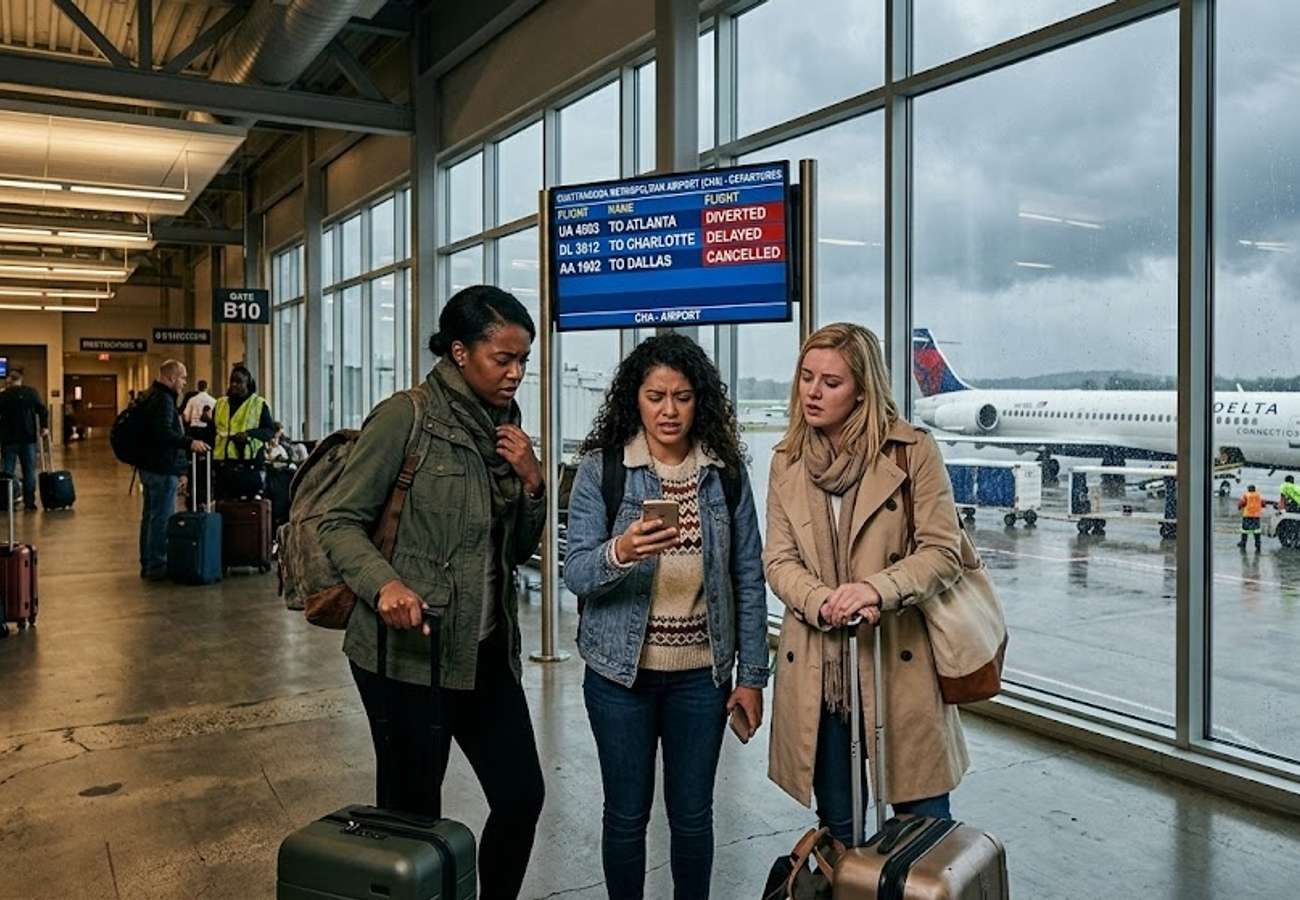
Image generated by AI
Headline Options:
- Factual/News: Delta Air Lines Flight DL3143 from Lexington Diverts to Chattanooga Metropolitan Airport Due to Severe Georgia Weather on 27 July 2026
- Curiosity-Gap (Discover): Why a Routine Flight to Atlanta Ended in Chattanooga: The Hidden Safety Math Behind Flight DL3143
- Problem-Solving (Search): What to Do When Your Flight Diverts: Lessons from Delta Flight DL3143’s July 27 Diversion
Severe summer convection in Georgia forced Delta Flight DL3143 to abandon its approach to Atlanta on 27 July, triggering a critical safety diversion to Chattanooga to maintain mandatory fuel reserves.
The Local Trend Revealed: Precision Safety Over Schedules
The diversion of flight DL3143, operated by a Boeing 717-200 (registration N891AT), underscores a growing trend in regional aviation: the absolute prioritization of "fuel decision points" over arrival punctuality. Departing from Lexington (LEX) for Atlanta (ATL), the aircraft encountered a wall of severe convection and heavy rain.
When Hartsfield-Jackson Atlanta International Airport implemented ground stops, the aircraft entered holding patterns. In the high-stakes environment of North Georgia's summer storm season, the decision to divert to Chattanooga Metropolitan Airport (CHA) was not a failure of planning, but a successful execution of safety protocols. Modern flight dispatch now utilizes real-time data to pivot to alternate airports the moment holding times threaten the legal minimum fuel thresholds.
Cultural & Environmental Value: The Logistics of Aviation Safety
For the visitor or frequent flyer, the real impact of such a diversion is the invisible layer of regulation that protects them. Aviation safety is governed by a strict mathematical formula: baseline mission fuel plus mandatory contingency reserves.
Under current civil aviation authority mandates, a commercial jet must carry enough fuel to reach its destination, fly to its furthest planned alternate airport, and still maintain an additional forty-five minutes of cruising reserve. When DL3143 reached its designated fuel decision point, the crew acted to ensure these statutory requirements were never compromised. This commitment to safety over schedule preserves the integrity of regional air corridors and ensures that passenger risk remains near zero, even when weather systems become unpredictable.
Visitor Insider Tips: Navigating Unexpected Diversions
If you find yourself diverted to a regional hub like Chattanooga, use these local insights to manage the disruption:
- The "Gas-and-Go" Window: If the diversion is purely weather-related and the storm is moving fast, ask crew members if a "gas-and-go" is planned. This is a quick refueling stop that avoids full passenger deboarding.
- Chattanooga Transit: If you are stranded at CHA, avoid airport-only taxis. Local rideshare options are efficient, but for a more authentic experience, head to the downtown riverfront area—a short trip from the airport—where local eateries provide a better wait-out experience than the terminal.
- Digital Paper Trails: Always screenshot your original boarding pass and itinerary. During mass diversions, airline apps can lag due to high traffic; having a hard copy or screenshot ensures ground staff can process your rebooking faster.
- Duty-Time Awareness: Be aware that pilots have strict "duty-time limitations." If a diversion lasts several hours, the original crew may time out, requiring a fresh crew assignment before the flight can resume.
Tourism Outlook: Regional Resilience
The ability of smaller hubs like Chattanooga Metropolitan Airport to absorb diverted traffic from major hubs like Atlanta demonstrates the resilience of the US regional airport network. As weather volatility increases in 2026, the reliance on these "safety valve" airports will grow. This shift encourages local investment in ramp space and refueling infrastructure in secondary cities, potentially boosting local economies through increased short-term transit activity.
Safety in the skies is a calculated science, where a detour is often the most direct route to security.
Related Travel Guides
Disclaimer
This article is for informational and educational purposes only. It does not constitute legal, financial, or professional advice. While we strive to provide accurate and up-to-date information, travel policies, regulations, and conditions change rapidly. Always verify information with official sources before making travel decisions. Nomad Lawyer makes no representations about the accuracy, reliability, completeness, or suitability of the information provided. Readers should consult qualified professionals for advice specific to their circumstances. The views expressed in this article are those of the author and do not necessarily reflect the views of Nomad Lawyer.

Preeti Gunjan
Contributor & Community Manager
A passionate traveller and community builder. Preeti helps grow the Nomad Lawyer community, fostering engagement and bringing the reader experience to life.
Learn more about our team →