
Delta Air Lines Flight 1034 Incident: FAA Zero-Tolerance Policy and $43,658 Fines for Unruly Passengers
A snack theft and racial insult on Delta Flight 1034 highlight the severe legal and financial risks passengers face under the FAA's zero-tolerance policy for unruly behavior.

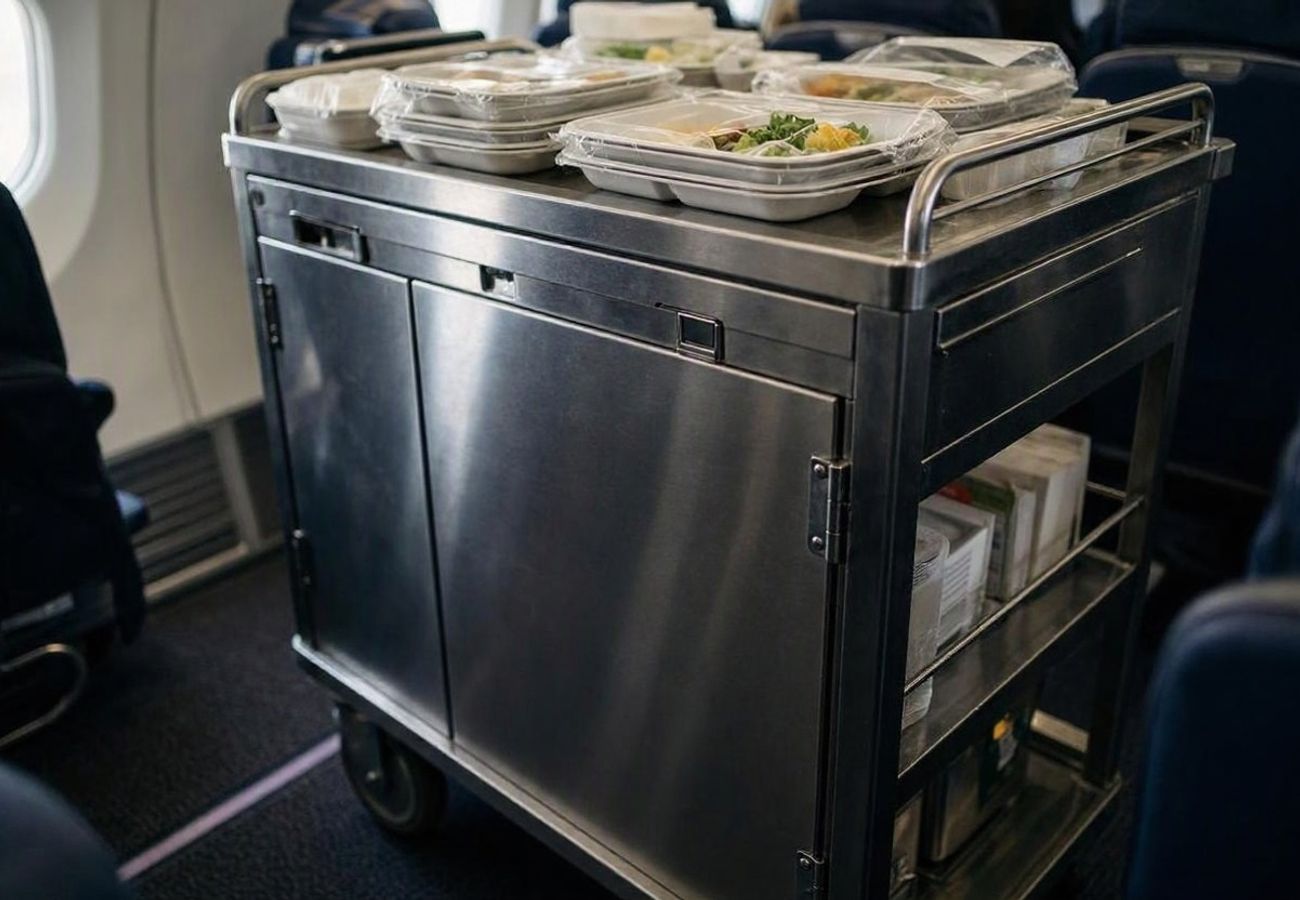
Image generated by AI
A maximum fine of $43,658 per violation is now the primary deterrent for disruptive air travelers, as highlighted by a recent conflict aboard Delta Air Lines Flight 1034. What began as an attempt to steal snacks from a service cart escalated into a legal liability when the passenger responded to crew correction with aggression and a racial insult.
The Anatomy of a Mid-Flight Conflict
On October 8, a Boeing 737-900ER departed Hartsfield-Jackson Atlanta International Airport (ATL) at 9:52 a.m., bound for John F. Kennedy International Airport (JFK). Approximately one hour into the journey, while cruising at 35,000 feet over Virginia, the flight crew utilized the Aircraft Communications Addressing and Reporting System (ACARS) to alert ground staff of a disruptive passenger.
The communication, obtained via ACARS Drama, specifically requested that "red coats"—the colloquial term for Delta Air Lines ground staff in their signature red uniforms—be present upon arrival to handle the individual. The crew reported that the passenger had attempted to grab snacks from the service cart and became abusive and racially charged when reprimanded.
Despite the onboard tension, the aircraft landed at JFK at 11:42 a.m. The total flight duration was just over two hours. The Boeing 737-900ER, which carries 180 passengers, subsequently completed its return leg to Atlanta, arriving roughly 30 minutes ahead of schedule.
Federal Oversight and Financial Penalties
The incident is not an isolated case of poor etiquette but a potential violation of federal law. Since January 2021, the Federal Aviation Administration (FAA) has maintained a "Zero-Tolerance Policy Against Unruly Passengers." This shift moved the agency away from warnings and counseling toward immediate financial penalties.
The FAA's data indicates that while incidents spiked during the pandemic era, the zero-tolerance approach has contributed to a significant decline in disruptions.
FAA Unruly Passenger Incident Volume (2017–2026)
| Year | Reported Incidents |
|---|---|
| 2017 | 544 |
| 2018 | 889 |
| 2019 | 1,161 |
| 2020 | 1,009 |
| 2021 | 5,973 |
| 2022 | 2,453 |
| 2023 | 2,075 |
| 2024 | 2,096 |
| 2025 | 1,621 |
| 2026 (YTD) | 1,331 |
Expert Analysis: The Legal Intersection of Contract and Code
For the traveler, the danger in the Flight 1034 incident is the dual-layer of liability: the private contract with the airline and the public regulation of the federal government.
First, Delta’s Contract of Carriage (Rule 7) provides the airline with broad discretionary power to refuse transport or remove passengers who are "disorderly, abusive or violent." By interfering with the crew's activities—in this case, the distribution of food—and using racial slurs, the passenger effectively breached their civil contract with the carrier. This can lead to permanent banning from the airline.
Second, the FAA's intervention transforms a customer service dispute into a federal matter. Because the FAA can propose up to $43,658 per violation, a single outburst involving both "interference with crew" and "abusive behavior" could theoretically result in fines exceeding $87,000. For the modern nomad, this means that "cabin rage" is no longer just a social faux pas; it is a high-stakes financial risk. The 70% drop in incidents between 2021 and 2025 proves that the threat of bankruptcy-level fines is more effective than airline warnings.
Key Takeaways
- Financial Risk: Unruly behavior can trigger FAA fines of up to $43,658 per single violation.
- Contractual Breach: Delta Rule 7 allows the airline to remove or ban any passenger who is abusive or fails to obey crew instructions.
- Reporting Mechanism: Crews use ACARS to coordinate with ground security ("red coats") in real-time, ensuring passengers are met by authorities upon landing.
- Trend Analysis: FAA data shows a massive spike in 2021 (5,973 incidents), which has since stabilized to 1,331 incidents year-to-date in 2026.
FAQ: Unruly Passenger Laws 2026
Can an airline ban me for life over one incident? Yes. Under the Contract of Carriage, airlines have the right to refuse future transport to any passenger who has been abusive or violent toward staff or other passengers.
What is the difference between an airline warning and an FAA fine? An airline warning is a private matter regarding your ability to fly with that brand. An FAA fine is a federal civil penalty that must be paid to the U.S. government.
Can disruptive behavior lead to jail time? Yes. While most cases result in fines, interfering with a flight crew can be classified as a federal felony, potentially leading to criminal prosecution and imprisonment.
What should I do if a passenger is being abusive near me? Notify the flight crew immediately. Do not engage with the disruptive passenger, as the FAA and airlines prioritize the safety of the cabin and the authority of the crew.
One snack is not worth a forty-thousand-dollar fine.
Related Travel Guides
Disclaimer
This article is for informational and educational purposes only. It does not constitute legal, financial, or professional advice. While we strive to provide accurate and up-to-date information, travel policies, regulations, and conditions change rapidly. Always verify information with official sources before making travel decisions. Nomad Lawyer makes no representations about the accuracy, reliability, completeness, or suitability of the information provided. Readers should consult qualified professionals for advice specific to their circumstances. The views expressed in this article are those of the author and do not necessarily reflect the views of Nomad Lawyer.
Raushan Kumar
Founder & Lead Developer
Full-stack developer with 11+ years of experience and a passionate traveller. Raushan built Nomad Lawyer from the ground up with a vision to create the best travel and law experience on the web.
Learn more about our team →