
Delhi Indira Gandhi International Airport Targets 125 Million Passengers by 2032 via T3 Expansion
Delhi International Airport Limited (DIAL) has unveiled a master plan to scale Indira Gandhi International Airport's capacity to 125 million annual passengers by 2032.

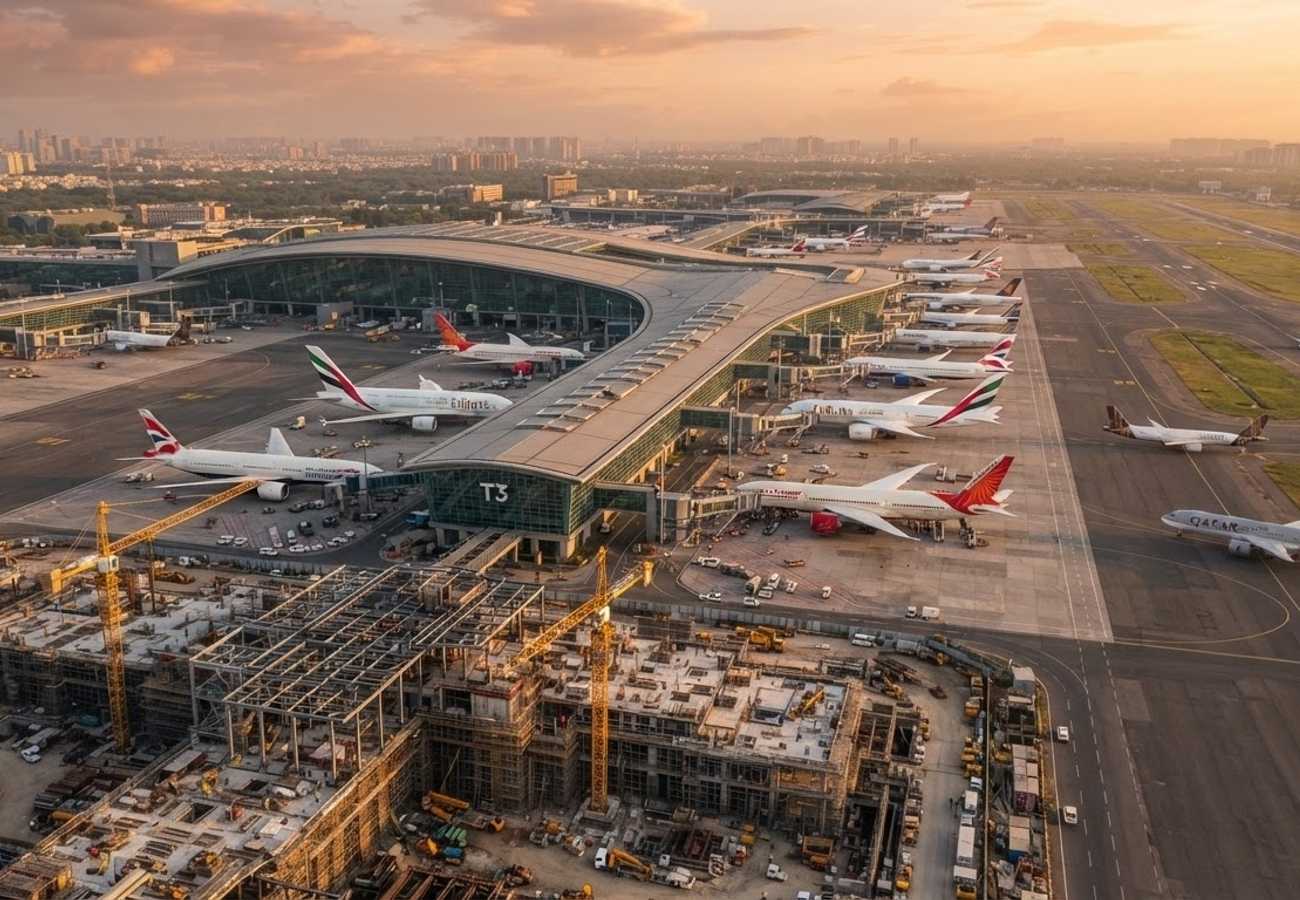
Image generated by AI
Delhi International Airport Limited (DIAL) is executing a strategic infrastructure overhaul to increase Indira Gandhi International Airport's (IGIA) annual capacity from 106 million to 125 million passengers by 2032.
The draft 2032 master plan outlines a phased transition to manage the surge in domestic and international traffic. This expansion is not a singular project but a tiered development strategy designed to maintain operational stability while scaling for one of the world's fastest-growing aviation markets.
Phased Capacity Milestones
The roadmap divides the capacity increase into two distinct stages to avoid operational bottlenecks:
- Phase 1 (By April 2030): The primary focus is the construction of Pier E at Terminal 3. This addition will elevate the airport's annual handling capacity to approximately 116 million passengers.
- Phase 2 (By 2032): Subsequent infrastructure upgrades will push the total annual capacity to the final target of 125 million passengers.
Terminal 3 and the Role of Pier E
The development of Pier E is the cornerstone of the current expansion. In aviation logistics, piers serve as the critical link between the main terminal building and the aircraft via boarding gates and aerobridges.
By adding Pier E, DIAL can increase the number of simultaneous aircraft dockings and passenger throughput without the immediate capital expenditure and disruption of building an entirely new terminal. This allows for a more efficient use of the existing Terminal 3 footprint, which has already seen modifications to support increased international flight volumes.
Future-Proofing and Logistics
Beyond the immediate pier expansion, DIAL is evaluating long-term structural options to ensure the airport does not hit a growth ceiling post-2032:
- Terminal 2 Conversion: Authorities are analyzing the possibility of converting Terminal 2 into a larger, modernized facility should demand exceed current projections.
- Terminal 4 Planning: While not yet finalized, the potential for a fourth terminal remains under review.
- Automated Passenger Mover (APM): Space is being reserved for an internal automated transport system. Our analysis suggests that as the airport scales toward 125 million passengers, an APM will be essential to prevent terminal-to-terminal transit congestion.
Capacity Growth Projection
| Milestone | Target Date | Key Infrastructure | Projected Annual Capacity |
|---|---|---|---|
| Current State | 2026 | Existing Terminals | 106 Million |
| Phase 1 | April 2030 | Terminal 3 Pier E | 116 Million |
| Phase 2 | 2032 | Full Master Plan Implementation | 125 Million |
Why This Matters
From a logistical perspective, this expansion is a response to the "hub-and-spoke" pressure facing Delhi. As India's primary gateway, IGIA is not just handling point-to-point travel but is the central node for international carriers connecting Asia, Europe, North America, and the Middle East.
For travelers and airlines, the real impact is twofold:
- Increased Slot Availability: More piers mean more gates, allowing airlines to introduce new routes and increase flight frequencies without facing severe slot constraints.
- Reduced Congestion: By scaling capacity in phases, DIAL is attempting to avoid the "growth pain" seen in other global hubs where passenger numbers outpaced infrastructure, leading to degraded passenger experiences.
The move toward an Automated Passenger Mover (APM) indicates that DIAL recognizes the physical limits of walking distances within a mega-terminal. For the business traveler, this means significantly reduced transit times between international arrivals and domestic departures.
Industry Outlook
The 125-million-passenger target positions Delhi as a dominant force in the global aviation landscape. Market trends suggest that India's aviation growth is tied directly to its economic trajectory; therefore, this infrastructure is a prerequisite for increased foreign direct investment and tourism.
Expect to see a surge in international bilateral agreements as airlines realize the airport can now support higher frequencies. The potential conversion of Terminal 2 suggests that DIAL is preparing for a "worst-case" high-growth scenario, ensuring that the capital remains the primary aviation gateway for the region.
Delhi's transition to a 125-million-passenger hub signals India's intent to compete with the likes of Dubai and Singapore as a premier global transit point.
Related Travel Guides
Disclaimer
This article is for informational and educational purposes only. It does not constitute legal, financial, or professional advice. While we strive to provide accurate and up-to-date information, travel policies, regulations, and conditions change rapidly. Always verify information with official sources before making travel decisions. Nomad Lawyer makes no representations about the accuracy, reliability, completeness, or suitability of the information provided. Readers should consult qualified professionals for advice specific to their circumstances. The views expressed in this article are those of the author and do not necessarily reflect the views of Nomad Lawyer.
Kunal K Choudhary
Co-Founder & Contributor
A passionate traveller and tech enthusiast. Kunal contributes to the vision and growth of Nomad Lawyer, bringing fresh perspectives and driving the community forward.
Learn more about our team →