
Delays Cancellations London Gatwick April 8: Full Travel Update
London Gatwick passengers face widespread delays and cancellations on April 8, 2026. Early-morning departures and European routes hit hardest during Europe's strained early April travel period.

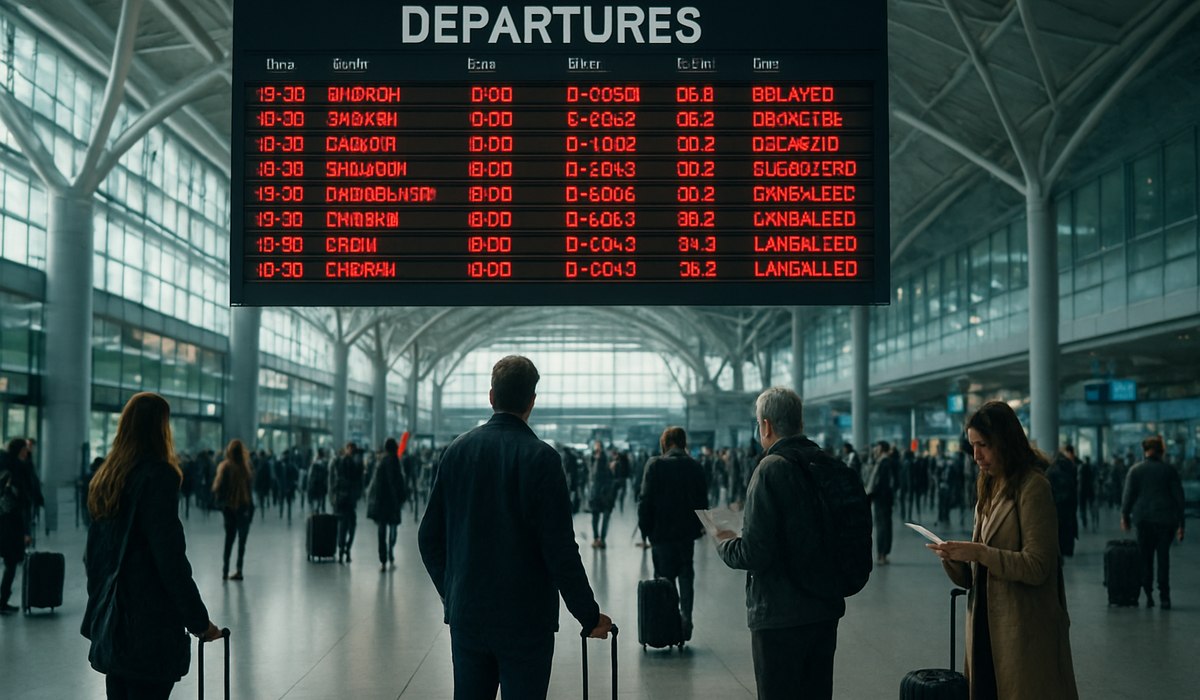
Image generated by AI
Gatwick Passengers Face Another Day of Widespread Disruption
London Gatwick Airport is experiencing significant operational challenges on Wednesday, April 8, 2026, with flight boards displaying a scattered pattern of delays and cancellations affecting both short-haul European routes and leisure destinations. The disruption spans departures and arrivals throughout the day, with early-morning flights to continental hubs experiencing holds of 45 minutes or more. This latest incident underscores the vulnerability of Europe's busiest travel period, when limited spare capacity at major airports means even routine operational hiccups cascade into passenger-facing delays.
Steady Trickle of Disruption on Departures and Arrivals
Gatwick's operational status on April 8 reflects a consistent pattern of minor but accumulating delays rather than a single catastrophic incident. Flight tracking data indicates that early-morning departures bear the brunt of disruption, with inbound aircraft from overnight rotations arriving behind schedule, creating a domino effect across subsequent flights.
Low-cost and leisure carriers operating on Gatwick's tight turnaround schedules face particular pressure. These airlines depend on rapid aircraft rotation—often 60 to 90 minutes between landing and next departure—leaving zero margin for absorbed delays. When an inbound service touches down 30 or 40 minutes late, the delay automatically extends to the next departure, affecting passengers booked on later connections through the day.
Arrivals from continental Europe and Mediterranean destinations show similar lateness, with several services absorbing delays generated at congested European airports. A smaller subset of flights has been cancelled entirely, removed from schedule boards hours before passengers would have checked in.
You can monitor live flight status updates via FlightAware, which provides real-time departure and arrival information for Gatwick and all UK airports.
Why Low-Cost and Leisure Airlines Are Hit Hardest
Budget and leisure carriers operate fundamentally different business models than full-service legacy airlines. Where premium carriers build schedule buffers and maintain crew flexibility, budget operators maximize aircraft utilization to contain costs. This efficiency strategy becomes a liability during disrupted operations.
When a Ryanair, easyJet, or similar carrier experiences a 40-minute inbound delay, that aircraft is now 40 minutes behind its entire daily rotation plan. Ground crews cannot absorb this impact because they're already scheduled for the next flight. Cabin cleaning, refueling, and boarding all compress into shorter windows, increasing operational stress and the probability of further delays.
Passengers on subsequent flights in that aircraft's rotation face cascading delays. Unlike premium carriers, which might cancel a flight to regularize operations, budget airlines typically push delayed flights into the evening, when crews approach mandatory rest limits and air traffic becomes congested.
The leisure market—including charter flights to holiday destinations—operates on similarly tight margins, making these routes particularly vulnerable during disruption events.
Knock-On Effects Across European Networks
Gatwick does not operate in isolation. Delays originating at London's second-largest airport ripple across European networks within hours. An aircraft delayed at Gatwick by 50 minutes will arrive at its next European hub (Frankfurt, Amsterdam, Paris) equally late, disrupting onward connections and compressing turnaround windows at busy continental airports.
This is particularly impactful for passengers connecting through Gatwick to other UK airports or continuing to long-haul hubs. Someone catching a morning flight from Gatwick to Frankfurt, then connecting to a transatlantic departure, faces genuine risk of missing their onward flight if the Gatwick segment slips significantly.
Air traffic control capacity across northern Europe remains constrained, meaning delays don't simply clear once aircraft leave UK airspace. Limited controller staffing, ongoing construction projects at major European hubs, and restricted capacity in busy corridors compound the problem. Weather across the continent—including low cloud, gusty winds, and shower activity—forces increased separation between aircraft, reducing runway throughput.
What Early April Travel Looks Like in Europe
April 8, 2026, falls within Europe's most pressured travel window of the year. Easter holidays drive elevated passenger volumes across all major airports, and many schools across the continent extend breaks into early April. Simultaneously, carrier schedules operate with historically tight margins, offering minimal flexibility.
Recent reports from aviation regulators document that Easter-period traffic typically exceeds comparable weeks by 15-25 percent. Gatwick, which typically handles 200,000+ passengers daily, experiences even higher compression because of its reliance on leisure routes and European short-haul capacity.
Industrial action affecting ground services, air traffic control staffing shortages in key countries, and spring weather systems create compounding pressure. Even airports with two or three runways experience delays during this period; Gatwick's single runway design makes it particularly sensitive.
The cumulative effect is an environment where small disruptions—a late-arriving aircraft, minor weather, or routine congestion—cannot be absorbed and instead trigger cascading delays across the day.
Key Operational Data: April 8 Disruption Summary
| Metric | Finding |
|---|---|
| Departure delays (early morning) | 45+ minutes on selected European routes |
| Affected route categories | Short-haul Europe, Mediterranean leisure, UK-mainland connections |
| Primary cause | Inbound aircraft rotation delays, cascading across day's schedule |
| Cancellations | Scattered removals; predominantly budget carrier services |
| Turnaround margin impact | Budget carriers squeezed to 50-60 minute gaps vs. normal 75-90 minute buffers |
| European secondary effects | Late arrivals at Frankfurt, Amsterdam, Paris creating onward connection risk |
| Runway capacity impact | Single runway constraint preventing recovery acceleration |
| Weather influence | Northern European low cloud and wind requiring increased separation |
Traveler Action Checklist
If you are traveling through London Gatwick on April 8 or are monitoring this route, take these specific steps:
-
Check your flight status immediately via your airline's website, app, or FlightAware—do not rely on airport information alone.
-
Contact your airline directly if you booked a budget or leisure carrier; budget operators often notify passengers via text or email rather than making public announcements.
-
Review connection windows if your itinerary includes a Gatwick connection; if you're connecting to another UK airport or European hub, allow minimum 2.5 hours for confidence.
-
Understand your passenger rights under UK and EU regulations (see FAQ below) and familiarize yourself with compensation entitlements if delays exceed thresholds.
-
Arrange ground transportation contingency plans, particularly if you're booked on a rail connection from Gatwick to central London; evening delays can cause you to miss specific train times.
-
Monitor official airport updates on Gatwick's social media or website; disruption may evolve or be resolved faster than expected.
-
Prepare documentation including booking confirmations, boarding passes, and receipts for incurred expenses, as you may need these for compensation claims if delays persist.
What This Means for Travelers
Delays and cancellations at London Gatwick create measurable risks for passengers beyond simple inconvenience. Missed onward flights cost money. Delayed connections to evening rail services strand travelers. Holiday arrangements with fixed departure times from cruise ports or resort transfers become impossible to make.
Budget carrier passengers face additional jeopardy: these airlines typically operate with single aircraft on routes, meaning a cancelled flight may not be rebooked for many hours. Compensation entitlements depend on delay duration and flight distance, but passengers often must claim through formal channels rather than receiving automatic rebooking.
Business travelers with same-day meetings or connections face operational disruption. Leisure travelers risk truncated holidays if connection delays compress vacation time.
Passengers transiting Gatwick during early April should pad
Disclaimer
This article is for informational and educational purposes only. It does not constitute legal, financial, or professional advice. While we strive to provide accurate and up-to-date information, travel policies, regulations, and conditions change rapidly. Always verify information with official sources before making travel decisions. Nomad Lawyer makes no representations about the accuracy, reliability, completeness, or suitability of the information provided. Readers should consult qualified professionals for advice specific to their circumstances. The views expressed in this article are those of the author and do not necessarily reflect the views of Nomad Lawyer.
Raushan Kumar
Founder & Lead Developer
Full-stack developer with 11+ years of experience and a passionate traveller. Raushan built Nomad Lawyer from the ground up with a vision to create the best travel and law experience on the web.
Learn more about our team →