
Dallas–Fort Worth International Airport Records 261 Flight Delays With Zero Cancellations as American, Southwest and United Airlines Navigate High Traffic and FAA Ground Holds in May 2026
Dallas–Fort Worth International Airport (DFW) reported 261 flight delays but zero cancellations on May 10, 2026, as the FAA issued ground hold and taxi delay advisories for the Texas hub, affecting American, Southwest, and United travelers.

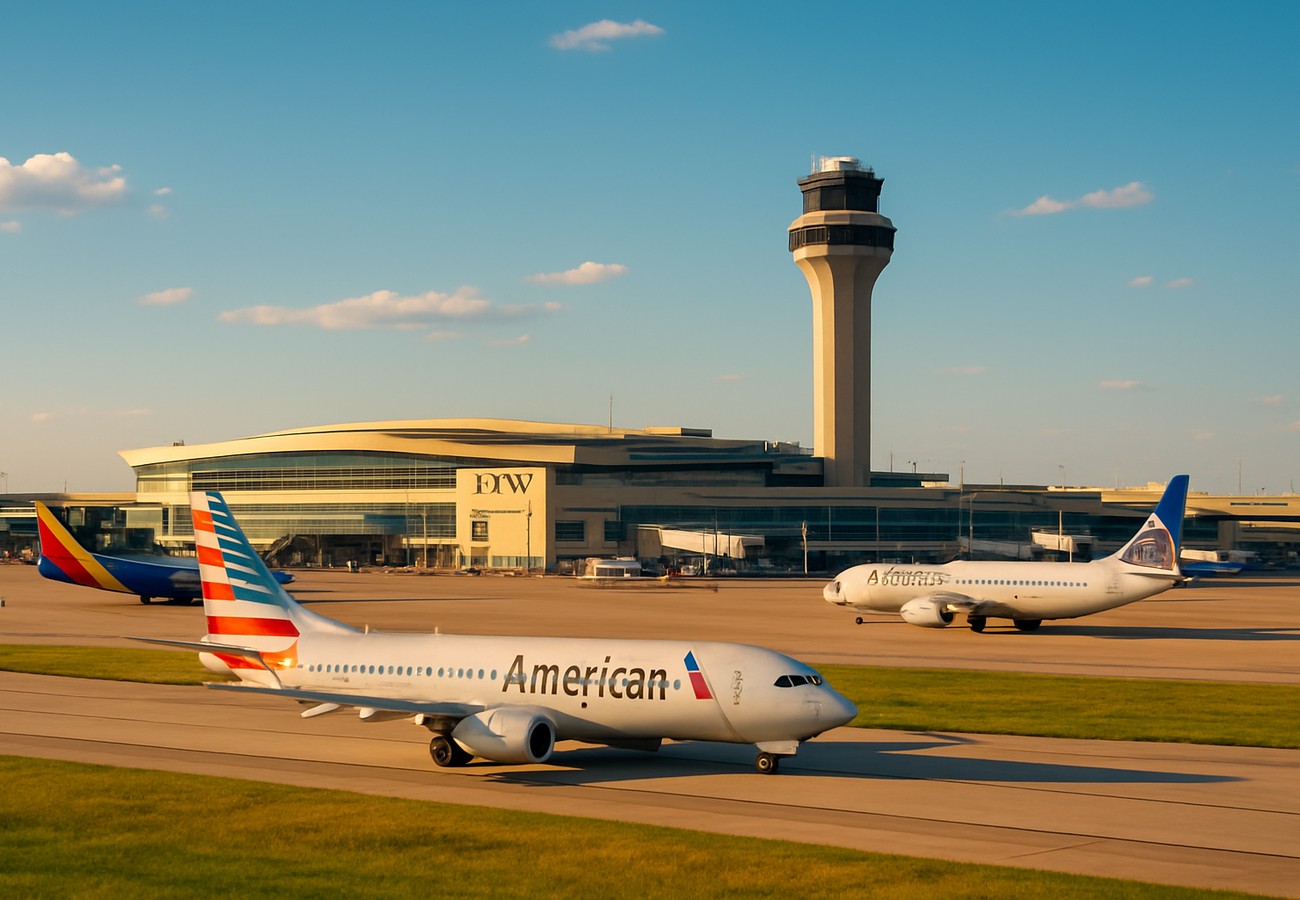
Image generated by AI
Dallas–Fort Worth International Airport (DFW) — the sprawling, 17,000-acre aviation powerhouse in the heart of Texas — recorded 261 flight delays today, May 10, 2026, even as the airport successfully avoided a single cancellation, according to the latest FAA Daily Air Traffic Report. The surge in delays, driven by a combination of high departure volumes and minor surface holding patterns, has impacted travelers across American Airlines, Southwest Airlines, United Airlines, and Delta Air Lines on routes to major hubs including Los Angeles, Chicago, New York, San Francisco, and Miami.
The zero-cancellation metric stands as a significant "silver lining" for the Texas hub, suggesting that while schedules have shifted, the operational continuity of the world's third-busiest airport remains intact under challenging traffic conditions.
The State of DFW: 261 Delays, Zero Cancellations
Located midway between the cities of Dallas and Fort Worth, DFW serves as the primary global gateway for the south-central United States and the undisputed fortress hub for American Airlines. With seven runways and five terminals, the airport is designed for high-frequency operations, yet today’s volume has pushed the facility into a sustained period of "ground hold" and "taxi delays."
According to FAA data, the 261 delays represent a modest portion of DFW’s massive daily operation, which typically sees over 1,800 aircraft movements. However, for the thousands of passengers affected, the "15-minute plus" delay standard has triggered the usual ripple effects: tight connections at destination airports, missed ground transportation windows, and the logistical headache of re-coordinated schedules.
The FAA Dashboard: Why the Delays Are Happening
The Federal Aviation Administration (FAA) air traffic dashboard for DFW indicates that the current delays are primarily "surface-driven." This means that while aircraft are fueled, boarded, and ready to depart, they are experiencing longer-than-usual wait times for runway access or gate availability.
Air Traffic Congestion: As a primary pivot point for North American east-west traffic, DFW often experiences "banks" of flights arriving and departing simultaneously. Today’s traffic peaks have coincided with minor regional airspace constraints, requiring air traffic controllers to implement holding patterns and taxi spacing to ensure safety.
Taxi and Gate Holds: Ground traffic management at DFW is a complex ballet involving dozens of gates across five terminals. The FAA report notes that taxi-out times have increased by an average of 12–18 minutes during peak windows, contributing to the "delayed" status of 261 flights.
Interconnected Hub Dynamics: For American Airlines, which operates approximately 85% of DFW’s flights, a delay at the Texas hub is never an isolated event. Because CLT (Charlotte) and PHX (Phoenix) are also experiencing elevated traffic today, the DFW delays are partly a result of aircraft arriving late from other major U.S. hubs, a phenomenon known as "cascading delays."
The National Context: DFW is Not Alone
Transportation data from the Bureau of Transportation Statistics (BTS) reveals that today’s situation at DFW is part of a broader trend of elevated delays across the U.S. aviation network. Major hubs like Atlanta (ATL), Charlotte (CLT), and Phoenix (PHX) have also reported high delay counts today, often linked to seasonal weather patterns and the ongoing stress of post-pandemic passenger volumes.
The critical differentiator for DFW today is the zero cancellation rate. While Charlotte (CLT) reported at least one cancellation amid its 181 delays, DFW has managed to keep every scheduled aircraft in the air, albeit behind schedule. This suggests a high level of operational resilience and effective coordination between DFW airport management and the FAA’s terminal radar approach control (TRACON).
Impact on Passengers: Managing the Wait
For travelers currently at DFW, the terminal experience is one of "high activity but steady movement." Unlike airports facing mass cancellations — where terminals often become sites of chaos and overnight stays — DFW’s delay-only status means that passengers are still reaching their destinations.
"My flight to San Francisco has been pushed back twice now," one passenger shared at Terminal D. "It's frustrating because I'll probably miss my dinner plans, but at least the plane is actually flying. I'd rather have a two-hour delay than a cancellation any day."
Airlines at DFW are actively managing their gate assignments to prevent further bottlenecks, and the airport’s automated Terminal Link and Skylink systems are running at full capacity to assist connecting passengers in navigating the vast five-terminal complex.
Actionable Advice: Navigating DFW Today
If you are scheduled to fly into or out of Dallas–Fort Worth International Airport (DFW) today, the following steps are recommended:
- Leverage the DFW Mobile App — it provides real-time updates on gate changes and, more importantly, Skylink transit times between terminals
- Check your specific flight status via your airline’s app at least 2 hours before departure; the "261 delays" are spread across different gates and carriers, so your specific flight may be unaffected
- Build extra buffer into your connections — if you have a 45-minute connection at DFW today, you are at high risk of a "miss" due to the taxi delays
- Stay informed via the FAA’s Fly.FAA.gov site, which provides the official government status of ground stops and delay programs at DFW
- Carry a portable charger — with 261 flights delayed, charging stations in Terminals A, C, and D are seeing high demand
FAQ: DFW Airport Flight Delays May 2026
Q: Why are there 261 delays but zero cancellations at DFW today? The delays are largely due to high traffic volume and "surface congestion" (taxi and gate holds) as managed by the FAA. The zero cancellation rate indicates that airlines have been able to maintain their crews and aircraft readiness despite the timing shifts.
Q: Which airlines are most affected at Dallas–Fort Worth? American Airlines is the primary carrier affected due to its massive hub operation at DFW. Southwest, United, and Delta are also experiencing delays on their regional and hub-to-hub routes.
Q: How do I know if my DFW flight is part of the 261 delays? You should check your flight number directly on your airline's website or app. FAA reports provide aggregate data for the airport, but only your airline can confirm the status of your specific seat.
The Bigger Picture: DFW’s Strategic Importance
As the largest aviation hub by land area in the United States and a primary driver of the North Texas economy, DFW’s operational health is a barometer for the entire U.S. aviation system. Today’s performance — managing over 260 delays without a single cancellation — reinforces the airport’s reputation for resilience.
While the "delay" label is an inconvenience for travelers, the ability to maintain flight continuity at this scale is a testament to the sophisticated air traffic management systems and the skilled coordination of the DFW Airport operations team. As the airport continues its "Central Terminal Area" expansion, the goal remains to reduce these friction points and ensure that "The Big D" remains the world’s most reliable mega-hub.
Key Takeaways
- 261 flight delays were recorded at Dallas–Fort Worth International (DFW) on May 10, 2026
- Zero cancellations — every scheduled flight is still planned to operate
- American Airlines hub operations are the most heavily impacted by the timing shifts
- Primary causes: FAA ground holds, taxi delays, and high traffic volume
- Impacted routes: Los Angeles, Chicago, New York, San Francisco, and Miami
- Travelers are advised to use the Skylink system for fast inter-terminal transfers and check status via airline apps
- DFW remains a model of operational resilience compared to other U.S. hubs facing cancellations today
Related Travel Guides
Charlotte Douglas Airport Hit by 181 Flight Delays and Cancellations — What US Travelers Face Today
Qantas Ranked World's 2nd Most Punctual Airline in April 2026 — What Australia Travelers Should Know
The Ultimate DFW Airport Guide: How to Navigate the World's 3rd Busiest Hub in 2026
Disclaimer
This article is for informational and educational purposes only. It does not constitute legal, financial, or professional advice. While we strive to provide accurate and up-to-date information, travel policies, regulations, and conditions change rapidly. Always verify information with official sources before making travel decisions. Nomad Lawyer makes no representations about the accuracy, reliability, completeness, or suitability of the information provided. Readers should consult qualified professionals for advice specific to their circumstances. The views expressed in this article are those of the author and do not necessarily reflect the views of Nomad Lawyer.
Kunal K Choudhary
Co-Founder & Contributor
A passionate traveller and tech enthusiast. Kunal contributes to the vision and growth of Nomad Lawyer, bringing fresh perspectives and driving the community forward.
Learn more about our team →