
Daallo Airlines Transfers De Havilland Dash 8 Q400 Registration to Kenya for Regional Expansion 2026
Daallo Airlines has re-registered its sole De Havilland Dash 8 Q400 turboprop in Kenya, utilizing the 5Y prefix to leverage Nairobi's regulatory framework and aviation infrastructure.

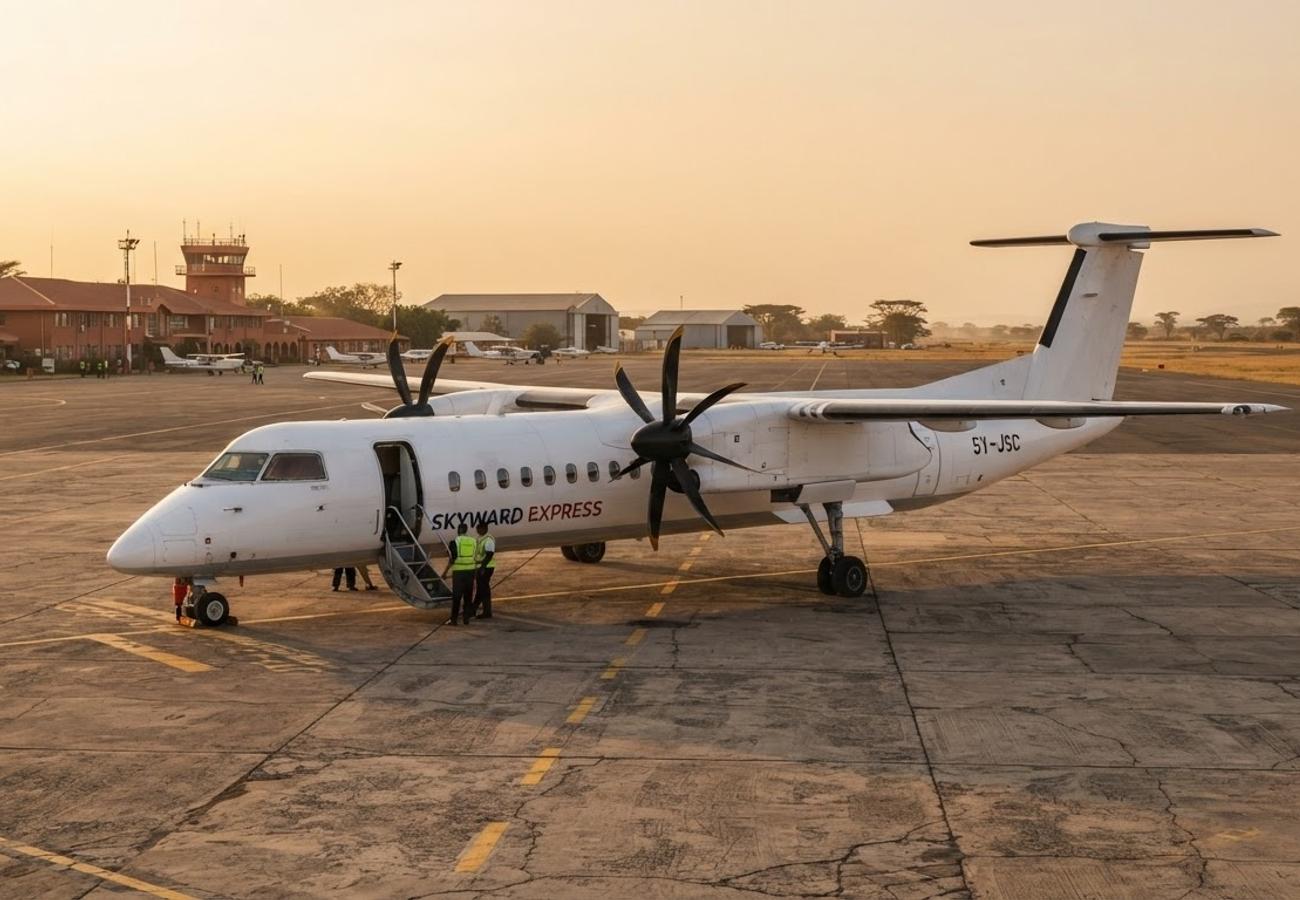
Image generated by AI
In a strategic move to stabilize its regional operations, Somalia-linked Daallo Airlines has transferred the registration of its only De Havilland Dash 8 Q400 turboprop to Kenya, adopting the 5Y national prefix. This shift places the aircraft under the direct oversight of the Kenya Civil Aviation Authority (KCAA), reflecting a broader trend of East African carriers leveraging Nairobi's mature regulatory environment to ensure operational consistency.
The transition occurs as Nairobi continues to solidify its position as the primary aviation anchor for the Horn of Africa, providing a stable framework for airlines operating in high-risk or developing markets. By moving its sole 76-seat regional aircraft to the Kenyan register, Daallo Airlines aligns its technical and safety compliance with one of the region's most recognized authorities.
Kenyan Oversight for Daallo’s Regional Fleet
Public regulatory data confirms that the De Havilland Dash 8 Q400, a cornerstone of Daallo's short-haul network, now operates under the 5Y national prefix. This change means the aircraft must adhere to the safety and airworthiness standards mandated by the Kenya Civil Aviation Authority. While the airline remains focused on connecting Somalia with international and regional hubs, the aircraft's "legal home" is now Kenya.
The Dash 8 Q400 is a 76-seat turboprop specifically designed for regional efficiency. For Daallo, this aircraft is the primary tool for navigating the challenging geography of the Horn of Africa. Shifting the registration to Kenya is not merely a paperwork exercise; it is a tactical alignment with a jurisdiction that provides streamlined access to maintenance, repair, and overhaul (MRO) facilities.
Industry data suggests that such re-registrations are common for operators serving Somalia, South Sudan, and the eastern Democratic Republic of Congo. These airlines often seek "flags of convenience" or regulatory shelters in countries with more predictable oversight to mitigate the risks associated with operating in fragile states.
Nairobi’s Evolution into an Aviation Command Center
The decision by Daallo Airlines highlights the consolidation of Nairobi as a regional aviation powerhouse. The Kenyan civil aviation framework is widely viewed as the most mature in East Africa, attracting carriers from neighboring states that require a stable base for their licenses and registrations.
Official gazette notices indicate a steady increase in air service license applications within Kenya. These requests cover a wide spectrum of operations, including:
- Scheduled passenger services
- Non-scheduled charter flights
- Regional cargo logistics
For a carrier like Daallo, which operates in post-conflict environments, the benefits of Kenyan registration extend beyond safety. A recognized registry often simplifies the process of securing aircraft insurance, negotiating lease agreements, and obtaining financing. Most global aviation insurers and lessors view the KCAA's oversight as a benchmark for reliability, reducing the perceived risk of the asset.
Operational Impact on the Daallo Network
While the change in registration does not immediately alter the flight schedules or the destinations served, it significantly impacts the backend of the operation. The re-registration likely influences where the aircraft is based for overnight stays and where primary maintenance checks are conducted.
The Dash 8 Q400 is uniquely suited for Daallo's specific operational needs due to several factors:
- Short-Field Performance: The ability to land and take off from shorter, less-developed runways common in Somali regional airports.
- Fuel Efficiency: Lower operating costs compared to regional jets on short-sector flights.
- Weather Resilience: Reliability in the variable climatic conditions of East Africa.
From a passenger perspective, the only visible change will be the "5Y" registration marking on the aircraft's fuselage. However, the long-term benefit may include improved scheduling reliability. A Kenyan-based operational structure allows for better integration with Jomo Kenyatta International Airport (JKIA), potentially opening doors for future interline agreements or codeshare partnerships with other major carriers operating out of Nairobi.
Regulatory Frameworks in East African Aviation
Aircraft registration in East Africa is a complex interplay of national sovereignty and practical necessity. While every state maintains its own register, the reality of cross-border commerce often leads to "hybrid" fleets where an airline's commercial identity differs from its aircraft's registration.
The Kenya Civil Aviation Authority has modernized its approach, offering digital portals for airworthiness and licensing. This transparency makes it an attractive destination for operators who want to avoid the bureaucratic hurdles found in less developed aviation sectors. To achieve registration, Daallo had to provide:
- Verified proof of ownership or lease agreements.
- Compliance with Kenyan technical maintenance standards.
- Adherence to national safety and operational rules.
By consolidating the oversight of its only Q400 under one well-resourced authority, Daallo avoids the complication of managing multiple regulatory relationships across different states with varying capacities.
Implications for the Somali Aviation Sector
This move serves as a barometer for the current state of aviation in Somalia. While the country has seen a resurgence of private air travel and increased connectivity, its internal regulatory institutions are still in a rebuilding phase.
Many Somali carriers currently rely on a "proxy" model—maintaining their brand and market presence in Somalia while outsourcing their regulatory and technical needs to neighboring countries. This strategy allows them to provide reliable service to their home market while benefiting from the international credibility of a foreign registry.
Daallo’s strategy represents a calculated bet on this hybrid model. By maintaining its identity as a Somali-focused carrier but placing its flagship regional asset under Kenyan supervision, the airline balances national loyalty with the harsh financial and safety demands of the global aviation industry.
The shift to a Kenyan registry underscores the pragmatic reality of aviation in the Horn of Africa, where regulatory stability is as vital as the aircraft themselves.
Related Travel Guides
Disclaimer
This article is for informational and educational purposes only. It does not constitute legal, financial, or professional advice. While we strive to provide accurate and up-to-date information, travel policies, regulations, and conditions change rapidly. Always verify information with official sources before making travel decisions. Nomad Lawyer makes no representations about the accuracy, reliability, completeness, or suitability of the information provided. Readers should consult qualified professionals for advice specific to their circumstances. The views expressed in this article are those of the author and do not necessarily reflect the views of Nomad Lawyer.
Raushan Kumar
Founder & Lead Developer
Full-stack developer with 11+ years of experience and a passionate traveller. Raushan built Nomad Lawyer from the ground up with a vision to create the best travel and law experience on the web.
Learn more about our team →