
Travel Cuba Makes Historic Debut in Southeast Asia with Luxury Push
Cuba makes historic travel debut in Southeast Asia 2026 at Singapore Expo, targeting Asian luxury travelers with beaches, culture, and premium experiences.

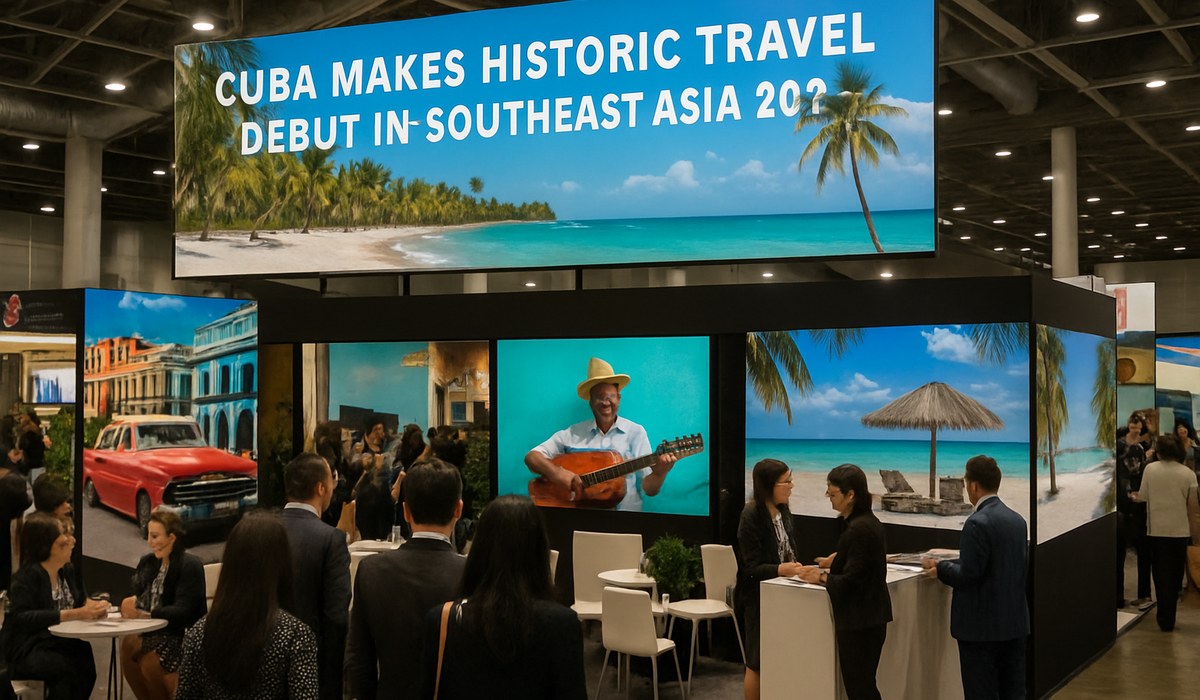
Image generated by AI
Quick Summary • Cuba launches unprecedented tourism showcase in Singapore, marking first major Southeast Asian market push • Exhibition targets affluent Asian travelers seeking Caribbean luxury experiences and cultural immersion • Strategic pivot reflects Caribbean destinations competing for post-pandemic Asian outbound travel surge • Showcase features premium resort offerings, UNESCO heritage sites, and bespoke travel packages
After six decades of operating largely outside mainstream global tourism circuits, travel Cuba makes an extraordinary entrance into Southeast Asia's burgeoning luxury market. The Caribbean nation unveiled its first-ever regional tourism exhibition in Singapore on March 28, 2026, signaling a calculated strategy to capture Asian travelers as international competition for high-value visitors intensifies.
The inaugural showcase at Singapore Expo represents a watershed moment for Cuban tourism officials, who have historically concentrated promotional efforts on European and North American markets. According to UNWTO's latest Caribbean tourism data, Caribbean destinations recorded a 23% increase in Asian visitor arrivals between 2024 and 2025, with Chinese, Singaporean, and Korean travelers demonstrating unprecedented interest in Atlantic island experiences.
Cuba's Ministry of Tourism director Ernesto García announced at the opening ceremony that Southeast Asian visitors represent "an untapped demographic with tremendous growth potential" for the island nation. The exhibition runs through April 2, 2026, featuring interactive pavilions dedicated to beach resorts, cultural heritage, adventure tourism, and luxury hospitality offerings.
Why Cuba Chose Singapore for Its Historic Southeast Asia Tourism Launch
Singapore's selection as the launch venue reflects meticulous strategic calculation. The city-state functions as Southeast Asia's premier travel hub, processing over 62 million passengers annually through Changi Airport before pandemic disruptions. More significantly, Singapore commands the region's highest per-capita income and represents a gateway to Indonesia, Malaysia, and Thailand's affluent travel markets.
Cuban tourism authorities partnered with Singapore's regional tourism associations and luxury travel consortia to maximize exposure. The timing aligns with emerging Southeast Asia business travel trends, as corporate travelers increasingly seek unconventional destinations that blend leisure and business networking opportunities.
Singapore's position as a luxury cruise hub also influenced Cuba's decision, with the island nation seeking to establish Caribbean itinerary connections through Asian cruise lines. The strategic role Singapore plays in connecting international cruise routes offers Cuba potential access to thousands of high-spending maritime travelers annually.
The exhibition features direct airline partnerships, with discussions underway for chartered routes connecting Singapore to Havana via European hubs. José Martí International Airport has expanded capacity to accommodate increased Asian visitor traffic, with multilingual services and Asian cuisine options now available throughout terminal facilities.
What Cuban Experiences Will Appeal to Asian Luxury Travelers
Cuban tourism officials curated the Singapore exhibition around three core pillars: pristine Caribbean beaches, immersive cultural experiences, and premium hospitality infrastructure. Varadero Beach, consistently ranked among the Caribbean's finest coastal destinations, occupies prominent exhibition space with virtual reality experiences allowing prospective visitors to preview turquoise waters and white sand stretches.
Cultural heritage forms the exhibition's centerpiece. Cuba boasts nine UNESCO World Heritage Sites, including Old Havana's colonial architecture and Trinidad's preserved Spanish colonial town. National Geographic's guide to Cuban cultural heritage highlights these locations as among the Western Hemisphere's most significant historical preservation efforts, a narrative Cuban officials emphasized throughout the Singapore showcase.
Asian travelers demonstrate particular interest in authentic cultural immersion, according to visitor preference data. The exhibition features live salsa performances, cigar-rolling demonstrations by master torcedores, and interactive rum-tasting experiences featuring premium Havana Club reserves. These tactile cultural elements resonate with Asian travelers seeking experiential depth beyond conventional beach vacations.
Luxury accommodations received substantial exhibition attention. Cuba has invested $800 million in upscale resort development since 2024, with international hotel chains including Meliá, Iberostar, and Kempinski operating properties across the island. Tripadvisor's top-rated Cuban experiences increasingly feature boutique hotels in Havana's renovated colonial mansions, where rooms command $300-600 nightly—price points accessible to Southeast Asia's affluent demographic.
Culinary tourism represents another strategic focus. Cuba's fusion cuisine, blending Spanish, African, and Caribbean influences, appeals to Asian palates accustomed to complex flavor profiles. The exhibition showcased partnerships with Michelin-trained chefs operating private paladares (family-run restaurants) in Havana and Santiago de Cuba.
The Geopolitical and Economic Stakes Behind Cuba's Asia Pivot
Cuba's Southeast Asian tourism offensive arrives amid broader economic imperatives. The island nation faced severe economic contractions between 2020 and 2023, with tourism revenue—accounting for approximately 10% of GDP—plummeting during pandemic lockdowns. Diversifying source markets beyond traditional European visitors represents an existential economic strategy.
Asian outbound tourism surged 67% in 2025 compared to 2019 baseline figures, according to regional aviation authorities. Chinese travelers alone spent $340 billion internationally in 2025, while Singaporean and Korean tourists demonstrated the highest per-trip expenditures globally. Cuba's calculated entry into this market reflects recognition of shifting global tourism economics.
The geopolitical dimension cannot be ignored. As Caribbean destinations compete for market share, Cuba faces particular challenges related to United States travel restrictions that complicate American visitor access. Asian travelers, unencumbered by these regulatory barriers, represent a politically neutral growth corridor. The broader trend of luxury cultural expansion into emerging markets mirrors Cuba's strategic repositioning.
Currency dynamics also favor Asian visitor growth. Cuba's dual economy—operating in both Cuban pesos and convertible currencies—creates favorable exchange rates for Asian travelers. Singapore dollar and Chinese yuan holders enjoy purchasing power advantages, particularly for accommodations, dining, and cultural experiences.
Cuban officials project 200,000 Southeast Asian visitors annually by 2028, representing 15% growth in total international arrivals. This target requires sustained marketing investment, improved air connectivity, and continued hospitality infrastructure development.
How to Plan Your Cuba Trip from Southeast Asia in 2026
Southeast Asian travelers face specific logistical considerations when planning Cuban vacations. Currently, no direct flights connect Singapore or other regional hubs to Havana. Most routing options require connections through Madrid, Paris, or Toronto, with total travel times ranging from 24 to 32 hours depending on layover durations.
Cuban tourist visas—available on arrival or through embassies—cost $25 USD for most Southeast Asian passport holders. Processing typically occurs within 48 hours for advance applications, though arrival visas remain available at José Martí International Airport. Singapore, Malaysia, and Thailand passport holders qualify for 90-day tourist stays without additional documentation beyond visa cards.
Optimal travel timing runs from November through April, when Cuba experiences dry season conditions with average temperatures of 25-28°C. This period aligns with Southeast Asia's northeast monsoon season, making Caribbean escapes particularly appealing. Cyclone season extends from June through November, though modern forecasting systems provide adequate advance warning.
Budget considerations vary dramatically based on accommodation choices. Mid-range travelers should anticipate daily costs of $80-120 USD covering comfortable casas particulares (licensed homestays), local dining, and transportation. Luxury travelers accessing international hotel properties and fine dining establishments can expect expenditures exceeding $300 USD daily.
Currency exchange warrants careful planning. While credit cards function at major hotels and restaurants, Cuba remains predominantly cash-based. Travelers should exchange currencies at official CADECA locations upon arrival, as informal exchange carries legal risks. Singapore banks now offer Cuban Convertible Peso (CUC) exchanges, though advance purchase remains unnecessary given airport availability.
Internet access presents limitations compared to Southeast Asian standards. Cuba's connectivity infrastructure lags regional norms, with WiFi primarily available through government-issued access cards (ETECSA) purchased at designated locations. Travelers should anticipate limited streaming capabilities and periodic service interruptions.
Health precautions include routine vaccinations with no specific requirements for Southeast Asian visitors. Comprehensive travel insurance covering medical evacuation remains advisable, as Cuba's healthcare system, while competent, may necessitate medical transport for serious conditions. Mosquito-borne illness prevention warrants attention during warmer months.
FAQ: Cuba's Southeast Asia Tourism Debut
Why has Cuba never promoted tourism in Southeast Asia before?
Cuba historically concentrated promotional resources on geographically proximate markets—Europe, Canada, and Latin America—where direct flights and established travel patterns existed. The recent Asian outbound tourism explosion, combined with Cuba's economic need for market diversification, triggered this strategic pivot toward Southeast Asian travelers.
What makes Cuba attractive to Asian luxury travelers specifically?
Cuba offers experiential authenticity increasingly rare in over-developed Caribbean destinations. The combination of UNESCO-protected colonial architecture, vibrant Afro-Caribbean culture, pristine beaches, and emerging luxury infrastructure creates a unique value proposition. Asian travelers particularly value destinations offering cultural depth beyond conventional resort experiences.
How long does it take to fly from Singapore to Cuba?
No direct flights currently operate. Most efficient routing involves European connections through Madrid or Paris, with total travel times of 24-30 hours including layovers. Cuban and Singaporean aviation authorities are discussing chartered route possibilities that could reduce travel time to 20-22 hours with single stops.
Is Cuba safe for Southeast Asian tourists?
Cuba maintains one of the Caribbean's lowest violent crime rates, with tourist-focused areas under substantial police presence. Petty theft occurs in crowded tourist zones, requiring standard precautions. The Cuban government prioritizes tourist safety given economic dependence on tourism revenue. Southeast Asian travelers report feeling secure in major Cuban destinations.
What visa requirements apply to Southeast Asian passport holders?
Most Southeast Asian citizens require tourist cards—essentially entry visas—costing $25 USD and valid for 90 days. These cards are available through Cuban embassies, travel agencies, or on arrival at Havana airport. Singapore, Malaysian, and Thai passport holders face streamlined processing given their countries' diplomatic relations with Cuba.
Related Articles:
Disclaimer
This article is for informational and educational purposes only. It does not constitute legal, financial, or professional advice. While we strive to provide accurate and up-to-date information, travel policies, regulations, and conditions change rapidly. Always verify information with official sources before making travel decisions. Nomad Lawyer makes no representations about the accuracy, reliability, completeness, or suitability of the information provided. Readers should consult qualified professionals for advice specific to their circumstances. The views expressed in this article are those of the author and do not necessarily reflect the views of Nomad Lawyer.
Raushan Kumar
Founder & Lead Developer
Full-stack developer with 11+ years of experience and a passionate traveller. Raushan built Nomad Lawyer from the ground up with a vision to create the best travel and law experience on the web.
Learn more about our team →