
Beyond Havana and Varadero: The Insider Guide to Baracoa, Gibara, Remedios, and Cuba's Regional Heritage Towns
As Cuba's international arrivals contract in 2026, six regional treasures—Baracoa, Gibara, Remedios, Bayamo, Las Tunas, and Camagüey—offer authentic cultural travel.

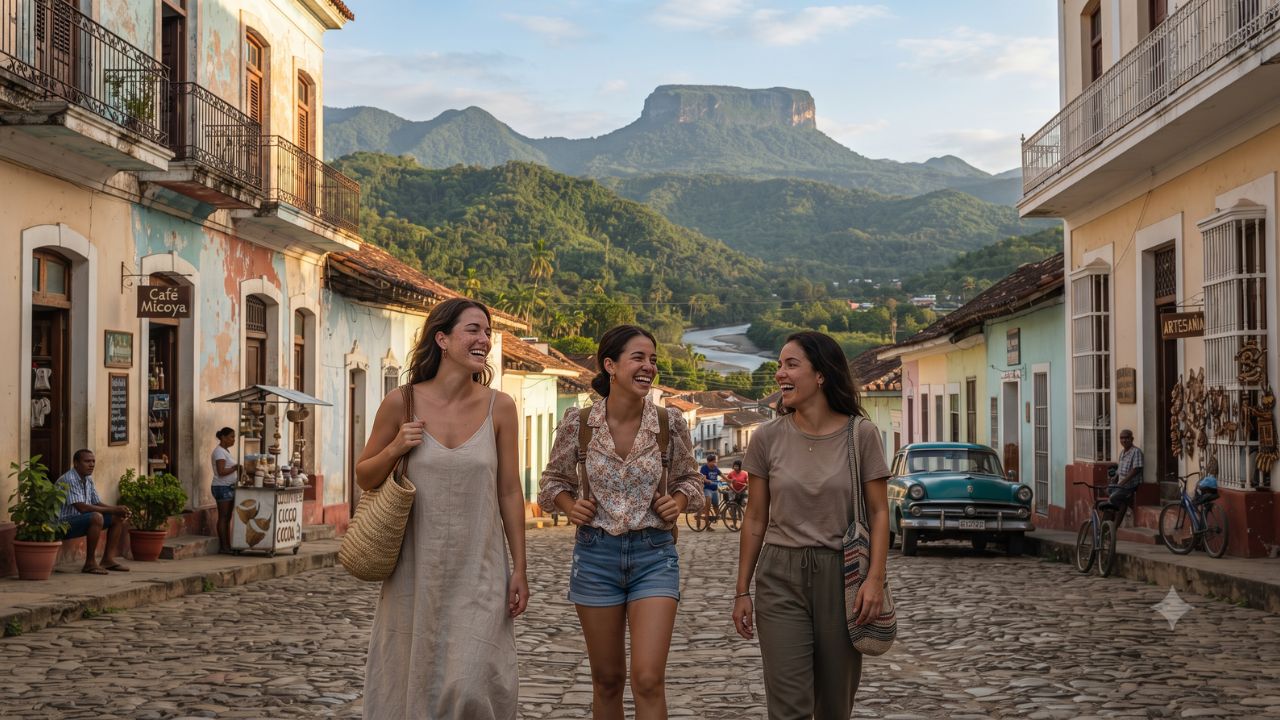
Image generated by AI
Between January and August 2026, Cuba received 450,353 international visitors—a steep 64.4 percent decline from the previous year, leaving the island's eastern colonial towns and mountain biosphere reserves completely free of mass package tour crowds. While traditional resort enclaves like Varadero face major occupancy drops, independent travelers willing to venture beyond Havana can experience centuries-old chocolate plantations, cave film festivals, and UNESCO-listed colonial street grids through an authentic community lens.
National Arrival Shifts Open a Regional Travel Lens
Official data released by Cuba's National Office of Statistics and Information (ONEI) highlights a dramatic recalibration across the island's visitor economy. The 450,353 international arrivals recorded through August 2026 represent 813,979 fewer visitors than the corresponding period in 2025. Major source markets experienced sharp reductions, led by Canada (128,400 arrivals, down 75.6 percent), the United States (41,971, down roughly 50 percent), and Spain (10,447, down 68.2 percent).
This contraction has transformed how travelers navigate the country. With January alone accounting for over 40 percent of 2026 arrivals (184,833 visitors) and subsequent months averaging around 30,000 travelers island-wide, regional travel across eastern and central provinces offers unhurried access to historic architecture, rural homestays (casas particulares), and endemic nature reserves.
Six Regional Treasures Worth Exploring
1. Baracoa: Mountain Forests and Indigenous Cuisine
Founded in 1511 as Cuba's first Spanish settlement, Baracoa sits isolated along the eastern Atlantic tip behind the dramatic La Farola mountain viaduct. Overlooked by the anvil-shaped summit of El Yunque, the region is surrounded by the crystalline Toa and Duaba river systems and the pristine rainforests of Alejandro de Humboldt National Park.
Baracoa maintains a distinct gastronomy found nowhere else in Cuba, centered around coconut milk, pure cacao, bacán (green plantain tamales wrapped in banana leaves), calalú greens, and tetí (tiny seasonal river fish). Heritage lodging is anchored by the 83-room Porto Santo Hotel, El Castillo Hotel, and numerous private family-run guesthouses.
2. Gibara: Coastal Heritage and Cave Cinema
Located in Holguín province, the seaside enclave of Gibara pairs 19th-century neoclassical maritime mansions with a dynamic creative scene. The town hosts the annual Gibara International Film Festival, staging film screenings inside natural subterranean caverns at the Cueva de los Panaderos. Travelers can lodge at restored heritage properties like Hotel Ordoño, Hotel Arsenita, or Hotel Plaza Colón, dining on fresh catch at El Faro.
3. San Juan de los Remedios: Colonial Squares and December Festivals
Established as Spain's eighth settlement, Remedios is famous for its twin-church central plaza, housing Nuestra Señora del Buen Viaje and the gold-altared Parroquial Mayor de San Juan Bautista. Every December 24, the town erupts into the Parrandas Remedianas, a centuries-old neighborhood carnival featuring towering illuminated floats and brass bands. Restored historic hostels include Hostal Buen Viaje, Hostal Los Vitrales, and La Paloma, complemented by Creole cuisine at Restaurante Mascotte.
4. Bayamo: Cradle of Nationality and Sierra Maestra Treks
Founded in 1513, Bayamo is a National Monument celebrated for its traditional horse-drawn carriage transport and role in the Cuban independence movement. Spanning 8,371.8 square kilometers, Granma province serves as the staging base for trekking up Pico Real del Turquino—Cuba's highest peak at 1,974 meters—and exploring Desembarco del Granma National Park. Peasant-style roasted pork and regional dishes are served at La Bodega and Restaurant 1513.
5. Las Tunas: Sculpture Capitals and Quiet Reefs
Promoted as Cuba's sculpture capital with public bronze works across every square, Las Tunas encompasses 11 protected nature areas and pristine coastal stretches. Along the northern shore, Covarrubias Beach offers a 10-kilometer ribbon of white sand and offshore barrier reefs anchored by the 180-room Muthu Covarrubias Beach Hotel, while city explorers can base themselves at the 142-room Las Tunas Hotel or Hotel Cadillac.
6. Camagüey: The 300-Hectare Colonial Labyrinth
Camagüey's historic center, spanning 300 hectares, was inscribed as a UNESCO World Heritage Site in 2008 for its unique anti-pirate labyrinth layout of asymmetric streets, hidden plazas, and giant clay water vessels (tinajones). Visitors can wander between Plaza San Juan de Dios and Plaza del Carmen, sampling ajiaco stew, tasajo, and matajíbaro at restaurant 1800, while lodging in boutique properties like Hotel E Camino de Hierro and Hotel E San Juan de Dios.
Visitor Insider Tips
- Cash and Currency Protocols: International debit and credit cards issued by US banking institutions do not function in Cuba. Carry sufficient physical cash in Euros (EUR) or US Dollars (USD) to exchange locally, as card processing terminals can experience intermittent connectivity.
- Pre-Trip Border Documentation: Complete the mandatory digital D'Viajeros customs and immigration health declaration online within 72 hours prior to flight departure to receive your entry QR code.
- Transport Realities: Fuel availability across eastern provinces can fluctuate. Book intercity transfers through private licensed drivers (taxistas particulares) or Viazul tourist buses well in advance, maintaining flexible schedule buffers of at least one day before international flights.
- Support Local Families: Stay in registered casas particulares and dine in private paladares rather than state-run resort chains to ensure your travel expenditure directly supports independent Cuban entrepreneurs. Official travel planning resources are provided by Cuba Travel.
Cultural and Economic Context
Traveling through Cuba's provincial interior provides essential economic lifelines to independent artists, private homestay hosts, smallholder coffee farmers, and bicycle-taxi drivers facing severe economic adjustments.
Respectful travelers can consult up-to-date consular guidance through the UK Foreign, Commonwealth & Development Office to stay informed regarding fuel and power supply conditions. Navigating the island with patience, humility, and direct community engagement unlocks an unmatched depth of human connection and cultural resilience.
FAQ: Visiting Cuba's Regional Destinations in 2026
What is the best way to travel between eastern Cuban cities?
Private classic car charters arranged through licensed local guesthouses and Viazul long-distance air-conditioned tourist coaches provide the most reliable regional transit.
Do international travelers need a visa to enter Cuba?
Yes. Travelers require a Tourist Card (Tarjeta del Turista), which is typically purchased through airlines, tour operators, or Cuban consulates prior to boarding.
Is Baracoa accessible by road?
Yes. Baracoa is reached via the spectacular mountain highway La Farola from Guantánamo, offering coastal and cloud forest views along winding paved switchbacks.
What are the Parrandas in Remedios?
The Parrandas are historic cultural street festivals held annually on December 24, where two rival town neighborhoods compete with handcrafted light monuments, brass bands, and fireworks.
Wandering through Cuba's historic eastern provinces reveals an island whose greatest treasures reside not in beach umbrellas, but in the enduring spirit and warmth of its people.
Disclaimer
This article is for informational and educational purposes only. It does not constitute legal, financial, or professional advice. While we strive to provide accurate and up-to-date information, travel policies, regulations, and conditions change rapidly. Always verify information with official sources before making travel decisions. Nomad Lawyer makes no representations about the accuracy, reliability, completeness, or suitability of the information provided. Readers should consult qualified professionals for advice specific to their circumstances. The views expressed in this article are those of the author and do not necessarily reflect the views of Nomad Lawyer.
Raushan Kumar
Founder & Lead Developer
Full-stack developer with 11+ years of experience and a passionate traveller. Raushan built Nomad Lawyer from the ground up with a vision to create the best travel and law experience on the web.
Learn more about our team →