
Cruise PhilaPort Terminal Races Construction Before Norwegian Jewel Debut
Philadelphia's cruise industry resurrection hinges on infrastructure completion. Norwegian Jewel's April 2026 inaugural visit signals East Coast port modernization amid construction challenges at PhilaPort terminal.

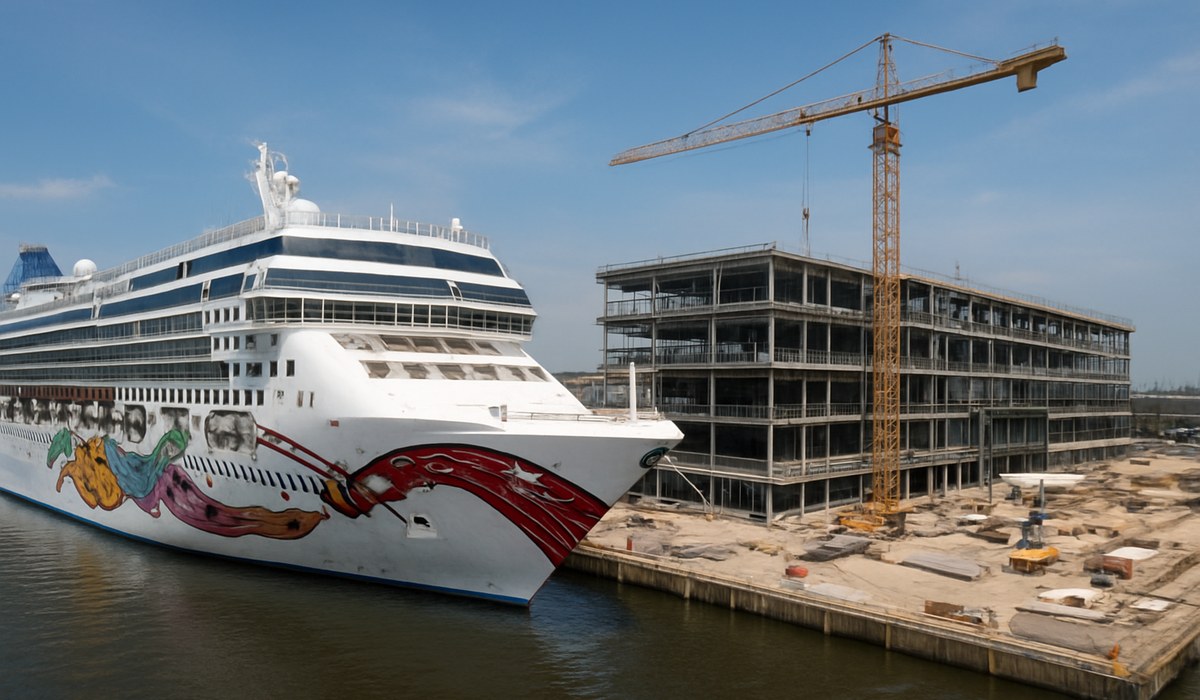
Image generated by AI
Quick Summary
- Philadelphia's cruise terminal reopens after 15 years of inactivity with Norwegian Jewel's inaugural April 2026 sailing
- Construction crews face tight deadlines to complete PhilaPort modernization before the historic vessel arrives
- The cruise comeback is projected to generate $500+ million in annual regional economic activity
- East Coast cruise terminals in Charleston and Savannah are watching PhilaPort's infrastructure race closely
Philadelphia's 15-Year Cruise Desert Ends: What's at Stake with Norwegian Jewel
The Delaware River waterfront is about to transform. After more than a decade without a single cruise ship departure, Philadelphia's maritime economy is poised for a dramatic resurrection this spring. Norwegian Cruise Line's decision to homeport the Norwegian Jewel at the cruise PhilaPort terminal marks the city's most significant tourism infrastructure moment since the mid-2000s.
The stakes couldn't be higher. This isn't merely about one vessel or one sailing season. Industry analysts view PhilaPort's reopening as a bellwether for East Coast cruise expansion, potentially redirecting tens of thousands of annual passengers toward Philadelphia instead of rival gateways like Charleston and Baltimore.
But there's a catch: construction crews are racing against an April 2026 calendar that leaves virtually no margin for error. Terminal upgrades, berth modifications, and infrastructure enhancements are all required to accommodate a megaship of the Jewel's magnitude. Project delays could jeopardize not only Norwegian's inaugural homeporting arrangement but also the broader investment confidence that other cruise operators are watching intently.
Local tourism officials and port authority leadership have publicly committed to the timeline. Yet the construction sector's notorious unpredictability—supply chain volatility, weather disruptions, labor scheduling complications—has already forced several infrastructure projects nationally to slip past their original deadlines.
Construction Race Against the Clock: Will PhilaPort Deliver?
The Philadelphia Port Authority awarded the terminal modernization contract in 2024, establishing a compressed 18-month execution window. Scope of work includes passenger processing facilities, security screening infrastructure, and berth structural reinforcement to handle the Jewel's 145,000-ton displacement and sophisticated mooring systems.
Project managers have divided the work into phases to minimize risk. The highest-priority elements—passenger boarding bridges, terminal roof systems, and customs/immigration processing areas—were prioritized for completion by mid-March 2026. Secondary elements including retail concourses and dining facilities follow a slightly more flexible timeline, with completion targeted for late April.
Sourcing delays have already tested the schedule. Specialized cruise terminal equipment, including advanced passenger flow management systems and biometric checkpoint technology, typically requires 12-16 weeks for manufacturing and delivery. Several suppliers reported production bottlenecks in late 2025, compressing the remaining installation window dangerously.
Weather represents another variable beyond planners' control. The Delaware River region's typical winter conditions—freezing temperatures, ice buildup, occasional flooding—have historically plagued waterfront construction projects. The relatively mild 2025-26 winter has so far cooperated with crews, but spring storms could still disrupt final-phase work.
"We're on track," Port Authority Director Michael Chubb stated in a March 2026 operational briefing. However, project timelines in his remarks included contingency language suggesting underlying nervousness about margin for error.
Economic Ripple Effects: Jobs, Airlines, and Regional Tourism Impact
Norwegian's homeporting decision doesn't exist in isolation. Cruise ship deployments generate cascading economic activity across multiple sectors. The Jewel typically carries 3,000-3,100 passengers per sailing, suggesting approximately 6,000-6,200 embarking travelers per 7-day rotation.
Those passengers require ground transportation from Philadelphia International Airport (PHL) and local hotels. Ride-share services, shuttle operators, and taxi fleets are already mobilizing to capture commute demand. Hotel occupancy projections for the week preceding each Friday embarkation now assume 85-90% capacity citywide—historically robust figures for Philadelphia properties.
Airline connectivity is where the economic multiplier effects become most pronounced. Norwegian and other carriers are evaluating Philadelphia as a feeder hub specifically because of cruise embarkation demand. Three new daily routes from secondary markets (Pittsburgh, Hartford, Buffalo) have been announced by regional carriers targeting cruise passengers who would otherwise fly into major hubs like Newark or Baltimore-Washington.
The parallel infrastructure growth resembles dynamics observed in other revitalized cruise ports. When Tourism Italy's US visitor surge reshaping airline networks, Italian ports similarly experienced expanded transatlantic service and inter-European connectivity improvements driven by cruise tourism integration.
For integrated travel packages combining cruise embarks with pre-cruise hotel stays and flights, passengers should familiarize themselves with US DOT passenger rights and compensation rules{target="_blank" rel="noopener noreferrer"}. Multi-leg journeys involving cruise embarkation flights fall under DOT jurisdiction for flight disruption compensation and passenger protection standards.
The Port Authority estimates 500,000+ cumulative cruise passengers annually once the terminal reaches stabilized operations (projected 2028-2029). At average per-passenger spending of $1,200 including transportation, lodging, dining, and attractions, the economic contribution approaches $600 million annually for the five-state region.
How Philadelphia Stacks Against Rival East Coast Cruise Terminals
The competitive landscape for East Coast cruise homeporting has intensified dramatically. Charleston's cruise terminals handled 550,000+ passengers in 2025. Savannah's renovated facilities attracted two additional homeported vessels. Baltimore is aggressively marketing capacity following recent infrastructure investment.
Philadelphia's strategic advantage lies in demographic reach and pricing accessibility. The Northeast Corridor population density—78 million residents within 500 miles—exceeds most competing ports. Direct flight availability from secondary markets gives Philadelphia passengers booking convenience competitors can't match.
Pricing competitiveness is another differentiator. Comparable cruise lines offering similar itineraries from competing ports often price Philadelphia sailings 8-12% lower, reflecting competitive intensity and port authority incentives designed to establish market share quickly.
Passenger amenities represent the final competitive lever. P&O Cruises Southampton onboard spending promotions illustrate how established European cruise ports maintain loyalty through onboard spending incentives. Norwegian's pricing strategy for Philadelphia sailings includes similar onboard credit offerings (typically $150-300 per booking), undercutting competitor incentives and driving conversion rates for first-time cruisers.
The construction completion directly determines competitive viability. If PhilaPort opens with construction delays, other cruise lines may hesitate to commit capacity, allowing Charleston and Savannah to consolidate market position. Conversely, on-time delivery signals operational competence that justifies industry investment and passenger willingness to departure from familiar ports.
Environmental Commitments and Sustainable Cruise Tourism
Philadelphia's cruise terminal modernization incorporates environmental considerations reflecting broader industry trends toward sustainable maritime operations. The new berth includes shore power infrastructure allowing docked vessels to disconnect from onboard fuel generators, reducing air pollution and carbon emissions during port calls.
Stormwater management systems integrated into the terminal design capture and filter runoff, protecting Delaware River water quality. Passenger-side sustainability messaging frames Philadelphia as an environmentally conscious cruise destination—messaging that resonates with the growing demographic of eco-conscious leisure travelers.
Global sustainability frameworks increasingly influence cruise industry investment decisions. As discussed in [Indonesia Tourism sustainability reshaping visitor economics](/indonesia-tourism-2045-sustainable-boom-march-2
Disclaimer
This article is for informational and educational purposes only. It does not constitute legal, financial, or professional advice. While we strive to provide accurate and up-to-date information, travel policies, regulations, and conditions change rapidly. Always verify information with official sources before making travel decisions. Nomad Lawyer makes no representations about the accuracy, reliability, completeness, or suitability of the information provided. Readers should consult qualified professionals for advice specific to their circumstances. The views expressed in this article are those of the author and do not necessarily reflect the views of Nomad Lawyer.
Kunal K Choudhary
Co-Founder & Contributor
A passionate traveller and tech enthusiast. Kunal contributes to the vision and growth of Nomad Lawyer, bringing fresh perspectives and driving the community forward.
Learn more about our team →