
Cruise Billion Club: Inside the $2 Billion Icon-Class Revolution
Royal Caribbean's Icon-class ships now exceed $2 billion in construction costs, joining an elite dozen-strong cruise billion club. Discover what drives these record-breaking expenses in 2026.

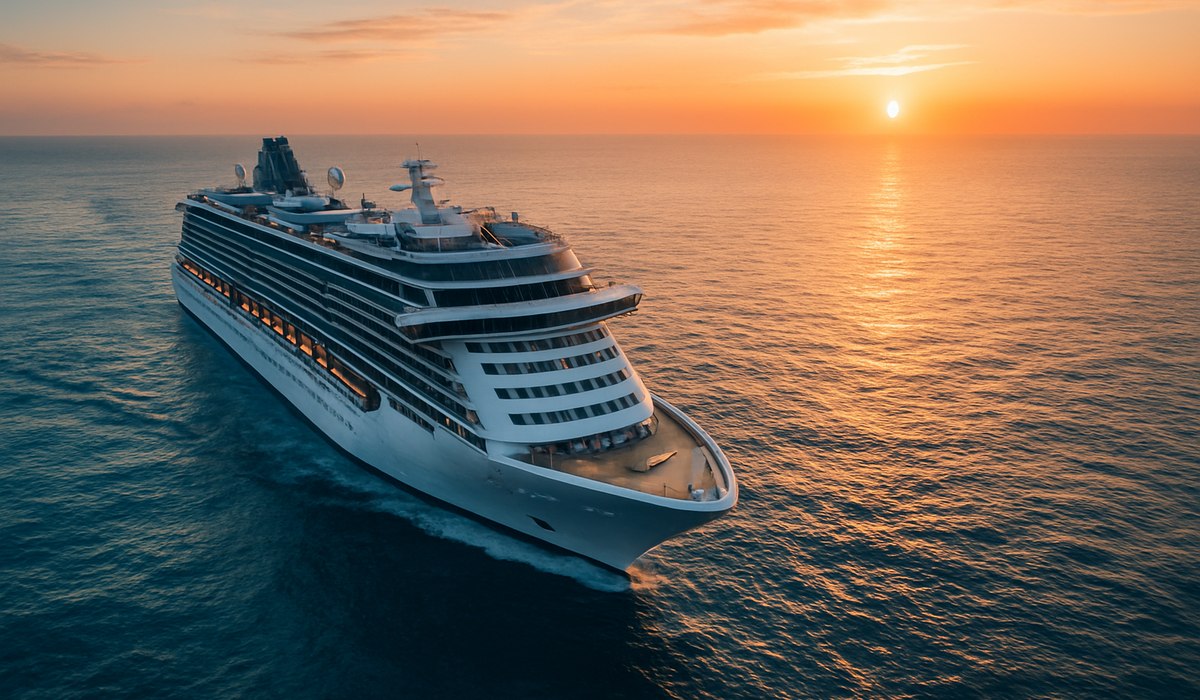
Image generated by AI
The Cruise Billion Club: A New Era of Floating Megastructures
More than a dozen cruise vessels now command construction budgets exceeding $1 billion, with Royal Caribbean's Icon-class ships shattering previous records at approximately $2 billion each. These colossal maritime engineering projects represent the most expensive cruise ships ever built, fundamentally reshaping expectations around luxury travel and ocean-going accommodations. The cruise billion club isn't just a measure of cost—it reflects technological innovation, sustainability investments, and unprecedented onboard experiences that rival five-star resorts.
What once seemed impossible has become industry standard. The evolution from billion-dollar thresholds to two-billion-dollar vessels marks a turning point in cruise ship construction and cruiser expectations.
The $1 Billion Threshold: What Changed in Cruise Ship Construction
The crossing into billion-dollar territory didn't happen overnight. A decade ago, breaking the $500 million mark represented a major milestone. Today's most expensive cruise ships reflect compounding factors: stricter environmental regulations, advanced propulsion systems, and expanded guest capacities.
Modern cruise ship construction demands cutting-edge technology. Liquefied natural gas propulsion systems alone account for substantial portions of construction budgets. Enhanced safety features, redundant systems, and sophisticated navigation equipment add millions to final costs. Additionally, labor expenses in premium shipyards command premium wages, and extended build timelines increase overhead.
The cruise billion club phenomenon accelerated as cruise lines pursued differentiation through innovation. Guests expect Wi-Fi connectivity rivaling shore-based networks, advanced wastewater treatment systems, and complex mechanical infrastructure. These aren't luxuries—they're baseline expectations for contemporary ocean cruising.
Visit Royal Caribbean's official website to explore Icon-class features and itineraries directly.
Royal Caribbean's Icon-Class: Breaking the $2 Billion Barrier
Royal Caribbean's Icon-class represents the flagship of expensive cruise ships, with each vessel requiring approximately $2 billion in construction investment. The Icon of the Seas—the class's first deployment—launched in 2024 and redefined what floating resort luxury encompasses. A second Icon-class ship entered service in 2025, with additional vessels planned through 2027.
The Icon-class design incorporates revolutionary features justifying its record-breaking cost. Each ship displaces approximately 250,800 gross tons and accommodates nearly 5,400 passengers plus 2,000+ crew members. The ships stretch 1,138 feet long—equivalent to four football fields—while maintaining maneuverability in ports across the Caribbean and beyond.
What specifically drives the cruise billion club pricing? Icon-class construction involves completely redesigned hull designs, innovative stateroom layouts, and breakthrough entertainment venues. The ships feature the first-ever floating roller coaster at sea, transforming recreational expectations. Multiple swimming pools, restaurants, and entertainment spaces occupy every available deck level.
Fuel efficiency improvements embedded in Icon-class design represent another significant cost factor. The transition to liquefied natural gas propulsion requires entirely new engine architectures, testing protocols, and supply chain infrastructure. These environmental investments position Royal Caribbean as an industry leader in sustainable cruising.
Learn more about Icon-class specifications and booking options at Cruise Critic's comprehensive reviews.
Technology and Amenities Driving Costs Skyward
The most expensive cruise ships command premium pricing due to technological sophistication often invisible to casual observers. Beneath gleaming decks lie kilometers of electrical wiring, fiber optic cables, and advanced monitoring systems. These infrastructure investments contribute substantially to billion-dollar construction expenses.
Modern expensive cruise ships feature centralized building management systems controlling everything from cabin climate to waste management. Artificial intelligence applications monitor engine performance, predict maintenance needs, and optimize fuel consumption. Cybersecurity systems protect guest information and ship operations—expenses unimaginable when older cruise vessels were designed.
Entertainment technology justifies significant portions of cruise billion club budgets. High-definition LED screens, motion simulator rides, and theatrical production systems require specialized engineering and installation expertise. Some vessels feature virtual reality experiences, advanced gaming facilities, and sports courts incorporating cutting-edge surface technology.
Guest accommodations themselves drive costs upward. Premium staterooms feature intelligent lighting systems, climate controls, and entertainment displays. Many accommodate the growing demand for connecting cabins, balconies across multiple configuration types, and accessibility features. Each customization increases construction complexity and expense.
Dining operations aboard expensive cruise ships exceed complexity of shore-based restaurants. Galleys must serve thousands of meals simultaneously, manage refrigeration across multiple decks, and maintain health standards under challenging maritime conditions. The mechanical systems supporting this logistical feat represent substantial capital investments.
The Economics Behind Luxury Floating Resorts
Understanding cruise billion club economics reveals industry dynamics beyond simple cost accounting. Shipyard competition remains fierce despite high construction costs, with European and Asian facilities competing for contracts. German Meyer Werft, Italian Fincantieri, and South Korean Hyundai Heavy Industries dominate construction, each bringing specialized expertise to expensive cruise ship projects.
Construction timelines stretch across five to seven years, meaning shipyards manage massive capital investments before first payments arrive. Financing arrangements for billion-dollar vessels typically involve complex international agreements, government subsidies, and long-term financing structures. These arrangements significantly impact final vessel costs.
Cruise lines accepting billion-dollar price tags employ sophisticated economic models justifying expense through premium pricing and extended service life. A $2 billion vessel operating continuously for 30+ years can generate $3-4 billion in revenue, making the investment rationally defensible from corporate perspectives. Passenger ticket pricing reflects these underlying costs.
The cruise billion club also reflects consolidation within cruise industry segments. Three primary operators—Carnival Corporation, Royal Caribbean, and Norwegian Cruise Line—control most global capacity. Their scale enables billion-dollar investments that smaller operators cannot undertake, further concentrating market power.
Sustainability investments increasingly justify expensive cruise ship construction costs. Advanced wastewater treatment systems, shore power connections reducing emissions at port, and hybrid propulsion systems represent genuine environmental improvements justified through premium guest pricing.
Cruise Itinerary at a Glance
Below is a snapshot of typical Icon-class deployment patterns and comparable vessel specifications:
| Ship Class | Operator | Launch Year | Gross Tonnage | Passenger Capacity | Construction Cost | Primary Markets |
|---|---|---|---|---|---|---|
| Icon-class | Royal Caribbean | 2024+ | 250,800 | 5,400 | $2 billion | Caribbean, Mediterranean |
| Wonder of the Seas | Royal Caribbean | 2022 | 362,000 | 5,734 | $1.35 billion | Caribbean, Caribbean |
| Symphony of the Seas | Royal Caribbean | 2018 | 228,081 | 4,180 | $1.35 billion | Mediterranean, Caribbean |
| Harmony of the Seas | Royal Caribbean | 2016 | 228,081 | 4,180 | $1.35 billion | Caribbean, Europe |
| Quantum of the Seas | Royal Caribbean | 2014 | 167,600 | 4,180 | $1.35 billion | Asia, Caribbean |
| MSC Seashore | MSC Cruises | 2022 | 169,400 | 4,888 | $1.1 billion | Caribbean, Mediterranean |
What This Means for Travelers
The cruise billion club expansion carries direct implications for vacation planning and budgeting:
-
Expect Premium Pricing: Icon-class and comparable expensive cruise ships command higher fares than traditional vessels. Nightly rates typically range $150-400+ per person, reflecting capital investment amortization across operating seasons.
-
Book Earlier for Best Value: Limited suite availability and premium positioning mean Icon-class bookings fill quickly. Planning 12-18 months ahead maximizes savings opportunities and cabin selection.
-
Compare Inclusive Options: Some expensive cruise ships offer
Disclaimer
This article is for informational and educational purposes only. It does not constitute legal, financial, or professional advice. While we strive to provide accurate and up-to-date information, travel policies, regulations, and conditions change rapidly. Always verify information with official sources before making travel decisions. Nomad Lawyer makes no representations about the accuracy, reliability, completeness, or suitability of the information provided. Readers should consult qualified professionals for advice specific to their circumstances. The views expressed in this article are those of the author and do not necessarily reflect the views of Nomad Lawyer.
Preeti Gunjan
Contributor & Community Manager
A passionate traveller and community builder. Preeti helps grow the Nomad Lawyer community, fostering engagement and bringing the reader experience to life.
Learn more about our team →