
Coworking Infrastructure in Italy: Best Cities and Workspaces
Italy’s coworking infrastructure has expanded rapidly, turning urban hubs into viable bases for remote workers. Here is an assessment of the best cities.

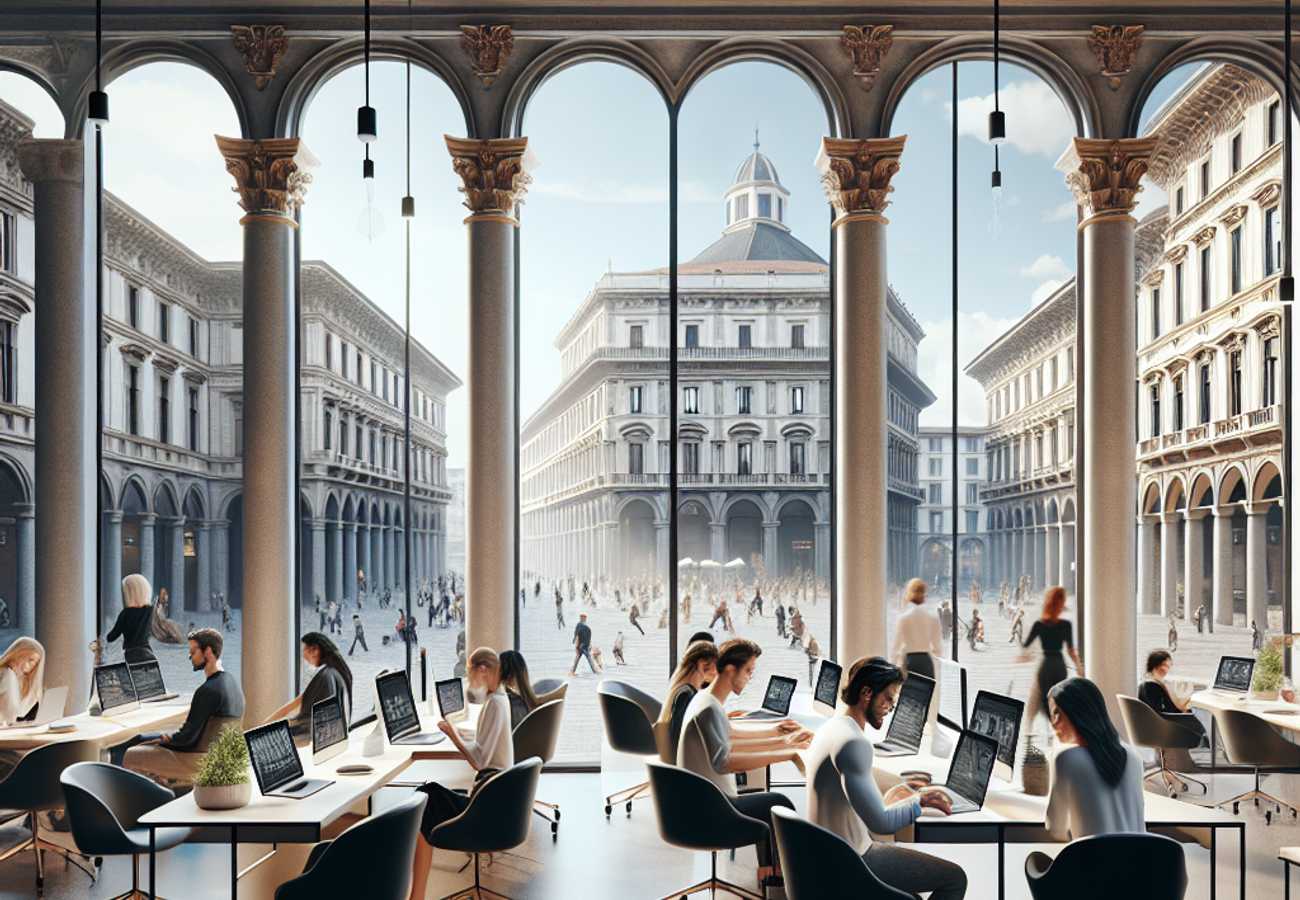
Image generated by AI
Italy’s recent introduction of a dedicated Digital Nomad Visa has triggered a surge of interest from global remote workers looking to experience "La Dolce Vita." Accompanying this influx, Italy’s coworking infrastructure has expanded rapidly, shifting from a niche offering to a significant component of the national office sector.
For professionals assessing a relocation, understanding where flexible offices are concentrated and what reliability can be expected is critical. Here is an overview of Italy’s strongest cities for remote work infrastructure.
Milan: The Corporate and Design Capital
Milan is Italy’s undeniable economic engine and the most mature coworking market in the country. If your remote work requires flawless corporate infrastructure, high-speed fiber connectivity, and professional networking, Milan is the prime choice.
- The Spaces: Milan boasts over 100 coworking facilities. Major international operators like Talent Garden, Copernico, and WeWork offer state-of-the-art facilities equipped with boardrooms, event spaces, and dedicated fiber-optic lines.
- The Vibe: Fast-paced, design-forward, and highly professional. It is ideal for tech workers, financial consultants, and designers.
Rome: Historic Charm Meets Modern Tech
Rome’s coworking scene is younger than Milan’s but is growing rapidly to accommodate the influx of digital nomads drawn to the capital's historic appeal.
- The Challenges: Retrofitting ancient buildings with modern fiber-optic cables can be challenging, meaning home Wi-Fi in the historic center (Centro Storico) can sometimes be unreliable.
- The Solutions: Dedicated coworking spaces solve this problem. Hubs like Wire Coworking and Ala/34 provide highly reliable internet, ergonomic setups, and a professional environment amidst the ancient city.
Florence and Turin: The Emerging Hubs
For nomads seeking a balance between lifestyle and affordability, secondary cities are emerging as strong contenders.
- Florence: Highly popular with American expats and creatives. Spaces like Nana Bianca offer excellent facilities in a city famous for its Renaissance art and walkable center.
- Turin (Torino): Often overlooked, Turin is a major industrial and tech hub in the north. It offers a much lower cost of living than Milan while maintaining excellent digital infrastructure and coworking spaces like Toolbox Coworking.
Rural Italy: The "Smart Working" Villages
Italy has actively promoted "South Working"—encouraging professionals to relocate to beautiful, depopulated villages in the south (like in Sicily or Puglia).
While idyllic, digital nomads must exercise caution. Internet connectivity in rural Italian villages can be highly unpredictable. If you plan to relocate to the countryside, ensuring access to a reliable localized coworking hub or investing in satellite internet (like Starlink) is absolutely essential for sustaining professional workflows.
Summary
Italy offers an incredible lifestyle for digital nomads, but infrastructure is heavily concentrated in the north and major urban centers. Milan and Rome provide seamless integration for corporate remote workers, while smaller cities require a bit more strategic planning regarding connectivity.
Disclaimer
This article is for informational and educational purposes only. It does not constitute legal, financial, or professional advice. While we strive to provide accurate and up-to-date information, travel policies, regulations, and conditions change rapidly. Always verify information with official sources before making travel decisions. Nomad Lawyer makes no representations about the accuracy, reliability, completeness, or suitability of the information provided. Readers should consult qualified professionals for advice specific to their circumstances. The views expressed in this article are those of the author and do not necessarily reflect the views of Nomad Lawyer.
Kunal K Choudhary
Co-Founder & Contributor
A passionate traveller and tech enthusiast. Kunal contributes to the vision and growth of Nomad Lawyer, bringing fresh perspectives and driving the community forward.
Learn more about our team →