
Costa Rica, San José, and Guanacaste Face Record Travel Surge as Over One Million Tourists Flood Airports in Q1 2026
Costa Rica, San José, and Guanacaste Face Record Travel Surge as Over One Million Tourists Flood Airports in Q1 2026

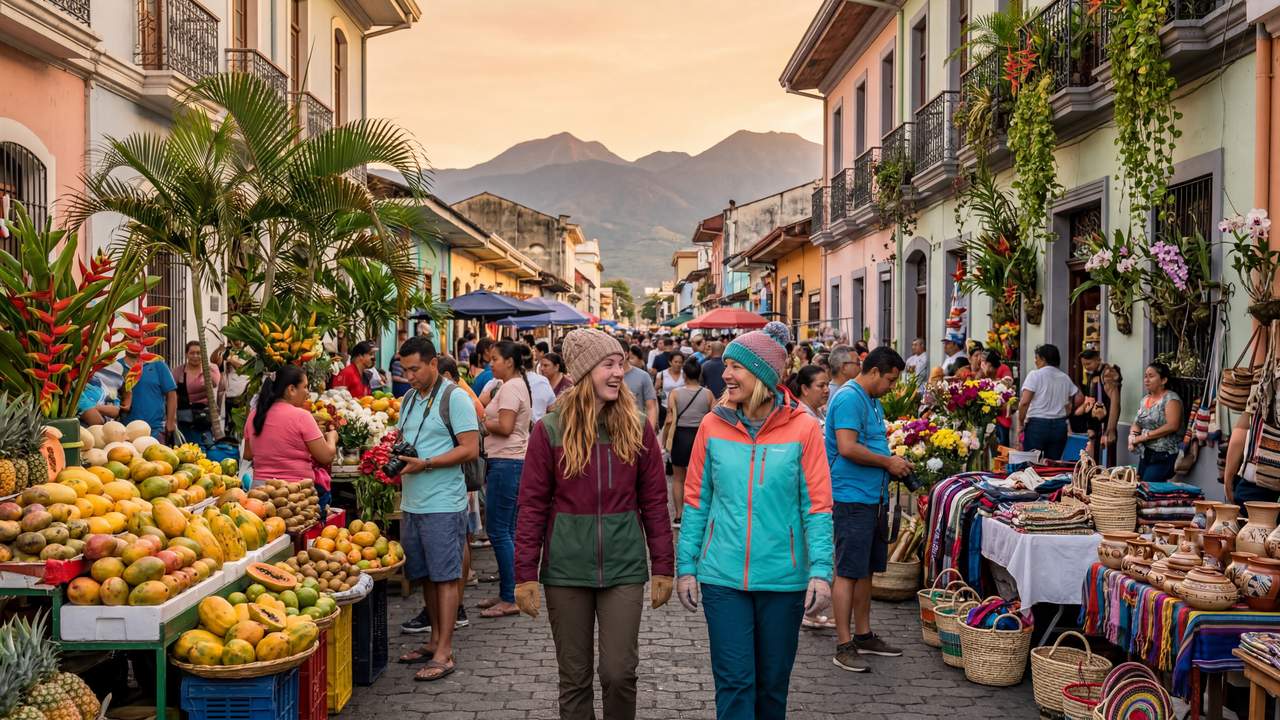
Image generated by AI
[San José, Costa Rica — June 23, 2026] — Costa Rica's aviation and tourism infrastructure is straining under unprecedented demand after more than 1,033,777 international visitors descended on the country during the first quarter of 2026, an 11.3 percent year-on-year jump that has shattered all previous arrival records. Juan Santamaría International Airport and Daniel Oduber Quirós Airport in Liberia are processing the bulk of this traffic, with airlines scrambling to expand capacity across both gateways to keep pace with surging North American leisure demand.
The milestone, confirmed by official registries maintained by the Instituto Costarricense de Turismo, marks the first time the Central American nation has surpassed the one-million-visitor threshold within a single three-month operational window. The figure pushes Costa Rica decisively past its pre-pandemic benchmarks and signals a structural shift in how long-haul travelers from the United States and secondary North American markets are routing directly into premium eco-tourism corridors rather than relying on traditional legacy hub connections.
Instituto Costarricense de Turismo Confirms Historic Q1 2026 Visitor Surge
Border control analytics compiled during the opening quarter of 2026 reveal that 1,033,777 international overnight visitors entered Costa Rica between January and March, representing an 11.3 percent increase over the same period in 2025. Officials familiar with the data described the result as a definitive breakthrough, noting that the figure eclipses every prior quarterly record maintained in modern aviation history for the destination.
The growth trajectory has outpaced regional competitors across Central America, with analysts attributing the acceleration to sustained demand from the United States, expanded direct-flight availability from secondary North American cities, and aggressive marketing of wellness and biodiversity-focused itineraries. The sovereign territory's global market appeal has demonstrated notable resilience against shifting macroeconomic conditions, including currency fluctuations and fluctuating fuel costs that have pressured rival destinations.
Industry sources indicate that the United States continues to dominate the inbound traveler mix, driven by dense flight connectivity from primary North American hubs, historical commercial ties, and intense consumer demand for world-class biodiversity experiences. Strategic campaigns emphasizing well-being and green luxury have reinforced loyalty among long-haul leisure travelers, particularly families seeking outdoor adventure destinations.
Juan Santamaría and Daniel Oduber Quirós Airports Process Record Transcontinental Arrivals
The surge has placed significant operational pressure on both of Costa Rica's principal international gateways. Juan Santamaría International Airport (SJO), located in the Central Valley near San José, handled the majority of international arrivals during the quarter. The facility has long served as the country's primary entry point for transcontinental traffic and continues to process the largest share of long-haul flights from North American carriers.
Daniel Oduber Quirós Airport (LIR) in Liberia, which serves as the primary access point for Guanacaste's Pacific coast resorts, recorded the fastest relative acceleration among all regional terminals. The facility posted a 16.9 percent growth rate in arrivals, reflecting the increasing preference among high-yield travelers for direct access to premium coastal sanctuaries and community-operated eco-lodges without transiting through the capital region.
Data profiles monitored through the U.S. National Travel and Tourism Office indicate that airlines have scaled up scheduled flight operations to provide over 5.4 million seats throughout the current seasonal calendar. Major international carriers have expanded direct weekly operations into both terminals, bypassing standard layover hubs to introduce streamlined transit schedules that allow travelers to move from secondary North American metropolitan areas directly to resort corridors in record time.
Airlines Expand Air-Lift Capacity to 5.4 Million Seats Amid Guanacaste Demand
The structural expansion of commercial air-lift capacity has emerged as the backbone of the record influx. Carriers have aggressively added routes connecting non-legacy secondary hub cities in North America directly to Costa Rica's regional terminals, reducing dependency on traditional connecting gateways and shortening total travel time for leisure passengers.
This capacity surge has channeled high-yield travelers directly into premium coastal destinations across Guanacaste and surrounding eco-tourism zones, bypassing urban congestion in San José and distributing corporate expenditures into rural hospitality networks. The strategy aligns with broader industry efforts to decentralize arrival patterns and reduce pressure on single-gateway infrastructure.
Industry observers note that the expansion reflects a calculated bet by airlines on sustained demand resilience in the Central American leisure market. By aligning wide-body and narrow-body jet capacity with premium eco-tourism demand, carriers are positioning themselves to capture a disproportionate share of the global leisure market while generating downstream economic activity for local communities.
International Travel Revenues Hit $5.57 Billion as Per-Visitor Spending Climbs
The economic impact of the visitor boom has driven total international travel revenues to a record $5.57 billion, according to state financial tracking platforms. The figure represents a historic pinnacle for the destination and underscores the willingness of global travelers to pay a premium for high-value wellness and nature-based itineraries.
Individual tourist expenditure has jumped significantly, reaching an estimated average of $1,892 per visitor. The increase reflects a shift toward longer stays, higher-end accommodations, and experiential travel packages that emphasize biodiversity, adventure, and cultural immersion.
However, tourism administration directors have cautioned that the headline revenue figures mask a more complex reality for independent domestic merchants. The steady strengthening of the local colón against the U.S. dollar has created a currency appreciation matrix that compresses profitability margins for businesses executing operations in local currency. While foreign exchange earnings have hit record heights, ground-level operators are experiencing tighter margins than raw volume metrics would suggest.
Officials explained that domestic businesses relying on local-currency transactions are absorbing the differential between rising operational costs and the relative purchasing power of incoming dollars. The dynamic has created subtle internal trade frictions even as the broader macroeconomic picture remains overwhelmingly positive.
Manuel Antonio National Park and Monteverde Cloud Forest Face Capacity Realignment
The record influx has prompted environmental protection watchdogs and park rangers to accelerate implementation of automated digital allocation frameworks designed to manage high-volume visitor footprints safely. Regional conservation authorities have indicated that strict capacity realignments across highly sought-after destinations are now mandatory to prevent ecological degradation.
Manuel Antonio National Park and the Monteverde Cloud Forest have been identified as priority zones for the new allocation systems. Both sites have experienced sustained increases in daily visitor volume, raising concerns about trail erosion, wildlife disruption, and the long-term integrity of fragile biological reserves that define the country's global tourism identity.
Conservation officials observed that the realignment measures are designed not only to protect ecosystems but also to maintain an exceptional visitor experience. By capping daily entries and distributing arrivals across broader time windows, authorities aim to reduce congestion at peak viewing sites while preserving the qualitative standards that have positioned Costa Rica as a premier eco-tourism destination.
Airport Operators Build Premium Processing Terminals and EV Infrastructure
Airport operators at both Juan Santamaría and Daniel Oduber Quirós are accelerating construction of dedicated premium processing terminals and electric vehicle infrastructure to improve throughput ahead of the next peak holiday rush. The upgrades are intended to reduce queuing times at immigration and customs while supporting ground transportation fleets transitioning to electric power.
The infrastructure push reflects growing recognition that sustained visitor growth requires corresponding investment in terminal capacity, baggage handling systems, and sustainable ground transport options. Operators are also expanding premium lounge facilities and dedicated fast-track corridors for high-yield travelers, a segment that has grown disproportionately within the overall arrival mix.
Industry observers note that the infrastructure investments are being timed to coincide with anticipated peak-season demand in late 2026 and early 2027, when airlines are expected to deploy additional capacity on key North American routes.
Costa Rica's Sustainable Eco-Tourism Model Draws Global Industry Attention
The record quarter has drawn attention from global hospitality analysts, who view Costa Rica's performance as a case study in how independent nations can leverage sustainable eco-tourism to future-proof their hospitality sectors against macroeconomic volatility. The alignment of pristine nature conservation with modern jet capacity has enabled the destination to capture a premium share of the global leisure market while generating economic resilience for local communities.
Reports indicate that the combination of expanded direct-flight corridors, record visitor volumes, and sustained per-visitor spending growth has positioned the country as a benchmark for competing destinations across Latin America and the broader developing world. The model demonstrates that biodiversity-rich nations can convert natural assets into durable economic engines without compromising ecological integrity.
Forward-Looking Implications for Costa Rica's Aviation and Tourism Sectors
The Q1 2026 milestone carries significant implications for the trajectory of Costa Rica's aviation and tourism sectors. Sustained growth at the current rate would push annual arrivals well beyond previous projections, requiring continued investment in airport infrastructure, conservation management, and workforce development across the hospitality value chain.
The currency dynamic presents both a challenge and an opportunity. While a stronger colón compresses margins for local-currency operators, it also signals macroeconomic stability that could attract further foreign investment in premium hospitality assets. Balancing these forces will require coordinated policy responses from tourism authorities, central bank officials, and private-sector operators.
For airlines, the data reinforces the commercial viability of direct long-haul routes into secondary Costa Rican gateways. Additional capacity additions are likely as carriers seek to capture incremental demand from underserved North American markets. For conservation managers, the pressure to implement science-based visitor allocation systems will only intensify as arrival volumes continue climbing.
The convergence of record demand, expanded air-lift, and sustainable tourism management will determine whether Costa Rica can sustain its position as the Western Hemisphere's premier eco-tourism destination through the remainder of the decade.
Related Travel Guides
Disclaimer
This article is for informational and educational purposes only. It does not constitute legal, financial, or professional advice. While we strive to provide accurate and up-to-date information, travel policies, regulations, and conditions change rapidly. Always verify information with official sources before making travel decisions. Nomad Lawyer makes no representations about the accuracy, reliability, completeness, or suitability of the information provided. Readers should consult qualified professionals for advice specific to their circumstances. The views expressed in this article are those of the author and do not necessarily reflect the views of Nomad Lawyer.
Kunal K Choudhary
Co-Founder & Contributor
A passionate traveller and tech enthusiast. Kunal contributes to the vision and growth of Nomad Lawyer, bringing fresh perspectives and driving the community forward.
Learn more about our team →