
Costa Rica's Green Season Travel Guide: Rainforest Wildlife, Thundering Waterfalls, and Shoulder-Season Value

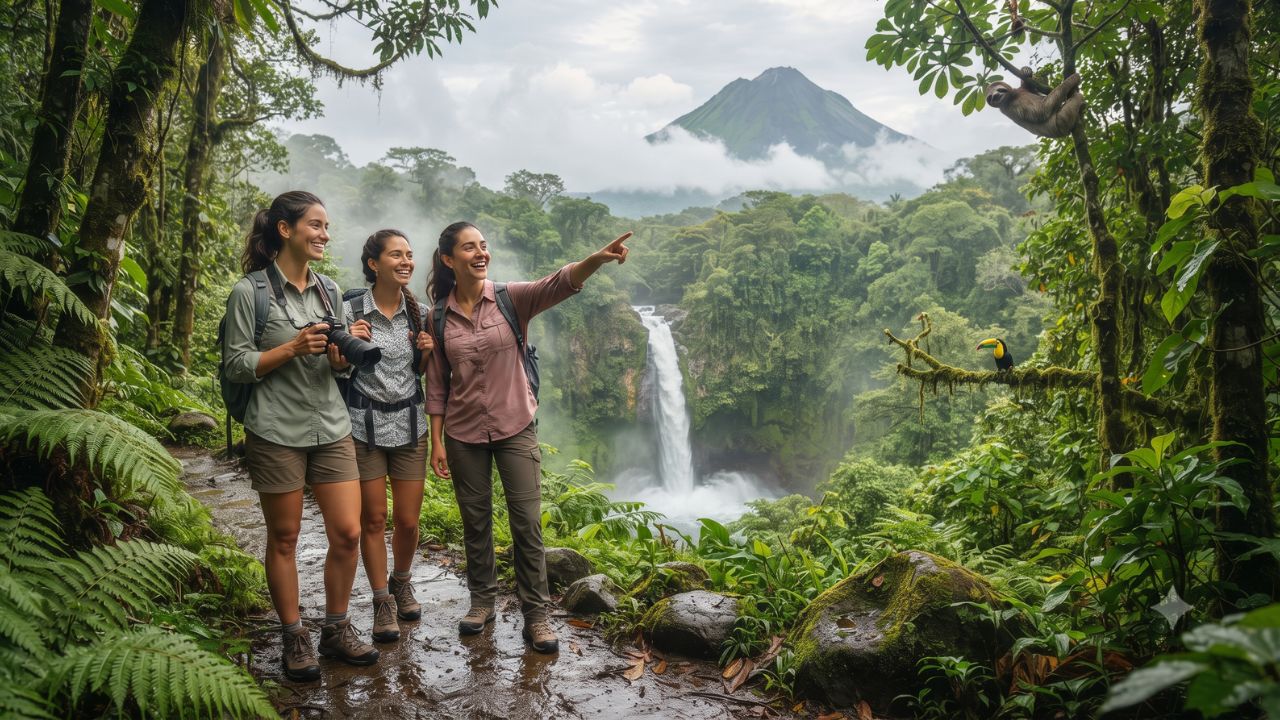
While peak dry-season tourists pay premium rates between December and April, local naturalists know that Costa Rica’s true ecological peak occurs during the green season from May through November. Morning skies are typically clear and sunny, followed by afternoon tropical rains that replenish thundering waterfalls, awaken dormant amphibians, and trigger humpback whale migrations along the Pacific coast.
Rather than disrupting travel, the green season (locally referred to as temporada verde) offers lower accommodation rates, quiet national park trails, and heightened wildlife activity. According to the Costa Rican Tourism Institute (ICT), travelers who align their daily schedules with the natural rhythm of the tropics can explore volcanic reserves, canopy hanging bridges, and coastal rainforests at a relaxed pace.
Rainforest Canopies, Volcanic Slopes, and Turquoise Rivers
Costa Rica’s diverse microclimates create distinct regional experiences during the green season:
- La Fortuna and Arenal Volcano: Heavy rain recharges thermal aquifers feeding natural hot spring rivers like the Tabacón and EcoTermales. Hiking the lava fields of Arenal 1968 and descending the 500 steps to the base of the 230-foot La Fortuna Waterfall reveals powerful torrents surrounded by dense green canyon walls.
- Monteverde Cloud Forest Reserve: Perched along the continental divide, cooler high-altitude mist nourishes ancient epiphytes, orchids, and mosses. Walking the hanging bridges of the Children's Eternal Rainforest in the morning offers exceptional opportunities to spot the resplendent quetzal, three-wattled bellbirds, and howling troops of mantled howler monkeys.
- Tenorio Volcano and Río Celeste: Located near the rural farming community of Bijagua de Upala, Tenorio Volcano National Park features the optical phenomenon of Río Celeste, where volcanic minerals mix to turn the river brilliant sky-blue. Early morning hikes ensure clear water views before heavy late-afternoon downpours stir up sediment.
- Manuel Antonio National Park: Combining primary coastal rainforest with white-sand Pacific coves, visitors can observe two-toed and three-toed sloths, white-faced capuchin monkeys, and land crabs along the Punta Catedral trail.
Green Season Regional Directory and Activity Matrix
| Destination | Signature Green Season Highlight | Morning Activity Focus | Afternoon Weather Consideration |
|---|---|---|---|
| La Fortuna / Arenal | Hot springs, waterfall torrents & lava fields | 7:00 AM hikes at Arenal 1968 | Afternoon rains ideal for thermal spring soaking |
| Monteverde | Cloud forest canopy walks & ziplining | 6:30 AM guided birdwatching | Misty fog and passing rain showers; pack layers |
| Tenorio (Río Celeste) | Sky-blue mineral waterfall & river pools | 8:00 AM trail departures | Heavy rainfall can temporarily cloud river colors |
| Manuel Antonio | Wildlife coastal hikes & secluded coves | 7:00 AM park entry for wildlife | Tropical downpours; sea remains warm for swimming |
| South Pacific Coast | Humpback whale migration (Marino Ballena) | Morning boat departures | Late summer/early autumn peak migration window |
| Lake Arenal | Scenic boat taxi between Arenal & Monteverde | Morning lake crossings | Afternoon choppy waters; confirm boat schedules |
Traditional Soda Dining and Farmhouse Flavors
Refueling between muddy trail treks offers a direct introduction to traditional Tico culinary culture at open-air roadside eateries known as sodas:
- Gallo Pinto: The national breakfast staple of white rice and black beans seasoned with coriander, onions, sweet peppers, and sweet-tangy Lizano sauce, served alongside farm eggs, fried sweet plantains, and fresh farmer's cheese (turrialba).
- Casado: The quintessential midday plate featuring rice, black beans, cabbage salad, sweet plantains, and your choice of grilled fish, chicken, or braised beef.
- Patacones: Thick slices of green plantain smashed flat and double-fried until golden, served with savory refried black beans and fresh pico de gallo.
- Natural Frescos: Fresh tropical juices blended to order with water (en agua) or milk (en leche), featuring seasonal passion fruit (maracuyá), soursop (guanábana), blackberry (mora), or starfruit (carambola).
Visitor Insider Tips
- Adopt the "Early In, Early Out" Trail Strategy: Set alarms early. Most tropical rain showers develop between 2:00 PM and 5:00 PM. Arriving at national park gates right at 7:00 AM guarantees dry hiking conditions, optimal lighting for photography, and the highest concentration of active birdlife and mammals.
- Invest in Waterproof Dry Bags: Do not rely solely on water-resistant backpack covers during torrential tropical downpours. Store camera equipment, smartphones, passports, and dry socks inside sealed 10-liter or 20-liter roll-top dry bags.
- Rent a 4WD Vehicle: Secondary gravel roads connecting La Fortuna to Monteverde around Lake Arenal, or routes leading into Bijagua de Upala, develop deep ruts and mud patches during the rainy months. A high-clearance four-wheel-drive vehicle is essential.
- Book Park Tickets Exclusively Online: SINAC requires all travelers to purchase advance timed-entry permits for Manuel Antonio, Poás Volcano, and Tenorio Volcano online. Tickets are not sold at park entrance gates.
Cultural and Environmental Context
Costa Rica’s green season plays a fundamental role in sustaining the country's world-leading biodiversity. Rain cycles replenish municipal watersheds, drive hydroelectric power generation, and provide life-giving moisture to protected conservation corridors that harbor 5% of the planet's total biodiversity across just 0.03% of the earth's surface.
For rural farming and ecotourism communities, shoulder-season visitors provide vital economic stability. By hiring certified local naturalist guides, patronizing family-owned sodas, and staying in community-run ecolodges, travelers prevent seasonal layoffs and support grassroots conservation programs that protect primary rainforests from illegal logging and agricultural encroachment.
FAQ: Visiting Costa Rica During the Green Season
What months make up Costa Rica's green season?
The green season spans from May through November across most of the Pacific and Central regions, characterized by sunny mornings and afternoon showers.
Does it rain continuously all day during the green season?
No. Typical green season weather features clear, sunny skies throughout the morning, with tropical rain showers developing in the mid-to-late afternoon.
What should I pack for green season travel in Costa Rica?
Pack a lightweight breathable rain shell, quick-drying hiking apparel, sturdy waterproof trail shoes, EPA-registered insect repellent, and roll-top dry bags.
Can I see humpback whales during the rainy season?
Yes. The southern Pacific coast (especially around Marino Ballena National Park in Uvita) hosts migrating southern hemisphere humpback whales from late July through October.
When the afternoon rain taps gently against broad palm fronds, Costa Rica's rainforest breathes with a primeval energy that dry-season travelers never get to experience.
Related Travel Guides
Disclaimer
This article is for informational and educational purposes only. It does not constitute legal, financial, or professional advice. While we strive to provide accurate and up-to-date information, travel policies, regulations, and conditions change rapidly. Always verify information with official sources before making travel decisions. Nomad Lawyer makes no representations about the accuracy, reliability, completeness, or suitability of the information provided. Readers should consult qualified professionals for advice specific to their circumstances. The views expressed in this article are those of the author and do not necessarily reflect the views of Nomad Lawyer.
Raushan Kumar
Founder & Lead Developer
Full-stack developer with 11+ years of experience and a passionate traveller. Raushan built Nomad Lawyer from the ground up with a vision to create the best travel and law experience on the web.
Learn more about our team →