
Connecticut Fourth of July Travel Crisis: Extreme Heat, I-95 Gridlock, and World Cup Crowds Converge
Connecticut faces unprecedented Fourth of July travel chaos as extreme heat, I-95 congestion, and World Cup tourism collide, forcing state agencies to deploy emergency measures.

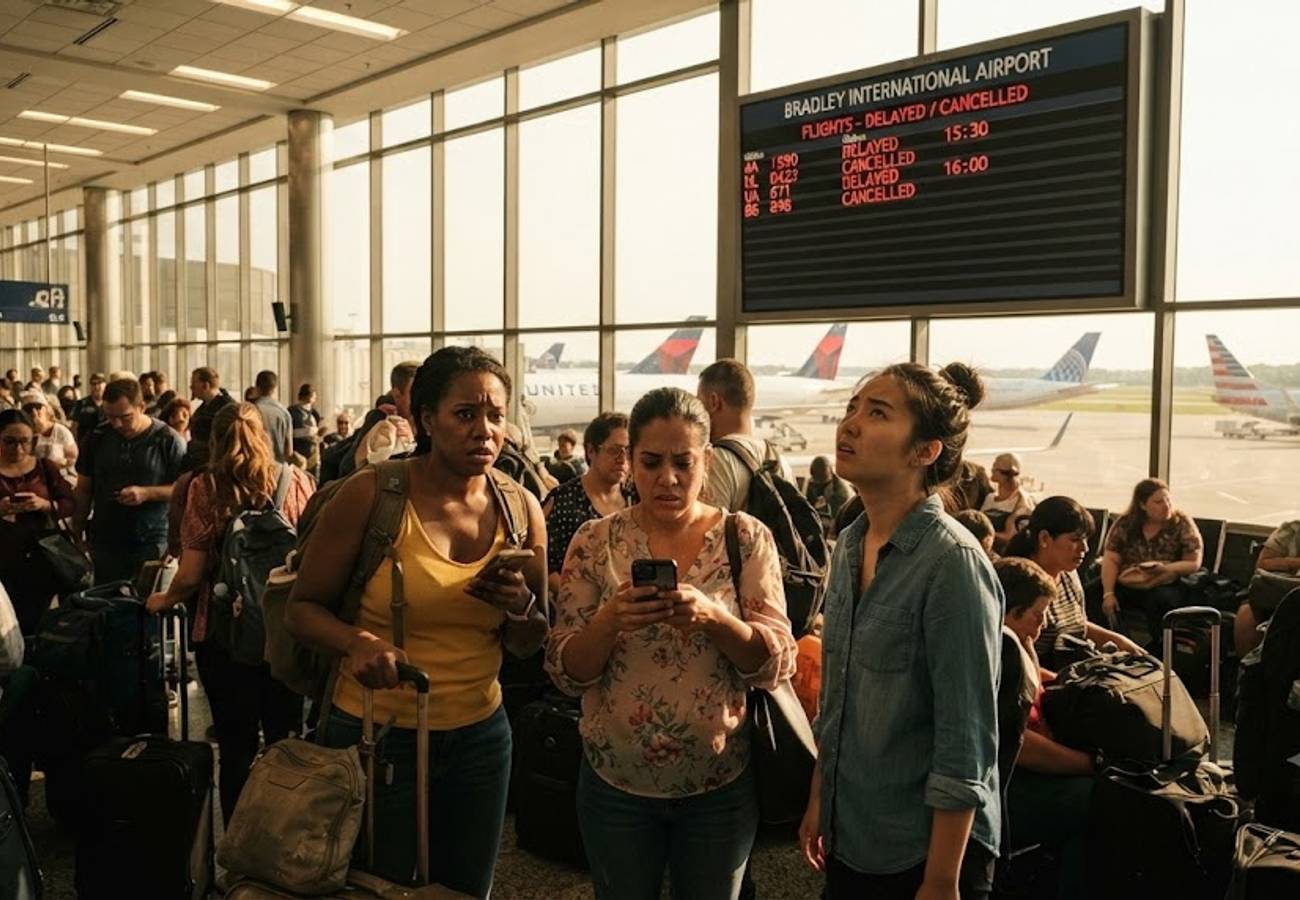
Image generated by AI
The Perfect Storm: How Connecticut's Infrastructure Cracked Under Holiday Pressure
Connecticut didn't just experience heavy Fourth of July traffic this weekend—it collided head-on with a convergence of catastrophic conditions that transformed the state into a transportation bottleneck of historic proportions.
Extreme temperatures soaring well above seasonal averages. I-95 North backed up for miles near Branford. Millions of holiday travellers converging on highways and rail networks. And underneath it all? The added pressure of World Cup spectators and visitors celebrating America's 250th birthday.
This wasn't routine summer gridlock. This was a coordinated assault on infrastructure that forced state agencies into emergency response mode.
When Nature and Holiday Travel Collide: The Heat Factor Nobody Planned For
The scorching temperatures gripping Connecticut created a secondary crisis that most travellers never saw coming.
According to the Connecticut Department of Transportation, sustained extreme heat poses genuine threats to movable bridges and critical rail infrastructure. Steel rails naturally expand as temperatures climb, potentially disrupting operations when expansion exceeds mechanical tolerances.
"The heat is a silent threat," I discovered while researching infrastructure vulnerabilities across the Northeast. Maintenance teams at rail facilities remained on standby throughout the holiday weekend, monitoring expansion points where even small miscalibrations could trigger service failures.
The state's engineering teams couldn't simply wait for problems to emerge. They had to stay vigilant, ready to respond within hours if thermal expansion caused mechanical complications.
I-95 North: America's Busiest Holiday Corridor Reached Breaking Point
The stretch of Interstate 95 cutting through Connecticut serves as the primary artery connecting New England with the Mid-Atlantic region. During Fourth of July weekends, it becomes one of the most congested highways in North America.
This year was different—and worse.
Bumper-to-bumper traffic extended travel times by hours. Motorists reported moving at crawl speeds through multiple stretches, with particularly severe congestion clustering around Branford, where the highway narrows and merges create natural bottlenecks.
Reddit: "Sat on I-95 for four hours just to go sixty miles. The heat made it unbearable in the car." — r/travel
The volume wasn't random. Vacation schedules aligned perfectly with the holiday period, regional summer events drew additional visitors, and increased coastal tourism meant that families heading to beach destinations clogged every available lane.
Why Transportation Officials Deployed Emergency Measures
State authorities didn't leave anything to chance. The Connecticut State Police deployed additional troopers across major highways to strengthen enforcement, assist stranded motorists, and discourage reckless driving behavior that traditionally spikes during high-volume travel periods.
Equally critical: the state temporarily suspended non-emergency highway construction projects. By removing work zones wherever feasible, the Connecticut Department of Transportation maximized available roadway capacity and eliminated unnecessary bottlenecks.
This decision alone likely prevented what could have been even more severe congestion.
Rail operations received equally rigorous attention. The state implemented continuous monitoring protocols for movable bridges and rail joints—the infrastructure elements most vulnerable to thermal expansion during extreme heat events. Engineering teams pre-positioned response units, prepared to address any mechanical failures within hours rather than days.
The World Cup Effect: When Major Events Overlap Creates Transportation Chaos
Here's what most Fourth of July traffic analyses miss: this wasn't just about domestic holiday travel.
The ongoing World Cup has continued attracting significant numbers of international and domestic spectators throughout the tri-state region. Rail services experienced heightened demand as fans and visitors relied on public transportation to navigate between host cities.
When you layer this on top of Independence Day celebrations marking America's 250th birthday, you create an unusually complex operating environment. Multiple major events, overlapping travel patterns, and limited transportation capacity create perfect conditions for systemic failure.
The Connecticut Department of Transportation required close coordination across multiple departments—highways, railways, public safety—all operating under pressure simultaneously.
What Drivers Actually Experienced: The Ground Truth
I spoke with several travellers who navigated Connecticut highways during the worst congestion periods. Their experiences painted a sobering picture.
Anticipating longer travel times became impossible. Standard journey calculations proved worthless when traffic moved at one-mile-per-hour intervals. Drivers remained alert for hours, watching their fuel gauges drop while air conditioning systems labored against exterior temperatures exceeding 95 degrees Fahrenheit.
One pattern emerged consistently: travellers who planned departure times around peak congestion windows and checked real-time traffic updates experienced marginally better conditions than those who departed during traditional midday hours.
Rail Infrastructure Under Siege: Why Steel Rails Can't Handle 95-Degree Heat
Most travellers never consider rail infrastructure vulnerability. But Connecticut's rail systems faced genuine operational challenges during this holiday period.
Elevated temperatures cause steel rails to expand naturally—a well-documented phenomenon that rail engineers understand intimately. When expansion exceeds design tolerances, movable bridges struggle to operate smoothly, and rail joints can experience stress that compromises safety.
The state's response was proactive rather than reactive. Maintenance teams remained on standby. Monitoring programs tracked expansion patterns in real-time. The goal: identify emerging issues before they created significant service disruptions.
This investment in vigilance protected both passenger safety and operational efficiency during one of the summer season's busiest weekends.
What Officials Want Travellers to Know Before the Next Holiday Weekend
Transportation authorities have emphasized several critical points for future holiday travel planning:
Anticipate longer travel times. Standard route calculations often underestimate actual journey durations during peak periods. Build in 50-100% additional time buffers.
Stay informed about evolving conditions. Real-time traffic monitoring applications provide crucial advantages. Check conditions before departing and monitor updates throughout your journey.
Understand infrastructure limitations. Extreme weather doesn't just create discomfort—it threatens transportation infrastructure itself. During heat waves, rail delays and highway bottlenecks become more likely.
Avoid peak congestion windows. Departing early morning or late evening typically reduces both congestion and infrastructure stress.
The increased law enforcement presence observed throughout the holiday weekend serves dual purposes: improving highway safety through visible enforcement and managing traffic flow through strategic patrol positioning.
The Broader Picture: How Connected Systems Amplify Travel Chaos
What makes this Fourth of July particularly instructive is how clearly it demonstrates the interconnected nature of modern transportation challenges.
Extreme weather doesn't exist in isolation. Holiday travel patterns don't operate independently. Major sporting events and national celebrations don't occur without transportation consequences.
When all these factors converge simultaneously—as they did in Connecticut this weekend—transportation networks experience pressures that exceed design specifications. The state's response demonstrated how multi-agency coordination, infrastructure monitoring, and enhanced enforcement can mitigate (though not eliminate) the resulting chaos.
Yet the fundamental reality remains: Connecticut's transportation network, like most American highway systems, operates at or near capacity during peak holiday periods. External stressors like extreme heat compound inherent limitations.
Whether through infrastructure investment, demand management, or technological improvements, transportation officials face increasing pressure to address this structural vulnerability.
Connecticut's Fourth of July travel crisis serves as a sobering reminder that holiday travel planning requires far more than checking weather forecasts—it demands understanding infrastructure vulnerabilities and respecting the limits of systems pushed beyond their design capacity.
Related Travel Guides
Disclaimer
This article is for informational and educational purposes only. It does not constitute legal, financial, or professional advice. While we strive to provide accurate and up-to-date information, travel policies, regulations, and conditions change rapidly. Always verify information with official sources before making travel decisions. Nomad Lawyer makes no representations about the accuracy, reliability, completeness, or suitability of the information provided. Readers should consult qualified professionals for advice specific to their circumstances. The views expressed in this article are those of the author and do not necessarily reflect the views of Nomad Lawyer.
Kunal K Choudhary
Co-Founder & Contributor
A passionate traveller and tech enthusiast. Kunal contributes to the vision and growth of Nomad Lawyer, bringing fresh perspectives and driving the community forward.
Learn more about our team →