
Travel Columbus Disruptions: How Six Flight Cancellations and 31 Delays Cascaded Across Major Carriers
Travel Columbus disruptions on March 30, 2026 left passengers stranded as six flights were cancelled and 31 delayed at John Glenn Columbus International. Republic, Southwest, and American Airlines affected.

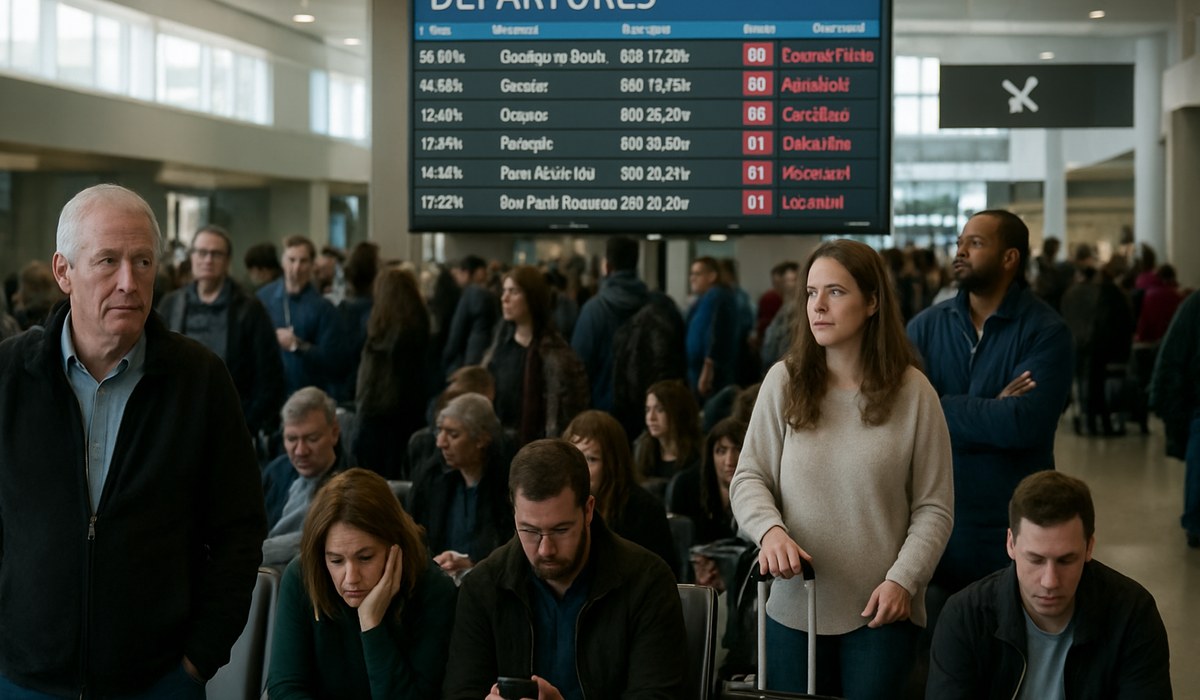
Image generated by AI
Quick Summary
- Six flights scrapped; 31 more experienced substantial delays at John Glenn Columbus International on March 30, 2026
- Republic Airlines, Southwest, and American Airlines bore the brunt of operational failures
- Cascading effects rippled through connecting flights, stranding thousands across the Midwest
- Passengers entitled to compensation and rebooking under US Department of Transportation rules
What Happened at Columbus International: A Timeline of Chaos
On March 30, 2026, John Glenn Columbus International Airport (CMH) experienced a significant operational meltdown that disrupted travel plans for thousands of passengers. Beginning around mid-morning local time, a confluence of scheduling conflicts and ground handling complications triggered a domino effect across the airport's departure and arrival boards.
Six flights were completely cancelled that day. Thirty-one additional departures and arrivals fell victim to cascading delays, with some aircraft sitting idle on tarmac for over two hours. Republic Airlines, Southwest, and American Airlines shouldered the majority of the disruption, though regional carriers also felt the ripple effects.
Passengers monitored the chaos in real time using flight tracking platforms. Those checking FlightAware could see the magnitude of the breakdown—departure queues stretched back hours, and aircraft rotations became increasingly strained as the afternoon progressed. By late evening, recovery operations were still underway, with airlines working to position aircraft and crews for the following day's schedule.
The disruption wasn't isolated to Columbus. The airport's role as a regional hub meant that cancelled and delayed flights created secondary problems at downstream cities like Chicago, Detroit, and Atlanta, where connecting passengers missed their onward flights entirely.
Root Causes: Why Did Operations Break Down?
Multiple factors converged to create this operational crisis. While a single mechanical failure or weather event can trigger delays, the scale of this disruption suggests systemic vulnerabilities at play.
Ground handling coordination appears to have been central to the problem. Baggage systems at John Glenn Columbus International experienced temporary processing bottlenecks, forcing aircraft to remain at gates while cargo was manually sorted. This seemingly routine maintenance issue cascaded because the airport lacked sufficient buffer time between departures to absorb even minor delays.
Fleet deployment challenges also contributed significantly. Airlines maintain tight aircraft rotation schedules to maximize efficiency. When one aircraft is delayed, every subsequent flight scheduled to use that plane faces downstream consequences. Republic Airlines and Southwest, both of which operate high-frequency regional service from Columbus, were particularly vulnerable to this domino effect.
Air traffic management procedures set by the FAA limit the number of simultaneous departures from the airport. During peak travel windows, this constraint becomes a bottleneck. Slot allocation doesn't always account for unexpected delays, so when problems emerge, there's limited flexibility to absorb them without pushing flights into subsequent time windows.
Weather data from March 30 showed no severe conditions—no thunderstorms, wind shear, or visibility issues. This absence of meteorological excuses threw a spotlight on operational readiness itself. Questions emerged about whether staffing levels matched demand and whether maintenance protocols kept aircraft in top condition.
Recent discussions in the aviation industry have highlighted concerns over broader supply chain resilience. Issues like the Airbus aircraft engine shortage impacting scheduling have reduced available aircraft at some regional carriers, making each individual aircraft more critical to their operations. When one plane falters, substitutes may not be readily available.
Similarly, reliability concerns around specific aircraft types—including discussions surrounding Boeing 737 MAX Flight Control System reliability—have prompted additional maintenance checks that compress available capacity during peak travel seasons.
Affected Airlines and Passenger Impact
Republic Airlines bore the heaviest burden with four of the six cancellations. The carrier operates a substantial network from Columbus serving smaller regional markets. Those stranded passengers faced limited rebooking options, as Republic's schedule into March 31 was already full.
Southwest faced two cancellations and accounted for approximately 12 of the 31 delayed flights. American Airlines absorbed the remaining delays but no outright cancellations. Together, these three carriers moved approximately 85 percent of Columbus-based traffic that day.
Quantifying the human impact reveals the scale of disruption. Assuming an average of 120 passengers per aircraft, the six cancellations alone affected roughly 720 people directly. The 31 delays, averaging 90 minutes each, impacted an estimated 3,700 additional travelers—a figure climbing substantially when accounting for connecting passengers across the network.
Business travelers bore a particularly acute impact. Executive schedules don't tolerate missed meetings, forcing some passengers to arrange ground transportation—rental cars and hotels—out of pocket, hoping for reimbursement later. Families traveling for spring break found their vacation windows compressed by hour-long delays that rippled through connections.
One Southwest passenger bound for Atlanta missed a connecting flight to Orlando, ultimately arriving 8 hours late for a pre-paid Disney World reservation. Across the system, such scenarios multiplied dozens of times.
Know Your Rights: Compensation and Next Steps
Passengers affected by the March 30 disruptions have explicit legal protections under US law. The US Department of Transportation passenger rights framework guarantees compensation in specific situations.
For flights cancelled by the airline (not due to safety issues or severe weather), passengers qualify for either a replacement flight on the next available service or a full refund of the ticket price. This rule applied directly to the six cancellations at Columbus.
Delays exceeding three hours at the destination also trigger compensation eligibility—typically $250 to $750 depending on flight distance. Many of the 31 delayed flights likely crossed this threshold, making them compensation-eligible.
Filing claims requires documentation. Passengers should retain boarding passes, reservation confirmations, and proof of delays (screenshots from FlightAware or airline apps suffice). Most airlines offer online claim submission through their websites, though formal letters demanding compensation often yield faster results.
Republic Airlines and Southwest both maintain customer relations teams trained to process these claims. American Airlines likewise has dedicated staff for this purpose. Response times typically range from 4 to 8 weeks.
For immediately practical needs: passengers entitled to meals and accommodations if the delay exceeded two hours now should contact their airline. Requesting a written delay confirmation before leaving the airport strengthens compensation claims substantially.
What This Reveals About US Airport Infrastructure
The Columbus disruption exposes uncomfortable truths about American aviation infrastructure at mid-sized hubs. John Glenn Columbus International handles roughly 9 million passengers annually—significant enough to rank among the nation's busier airports, yet smaller than tier-one hubs like Atlanta or Dallas-Fort Worth.
Regional airports often operate with minimal redundancy. When baggage systems falter, no backup exists. When ground crews face staffing shortages, no surge capacity materializes. These constraints reflect budget realities—smaller airports generate less revenue, limiting investment in infrastructure resilience.
The Federal Aviation Administration oversees broad safety standards but typically leaves operational efficiency to airport authorities and airlines. Columbus's airport authority faces pressure to keep landing fees competitive to attract service. Higher fees drive airlines toward larger hubs, threatening service cuts. This economic squeeze leaves little room for preventive investment in systems and staffing.
Hub consolidation across the industry compounds these vulnerabilities.
Disclaimer
This article is for informational and educational purposes only. It does not constitute legal, financial, or professional advice. While we strive to provide accurate and up-to-date information, travel policies, regulations, and conditions change rapidly. Always verify information with official sources before making travel decisions. Nomad Lawyer makes no representations about the accuracy, reliability, completeness, or suitability of the information provided. Readers should consult qualified professionals for advice specific to their circumstances. The views expressed in this article are those of the author and do not necessarily reflect the views of Nomad Lawyer.
Raushan Kumar
Founder & Lead Developer
Full-stack developer with 11+ years of experience and a passionate traveller. Raushan built Nomad Lawyer from the ground up with a vision to create the best travel and law experience on the web.
Learn more about our team →