
Autumn Travel Disruptions 2026: How Fuel Pressures and Lodge Closures Are Reshaping US National Park Gateways

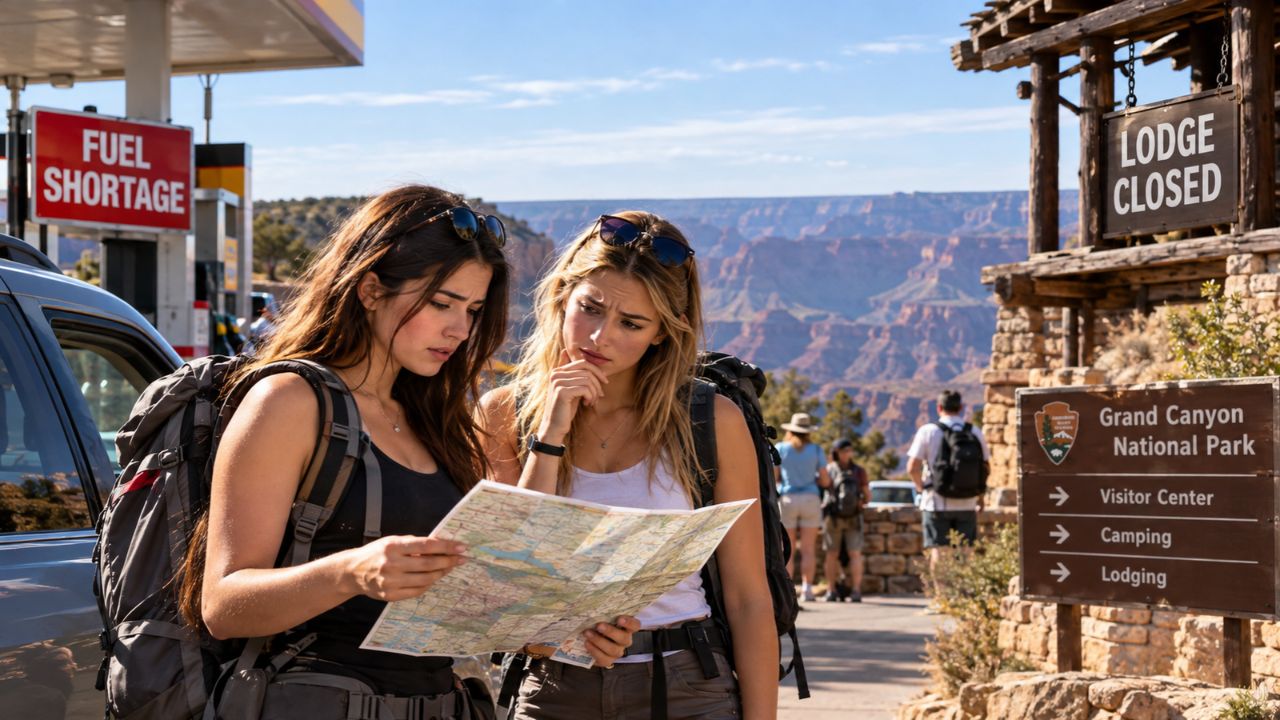
When flood-related water pipeline failures forced historic South Rim accommodations including El Tovar Hotel and Bright Angel Lodge to suspend overnight bookings, Coconino County highlighted how fragile seasonal tourism infrastructure can be. While autumn foliage and cooler mountain temperatures traditionally spark a surge in road-trip travelers, a convergence of infrastructure repairs, rising fuel expenses, and localized lodging closures is testing gateway economies from the desert Southwest to the Blue Ridge Mountains.
Rather than representing an industry-wide shutdown, the 2026 autumn travel period is exposing vulnerabilities in regions that depend on narrow seasonal booking windows. In rural and remote counties where public transit alternatives do not exist, changes in retail gasoline prices and accommodation availability directly influence whether travelers complete multi-state itineraries or scale back their journeys.
Regional Infrastructure Pressures Across Autumn Travel Corridors
In Northern Arizona, Coconino County serves as the primary staging ground for millions of visitors heading toward Grand Canyon National Park and Flagstaff. The temporary interruption of lodging services at flagship rim properties shifted pressure onto gateway hotels along Highway 64 and Interstate 40. For travelers accustomed to staying inside park boundaries managed by the National Park Service, unexpected operational adjustments require booking rooms 30 to 60 miles away, increasing daily driving times and localized vehicle congestion.
On the East Coast, Buncombe County, North Carolina—anchored by Asheville and the surrounding Blue Ridge Mountains—is working to sustain visitor confidence during its premier fall foliage window. In mountainous terrain, seasonal tourism remains susceptible to storm-related route closures and prolonged utility maintenance. Because autumn foliage excursions represent the primary annual revenue generator for regional craft markets, bed-and-breakfasts, and independent dining venues, any interruption along scenic corridors such as the Blue Ridge Parkway reverberates throughout western North Carolina, a reality documented by Visit North Carolina.
Island ecosystems face distinct logistical challenges. In Hawaii County and Maui County, the visitor economy depends on complex maritime fuel shipping lanes and inter-island air routes. Any disruption to harbor facilities or aviation fuel supply chains elevates operating overheads for boat excursion operators, inter-island regional airlines, and resort properties, highlighting the difference between mainland road-trip hubs and isolated maritime destinations.
Assessing Vulnerability Factors Across US Tourism Counties
To understand how localized pressures alter visitor experiences, examining the operational risks across primary tourism corridors provides essential clarity for fall trip planning.
| County & Region | State | Primary Tourism Asset | Primary 2026 Fall Risk Factor | Accommodation & Access Status |
|---|---|---|---|---|
| Coconino County | Arizona | Grand Canyon National Park, Flagstaff corridor | Utility and pipeline infrastructure disruption | Historic lodges including El Tovar and Bright Angel faced temporary closures |
| Buncombe County | North Carolina | Asheville, Blue Ridge Mountains foliage | Severe weather recovery and scenic route access | Regional occupancy varies; utility stabilization underway |
| Hawaii County | Hawaii | Hawaii Volcanoes National Park, Big Island coastline | Marine shipping logistics and aviation fuel costs | Resort operations active with elevated logistical overheads |
| Maui County | Hawaii | West Maui beaches, Haleakala National Park | Ongoing accommodation capacity recovery | Luxury resorts operating under refined capacity frameworks |
| Monroe County | Florida | Florida Keys, marine and reef tourism | Marine fuel dependence and single-highway access (US-1) | Small boutique motels exposed to operating cost swings |
| Navajo County | Arizona | Petrified Forest, White Mountains recreation | Road-trip travel sensitivity and long driving routes | Rural motor lodges sensitive to gasoline price adjustments |
| Teton & Jackson County | Wyoming | Grand Teton National Park, Jackson Hole | High vehicle travel expenses and premium room rates | Limited budget lodging inventory during shoulder season |
| Grand & San Juan Counties | Utah | Arches National Park, Canyonlands, Moab trails | High automobile dependence for backcountry access | Peak seasonal occupancy concentrated in central Moab |
The Compounding Influence of Road-Trip Travel Costs
Outside major metropolitan transit networks, outdoor recreation in the American West and mountain Southeast requires private vehicle mobility. When gasoline prices fluctuate alongside broader inflation, leisure travelers calculate total expenditure by weighing fuel outlays against lodging and dining budgets.
In gateway hubs such as Grand County and San Juan County in Utah, visitors routinely drive between Arches, Canyonlands, and Dead Horse Point State Park across multiple days. If gasoline costs consume a larger share of the vacation budget, travelers often shorten their stays from four nights to two, pack independent meals, or choose dispersed public land camping over downtown motel bookings.
Similarly, in Wyoming's Teton County, where baseline accommodation rates remain among the highest in the national park system, high transportation expenses prompt price-sensitive visitors to bypass multi-day stays in Jackson in favor of day trips from neighboring communities in Idaho.
Visitor Insider Tips for Fall Travel Planning
Travelers exploring national park corridors this autumn can avoid major logistical bottlenecks by implementing practical adjustments.
- Verify Park Utility Status Directly: Before departing for remote destinations like the Grand Canyon South Rim, review official park utility alerts. If core facilities experience water maintenance, carry secondary potable water containers and confirm operating hours for park grocery stores.
- Establish Secondary Gateway Bases: When premier gateway towns like Flagstaff, Asheville, or Moab face tight room inventory or elevated pricing, look at secondary towns located 35 to 50 miles outside the main entrance. Towns like Williams in Arizona, Waynesville in North Carolina, or Monticello in Utah frequently offer stable availability.
- Pack Self-Sustaining Day Kits: Rural service stations along stretches of Highway 89 in northern Arizona and Highway 191 in southeastern Utah can experience long queues during holiday weekends. Keep your vehicle tank above a quarter-full and carry trail snacks to reduce reliance on roadside convenience stops.
- Monitor Highway Administration Feeds: In mountain areas like the Blue Ridge or the Southern Rockies, sudden autumn storms or maintenance work can close high-elevation gaps. Check state department of transportation mapping feeds each morning before setting out.
Cultural and Environmental Context of Seasonal Gateway Economies
The economic health of America's outdoor gateway communities is tied directly to seasonal visitor spending. In small mountain and desert towns, municipal sales tax revenues collected during the September-to-November window fund year-round community services, including emergency medical teams, road resurfacing, and municipal water management.
When disruptions occur, the strain falls heavily on small independent businesses—such as family-owned outfitters, roadside bakeries, and local guides—that operate on narrow profit margins. In places like Buncombe County and Coconino County, destination management organizations are encouraging visitors to adopt respectful, low-impact travel behaviors that support local businesses without overburdening fragile local infrastructure.
Simultaneously, conservation authorities emphasize the importance of staying on marked trails and respecting temporary facility closures. When high visitor traffic converges on limited open lodges or day-use sites, Leave No Trace practices become vital to protecting historical landmarks and surrounding ecosystems.
FAQ: Visiting US National Park Gateways in Autumn 2026
Are the Grand Canyon South Rim lodges open for visitors?
While temporary utility repairs affected select properties such as El Tovar and Bright Angel Lodge, day-use park access and surrounding gateway services remain fully accessible.
How are road conditions in western North Carolina during fall foliage?
Primary highways connecting Asheville remain operational, though visitors should monitor state transport portals for real-time updates on high-elevation scenic roadways and parkway segments.
Is car rental necessary for visiting Utah's national park counties?
Yes. Grand County and San Juan County feature vast distances between park trailheads, scenic overlooks, and lodging bases, making private vehicles indispensable.
How can travelers support local businesses in affected seasonal counties?
Booking guided tours with local outfitters, dining at independent downtown eateries, and purchasing regional artisan goods directly strengthens gateway economies during recovery periods.
Thoughtful route planning and local awareness transform unexpected travel shifts into authentic discoveries across America's scenic heartlands.
Related Travel Guides
Disclaimer
This article is for informational and educational purposes only. It does not constitute legal, financial, or professional advice. While we strive to provide accurate and up-to-date information, travel policies, regulations, and conditions change rapidly. Always verify information with official sources before making travel decisions. Nomad Lawyer makes no representations about the accuracy, reliability, completeness, or suitability of the information provided. Readers should consult qualified professionals for advice specific to their circumstances. The views expressed in this article are those of the author and do not necessarily reflect the views of Nomad Lawyer.
Raushan Kumar
Founder & Lead Developer
Full-stack developer with 11+ years of experience and a passionate traveller. Raushan built Nomad Lawyer from the ground up with a vision to create the best travel and law experience on the web.
Learn more about our team →