
Cockpit McDonnell Douglas MD-80: America's Last Analog Commercial Jet
The McDonnell Douglas MD-80 remains America's final commercial airliner with a fully analog cockpit in 2026. Nearly 50 years after its debut, some examples still operate globally today.

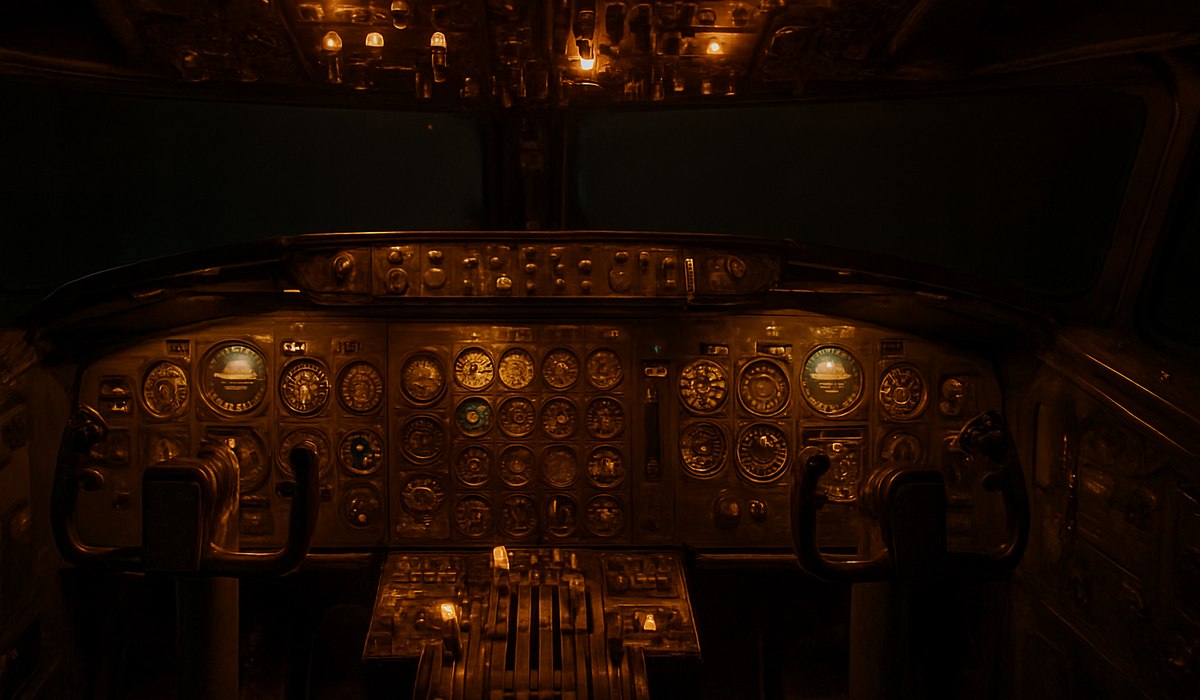
Image generated by AI
The Final Analog Marvel: McDonnell Douglas MD-80 Dominates Aviation History
The McDonnell Douglas MD-80 stands alone as America's last commercial airliner built with a fully analog cockpit still in active service worldwide. Decades after its October 1980 debut with Swissair, this engineering legacy continues flying passengers across regional routes. The aircraft represents a remarkable bridge between aviation's analog era and today's digital cockpits. With approximately 1,191 examples built by the US manufacturer, several remain operational despite the industry's shift toward glass cockpits and advanced avionics. Travelers boarding MD-80s experience a tangible connection to commercial aviation's golden age of mechanical precision and tactile instrumentation.
The MD-80: America's Final Analog Aircraft
The McDonnell Douglas MD-80 emerged as a stretched derivative of the DC-9, entering service during aviation's transition toward computerization. Its analog cockpit featured traditional round-dial instruments, mechanical systems, and electromechanical controls that required pilot skill and experience to master. This design philosophy contrasted sharply with competitors who introduced digital glass cockpits during the 1980s and 1990s.
The aircraft's instrument panel contained mechanical altimeters, traditional attitude indicators, and analog airspeed indicators—systems that performed reliably without requiring sophisticated computer backups. Pilots appreciated the straightforward design and ease of troubleshooting mechanical failures compared to complex digital systems. Airlines initially embraced the MD-80 for short-haul regional operations, where its fuel efficiency and passenger capacity made economic sense.
Today's operational MD-80s serve as living museums of cockpit design philosophy. Modern pilots transitioning to these aircraft must undergo specific training on analog systems unfamiliar to younger aviators trained exclusively on contemporary glass cockpits. The FAA continues certifying MD-80 operations despite their age, recognizing the aircraft's safety record and mechanical reliability.
From Swissair Launch to Global Operations
Swissair's inaugural MD-80 service in October 1980 marked the beginning of a four-decade journey across international skies. The Swiss airline ordered multiple examples for their European network, establishing operational protocols that other carriers eventually adopted. Throughout the 1980s and 1990s, American, Delta, Northwest, and international carriers expanded their MD-80 fleets substantially.
The aircraft's sweet spot in regional aviation created enormous demand. Airlines appreciated the 150-seat capacity, economical operating costs, and reliable mechanical systems. Carrier networks from North America through Europe and into Asia incorporated MD-80s into their short-haul operations.
By the 2000s, retirements accelerated as newer aircraft like the Boeing 737 and Airbus A320 dominated the market. However, several operators maintained MD-80s in revenue service, particularly in Mexico, South America, and parts of Asia. Today's remaining operators value the aircraft's known mechanical characteristics and the ecosystem of spare parts supporting analog systems.
Why Analog Cockpits Became Obsolete
Digital glass cockpit technology revolutionized pilot workload management, navigation accuracy, and system redundancy during the 1990s. Advanced Flight Management Systems (FMS) automated complex calculations, reducing human error and improving fuel efficiency. Integrated displays consolidated information previously distributed across dozens of mechanical instruments.
Regulatory bodies recognized glass cockpits' safety advantages, offering reduced weather minimums and improved approach capabilities for equipped aircraft. Insurance companies incentivized operators to upgrade, offering premium reductions for modern avionics. The economics of aviation increasingly favored digital systems.
Analog cockpits required constant attention to multiple instruments. Pilots manually calculated drift, crosswind correction, and fuel consumption using navigation charts and mechanical computers. Modern glass cockpits present synthesized information, allowing pilots to focus on strategic decision-making rather than tactical calculations.
The transition reflected broader technological evolution across aviation. Engine monitoring systems progressed from mechanical gauges to comprehensive digital architecture. Communications shifted from VHF radio to data-link systems. The McDonnell Douglas MD-80, frozen in time with its analog equipment, became increasingly unique as industry standards evolved.
The Aircraft's Legacy in Modern Aviation
The MD-80's persistence in service represents more than nostalgia—it reflects genuine reliability and maintainability advantages in specific operational niches. Regional carriers operating short routes generate sufficient revenue to justify mechanical overhauls and parts procurement for older aircraft.
Aviation museums and enthusiast communities celebrate the MD-80 as a significant chapter in American aerospace manufacturing. The aircraft's design demonstrated that passenger safety doesn't require cutting-edge technology, challenging assumptions about mandatory modernization.
Some industry analysts suggest the MD-80's longevity proves analog systems' inherent robustness. Mechanical failure modes are visible, predictable, and manageable without complex troubleshooting software. This characteristic appeals to operators in developing economies where technical support for advanced avionics proves limited.
The cockpit McDonnell Douglas designed influenced how subsequent aircraft balanced automation with manual control. Airbus and Boeing incorporated lessons learned from MD-80 operations into their standard operating procedures and training protocols. The aircraft inadvertently shaped modern cockpit design by demonstrating what pilots needed to accomplish safely with minimal automation.
Key Data About the McDonnell Douglas MD-80
| Specification | Details |
|---|---|
| First Service | October 1980, Swissair |
| Total Built | 1,191 aircraft |
| Cockpit Type | Fully Analog (Last American Commercial) |
| Passenger Capacity | Approximately 150 seats |
| Range | 1,500-2,060 nautical miles |
| Production End | 1999 |
| Current Operators | Regional carriers in Americas, Asia, Latin America |
| Flight Deck Instruments | Mechanical gauges, electromechanical controls |
| Notable Feature | No integrated glass cockpit displays |
What This Means for Travelers
Booking flights on McDonnell Douglas MD-80 aircraft offers unique advantages and considerations for modern passengers:
-
Confirm Aircraft Type – Check your airline's fleet on FlightAware before booking, searching specifically for "MD-80" or "DC-9 family" aircraft to understand cockpit technology.
-
Expect Traditional Cabin Design – Analog-era aircraft feature narrower overhead bins, smaller lavatories, and less sophisticated entertainment systems compared to contemporary narrowbody jets.
-
Experience Proven Safety Records – Despite advanced age, operational MD-80s maintain excellent safety records maintained through rigorous mechanical inspection and manufacturer support.
-
Understand Regional Network Focus – MD-80s primarily operate short-haul routes under two hours, concentrating on profitability-optimized networks rather than long-distance international service.
-
Plan for Potential Schedule Changes – Mechanical unpredictability increases slightly with older aircraft, potentially affecting schedule reliability compared to modern fleet options.
-
Verify Flight Status Actively – Use the FAA's official resources at faa.gov and monitor real-time tracking through FlightAware to track MD-80 operations, as older aircraft may experience schedule adjustments.
Frequently Asked Questions
Q: Is it safe to fly on an MD-80 with an analog cockpit? A: Yes. The MD-80 maintains an excellent safety record among operating aircraft. Analog systems, while older, have proven reliability through decades of commercial operation. Regulatory certification ensures continued airworthiness. Mechanical failure modes are predictable and manageable through proven maintenance protocols.
Q: Which airlines currently operate McDonnell Douglas MD-80 aircraft? A: Several carriers maintain MD-80s in operational service, primarily in Mexico, Central America, South America, and select Asian markets. Regional carriers value the aircraft's economics for short-haul routes. Check your
Disclaimer
This article is for informational and educational purposes only. It does not constitute legal, financial, or professional advice. While we strive to provide accurate and up-to-date information, travel policies, regulations, and conditions change rapidly. Always verify information with official sources before making travel decisions. Nomad Lawyer makes no representations about the accuracy, reliability, completeness, or suitability of the information provided. Readers should consult qualified professionals for advice specific to their circumstances. The views expressed in this article are those of the author and do not necessarily reflect the views of Nomad Lawyer.
Raushan Kumar
Founder & Lead Developer
Full-stack developer with 11+ years of experience and a passionate traveller. Raushan built Nomad Lawyer from the ground up with a vision to create the best travel and law experience on the web.
Learn more about our team →