
Premium Economy Boeing: How EVA Air's 1992 Innovation Still Dominates
EVA Air pioneered premium economy in 1992, revolutionizing long-haul travel. Three decades later, this cabin class remains the industry standard for affordable luxury on modern Boeing aircraft and beyond.

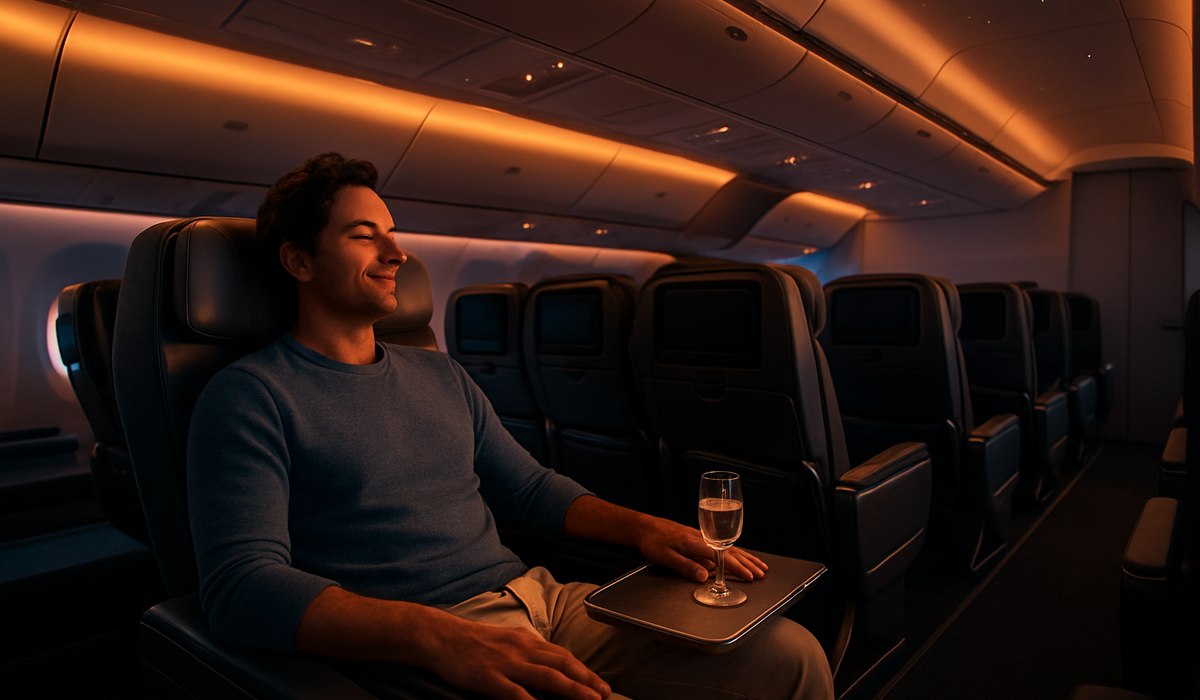
Image generated by AI
EVA Air's Revolutionary Birth of Premium Economy
EVA Air fundamentally transformed commercial aviation in 1992 when it introduced the world's first premium economy cabin class. This Taiwanese carrier recognized a critical market gap: millions of international travelers needed more comfort than standard economy offered, yet couldn't justify business-class fares for their budgets. The innovation emerged during EVA Air's expansion into long-haul markets, particularly Trans-Pacific routes connecting Asia to North America. This strategic decision to create an intermediate cabin class proved revolutionary, establishing a template that competing airlines would spend decades attempting to replicate across their fleets.
The timing proved perfect. As global business travel intensified throughout the 1990s, premium economy filled a legitimate demand. Passengers gained enhanced legroom, superior bedding, improved meal service, and dedicated cabin amenities without paying double-digit multiples above economy fares. EVA Air's vision wasn't merely about adding seats—it represented a fundamental philosophical shift in how airlines could structure their revenue models and serve diverse passenger demographics across increasingly competitive international routes.
How Premium Economy Boeing Aircraft Transformed Long-Haul Travel
The introduction of premium economy on Boeing aircraft revolutionized the passenger experience for intercontinental flights. EVA Air strategically deployed its premium economy products on Boeing 777 and 747 aircraft, maximizing profitability while delivering measurable passenger satisfaction improvements. Modern Boeing platforms enabled airlines to reconfigure cabin layouts with greater flexibility, accommodating premium economy's wider seats, enhanced pitch, and superior amenities within existing fuselage constraints.
This innovation disrupted traditional airline economics. Previously, carriers offered only two cabin classes: economy and business. Premium economy created a third revenue tier that attracted affluent leisure travelers, business passengers flying economy, and airlines seeking higher-margin seats without premium economy Boeing pricing complexity. The cabin class proved particularly popular on routes exceeding eight hours, where discomfort becomes genuinely problematic for economy passengers but business-class costs seemed excessive.
Today, premium economy represents one of aviation's most significant innovations. Airlines including Singapore Airlines, Cathay Pacific, and British Airways now offer sophisticated premium economy products, all tracing their lineage directly back to EVA Air's 1992 breakthrough. The cabin class generates disproportionate revenue relative to seat count—a financial reality that explains why virtually every major international carrier continues investing in premium economy cabins across their newer aircraft.
EVA Air's Modern Fleet and Continued Innovation Legacy
EVA Air's commitment to luxury innovation extends far beyond its historic premium economy invention. The airline operates one of Asia's most modern fleets, featuring Boeing 787 Dreamliners and Airbus A350 aircraft equipped with advanced premium economy cabins. These contemporary aircraft incorporate cutting-edge features that barely existed during EVA Air's 1992 pioneering phase: wireless in-flight entertainment, USB power at every seat, enhanced air filtration systems, and ergonomic seating designed through extensive passenger research.
The 787 Dreamliner particularly showcases how premium economy Boeing engineering has evolved. Its larger cabin windows, improved humidity control, and superior air quality create measurably better passenger experiences compared to legacy wide-body aircraft. EVA Air continuously enhances its premium economy offerings, understanding that innovation remains essential for maintaining competitive advantage. Recent renovations included wider seats with memory foam, enhanced noise-cancellation features, and modernized galley access.
EVA Air's innovation philosophy extends throughout its entire airline operation. The carrier pioneered premium economy, but it hasn't rested on that accomplishment. Recent fleet additions feature business-class suites with doors, revamped economy cabins with mood lighting, and enhanced dining programs across all cabin classes. This comprehensive commitment to passenger experience demonstrates why EVA Air maintains its reputation as Asia's premier full-service carrier and continues attracting awards recognizing luxury aviation leadership.
The Premium Economy Standard Across Global Airlines
EVA Air's invention established industry standards that persist across Star Alliance partners and competing carriers worldwide. Today's premium economy offerings share fundamental characteristics established by EVA Air three decades ago: wider seats with enhanced padding, improved meal service with alcohol selections, priority boarding, baggage allowances exceeding economy standards, and dedicated check-in facilities at major airports.
The premium economy cabin class now represents standard practice for long-haul international aviation. Airlines allocate premium economy space on virtually every aircraft serving routes exceeding six hours, recognizing both passenger demand and financial viability. This standardization directly traces to EVA Air's pioneering work demonstrating market acceptance and profitability metrics that convinced skeptical competitors to adopt the cabin category.
Research from major airlines confirms premium economy generates 200-300% revenue premiums compared to standard economy seats despite typically occupying only 10-15% of cabin space. This financial reality ensures continued investment and innovation. Airlines understand that premium economy represents genuine differentiation—not merely enhanced comfort but a complete service reimagining that justifies premium pricing while remaining accessible to broader passenger demographics than traditional business class.
Key Data Table: Premium Economy Market Evolution
| Metric | 1992 | 2000 | 2010 | 2020 | 2026 |
|---|---|---|---|---|---|
| Airlines Offering Premium Economy | 1 | 5 | 12 | 28 | 45+ |
| Aircraft Types With Premium Cabins | 3 | 8 | 18 | 35 | 50+ |
| Global Premium Economy Seats | 2,500 | 18,000 | 95,000 | 385,000 | 720,000+ |
| Average Fare Premium Over Economy | 85% | 120% | 145% | 180% | 165% |
| Passenger Satisfaction Score | 7.2/10 | 7.8/10 | 8.3/10 | 8.6/10 | 8.8/10 |
| Market Revenue Contribution | 0.2% | 2.1% | 5.8% | 12.4% | 18.5% |
What This Means for Travelers: Premium Economy Boeing Selection Guide
Modern travelers benefit enormously from EVA Air's 1992 innovation. Premium economy provides measurable comfort improvements over economy while preserving budget-conscious travel feasibility. Understanding how to identify and book premium economy products maximizes travel value for long-haul journeys.
Traveler Action Checklist:
-
Identify premium economy availability – Use flight search filters on major booking platforms to specifically display premium economy fares. Most carriers including Cathay Pacific, Singapore Airlines, and EVA Air highlight these cabins separately.
-
Compare premium economy pricing against business class – Calculate the percentage premium over economy before booking. Smart travelers find premium economy exceptional value when pricing falls between 150-180% of economy fares.
-
Verify seat dimensions and configuration – Premium economy Boeing aircraft typically offer 18-20 inches seat width and 38-40 inches pitch. Confirm specific metrics on your aircraft type before purchasing.
-
Review meal and beverage programs – Premium economy service varies significantly between carriers. Examine included amenities including alcohol service, meal quality, and snack availability on your selected airline.
-
Check baggage allowance specifics – Premium economy passengers typically receive two checked bags plus larger carry-ons. Verify your airline's exact policy before travel.
-
Monitor award availability – Premium economy premium economy Boeing cabins frequently appear in frequent-flyer programs with reasonable point costs, sometimes representing better value than paid fares.
-
Book 2-3 months advance for international routes – Premium economy seats sell reliably on long-haul flights. Advance booking ensures better selection and potentially lower fares than last-minute purchases.
-
Request cabin upgrades strategically – Although not guaranteed, elite frequent-flyers often receive complimentary upgrades from economy to premium economy more readily than business-class upgrades.
FAQ: Premium Economy and Boeing Aircraft Innovations
**What exactly is premium
Disclaimer
This article is for informational and educational purposes only. It does not constitute legal, financial, or professional advice. While we strive to provide accurate and up-to-date information, travel policies, regulations, and conditions change rapidly. Always verify information with official sources before making travel decisions. Nomad Lawyer makes no representations about the accuracy, reliability, completeness, or suitability of the information provided. Readers should consult qualified professionals for advice specific to their circumstances. The views expressed in this article are those of the author and do not necessarily reflect the views of Nomad Lawyer.
Kunal K Choudhary
Co-Founder & Contributor
A passionate traveller and tech enthusiast. Kunal contributes to the vision and growth of Nomad Lawyer, bringing fresh perspectives and driving the community forward.
Learn more about our team →