
Top 10 US Cities With Best Parks in 2026: Washington DC and Irvine Lead Wellness Rankings
Analysis of the 2026 ParkScore rankings reveals Washington D.C. and Irvine as top destinations for renters prioritizing green space, health, and urban wellness access.

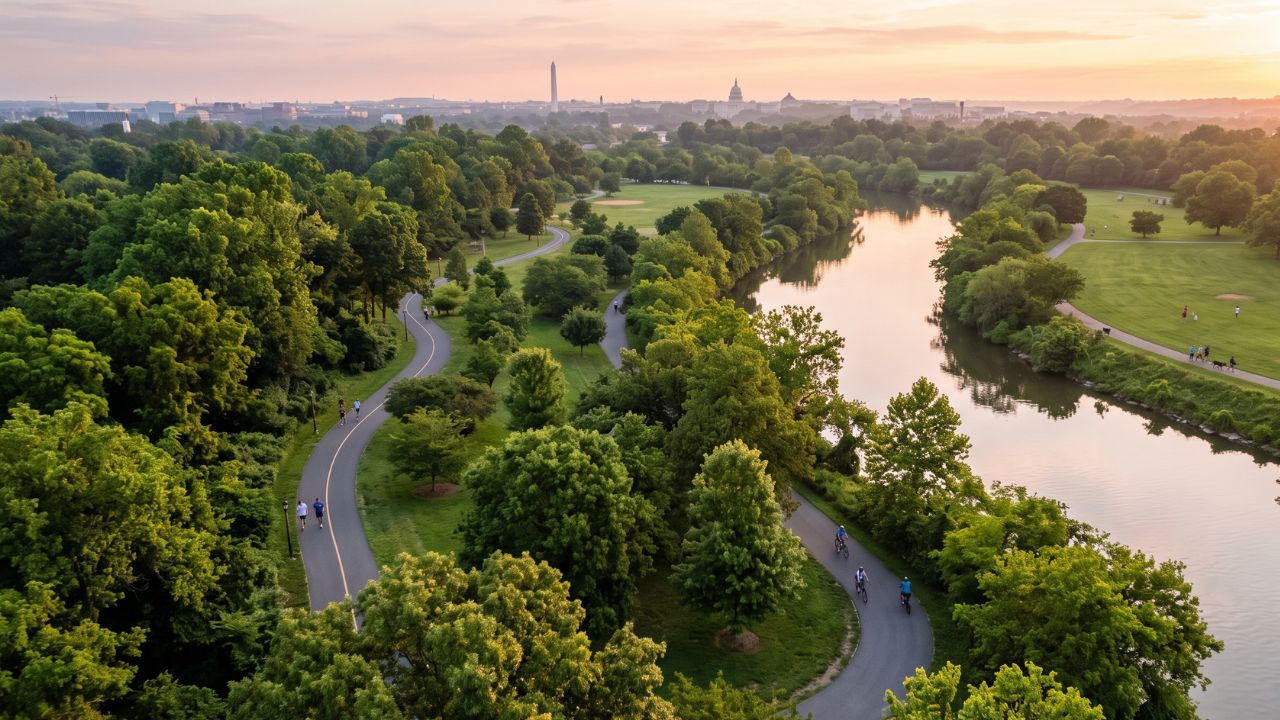
Image generated by AI
[Washington, D.C.] — Urban planning trends in 2026 show a decisive shift toward "wellness-centric" living, with 35 percent of renters now prioritizing proximity to green spaces when selecting new residences. Recent data indicates that residents living further than one kilometer from a park face nearly 50 percent higher stress levels than those living within 300 meters of a green area, driving a surge in demand for park-adjacent housing.
The correlation between outdoor access and mental health has transformed public parks from simple amenities into critical infrastructure for urban health. This trend is reflected in the latest accessibility statistics, where 76 percent of residents in the 100 most populous U.S. cities now live within a 10-minute walk of a park—a 2 percent increase from 2024.
To quantify these improvements, the Trust for Public Land (TPL) utilizes the ParkScore® system, evaluating cities based on five primary metrics: acreage, investment, amenities, access, and equity.
Leading Urban Centers for Green Space Access in 2026
The 2026 rankings highlight a diverse set of cities that have successfully integrated nature into the urban grid. The top ten performers are:
- Washington, D.C.
- Irvine, CA
- Minneapolis, MN
- Cincinnati, OH
- Saint Paul, MN
- San Francisco, CA
- Arlington, VA
- Seattle, WA
- Portland, OR
- Denver, CO
Washington D.C. Dominates National Park Rankings
Washington, D.C. has secured the top position for 2026, distinguished by a near-universal level of park access. An impressive 99 percent of the city's population resides near a green space, with parkland occupying 21.5 percent of the total city area. With 693 distinct parks, the capital integrates historical monuments and natural landscapes to create a comprehensive wellness network.
The National Mall serves as the city's primary cultural and green hub, while Rock Creek Park provides a more secluded, forested experience across 1,754 acres. For those on the east side of the city, the 12-mile Anacostia Riverwalk Trail offers a critical connection between the Navy Yard and Bladensburg.
Neighborhood Analysis: West End and Navy Yard
For renters in the capital, specific districts offer varying balances of luxury and accessibility.
| Metric | West End | Navy Yard |
|---|---|---|
| Average Monthly Rent | $3,297 | $2,490 |
| Walkability Score | 100/100 | 70/100 |
| Bikeability Score | 90/100 | 80/100 |
| Parks Score | 100/100 | 90/100 |
| Wellness Score | 100/100 | 90/100 |
The West End is characterized by its absolute walkability and proximity to the National Mall. Conversely, the Navy Yard provides a waterfront lifestyle with immediate access to the Potomac River and the Anacostia Riverwalk Trail.
Irvine’s Master-Planned Approach to Wellness
Irvine, California, ranks second, utilizing a master-planned strategy that embeds green corridors directly into the city's architecture. Parkland accounts for 26.5 percent of the city's area, and 94 percent of residents live within close proximity to a park.
The centerpiece of this strategy is the Great Park, one of the largest public park initiatives in the United States. This massive project combines traditional lawns and playgrounds with amphitheaters and cultural spaces. Additionally, the city maintains 369 parks, including the William R. Mason Regional Park and the IRWD San Joaquin Marsh and Wildlife Sanctuary.
Neighborhood Analysis: University Town Center and Woodbury
Irvine's residential zones are designed to minimize the distance between the home and the outdoors.
| Metric | University Town Center | Woodbury |
|---|---|---|
| Average Monthly Rent | $2,366 | $2,740 |
| Walkability Score | 50/100 | 50/100 |
| Bikeability Score | 90/100 | 70/100 |
| Parks Score | 80/100 | 60/100 |
| Wellness Score | 60/100 | 40/100 |
University Town Center offers high bikeability and proximity to the Mountains to the Sea Trail. Woodbury, located in the north, focuses on "pocket parks" and the Jeffrey Open Space Trail to ensure nature is accessible within a few blocks of every residence.
Minneapolis and the "City of Lakes" Infrastructure
Minneapolis ranks third, leveraging its unique geography to provide extensive water-based recreation. The city is defined by 13 lakes and the Grand Rounds National Scenic Byway, a 102-mile network of trails and parks.
With 308 parks spanning 5,305 acres, Minneapolis provides 99 percent of its residents with park access. The city's focus on the Mississippi River allows for high-density water activities like kayaking and paddleboarding, while the 5.5-mile Midtown Greenway provides a car-free transit artery for residents in the southern districts.
Why This Matters: The Shift Toward "Green Urbanism"
The data from 2026 reveals a fundamental shift in how urban dwellers perceive "luxury." While previous decades focused on interior amenities like gymnasiums or concierge services, the current trend emphasizes "Information Gain" in the form of ecological connectivity.
The fact that 35 percent of renters now prioritize park proximity suggests that the real estate market is pricing in mental health. When a city like Washington D.C. achieves a 99 percent access rate, it creates a competitive standard for other metropolitan areas. This is no longer about aesthetics; it is about public health outcomes.
The increase in the national average of park access to 76 percent indicates that municipal governments are recognizing that green spaces reduce the burden on healthcare systems by lowering stress-related illnesses. For the modern "nomad" or urban professional, the "Parks Score" is becoming as influential as the "Walk Score" in determining where to invest in a lease or home.
The integration of nature into city grids is transforming from a civic luxury into a public health necessity.
Related Travel Guides
Disclaimer
This article is for informational and educational purposes only. It does not constitute legal, financial, or professional advice. While we strive to provide accurate and up-to-date information, travel policies, regulations, and conditions change rapidly. Always verify information with official sources before making travel decisions. Nomad Lawyer makes no representations about the accuracy, reliability, completeness, or suitability of the information provided. Readers should consult qualified professionals for advice specific to their circumstances. The views expressed in this article are those of the author and do not necessarily reflect the views of Nomad Lawyer.
Kunal K Choudhary
Co-Founder & Contributor
A passionate traveller and tech enthusiast. Kunal contributes to the vision and growth of Nomad Lawyer, bringing fresh perspectives and driving the community forward.
Learn more about our team →