
China’s Tourism Boom Makes Travel Apps Essential for Payments, Rail, Rides and Local Discovery
China’s Tourism Boom Makes Travel Apps Essential for Payments, Rail, Rides and Local Discovery

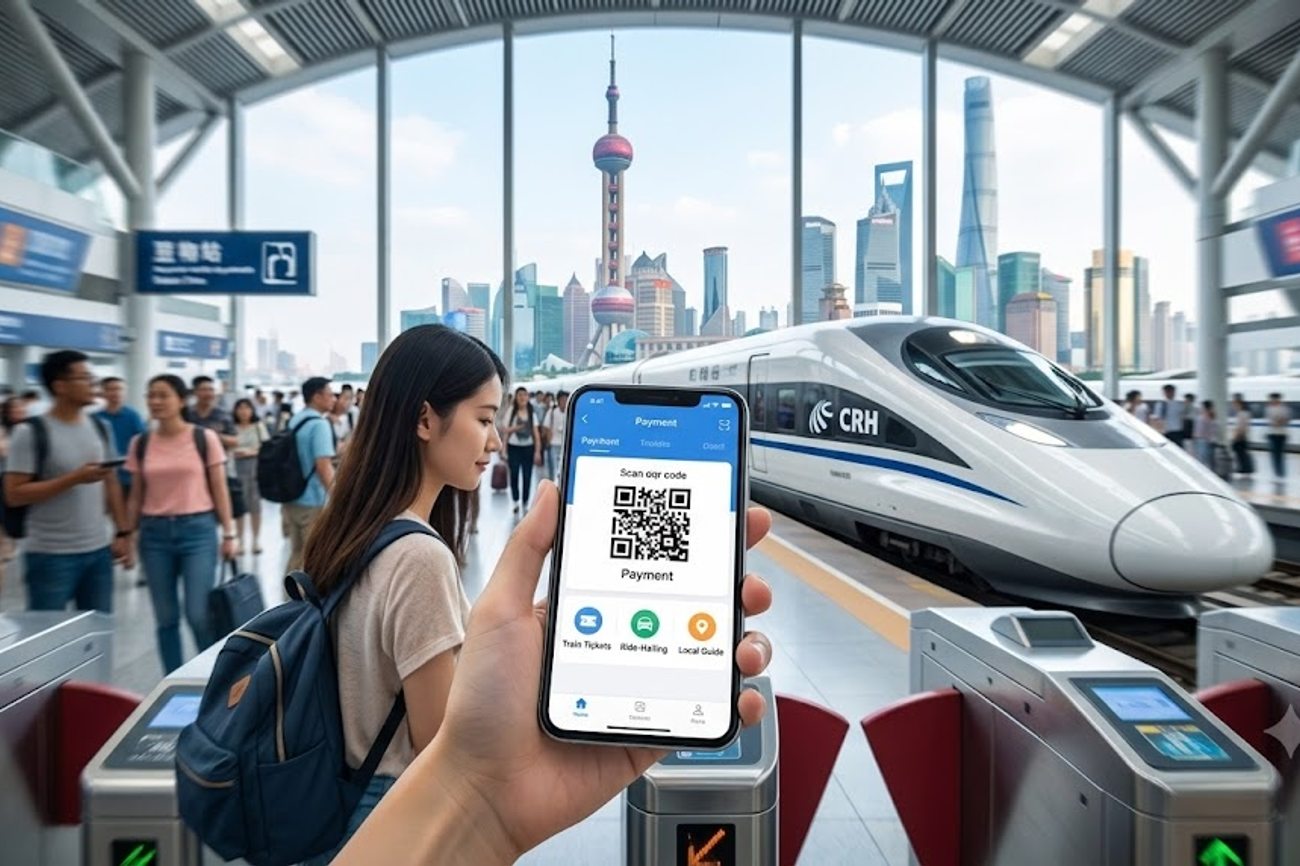
Image generated by AI
154.5 million inbound visits in 2025 mark a massive resurgence in Chinese tourism, representing a 17.1% year-on-year increase. This surge is not merely a return to form but a structural shift in how the world enters China, characterized by a 49.5% spike in visa-free entries, which reached 30.08 million travelers. While the physical barriers to entry are falling, a new, invisible barrier has emerged: a digital divide that requires international visitors to entirely swap their technological toolkit to function within the country's closed-loop ecosystem.
The Architecture of Digital Isolation
China's tourism recovery is operating at a scale that dwarfs most regional rebounds, yet it exists within a unique digital silo. For the 35.17 million foreign visitors who entered in 2025, the primary challenge is not bureaucratic but operational. The domestic digital environment has evolved independently of the global internet, resulting in the restriction or total inaccessibility of staples like WhatsApp, Instagram, and Facebook Messenger.
This isolation is not accidental but a byproduct of a domestic ecosystem built around "super-apps." For the modern traveler, the traditional reliance on a global roaming plan or a basic eSIM is no longer sufficient. While these tools may provide a bridge to Western services, they do not solve the fundamental problem of local utility. The National Immigration Administration reports that international crossings exceeded 82 million in 2025, with visa-free entries accounting for 73.1% of those arrivals. This massive influx of "frictionless" entries is colliding with a high-friction digital reality where Google Maps and other Western platforms lack the granular local data required to navigate Chinese megacities.
The Financial Pivot: From Plastic to QR
The most profound shift for the international traveler is the near-total obsolescence of physical currency and traditional credit card swipes in favor of QR-code-based transactions. In 2025, inbound tourists spent approximately 80 billion yuan (roughly $11.6 billion) via mobile payment platforms, signaling that these apps are no longer optional conveniences but essential travel infrastructure.
To facilitate this, regulatory frameworks have shifted to accommodate foreign wallets. International cards, including Mastercard and Visa, can now be linked directly to domestic platforms. Furthermore, the financial ceiling for these transactions has been raised significantly to support high-spending tourists, with single transaction limits now set at $5,000 and annual cumulative limits reaching $50,000.
| Digital Tool | Primary Travel Utility | Strategic Necessity |
|---|---|---|
| Alipay | Payments, transit, mini-apps | Essential for daily commerce and urban transit |
| WeChat Pay | Payments, social communication | Critical for hotel interactions and service messaging |
| Amap | Localized navigation | Necessary for accurate city-level mapping |
| Didi | Ride-hailing | The primary alternative to Western ride-sharing apps |
| Trip.com | Logistics and bookings | Primary source for rail and hotel inventory |
| Rednote | Discovery and reviews | Key for finding non-tourist local recommendations |
Expert Analysis: The Cost of Digital Dependency
For travelers booking routes into China, the direct consequence of this ecosystem is a mandatory "pre-trip configuration phase." In most global destinations, a traveler can land and solve problems in real-time using a browser. In China, a failure to link a payment card to Alipay or WeChat Pay before departure can result in immediate logistical paralysis upon arrival.
The pricing pressure this creates is subtle but real. Because Trip.com holds a dominant position over the local inventory of hotels and high-speed rail, travelers who rely on legacy Western booking sites often find themselves with limited options or inflated prices. The consolidation of booking, ticketing, and payment into a few super-apps means that the "digital readiness" of a traveler directly correlates to their ability to access competitive pricing and efficient transport.
Furthermore, the reliance on Didi for urban mobility introduces a specific operational friction: the verification of the last four digits of a phone number. For the corporate traveler or the luxury tourist, this small detail is the difference between a seamless airport pickup and a stranded experience. The transition to a "multi-channel" financial strategy—combining mobile payments with a modest reserve of renminbi—is the only way to mitigate the risk of account freezes or connectivity failures in secondary cities where ATM access is sparse.
Key Takeaways
- Visa-Free Dominance: Visa-free entries now represent 73.1% of international arrivals, drastically lowering the barrier to entry but increasing the reliance on digital preparation.
- Financial Thresholds: Foreigners can now process up to $5,000 in a single mobile transaction, with an annual cap of $50,000, reflecting a push toward high-value tourism.
- Infrastructure Shift: Mobile payments accounted for $11.6 billion in inbound spending in 2025, rendering traditional credit cards ineffective outside of major luxury hubs.
- Navigation Gap: Google Maps is functionally inadequate for local navigation; Amap is the required standard for accurate, real-time movement within cities.
- Inventory Control: Trip.com serves as the primary gateway for high-speed rail and domestic accommodation, offering significantly more depth than Expedia or Booking.com.
FAQ: China Travel 2025
Do I still need to carry cash in China in 2025? Yes. While mobile payments are dominant, you should carry a modest amount of renminbi for emergencies. ATMs are increasingly rare outside major urban centers, and digital systems can occasionally fail due to verification issues.
Can I use my US or European credit card at shops? Rarely. Most merchants use QR codes. You must link your Visa or Mastercard to Alipay or WeChat Pay before arriving to ensure your funds are accessible via a mobile interface.
Will Google Maps work for navigating Beijing or Shanghai? It is unreliable. Due to connectivity restrictions and a lack of updated local data, Google Maps often provides inaccurate directions. Use Amap for reliable, city-specific navigation.
How do I book high-speed trains in China? The most effective method for international travelers is Trip.com, which integrates with the national rail system and allows for digital ticketing without needing a domestic Chinese bank account.
The gateway to China is now open, but the key is no longer a visa—it is a configured smartphone.
Tags: Alipay, WeChat Pay, Trip.com, China Tourism 2025, Didi, National Immigration Administration
Related Travel Guides
- Travel Industry Sees Powerful Shift as Human Connection Beats Artificial Intelligence in Holiday Planning
- Dubai Airport Immigration Upgrade Transforms Travel As Smart Gates Deliver Faster Passport Control For Visitors
- Guyana Tourism Surges as Record Arrivals Put Kaieteur Falls and Indigenous Travel in Focus
Disclaimer
This article is for informational and educational purposes only. It does not constitute legal, financial, or professional advice. While we strive to provide accurate and up-to-date information, travel policies, regulations, and conditions change rapidly. Always verify information with official sources before making travel decisions. Nomad Lawyer makes no representations about the accuracy, reliability, completeness, or suitability of the information provided. Readers should consult qualified professionals for advice specific to their circumstances. The views expressed in this article are those of the author and do not necessarily reflect the views of Nomad Lawyer.
Raushan Kumar
Founder & Lead Developer
Full-stack developer with 11+ years of experience and a passionate traveller. Raushan built Nomad Lawyer from the ground up with a vision to create the best travel and law experience on the web.
Learn more about our team →