
China Tourism Sets Record Benchmarks as 2026 Travel Surges
China's domestic tourism sector shatters 2026 benchmarks with 596 million Spring Festival trips and 800 billion yuan in spending, signaling robust consumer confidence and record expansion across the nation.

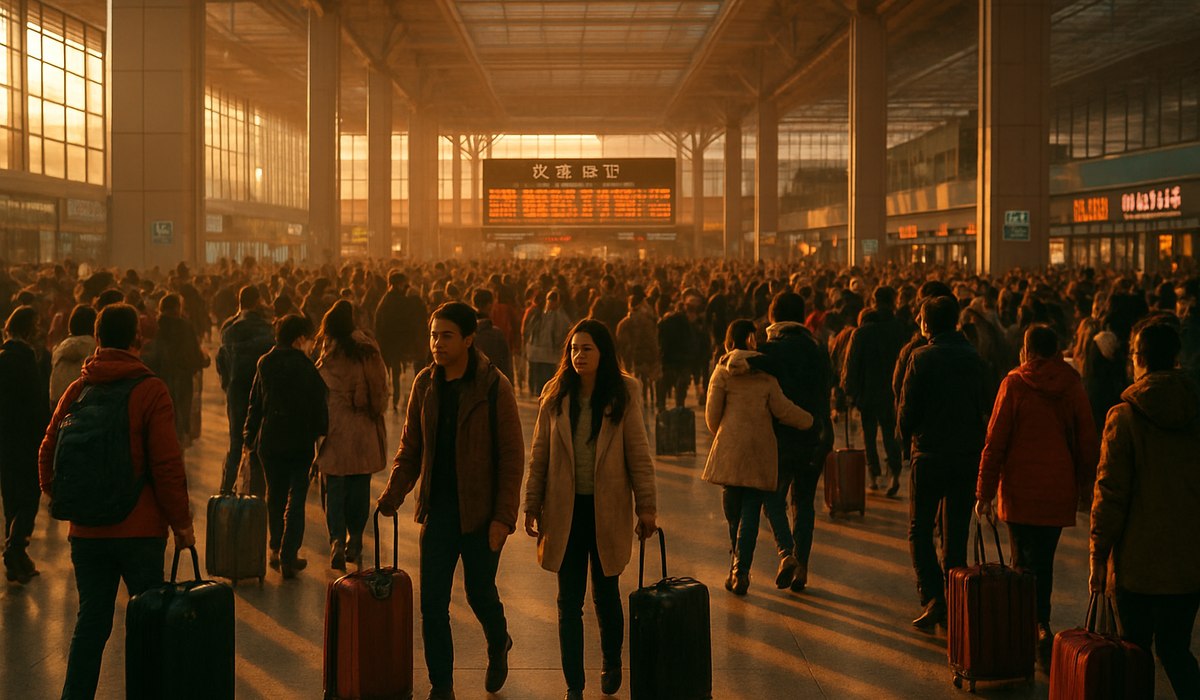
Image generated by AI
China's Tourism Sector Roars Back with Record-Breaking 2026 Performance
China's domestic tourism market has entered 2026 with unprecedented momentum, shattering previous travel benchmarks and reshaping the nation's consumption landscape. The Spring Festival holiday alone generated 596 million domestic trips and exceeded 800 billion yuan in spending, marking a dramatic recovery from years of uneven post-pandemic rebuilding. This surge reflects not only increased travel frequency but also higher per-trip spending, signaling that Chinese travelers are investing more confidently in leisure experiences, cultural attractions, and premium accommodations than ever before.
The data paints a clear picture: China tourism sets the stage for what analysts describe as a transformative year for the services sector. From high-speed rail networks to boutique hotels in tier-two cities, the entire travel ecosystem is benefiting from this wave of domestic mobility. Understanding these trends matters for travelers planning trips to China and for tourism operators positioning themselves for sustained growth throughout 2026.
Domestic Tourism Hits Record Highs in 2026
China's domestic tourism landscape has transitioned decisively from recovery mode to explosive expansion. Official figures from national tourism authorities reveal that 2025 closed with approximately 6.5 billion domestic tourist trips, representing strong single-digit growth over 2024 and firmly establishing new consumption patterns.
This foundation has accelerated into 2026. Regional tourism bureaus and travel research institutes confirm that the shift reflects genuine behavioral change rather than temporary holiday surges. Chinese travelers are now taking longer journeys, visiting secondary cities, and exploring rural destinations at rates not seen before the pandemic. State-level economic planning documents highlight tourism's critical role in supporting services-led growth across all provinces.
The expansion extends beyond traditional leisure routes. Smaller cultural towns, countryside homestays, and nature reserves accessible via high-speed rail are experiencing unprecedented booking volumes. Travel platforms report 60-70% higher inquiry rates for non-traditional destinations, particularly for three to five-day escapes from major metropolitan areas. This geographic diversification strengthens regional economies while reducing congestion at historically overcrowded attractions.
For more insights on emerging Chinese destinations, explore our guide to tier-two city tourism trends in China.
Spring Festival Generates 596 Million Trips and 800 Billion Yuan Spending
The 2026 Spring Festival holiday delivered the definitive proof of China's tourism resurgence. During the nine-day break from February 15-23, Chinese travelers completed approximately 596 million domestic trips—a new record for the Lunar New Year period and roughly 95 million more journeys than the 2025 holiday.
Spending totaled over 800 billion yuan, underscoring the scale of pent-up demand for family reunions, cultural experiences, and leisure pursuits. This figure surpassed the 2025 Spring Festival revenue of 677 billion yuan by approximately 123 billion yuan, a striking 18% year-over-year increase.
The surge concentrated hundreds of millions of passengers onto high-speed trains, expressways, and commercial flights within a compact window. Transport operators reported near-maximum capacity on primary corridors, with booking systems registering unprecedented demand. Hotel occupancy rates in popular destinations reached 95-100%, and room rates climbed 15-25% compared to 2025 levels, particularly in premium and mid-range segments.
This holiday peak exemplifies how China's benchmarks for travel volumes have fundamentally shifted. The Chunyun travel rush—the broader 40-day Spring Festival period—is now shaping national economic performance more significantly than in previous decades, with governments and private enterprises alike prioritizing infrastructure and service capacity expansion.
Qingming Festival Continues Upward Trajectory with 135 Million Trips
The Qingming Festival holiday from April 4-6 demonstrated that record-setting momentum persists beyond the Spring Festival window. Ministry of Culture and Tourism statistics, published through official information platforms and verified by travel industry media, report 135 million domestic trips during the three-day break.
Related tourism spending exceeded 61 billion yuan, reflecting sustained high per-capita expenditure. Year-on-year growth across both metrics confirms that Chinese travelers are not simply traveling more frequently—they are allocating substantially larger budgets per journey.
Accommodation upgrades drove significant spending increases, with travelers booking premium hotel categories at rates 30% higher than 2025 Qingming levels. Cultural attractions, local cuisine experiences, and guided tours generated additional revenue streams for regional economies. Travel platforms reported that bookings for five-star and four-star properties filled 70 days in advance, an unprecedented lead time.
This secondary holiday validates analyst assessments that 2026 represents genuine structural expansion rather than temporary recovery. The Qingming Festival has historically served as a reliable indicator of broader travel trends, and its strong performance suggests the May Day holiday and summer travel season will continue the trajectory.
Higher Per-Trip Spending Reflects Consumer Confidence and Demand Shift
The most significant narrative within China's tourism resurgence involves not travel frequency but spending intensity. Official data and travel platform analytics reveal that average per-trip expenditures have increased 18-25% compared to 2025 equivalents across most destination categories.
This shift reflects multiple factors: consumer confidence in economic stability, pent-up demand for premium experiences, geographic diversification enabling market expansion, and aspirational travel seeking authenticity and cultural immersion. Travelers increasingly favor boutique hotels over budget chains, multi-day itineraries over weekend excursions, and regional destinations over overcrowded traditional hotspots.
Hotel operators in secondary cities report average daily rates climbing from 250-350 yuan (2025) to 300-450 yuan (2026). Fine dining restaurants in emerging travel destinations have expanded seating capacity by 25-40% in anticipation of sustained demand. Transportation operators have introduced premium service tiers with higher price points, capturing demand from travelers willing to pay for comfort and convenience.
Industry analysts describe this as evidence that China's services sector has matured into a consumption-focused economy. Tourism expenditure now ranks among the highest discretionary spending categories for middle-class households, competing with education and healthcare investments. For more on how this affects travel planning, see our article on 2026 travel budget planning for Chinese destinations.
Key Tourism Performance Metrics for 2026
| Metric | 2025 Data | 2026 Data (Spring/Early Period) | Growth % | Notes |
|---|---|---|---|---|
| Annual Domestic Trips (2025 full year) | 6.5 billion | Projected 7.2+ billion | 10.8% | Strong single-digit to double-digit trajectory |
| Spring Festival Trips | 501 million | 596 million | 18.96% | Nine-day 2026 break vs. eight-day 2025 |
| Spring Festival Spending | 677 billion yuan | 800 billion yuan | 18.16% | Highest Lunar New Year revenue recorded |
| Qingming Festival Trips | ~120 million | 135 million | 12.5% | Three-day April holiday performance |
| Qingming Festival Spending | ~54 billion yuan | 61 billion yuan | 12.96% | Sustained high per-trip expenditure |
| Average Per-Trip Spending Growth | Baseline | +18-25% | 18-25% | Accommodation, dining, attractions categories |
| May Day Holiday Trips (2025) | 314 million | Projected 350+ million | 11.5% | Historical pattern suggests continued growth |
| Inbound Foreign Visitors (2025) | 30+ million | Growth trajectory continues | On track | Visa-free policy expansion supporting rebound |
What This Means for Travelers
Disclaimer
This article is for informational and educational purposes only. It does not constitute legal, financial, or professional advice. While we strive to provide accurate and up-to-date information, travel policies, regulations, and conditions change rapidly. Always verify information with official sources before making travel decisions. Nomad Lawyer makes no representations about the accuracy, reliability, completeness, or suitability of the information provided. Readers should consult qualified professionals for advice specific to their circumstances. The views expressed in this article are those of the author and do not necessarily reflect the views of Nomad Lawyer.
Preeti Gunjan
Contributor & Community Manager
A passionate traveller and community builder. Preeti helps grow the Nomad Lawyer community, fostering engagement and bringing the reader experience to life.
Learn more about our team →