
China High Speed Rail Network Surpasses 50,000 km in March 2026
China's high-speed rail network exceeded 50,000 kilometers by late 2025, representing two-thirds of global high-speed track. The expansion in 2026 redefines travel across 31 provinces with new routes, upgraded comfort, and eco-friendly service.

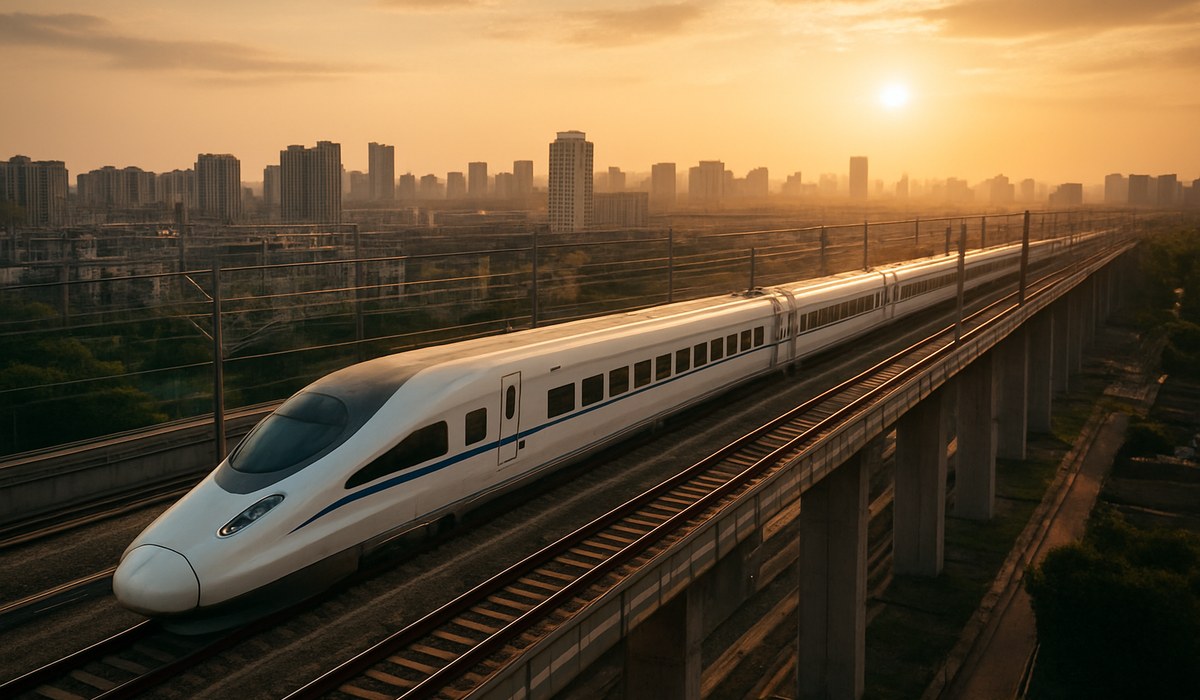
Image generated by AI
China's high-speed rail network has entered 2026 as a transformative force in global transport, with over 50,000 kilometers of operating lines now connecting 31 provincial regions and reshaping how millions travel annually. The expansion represents two-thirds of the world's commercial high-speed track, positioning China's bullet trains as the blueprint for sustainable, rapid transit that competing nations are studying closely. This milestone—reached in late 2025—reflects continued capital investment and engineering ambition that shows no signs of slowing as authorities target 60,000 kilometers by 2030.
China High Speed Rail Network Reaches Unprecedented Coverage
The 50,000-kilometer threshold marks a watershed moment for the world's largest high-speed rail system. As of late 2025, China's network spanned from coastal megacities to inland regions that previously required overnight conventional rail or air travel. Official railway operator data confirms the milestone, with coverage now touching 31 of 33 provincial-level divisions across the nation.
The flagship Beijing-Shanghai corridor remains the crown jewel, but secondary routes exemplify the push into underserved markets. Xi'an to Yan'an and Panzhou to Xingyi connections now link smaller urban centers with major hubs, opening previously isolated tourism gateways. Government planning documents indicate authorities are targeting approximately 60,000 kilometers by 2030, building on the 48,000 kilometers recorded at the end of 2024. This acceleration redefines regional mobility and shortens intercity commute times substantially. Recent figures show high-speed lines now represent nearly one-third of China's entire 165,000-kilometer national rail system, growing faster than conventional rail infrastructure.
Tourism Transformation: Multi-City Itineraries Made Seamless
High-speed connections have fundamentally reshaped how travelers explore China's diverse regions. Popular circuits now pair Beijing with the Great Wall, Xi'an's terracotta warriors, and karst scenery near Guilin—all accessible within a single week via rail. The Yangtze River Delta's dense network links Shanghai, Hangzhou, Nanjing, and Suzhou with journey times under one hour between city pairs.
Newer routes in Guizhou, Gansu, and along the Chengdu-Lanzhou alignment reduce travel times to mountainous interior provinces, supporting eco-tourism campaigns and ethnic minority cultural experiences. Local authorities have highlighted rail access as a catalyst for hotel projects and visitor services in smaller cities now only hours from major transport hubs. Domestic travel surveys note that high-speed trains operating at up to 350 kilometers per hour have become the preferred mode for multi-destination travelers avoiding airport transfers and urban congestion. During peak holiday periods—May Day and National Day breaks—bullet train stations in Xi'an, Shanghai, Chengdu, and Guangzhou operate near or at full capacity, demonstrating the network's appeal across demographics.
How to Book the Best Fare
Securing optimal pricing on china high speed services requires strategic planning and knowledge of ticket windows and digital platforms. The official China Railways 12306 booking portal offers direct reservation access, though international travelers often find Trainline more user-friendly for non-Chinese credit cards and English-language support. Fares vary by class (second, first, and business), with second-class seats offering excellent value for budget-conscious visitors.
Advance booking—typically 30 days ahead—yields lower base fares, though dynamic pricing means peak travel windows command premiums. Midweek departures, especially Tuesday through Thursday, consistently undercut weekend and holiday rates by 15-30 percent. Mobile ticketing through the 12306 app eliminates printing delays, while facial-recognition boarding at major stations like Shanghai Hongqiao reduces dwell times. Consider purchasing a China rail pass if planning five or more intercity journeys; the investment spreads costs across multiple trips and simplifies reservations. Group bookings of 10+ passengers unlock corporate discounts directly through operator customer service lines.
Onboard Experience: Premium Comfort Redefines Long-Distance Rail
The Fuxing series, deployed across mainline corridors, sets a new benchmark for high-speed train comfort that rivals short-haul air travel. Business, first, and second-class configurations feature ergonomically designed seating, generous legroom, and seat-back power outlets as standard. Travelers report quiet, air-conditioned carriages with stable ride quality even at cruising speeds, wide aisles accommodating luggage movement, and panoramic windows framing landscapes.
Premium classes incorporate hotel-style amenities: dimmable lighting, adjustable headrests, fold-out footrests, and seat-side food ordering via onboard portals. Free or subsidized Wi-Fi now spans flagship routes, supported by 5G coverage along major corridors. Real-time journey information, destination guides, and mobile ticketing reduce passenger friction. Accessibility has become central to newer train designs—level boarding platforms, tactile paving, accessible restrooms, and wheelchair-designated spaces appear across the network. Stroller storage and child-friendly facilities appeal to families, while low noise levels and minimal turbulence attract older travelers who might otherwise avoid long-distance transport.
| Feature | Second Class | First Class | Business Class |
|---|---|---|---|
| Legroom (cm) | 78 | 95 | 110 |
| Seat Width (cm) | 45 | 52 | 58 |
| Power Outlets | Shared USB | Individual AC | Individual AC |
| Meal Service | Paid options | Included | Premium included |
| Wi-Fi Access | Free | Free | Free |
| Luggage Allowance (kg) | 20 | 20 | 20 |
| Average Ticket Price (Beijing-Shanghai, USD) | 65–85 | 110–140 | 180–220 |
Investment and Infrastructure: The Push Behind the Growth
Railway fixed-asset investment in 2024 surpassed the equivalent of 850 billion yuan, with additional increases allocated for 2025 and beyond. This sustained capital commitment funds both new corridors and upgrades to existing lines, pushing average speeds higher and expanding capacity to accommodate projected demand growth. Government planning cycles have consistently prioritized high-speed rail expansion within broader five-year strategic frameworks, ensuring resources flow toward network densification in less-developed regions.
The push reflects policy recognition that rail transport reduces carbon emissions compared to aviation and private vehicles. New electrified lines minimize fossil fuel dependency while supporting China's climate commitments. Station modernization—including digital ticketing infrastructure, accessibility upgrades, and passenger information systems—parallels track expansion, creating a cohesive travel ecosystem. Regional authorities view high-speed connectivity as an economic development lever, attracting hotel chains, retail hubs, and service industries to station precincts.
What This Means for Travelers
The 2026 expansion of China's high-speed rail network delivers concrete advantages:
-
Faster connections between major cities: Beijing to Shanghai now takes under 5 hours (previously 12+ hours by conventional rail). Secondary cities like Xi'an and Chengdu are now within 3–4 hours of Beijing.
-
Lower carbon footprint per journey: Rail travel emits 80% fewer greenhouse gases than domestic flights over equivalent distances, aligning with eco-conscious traveler priorities.
-
Multi-city itineraries in single trips: Weekend circuits combining Shanghai, Suzhou, and Hangzhou are now feasible without flights or overnight buses.
-
Reduced airport dependency: Travelers skip taxi queues, security lines, and check-in procedures by using city-center rail stations as primary departure points.
-
Improved accessibility: Newer trains and stations accommodate wheelchair users, elderly passengers, and families with young children more effectively than older infrastructure.
-
Real-time digital connectivity: 5G-enabled onboard networks enable work, entertainment, and navigation during journeys.
-
Predictable scheduling: High-speed trains operate with punctuality rates exceeding 99%, unlike flights frequently delayed by weather.
Book 30 days in advance through 12306 or Trainline to secure optimal fares. Prioritize business-class seating on journeys exceeding 4 hours for maximum legroom and included meals. Download the official app to access real-time schedules, mobile tickets, and seat-selection tools before arrival at stations.
Frequently Asked Questions
What is the fastest train on China's high-speed rail network? The Fuxing CR450 prototype operates test runs at 350 kilometers per hour on select corridors, though commercial services typically cruise between 250–300 km/h depending on track design. Standard second-class fares remain affordable despite high speeds, making rapid intercity transit accessible to budget travelers.
How does China high speed rail compare to flying for Beijing-Shanghai travel? Door-to-door rail journeys (4.5–5 hours) often match or beat flight times when including airport transfers, security, and boarding procedures (6–8 hours total). Rail stations occupy city centers, eliminating 30-minute airport transfers on each end. Ticket prices average USD 65–85 second-class versus USD 120–180 airfare.
Can international visitors use Trainline to book trains in China? Yes, Trainline provides English-language interfaces and accepts foreign credit cards for high-speed rail bookings. Alternatively, the official 12306 portal requires Chinese identification but offers identical pricing. Mobile ticketing displays QR codes scanned at facial-recognition gates, eliminating paper ticket complications.
When is the best time to visit China to experience the new high-speed routes? Spring (April–May) and autumn (September–October) offer pleasant weather and moderate crowds. Avoid May Day and National Day holidays (October 1–7) when stations operate at maximum capacity and fares surge 20–30 percent above baseline rates.
Related Travel Guides
China Rail Pass: Cost-Effective Multi-City Journeys in 2026
Shanghai to Beijing by High-Speed Train: Complete Booking Guide
Accessing China's Interior Provinces: High-Speed Rail to Guizhou and Gansu
Disclaimer
This article is for informational and educational purposes only. It does not constitute legal, financial, or professional advice. While we strive to provide accurate and up-to-date information, travel policies, regulations, and conditions change rapidly. Always verify information with official sources before making travel decisions. Nomad Lawyer makes no representations about the accuracy, reliability, completeness, or suitability of the information provided. Readers should consult qualified professionals for advice specific to their circumstances. The views expressed in this article are those of the author and do not necessarily reflect the views of Nomad Lawyer.
Raushan Kumar
Founder & Lead Developer
Full-stack developer with 11+ years of experience and a passionate traveller. Raushan built Nomad Lawyer from the ground up with a vision to create the best travel and law experience on the web.
Learn more about our team →