
Escaping Transpacific Travel Chaos: China Airlines Launches Advanced Boeing 787-9 Premium Economy to Shield Passengers from Long-Haul Airport Disruptions
As cascading flight cancellations and severe transit disruptions paralyze international travel, China Airlines violently disrupts the Asian aviation market with a highly secluded Premium Economy sanctuary aboard its 787-9 Dreamliners.

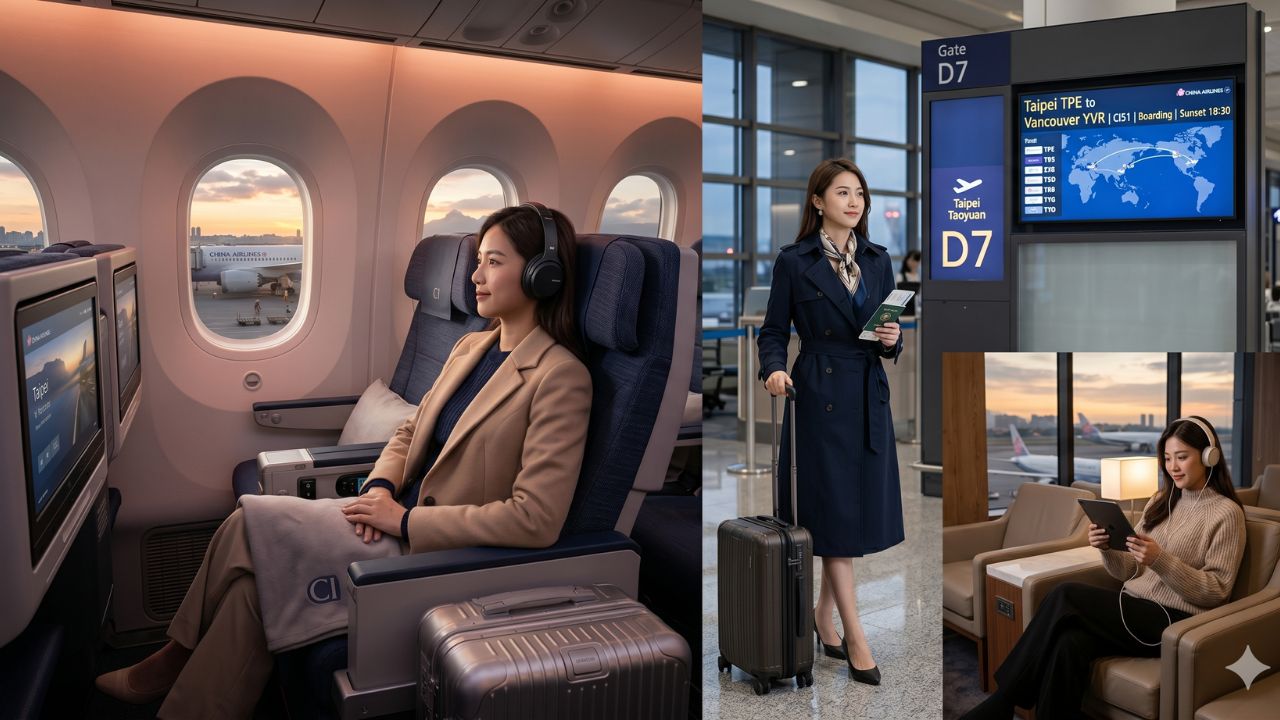
Image generated by AI
A Massive Strategic Upgrade to Defeat Transpacific Gridlock
While massive sectors of the global passenger network frequently battle highly unpredictable labor shortages, synchronized logistical bottlenecks, and horrific commercial fleet constraints, the exhausting, anxiety-inducing environment of a cramped main cabin remains the absolute most terrifying reality during cascading airport disruptions. Delivering highly urgent, breaking airline news, verified Asian aviation trackers confirm that a massive strategic operational milestone has actively launched to completely shield vulnerable commercial travelers from severe travel chaos across the highly volatile transpacific aviation network. Today, June 3, 2026, highly positive operational news forcefully emerged as Taiwan’s China Airlines successfully unveiled a brand-new, ultra-private Premium Economy Class cabin for its incoming Boeing 787-9 Dreamliner fleet.
While desperate travelers usually attempt to navigate sudden, terrifying flight cancellations caused by isolated technical failures at massive intermediate mega-hubs, these exclusive aviation updates reveal a highly systemic, incredibly protective capacity upgrade designed to entirely bypass the decaying global transit experience. Verified corporate data confirms that this massive operational expansion is a direct response to the grueling transit conditions corporate travelers and affluent tourists currently face. This highly lucrative logistical upgrade actively rescues the travel itineraries of thousands of incredibly vulnerable passengers, directly joining Japan, Canada, and Australia in a brutal global competition to provide a sanctuary from the relentless stress of modern commercial aviation.
Expanded Overview: The Scale of the Transcontinental Upgrade
The sudden, highly publicized execution of this massive regional operational deployment serves as an undeniable example of how rapidly a legacy carrier can completely insulate its premium passenger base from extreme transit pressure. The massive expansion has explicitly drawn international attention to the incredibly complex, highly fragile operational ecosystem that links Taiwan's major economic centers to massive global hubs. For a massive corporate corridor heavily reliant on incredibly robust, high-frequency intercontinental flight schedules exceeding 10 to 14 hours, forcing highly paid executives to endure cramped economy seating during massive international delays heavily exposes them to terrifying travel fatigue.
The terrifying reality of the current transit crisis is found in the sheer volume of connecting aircraft abruptly knocked out of alignment during peak travel seasons. By instantly providing an upgraded, privacy-focused 28-seat cabin, China Airlines is permanently rescuing thousands of vulnerable passengers from a terrifying logistical puzzle. This massive strategic maneuver instantly bypasses the exhaustion of the main cabin, actively preserving the sanity of hundreds of incredibly valuable business travelers heading to Los Angeles, San Francisco, Vancouver, Tokyo, and Sydney. When critical mega-hubs simultaneously fail to process traffic, China Airlines Premium Economy passengers are heavily insulated from the localized ripple effects that violently spiral into massive, unmanageable waves of terminal congestion worldwide.
Section-Wise Breakdown of the Connectivity Solution
The Transpacific Cabin War: China Airlines vs EVA Air
China Airlines’ latest premium economy product will debut aboard newly delivered Boeing 787-9 Dreamliners, forcefully arranged in a highly spacious 2-3-2 configuration. The airline has aggressively introduced a new cabin design philosophy inspired by Taiwanese cultural aesthetics, utilizing a "Starlit Mountain City" concept featuring warm metallic finishes and ambient lighting. More importantly, this aggressive launch places China Airlines in direct, brutal competition with fellow Taiwanese carrier EVA Air, widely recognized as the legacy airline that explicitly pioneered the premium economy concept (initially called “Evergreen Deluxe Class”) more than three decades ago in 1992.
The Privacy Wing Revolution
What stands out absolutely most regarding this aggressive cabin launch is the growing, non-negotiable emphasis on passenger privacy. Premium economy was once defined strictly by extra legroom alone. Today’s highly stressed passengers increasingly prioritize personal space, absolute privacy, and sleep quality to survive rolling airport disruptions. The new China Airlines seats feature highly advanced adjustable headrests equipped with integrated privacy wings and dedicated reading lights. These adjustable side panels actively help reduce visual distractions, provide crucial head support during turbulent sleep, and create a stronger sense of individual space without requiring the purchase of a massively expensive business-class suite.
The Economics of Travel Chaos
According to elite aviation consultancy analyses and verified airline financial disclosures, premium economy cabins frequently generate substantially higher revenue per square foot than traditional economy seating while requiring significantly less cabin space than business class. The segment has violently benefited from corporate travel budget controls, where companies relentlessly downgrade their employees from business class to premium economy to survive economic inflation. For travelers flying from Taiwan across the globe, premium economy offers a highly critical middle-ground product that completely balances corporate affordability with the mandatory comfort required to survive a 14-hour itinerary.
Verified Premium Economy Competition Data
To fully comprehend the massive operational scale and strategic deployment dictating this highly protective transpacific solution, the following tables explicitly detail the exact seating metrics and global carrier trends officially recorded for this massive cabin upgrade:
China Airlines Premium Economy Features at a Glance
| Feature | China Airlines Boeing 787-9 Premium Economy |
|---|---|
| Aircraft Type | Boeing 787-9 Dreamliner |
| Cabin Capacity | 28 Seats |
| Configuration | 2-3-2 |
| Privacy Wings | Yes |
| Integrated Reading Light | Yes |
| Adjustable Leg Rest | Yes (appears included) |
| Personal Device Holder | Yes |
| New Cabin Design Theme | Taiwan-inspired “Starlit Mountain City” concept |
| Seat Manufacturer | Not officially confirmed, appears similar to Recaro R5 |
| IFE Specifications | Yet to be officially released |
| Power Specifications | Yet to be officially released |
China Airlines vs EVA Air Premium Economy Comparison
| Feature | EVA Air Boeing 787-9 | China Airlines Boeing 787-9 |
|---|---|---|
| Seat Count | 28 | 28 |
| Configuration | 2-3-2 | 2-3-2 |
| Seat Type | Recaro R5 | Appears similar |
| Privacy Wings | Yes | Yes |
| Reading Lights | Integrated | Integrated |
| Leg Rest | Adjustable | Appears similar |
| Device Holder | Yes | Yes |
| Seat Pitch | 42 inches | Not announced |
| Seat Width | 19.5 inches | Not announced |
| Recline | 6 inches | Not announced |
Airlines Introducing Premium Economy Privacy Wings
| Airline | Aircraft |
|---|---|
| China Airlines | Boeing 787-9 |
| EVA Air | Boeing 787-9 |
| Air Canada | Boeing 787-10 |
| British Airways | Boeing 787-9 |
| Cathay Pacific | Boeing 777-300ER |
| Qantas | Airbus A350-1000 |
Traveler Considerations When Choosing Premium Economy
| Factor | Benefit |
|---|---|
| Extra Seat Space | Greater comfort on flights over 8 hours |
| Priority Services | Faster airport processing on many airlines |
| Improved Sleep | Privacy wings and leg rests enhance rest quality |
| Better Dining Experience | Typically upgraded meal service |
| Value for Money | Significant comfort improvement versus economy |
Conclusion: A Highly Protective Transit Upgrade
The massive, highly publicized premium cabin launch by China Airlines represents a severe, incredibly vital upgrade for the global travel sector. By actively allowing passengers to completely bypass the physical exhaustion associated with critical flight disruptions across Asia's most volatile connecting corridors, this advanced seating guarantees an incredibly smooth, highly protective travel experience. As operational teams at other airlines frantically battle sudden logistical puzzles and severe ATC backlogs, China Airlines passengers are heavily urged to aggressively book this new premium product, thoroughly utilize the advanced privacy wings, and fully expect to avoid the massive physical fatigue that defines unprecedented global travel chaos.
Key Takeaways
- Massive Transpacific Upgrade: China Airlines has officially unveiled a highly advanced Premium Economy Class cabin featuring 28 seats aboard its new Boeing 787-9 Dreamliner fleet.
- The Privacy Wing Revolution: The new seats aggressively feature adjustable headrests equipped with integrated privacy wings, a massive industry trend adopted by Qantas, Air Canada, and British Airways.
- Direct Battle with EVA Air: The launch places China Airlines in brutal, direct competition with rival EVA Air, the Taiwanese legacy carrier that originally pioneered premium economy in 1992.
- Surviving Corporate Travel Cuts: As global corporations relentlessly cut business-class budgets, premium economy offers the absolute only sanctuary for business travelers facing 14-hour long-haul flights.
- Passenger Survival Tactics: Travelers are aggressively urged to completely abandon cramped main cabin seating in favor of this highly protective premium tier to permanently avoid travel fatigue and survive severe terminal chaos.
Disclaimer: The specific cabin metrics, seating dimensions, and airline operational rollouts presented in this report are based on verified corporate data regarding the China Airlines fleet in June 2026. Official airline routing, aircraft deployment, and local carrier cabin policies are highly volatile and subject to continuous, real-time update based on active airline directives, fluctuating aircraft delivery schedules, and sudden international air traffic shifts. Prospective passengers are urgently advised to fiercely monitor their specific booking status and verify active cabin configurations directly via the airline's official portal prior to booking travel.
Disclaimer
This article is for informational and educational purposes only. It does not constitute legal, financial, or professional advice. While we strive to provide accurate and up-to-date information, travel policies, regulations, and conditions change rapidly. Always verify information with official sources before making travel decisions. Nomad Lawyer makes no representations about the accuracy, reliability, completeness, or suitability of the information provided. Readers should consult qualified professionals for advice specific to their circumstances. The views expressed in this article are those of the author and do not necessarily reflect the views of Nomad Lawyer.
Kunal K Choudhary
Co-Founder & Contributor
A passionate traveller and tech enthusiast. Kunal contributes to the vision and growth of Nomad Lawyer, bringing fresh perspectives and driving the community forward.
Learn more about our team →