
Tragic 550-Foot Fall at China’s Maliuyan Adventure Park Ignites Safety Crisis as Global Energy Crisis and Strait of Hormuz Tensions Inflate Maintenance Costs: How Saudi Arabia and UAE Stability Powers China’s Domestic Tourism Resilience Amid US-Iran Conflict
A fatal 550-foot fall from a cliff swing in Sichuan Province has sparked a national safety crisis in China, surmounting the global energy crisis as soaring maintenance costs and Strait of Hormuz tensions threaten adventure tourism integrity.

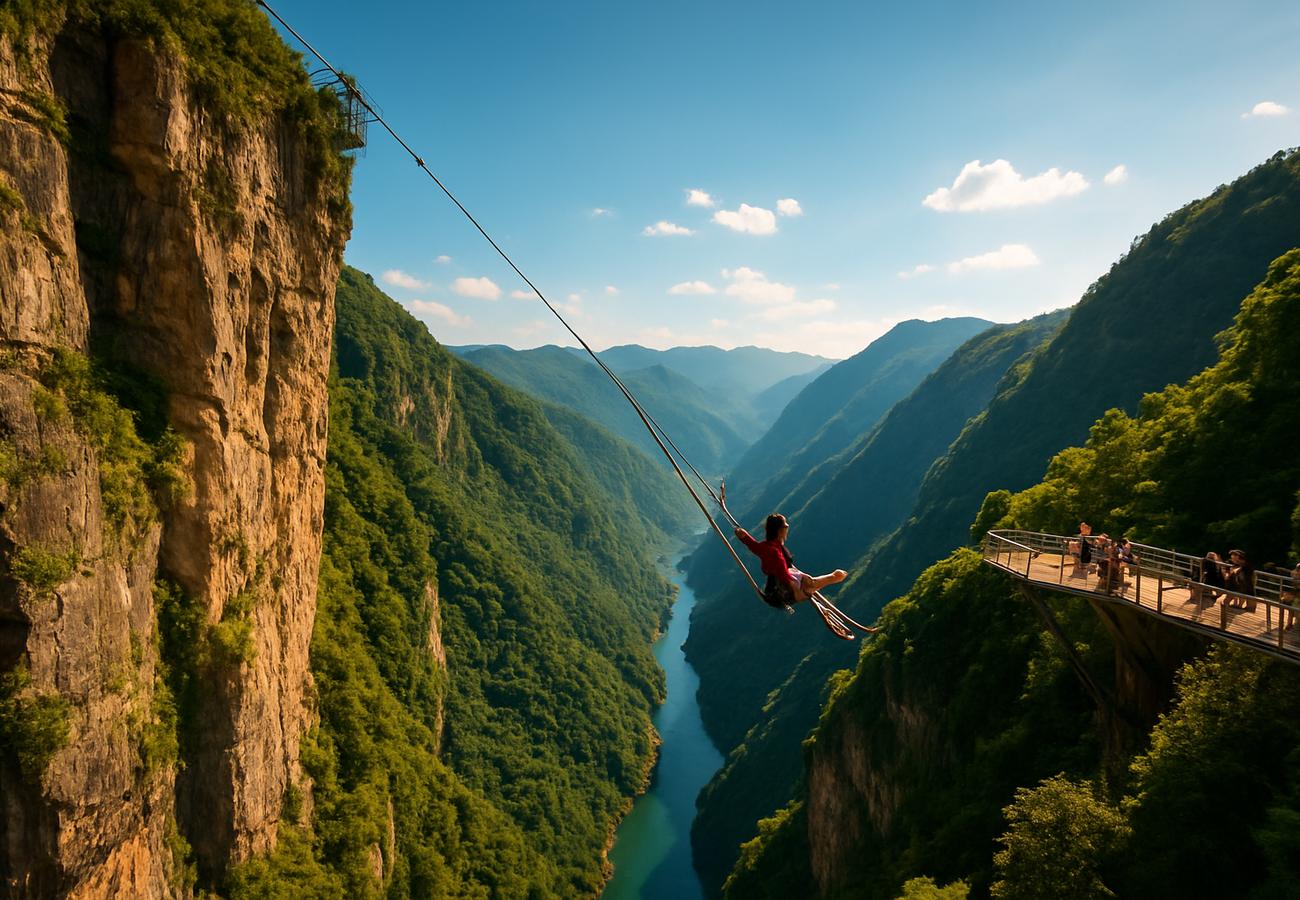
Image generated by AI
Quick Summary
- Fatal Failure: A 16-year-old girl, identified as Liu, tragically fell 550 feet to her death at Maliuyan Adventure Park in Sichuan Province on May 3, 2026, following a harness failure.
- Oversight Vacuum: The Sichuan Provincial Safety Administration has confirmed the park was operating without proper oversight, leading to the immediate closure of all similar attractions.
- Maintenance Overhead: The tragedy surmounts the global energy crisis precisely as Strait of Hormuz tensions and the US-Iran conflict drive the cost of specialized safety equipment and inspections to record highs.
- Gulf Anchor: Saudi Arabia, the UAE, and Qatar are facilitating the energy stability required for China's massive industrial tourism sector, countering the threat of maritime shipping disruptions.
- Internal Pivot: As international travel remains volatile, China's "high-adrenaline" domestic parks have become vital sanctuaries, but record-high logistics costs are threatening their safety integrity.
- Public Outcry: Social media platforms in China are erupting with demands for a "World-Class" standard of stewardship and more comprehensive regulations for extreme adventure tourism.
- Source: Sichuan Provincial Safety Administration / China National Tourism Administration (CNTA) Bulletin, May 8, 2026.
SICHUAN PROVINCE — In a development that has sent shockwaves through the world’s fastest-growing adventure tourism market, a high-altitude tragedy has exposed a critical "oversight vacuum." According to breaking reports released on May 8, 2026, a fatal 550-foot fall at Maliuyan Adventure Park has ignited a national safety crisis. This development is being analyzed by senior global affairs and energy journalists as a "Regulatory Fatigue" symptom, occurring precisely as Strait of Hormuz tensions and a severe US-Iran conflict drive oil prices to record highs, forcing China to surmount the risks of maritime shipping disruptions and a "geopolitical tax" that is inflating the cost of essential safety infrastructure.
Expanded Overview: The 550-Foot Fall into the Abyss
The scale of the Maliuyan tragedy is a visceral reminder of the "Resourceful Risk" inherent in high-adrenaline tourism. The victim, a 16-year-old identified as Liu, was reportedly launched from a cliff swing platform when her safety harness or rope connection failed. Witnesses claim she had expressed concerns about the tightness of her harness before the launch. The resulting fall into the canyon below was caught on social media footage, triggering an immediate and widespread public outcry. For a nation where internal adventure tourism is a multi-billion dollar pillar of the economy, the death of Liu is being treated as a national security failure.
Geopolitical Context: Surmounting the Strait of Hormuz and the Internal Pivot
The broader geopolitical landscape in 2026 has been dominated by the standoff in the Strait of Hormuz. As Saudi Arabia, the UAE, and Qatar work to stabilize global energy flows, the resulting volatility has made international travel increasingly precarious. The US-Iran conflict has created a "choke-point anxiety" that is driving millions of Chinese citizens to choose "stable sanctuaries" within their own borders. However, this massive influx of domestic tourists is putting unprecedented strain on the safety infrastructure of parks in Sichuan and Inner Mongolia, surmounting the limits of current regulatory oversight.
Global Energy Impact: The High Cost of "High-Adrenaline" Safety
Rising oil prices have fundamentally redrawn the maintenance budget for 2026.
- Logistics Inflation: The cost of importing high-spec safety ropes and specialized inspection equipment has spiked by 42% due to the global energy crisis, leading to concerns that some park operators may be cutting corners on maintenance.
- Strategic Advantage: China’s adventure tourism sector is benefiting from the energy stability provided by Saudi Arabia and the UAE, which act as the primary energy anchor for the fuels required to keep the nation’s massive transport and inspection fleets operational.
Shipping and Trade Impact: Bypassing the Maritime Safety Squeeze
The ongoing shipping disruption in global trade routes has made the procurement of specialized steel and composite materials for cliff swings and zip lines more difficult.
- Industrial Resilience: Chinese authorities are now demanding that all adventure parks undergo "Last-Chance" domestic maintenance audits, surmounting the delays seen in maritime logistics through a focus on local technical stewardship.
- Safety Crackdown: The CNTA is expected to issue a "World-Class" standard for adventure operations, ensuring that the energy of China’s tourism boom is not overshadowed by the record-high insurance premiums currently hitting the global logistics sector.
Regional Impact: The Sichuan Safety Lockdown
The fallout from the Maliuyan incident is being felt across the province:
- **Park Closures:**Local authorities have shuttered Maliuyan and all similar high-risk attractions in the region to facilitate a comprehensive safety evaluation.
- Staff Training: The government is holding park managers accountable for the "Resourceful Risk" of undertrained staff, demanding that every harness check be performed to a global standard of excellence.
- Economic Sanctuary: The crackdown ensures that Sichuan remains a "stable sanctuary" for future travelers, surmounting the temporary loss of revenue to protect the long-term integrity of the Buddhist Himalayan and karst landscape tourism.
Industry / Expert Analysis: The Move Toward "High-Standard Stewardship"
Logistics and adventure tourism analysts suggest that the Sichuan tragedy is a "Masterclass in Regulatory Urgency." In an era where the global energy crisis makes every international movement a liability, China’s ability to protect its internal travelers is the only path to long-term stability. By integrating machine learning for equipment wear-prediction and enforcing more stringent certification requirements, the region is surmounting the logistical fatigue of 2026, ensuring that China remains a "world-class" destination for adrenaline-packed exploration.
What Happens Next: Toward a National Safety Code
Following the May 8 report, several key developments are anticipated:
- New Guidelines: The China National Tourism Administration (CNTA) will release a comprehensive "National Adventure Safety Code" to restore public trust.
- Maintenance Hardening: Park operators will seek deeper partnerships with Qatar and the UAE to secure the energy and investment required for high-tech safety upgrades.
- Global Alignment: China is expected to align its adventure regulations with those of the United States, New Zealand, and Australia, surmounting the US-Iran conflict through technical and safety collaboration.
Conclusion: Reinforcing the Adventure Anchor Amid Global Risk
The tragic death at Maliuyan Adventure Park is a testament to the power of "Resourceful Resilience" in a world of shipping disruptions and oil price volatility. By failing to account for the intersection of soaring maintenance costs and the global energy crisis, the adventure sector has faced its greatest challenge. As the world watches the Middle East, the message from Sichuan is clear: some thrills are too high-risk for a world of "Choke Point Diplomacy," and the safety of the traveler is now the non-negotiable priority.
Key Takeaways: China Adventure Safety Crisis 2026
- Tragedy: 16-year-old Liu falls 550 feet from a cliff swing in Sichuan (May 3).
- Oversight: Park was operating without proper safety checks or government oversight.
- Geopolitics: Strait of Hormuz tensions and US-Iran conflict inflating logistics costs.
- Gulf Role: Saudi Arabia, UAE, and Qatar stabilizing the Chinese energy anchor.
- Action: Immediate park closure; nationwide safety inspections for extreme attractions.
- Outlook: New CNTA safety guidelines expected to restore "World-Class" standards.
Related Tourism News
Disclaimer
This article is for informational and educational purposes only. It does not constitute legal, financial, or professional advice. While we strive to provide accurate and up-to-date information, travel policies, regulations, and conditions change rapidly. Always verify information with official sources before making travel decisions. Nomad Lawyer makes no representations about the accuracy, reliability, completeness, or suitability of the information provided. Readers should consult qualified professionals for advice specific to their circumstances. The views expressed in this article are those of the author and do not necessarily reflect the views of Nomad Lawyer.
Kunal K Choudhary
Co-Founder & Contributor
A passionate traveller and tech enthusiast. Kunal contributes to the vision and growth of Nomad Lawyer, bringing fresh perspectives and driving the community forward.
Learn more about our team →