
Chile and South American Nations Pivot to Regenerative Hospitality and Off-Grid Luxury in 2026
Chile, Peru, Brazil, Ecuador, Colombia, and Argentina are redefining luxury travel in 2026 by transitioning from passive eco-tourism to active regenerative hospitality and indigenous equity models.

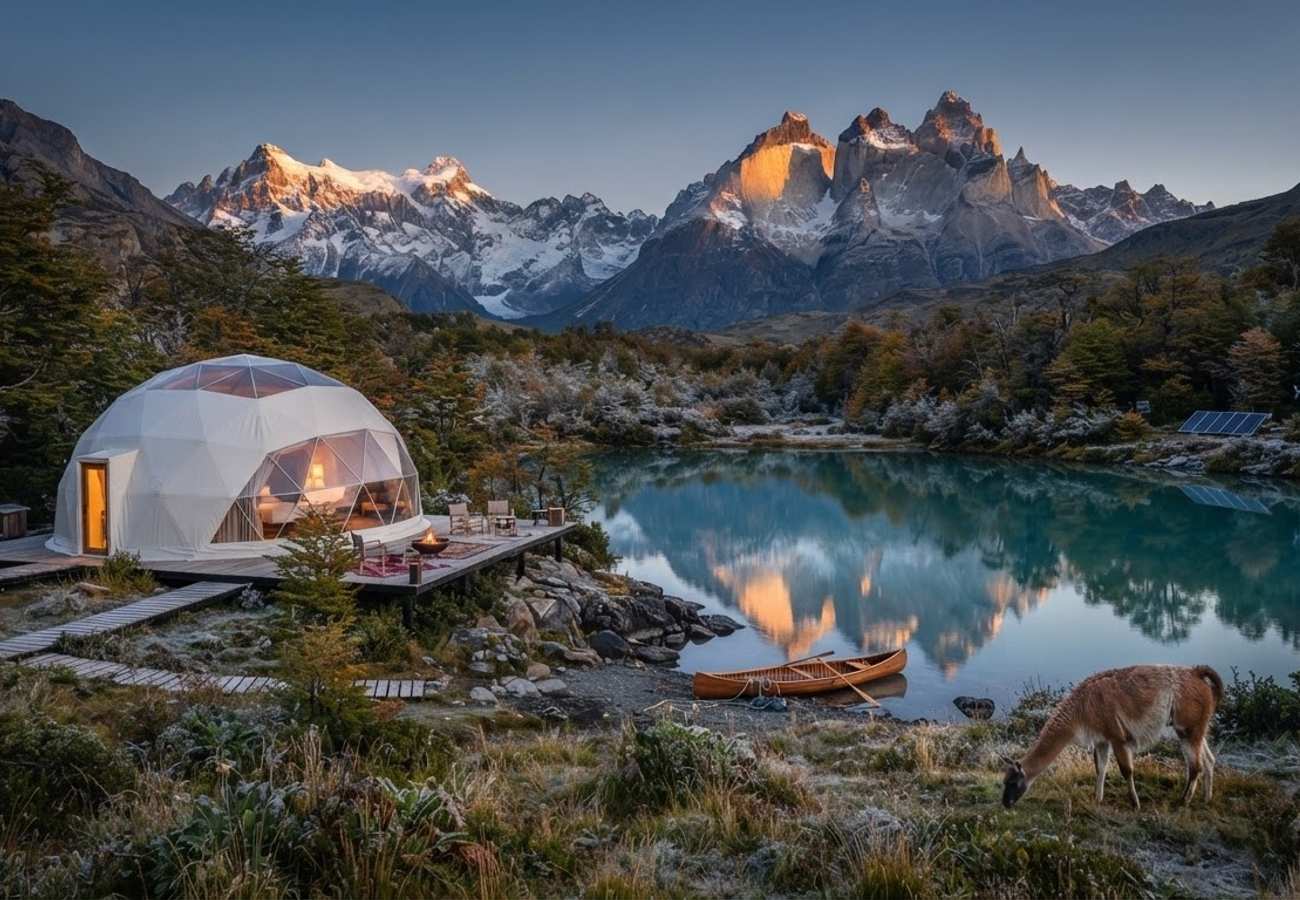
Image generated by AI
South America is undergoing a structural transformation in hospitality, moving beyond traditional eco-tourism toward "regenerative travel." Led by Chile, Peru, Brazil, Ecuador, Colombia, and Argentina, the industry is now prioritizing active ecosystem restoration and indigenous equity over simple footprint reduction.
South American Hospitality Evolution 2026
The traditional luxury travel model in South America has been replaced by high-benefit, low-impact frameworks. This shift integrates carbon-neutral micro-grids, post-conflict economic re-integration, and radical equity partnerships with indigenous populations. From the Patagonian glaciers to the Amazonian rainforest, the industry is deploying advanced off-grid technologies to eliminate reliance on national energy grids.
Regional Progress and Industry Initiatives
| Country | Key Progress Indicators | Flagship Examples | Core Impact Focus |
|---|---|---|---|
| Chile | Off-grid luxury; aerodynamic geodesic architecture; micro-hydro/solar power. | EcoCamp Patagonia, Huilo Huilo Biological Reserve, Tierra Atacama | 90%+ renewable energy; zero-waste composting; endemic rewilding. |
| Peru | Community-Based Tourism (CBT); indigenous equity partnerships. | Posada Amazonas, Misminay & Huilloc Homestays | Indigenous co-ownership; profit-sharing; glacier adaptation. |
| Brazil | Fauna conservation tourism; marine reef restoration. | Onçafari, Céu de Montanhas Network, BioFábrica de Corais | Predator tracking; 7,000+ corals planted; 75% women-led leadership. |
| Ecuador | Bio-capacity control; strict room caps; carbon-neutral standards. | Mashpi Lodge, Mama Uma, Pikaia Lodge | Private reserve funding; single-use plastic elimination. |
| Colombia | Peace-corridor ecotourism; "Green Destinations" certification. | Cannabalico Lodge, Senda Hotels, El Cantil Ecolodge | Peace economy integration; humpback whale protection. |
| Argentina | B-Corp certified collaborations; low-impact travel networks. | Say Hueque Journeys, Estancia Los Potreros, Eolo Patagonia | Regenerative ranching; soil restoration; carbon tracking. |
Chilean Innovation in Off-Grid Architecture
Chile has established a global benchmark for high-tech environmental engineering in hospitality. Operators are utilizing aerodynamic geodesic architecture to minimize heating demands and withstand extreme weather in fragile ecosystems.
Our analysis of these operations shows a heavy reliance on custom solar arrays and micro-hydro turbines, which now supply over 90 percent of total operational power for many remote properties. EcoCamp Patagonia, listed on the Wanderlust Travel Green List, has operationalized zero-waste composting and localized supply chains. Similarly, the Huilo Huilo Biological Reserve uses lodging revenue to fund the rewilding of endemic species across 100,000 hectares.
Indigenous Equity and Social Paradigms in Peru
Peru is leading a transition from wage-labor models to full equity partnerships. Community-Based Tourism (CBT) now integrates indigenous Quechua populations as co-owners of hospitality assets.
In the Amazon, the Posada Amazonas joint venture—managed by Rainforest Expeditions and the Esa ‘Eja Community of Infierno—distributes net profits directly to community households. In the Sacred Valley, homestays in Misminay and Huilloc provide direct economic yield to families without altering traditional textile or agricultural practices. Additionally, high-altitude lodges have implemented reforestation using native Polylepis trees to protect mountain water tables.
Conservation and Recovery in Brazil and Ecuador
Brazil's 2026 strategy focuses on apex predator protection and marine recovery. In the Pantanal, Onçafari utilizes jaguar habituation and high-end tourism to expand protected corridors. On the coast, the BioFábrica de Corais has successfully planted over 7,000 propagated corals. In Brumadinho, the Céu de Montanhas Network has empowered local women, who now hold 75 percent of leadership positions.
Ecuador continues to pioneer bio-capacity control, particularly in the Galápagos. Regulators enforce strict room-capacity caps and mandatory carbon-neutral frameworks. Pikaia Lodge operates on land reclaimed from cattle ranching, while Mashpi Lodge in the Chocó Cloud Forest functions as a research station where guests contribute to scientific data collection.
Peace-Building through Tourism in Colombia
Colombia is repurposing former conflict zones into protected nature corridors. By opening previously restricted areas to eco-friendly tourism, the nation is integrating a "peace economy" into its hospitality sector. This includes hiring from former conflict zones and implementing marine conservation efforts, specifically for humpback whale protection in coastal regions.
Passenger Advisory: Navigating Regenerative Travel
For the modern traveler, the shift toward regenerative hospitality changes the nature of the guest experience and the legal expectations of service.
- Booking Expectations: Many lodges in Ecuador and the Galápagos now operate under strict capacity caps. This means availability is significantly lower than traditional hotels; our analysis suggests booking 6–12 months in advance.
- Sustainability Levies: Travelers should expect "conservation fees" integrated into booking costs. These are often direct contributions to the rewilding projects (such as the 100,000 hectares in Chile) or indigenous profit-sharing pools in Peru.
- Eco-Compliance: Strict single-use plastic bans are now mandatory in several biomes. Passengers arriving with prohibited plastics may be required to surrender them at check-in or face local environmental fines.
- Off-Grid Limitations: As properties move to 90%+ renewable energy, "off-grid" may mean limited high-bandwidth connectivity. Travelers should verify the digital infrastructure of a lodge if business connectivity is required.
The transition from "sustainable" (doing less harm) to "regenerative" (doing active good) marks a pivotal moment for South American aviation and travel. By linking luxury stays to tangible ecological and social outcomes—such as the 7,000 corals in Brazil or the peace corridors in Colombia—these nations are insulating their tourism sectors from the volatility of mass-market travel. The integration of B-Corp certifications in Argentina and carbon-neutral mandates in Ecuador suggests that environmental compliance is no longer a marketing tool but a regulatory requirement for market entry in 2026.
The era of passive eco-tourism has ended; the era of active restoration has begun.
Related Travel Guides
Disclaimer
This article is for informational and educational purposes only. It does not constitute legal, financial, or professional advice. While we strive to provide accurate and up-to-date information, travel policies, regulations, and conditions change rapidly. Always verify information with official sources before making travel decisions. Nomad Lawyer makes no representations about the accuracy, reliability, completeness, or suitability of the information provided. Readers should consult qualified professionals for advice specific to their circumstances. The views expressed in this article are those of the author and do not necessarily reflect the views of Nomad Lawyer.
Naina Thakur
Contributor & Travel Specialist
Travel enthusiast and legal writer covering visa regulations, responsible tourism, and cultural journeys across global destinations.
Learn more about our team →