
Boston Logan Airport Gripped by Travel Chaos as Weather and Congested Airspace Force 76 Flight Delays and Cancellations, Disrupting American Airlines, Delta, JetBlue, and United Airlines Flights to London, New York, Chicago, Los Angeles, and Toronto: New Aviation Updates
Boston Logan (BOS) faces significant travel chaos with 76 delays and 1 cancellation on May 18, 2026, impacting JetBlue, American, Delta, United and key routes to London, New York, Chicago, Los Angeles, and Toronto.

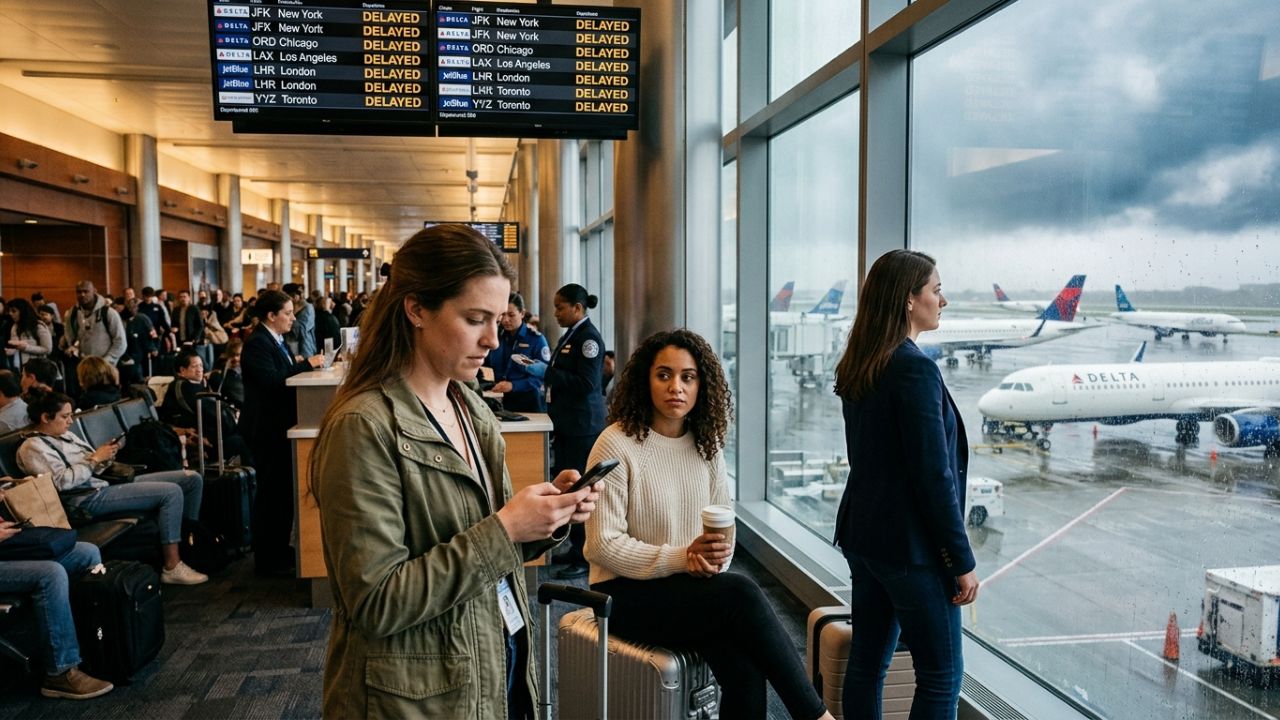
Image generated by AI
In a dramatic wave of operational instability, Boston Logan International Airport (BOS) has been plunged into acute travel chaos. On May 18, 2026, the primary aviation hub of New England recorded a total of 76 flight delays and 1 cancellation, triggering significant airport disruptions across domestic and international corridors. This latest airline news update has sent shockwaves through the region's transit networks, leaving thousands of passengers—including families, business travelers, and students—facing hours of uncertainty inside crowded terminals. The scheduling fallout has severely impacted high-frequency passenger routes connecting Boston to global hubs like New York, Chicago, Los Angeles, London, and Toronto, putting immense pressure on passenger service teams.
Context and Background
According to official operational logs from the Federal Aviation Administration (FAA), the severe backlog at Boston Logan was triggered by a combination of volatile Northeast weather systems, low clouds, mist, and gusty winds. These atmospheric challenges resulted in low visibility, which immediately compromised the capacity of Boston’s runways. To maintain safety standards, air traffic controllers were forced to implement strict traffic management controls.
The Northeast airspace corridor is notoriously dense and highly congested. When weather disturbances reduce visibility at a major gateway like Logan, the FAA must implement ground stops or airborne metering. FAA operational reports indicated that arrival traffic faced extended airborne delays, while departure traffic suffered heavy taxi and gate holding delays. Because modern airline networks rely on tightly connected aircraft and crew rotations, a single delay at Logan quickly cascades across subsequent routes, creating a national ripple effect.
Breaking Down the Geographic and Commercial Impact
The operational bottleneck has disrupted schedules for almost all major domestic and international carriers operating out of Boston. Legacies and low-cost giants alike—including JetBlue Airways, American Airlines, Delta Air Lines, and United Airlines—have had to adjust their aircraft rotations to recover their schedules.
The disruption is particularly acute along high-volume business and leisure corridors. Flights destined for transborder hubs like Toronto Pearson (YYZ) and transatlantic routes heading to London Heathrow (LHR) faced severe schedule slippage. Domestically, the high-density "shuttle" routes to New York’s airports, Chicago O'Hare (ORD), and Los Angeles (LAX) were the hardest hit, as gate availability became increasingly fluid.
The following data table outlines the exact operational disruptions logged during this period of intense scheduling friction at the Boston gateway:
BOS Airport Disruption Summary: May 18, 2026
| Operational Metric | Total Count | Scope & Details |
|---|---|---|
| Flight Delays | 76 | Affecting key domestic and international departures |
| Flight Cancellations | 1 | Single commercial service canceled |
| Primary Hub Impacted | Boston Logan International Airport (BOS) | Managed by Massport on behalf of Transport Canada guidelines |
| Major Impacted Airlines | JetBlue, American Airlines, Delta, United Airlines | Key domestic and international legacy carriers |
| Disrupted Key Routes | New York, Chicago, Los Angeles, London, Toronto | Critical business, student, and leisure corridors |
| Primary Disruption Drivers | Weather systems, low clouds, mist, gusty winds, low visibility | Official FAA operational status updates |
What Passengers Get
A closer look at the terminal environment at Boston Logan reveals the immediate challenges facing stranded travelers:
- Crowded Terminal Facilities: Waiting areas, lounges, and customer service desks experienced heavy congestion as travelers checked their devices for live updates.
- Prolonged On-Board Waiting: Departure flights experienced extended taxi and gate holds, keeping passengers on the tarmac for significant periods before takeoff.
- Baggage and Gate Friction: Re-accommodation and gate changes created confusion, forcing airport staff to manage extensive queues.
- Live Operational Information: The Massachusetts Port Authority (Massport) deployed live tracking updates across digital terminal screens and official platforms to assist passengers.
What This Means for Travelers
For travelers scheduled to fly through Boston Logan or neighboring Northeast hubs in the coming days, senior aviation specialists advise the following actions:
- Check Flight Status Frequently: Do not leave for the terminal without checking your live flight status via your operating carrier's mobile application.
- Verify Early and Late Departures: Early morning and late evening departures are historically the most vulnerable to regional scheduling bottlenecks; check directly with your airline.
- Allow Extra Processing Time: Give yourself ample buffer time for security screening, check-in, and boarding procedures, as terminal crowds are much higher than normal.
- Prepare for Tarmac Delays: Keep essential travel documents, chargers, and medications in your carry-on baggage in case of unexpected taxi delays.
- Understand Rebooking Policies: Familiarize yourself with passenger rights and rebooking policies for carriers like JetBlue Airways to secure alternative flights quickly if your departure is canceled.
FAQ: Boston Logan Airport Flight Delays 2026
1. Why did Boston Logan experience so many flight delays on May 18, 2026?
The delays were caused by weather-related air traffic disruptions, including low clouds, mist, gusty winds, and low visibility. These conditions forced the FAA to implement traffic management controls, restricting runway capacity.
2. Which airlines and routes were most affected by the Boston travel chaos?
The disruptions heavily impacted JetBlue, American Airlines, Delta Air Lines, and United Airlines. The most affected routes included high-frequency flights to London, Toronto, New York, Chicago, and Los Angeles.
3. What should passengers do if their flight is delayed or canceled at BOS?
Passengers should check their flight status directly with their airline before heading to the airport. Travelers should also utilize Massport's live flight tracking systems and prepare for extra security and boarding processing times.
Related Travel Guides
- Boston Logan Airport Gripped by Travel Chaos: 251 Delays and 4 Cancellations Hit JetBlue, American, and United as Airport Disruptions Ripple Through New England
- Airlines Cancel 13,000 Flights in May Amid Soaring Jet Fuel Costs
- The 10 Best Travel Apps to Survive Major Flight Delays, According to Reddit
Disclaimer
This article is for informational and educational purposes only. It does not constitute legal, financial, or professional advice. While we strive to provide accurate and up-to-date information, travel policies, regulations, and conditions change rapidly. Always verify information with official sources before making travel decisions. Nomad Lawyer makes no representations about the accuracy, reliability, completeness, or suitability of the information provided. Readers should consult qualified professionals for advice specific to their circumstances. The views expressed in this article are those of the author and do not necessarily reflect the views of Nomad Lawyer.
Kunal K Choudhary
Co-Founder & Contributor
A passionate traveller and tech enthusiast. Kunal contributes to the vision and growth of Nomad Lawyer, bringing fresh perspectives and driving the community forward.
Learn more about our team →