
Champlain Valley Fair 2026: Vermont's Largest Event Draws 120,000 Visitors to Essex Junction
The Champlain Valley Fair returns to Essex Junction from August 28 to September 6, 2026, blending agricultural heritage with major concerts and motorsports.

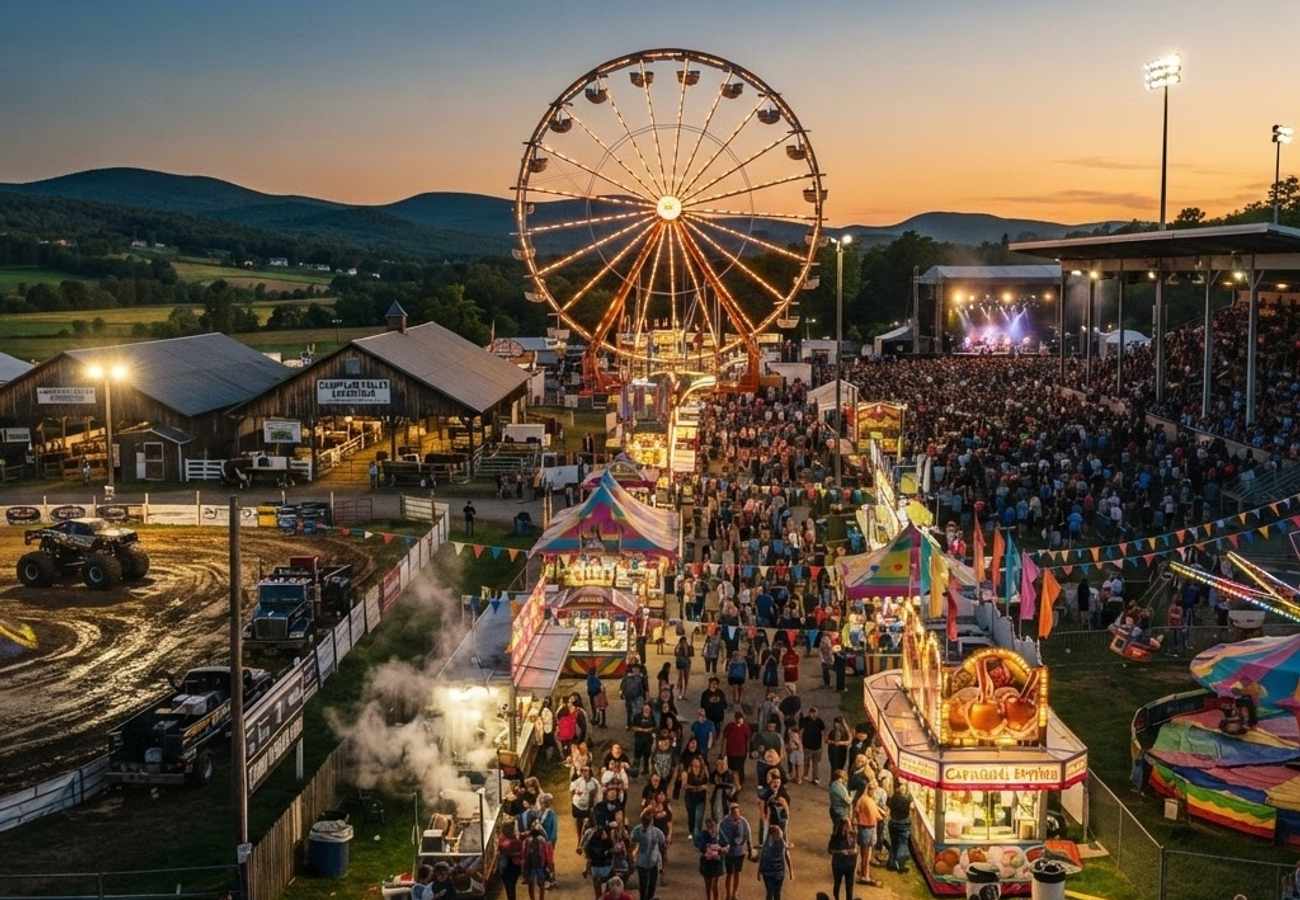
Image generated by AI
More than 120,000 people descend upon Essex Junction annually for the Champlain Valley Fair, making it the largest event in Vermont. From August 28 to September 6, 2026, this non-profit tradition transforms the region into a hub of agricultural education and high-energy entertainment.
The New England Summer Finale
The Champlain Valley Fair is not merely a carnival; it is a strategic anchor for late-summer tourism in the Lake Champlain region. Running for ten days at the Champlain Valley Exposition, the event serves as a bridge between Vermont's rural identity and modern entertainment. For the visitor, the real impact is the ability to transition from an educational morning among livestock to a high-decibel evening at the grandstand, all within a single venue.
Founded in 1922, the Exposition operates as a non-profit dedicated to the promotion of agriculture, arts, and commerce. This mission ensures that while the rides and food are primary draws, the core of the event remains rooted in the state's dairy and maple traditions.
A High-Octane 2026 Entertainment Slate
The 2026 programming is designed to attract a diverse demographic, blending country, rock, and hip-hop to ensure broad regional appeal. The concert series is a primary driver for overnight stays in Burlington and Essex Junction.
Grandstand Concert Schedule:
- August 28: Warren Zeiders with special guest Kevin Powers
- August 29: Jordan Davis and Matt Lang
- September 4: ZZ Top and George Thorogood
- September 5: Bow Wow, Soulja Boy, and Fat Joe
- September 6: Night Ranger and John Waite
Beyond the music, the fair maintains its edge with motorsports. The 2026 lineup includes Figure 8 racing, monster-truck exhibitions, and the traditional demolition derby, catering to a crowd that seeks high-energy action alongside the slower pace of agricultural exhibits.
Preserving Rural Heritage through Experience
While the concerts bring the crowds, the agricultural displays provide the "Information Gain" that distinguishes this event from a standard theme park. Vermont's identity is inextricably linked to its farms, and the fair allows urban visitors to engage directly with the source of the region's famous dairy and maple products.
By integrating livestock exhibits with family-friendly education, the fair supports the local rural economy. It transforms the abstract concept of "farm-to-table" into a tangible experience, where children and adults alike can interact with the animals and farmers who sustain the state's agricultural sector.
Visitor Insider Tips
To navigate the fair like a local and avoid the heaviest crowds, consider these practical strategies:
- The Ticket Hack: Purchase your concert tickets in advance. Pre-bought tickets include fair admission, whereas tickets bought on the day of the show do not.
- Timing Your Visit: Weekdays run from 12:00 PM to 10:00 PM, while weekends open earlier at 10:00 AM. For a quieter experience with the animals, arrive exactly at opening on a Tuesday or Wednesday.
- Budgeting for Families: Children aged 4 and under enter for free. For those aged 5 to 12, discounted tickets are available.
- Navigation: Download the official fair app before arriving; it is the only efficient way to track daily activity schedules and locate specific food vendors across the expansive grounds.
- Beyond the Gates: Use the fair as a base to explore the Burlington waterfront and the shores of Lake Champlain, which are within easy driving distance.
Tourism Outlook for Essex Junction
The economic ripple effect of the Champlain Valley Fair extends far beyond the Exposition gates. The influx of 120,000+ visitors provides a critical revenue spike for local hotels, transport services, and restaurants in the wider Lake Champlain area.
Long-term, the fair reinforces Vermont's position as a destination that balances outdoor adventure with cultural heritage. By maintaining its non-profit status and agricultural focus, the event ensures that tourism growth does not come at the expense of local identity, but rather serves as a showcase for it.
A perfect blend of rural tradition and stadium-sized excitement.
Related Travel Guides
Disclaimer
This article is for informational and educational purposes only. It does not constitute legal, financial, or professional advice. While we strive to provide accurate and up-to-date information, travel policies, regulations, and conditions change rapidly. Always verify information with official sources before making travel decisions. Nomad Lawyer makes no representations about the accuracy, reliability, completeness, or suitability of the information provided. Readers should consult qualified professionals for advice specific to their circumstances. The views expressed in this article are those of the author and do not necessarily reflect the views of Nomad Lawyer.
Naina Thakur
Contributor & Travel Specialist
Travel enthusiast and legal writer covering visa regulations, responsible tourism, and cultural journeys across global destinations.
Learn more about our team →