
Caribbean Urban Mobility Shift: Havana and Santo Domingo Lead Cycling Infrastructure Investments 2026
Caribbean capitals are pivoting toward sustainable transit, with Havana and Santo Domingo deploying millions in cycling infrastructure to reduce vehicle dependency and diversify tourism offerings.

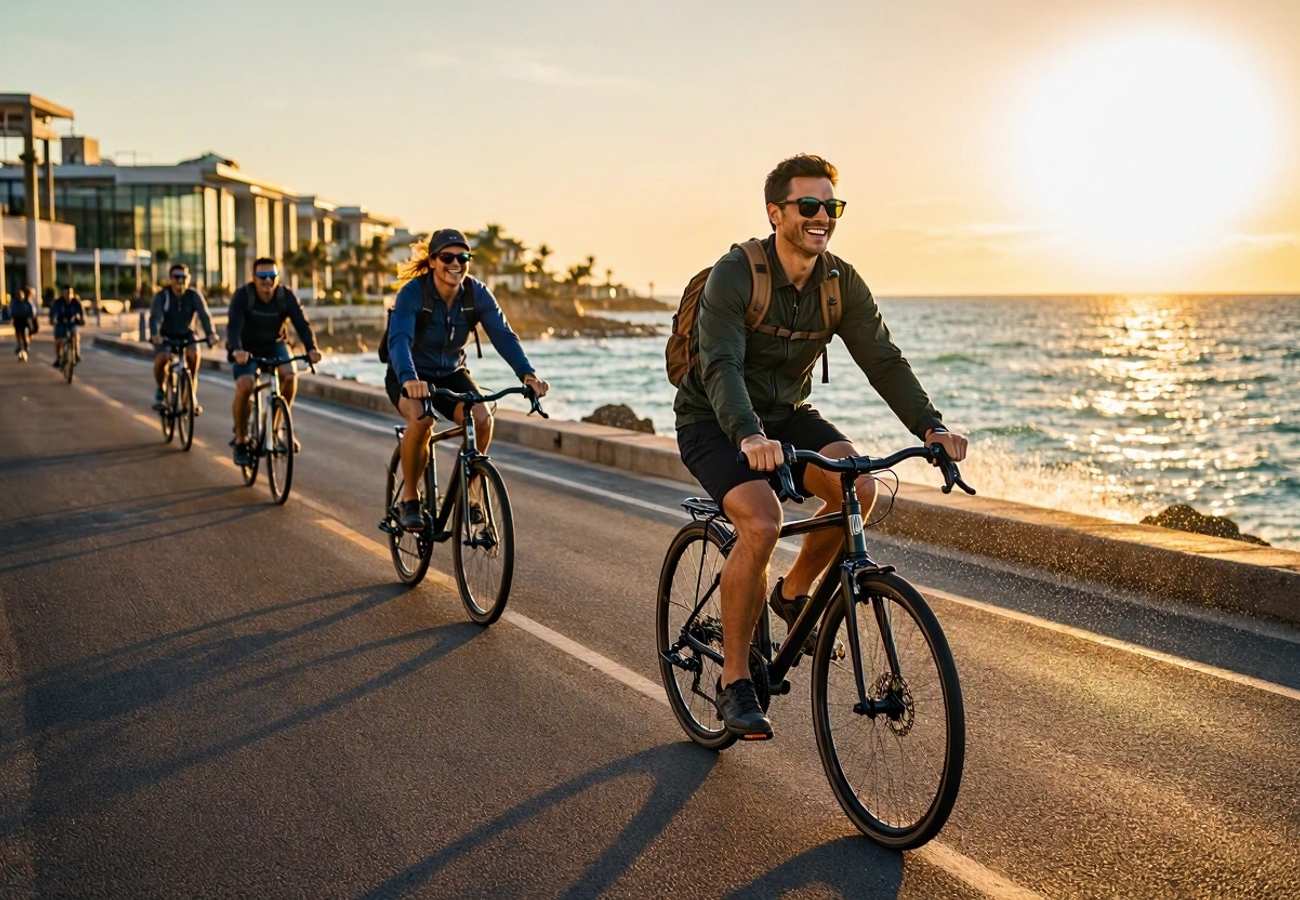
Image generated by AI
While traditional Caribbean tourism has long relied on taxi-based transit, the region is seeing a strategic pivot toward active mobility, with Havana proposing a US$7.20 million cycling package and Santo Domingo launching a nearly 2 km waterfront circuit. This shift represents a calculated move to decouple urban exploration from private vehicle dependency, reflecting a broader global trend toward "15-minute city" planning in tourist hubs.
The Mobility Shift in Numbers: Caribbean Capital Investments
The transition toward bicycle-friendly urban centers is not uniform across the region, but the financial commitments reveal a clear intent to modernize. Havana is currently the most aggressive in its planning, with a Sustainable Urban Mobility Plan that earmarks approximately €6.08 million for cycling. Of this, €3.49 million is dedicated specifically to safer infrastructure and parking, while €2.48 million is targeted at the expansion of bike-sharing services.
In the Dominican Republic, Santo Domingo has shifted from planning to execution with the April 23, 2026, inauguration of the Malecón Deportivo. While this 2 km stretch focuses on recreation, it sits within a massive US$2.6 billion multi-modal transport strategy. Meanwhile, in Guyana, the government has integrated cycling lanes into the 4.4 km Aubrey Barker Road corridor, funded by a G$6 billion investment that balances motor-vehicle needs with pedestrian and cyclist safety.
These figures align with global benchmarks set by the World Tourism Organization (UNWTO), which emphasizes that sustainable urban transport is a primary driver for increasing the "length of stay" in city destinations by making local neighborhoods more accessible to visitors.
Comparative Regional Infrastructure Analysis
The disparity between "policy framework" and "physical delivery" is the defining characteristic of the current Caribbean landscape. While some cities have inaugurated physical lanes, others remain in the feasibility stage.
| City/Destination | Key Project/Infrastructure | Investment Scale | Status (as of Oct 2026) | Primary Tourism Impact |
|---|---|---|---|---|
| Havana, Cuba | Citywide Cycling Master Plan | US$7.20M (Proposed) | Planning/Financing | Heritage & Neighborhood Tours |
| Santo Domingo, DR | Malecón Deportivo | US$2.6B (Citywide Plan) | Inaugurated Apr 2026 | Waterfront & Sports Tourism |
| Georgetown, Guyana | Aubrey Barker Road | G$6B (Total Corridor) | Completed 2026 | Urban Mobility & Guided Tours |
| San Juan, PR | Avenida Gándara Lanes | US$79.5M (6-project pool) | Announced Feb 2025 | District Connectivity |
| George Town, Cayman | City-Centre Regeneration | Not Separately Published | Phase 2 Done May 2025 | Cruise Passenger Access |
| Vega Alta, PR | PR-690/693/6690 Lanes | US$84,000 (Study) | Study Oct 26 - Oct 27 | Residential-Tourism Links |
What This Means for Travelers
For the individual traveler, this infrastructure shift changes the logistics of visiting Caribbean capitals. The move away from a taxi-only model allows for a more granular exploration of cultural sites, but the "fragmented" nature of these networks requires specific booking and navigation strategies.
- Diversify Your Transit Mix: In Santo Domingo, the Malecón Deportivo now allows for safe coastal exploration without a rental car. Travelers should plan for "hub-and-spoke" movement—using rideshares to reach a cycling-friendly district and then renting a bike for local exploration.
- Monitor "Pilot" Programs: Havana's Neomovilidad initiative, which saw over 13,000 services during its pilot, suggests that bike-sharing will become a primary way to see the city. Travelers visiting in late 2026 should check for the availability of app-based rentals to avoid the higher costs of private tours.
- Plan for "Gap" Areas: As seen in the San Juan and Vega Alta data, many lanes are part of larger infrastructure pools or are still in the "feasibility" stage. Do not assume a city is fully "bikeable" based on a single project; verify the continuity of lanes via International Air Transport Association (IATA) regional travel advisories or local maps.
Forward Projection: The Rise of the "Active Tourist"
The current trajectory suggests that by 2027, the Caribbean will move from "isolated lanes" to "connected corridors." The focus is shifting from purely recreational paths (like the Malecón) to functional transit (like Havana's master plan).
We expect to see a surge in "Cycling Heritage Packages" where tour operators bundle hotel stays with curated bike routes. This is particularly likely in Havana and George Town, where the goal is to move cruise passengers and international visitors out of the immediate port areas and into local commercial districts. If the funding for the US$7.20 million Havana plan is fully realized, Cuba could become the regional leader in low-carbon urban tourism.
FAQ: Caribbean Cycling Trends 2026
Will bike rentals become cheaper than taxis in Caribbean cities? For short-distance urban trips, yes. With the expansion of bike-sharing in Havana and the new lanes in Georgetown, the cost per kilometer for cyclists will be significantly lower than standard taxi fares.
Is it safe to cycle in these cities now? Safety is improving but varies. Dedicated zones like Santo Domingo's Malecón are high-safety areas. However, in cities like San Juan, where lanes are still being integrated into larger projects, travelers should stick to marked corridors.
Which city is currently the most "bike-friendly" for a tourist? Based on completed infrastructure, Santo Domingo and George Town offer the most immediate "plug-and-play" experiences for visitors due to their completed waterfront and city-center regenerations.
The Caribbean is trading the exhaust pipe for the pedal, turning urban congestion into a tourism asset.
Related Travel Guides
Disclaimer
This article is for informational and educational purposes only. It does not constitute legal, financial, or professional advice. While we strive to provide accurate and up-to-date information, travel policies, regulations, and conditions change rapidly. Always verify information with official sources before making travel decisions. Nomad Lawyer makes no representations about the accuracy, reliability, completeness, or suitability of the information provided. Readers should consult qualified professionals for advice specific to their circumstances. The views expressed in this article are those of the author and do not necessarily reflect the views of Nomad Lawyer.
Kunal K Choudhary
Co-Founder & Contributor
A passionate traveller and tech enthusiast. Kunal contributes to the vision and growth of Nomad Lawyer, bringing fresh perspectives and driving the community forward.
Learn more about our team →