
The Caribbean Electric Road Trip Revolution: Exploring Curaçao, Aruba, and Puerto Rico by EV 2026

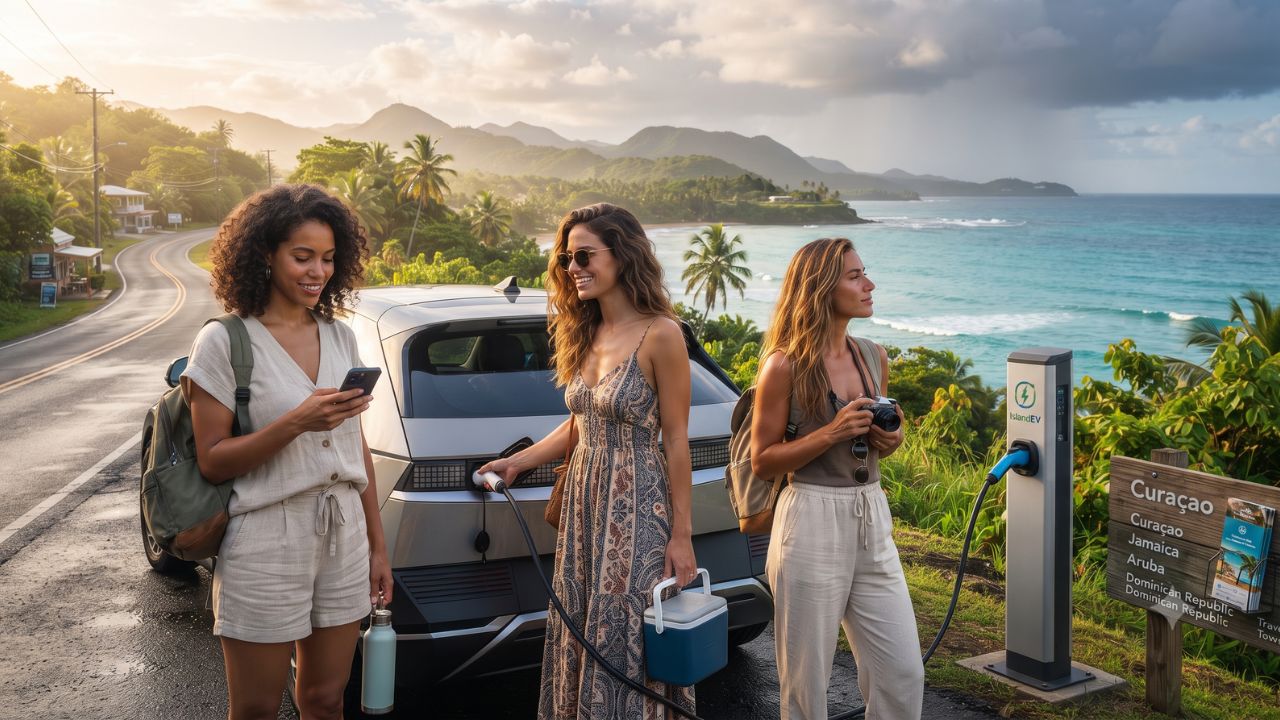
With the Dominican Republic boasting over 500 Evergo charging stations and Curaçao featuring 32 public D-Point charging hubs across a 45-kilometer island axis, electric vehicle road trips are fundamentally transforming Caribbean tourism. Official clean-energy initiatives monitored by the Curaçao Tourist Board and the Aruba Tourism Authority confirm that zero-emission self-drive itineraries have moved from experimental concepts to accessible, daily travel realities across the West Indies.
Rather than remaining confined to all-inclusive resort gates or relying on traditional fuel-burning rental cars, eco-conscious travelers can now rent modern electric vehicles to navigate coral coastlines, colonial plantation estates, and mountainous rainforests. With manageable driving distances and expanding rapid-charging infrastructure, islands like Curaçao, Aruba, the Dominican Republic, Jamaica, Grand Cayman, and Puerto Rico are pioneering sustainable island exploration.
Island-by-Island EV Routes: The Top Caribbean Electric Road Trips
Each participating Caribbean destination offers a tailored electric road trip experience suited to specific travel styles and battery ranges:
- Curaçao (The Premier Island Route): Curaçao anchors the southern Caribbean's electric transition with its 32-station D-Point public charging network. A premier two- to three-day itinerary begins in the pastel-colored Dutch colonial capital of Willemstad, tracing east toward Jan Thiel and Spaanse Water before heading northwest across 45 kilometers of scenic two-lane roads to the cliff-framed turquoise coves of Cas Abao, Grote Knip, and Westpunt.
- Aruba (Effortless Small-Island Loop): Measuring just 20 miles long by six miles wide, Aruba eliminates range anxiety entirely. National utility ELMAR maintains 11 public ChargeUp charging locations across Oranjestad, the Queen Beatrix International Airport corridor, Palm Beach, Noord, Paradera, Pos Chiquito, and San Nicolas. A complete 70-to-90-kilometer island loop connects California Lighthouse in the north to the tranquil waters of Baby Beach in the deep south.
- Dominican Republic (The Grand Cross-Country Highway): With Evergo operating more than 500 charging stations along modern multi-lane tollways, the country offers the Caribbean's premier long-distance EV adventure. A 380-to-420-kilometer round trip links the UNESCO-listed colonial quarter of Santo Domingo with luxury marinas in La Romana, diving centers in Bayahibe, and beachfront resorts in Punta Cana.
- Jamaica (The North Coast Corridor): Powered by Jamaica Public Service (JPS) and its expanding Charge 'N Go network across St. James, St. Ann, Kingston, St. Andrew, Westmoreland, Clarendon, and Portland alongside Evergo stations, travelers can complete a 210-to-260-kilometer round-trip coastal journey between Montego Bay, Discovery Bay, Drax Hall, and the cascading waterfalls of Ocho Rios.
- Grand Cayman (Relaxed Level 2 Touring): Stretching 45 kilometers from Seven Mile Beach to Rum Point (90 km round-trip), Grand Cayman is tailored for unhurried day trips. While the island features multiple free public Level 2 chargers, it currently has no Level 3 DC fast chargers, making overnight hotel charging the standard operational model.
- Puerto Rico (Coastal and Mountain Discovery): Spanning 110 miles long by 35 miles wide, Discover Puerto Rico promotes an expanding fast-charging network connecting historic Old San Juan east along Route 66 toward the food kiosks of Luquillo, the bioluminescent bay in Fajardo, ferry docks in Ceiba, and the lush hiking trailheads of El Yunque National Forest.
What Makes Caribbean EV Touring Experientially Superior
Exploring the Caribbean behind the wheel of an electric vehicle fundamentally changes the sensory experience of tropical travel.
Without engine noise or exhaust emissions, driving along winding coastal bluffs allows travelers to hear breaking ocean waves and tropical birdsong through open windows. The instant torque of electric motors provides effortless climbing power on steep switchbacks across Puerto Rico's Cordillera Central and Jamaica's Blue Mountains.
Moreover, the natural rhythm of EV charging aligns perfectly with slow Caribbean living. Plugging in for a 45-minute charge at a coastal restaurant provides the ideal window to savor fresh grilled red snapper at a seaside palapa, swim in a secluded limestone cove, or sample local Dutch-Caribbean goat stew (karni stoba) at a roadside village diner.
Visitor Insider Tips for Caribbean Electric Road Trips
Executing a smooth electric car holiday in the Caribbean requires a few strategic planning habits:
- Download Regional Charging Apps Before Departure: Install local network apps—such as the Evergo app for the Dominican Republic and Jamaica, or the D-Point and ChargeUp apps for Curaçao and Aruba—and link an international credit card before arriving at airport rental desks.
- Verify Charging Connector Compatibility: Confirm whether your rental EV uses a North American CCS1 / J1772 connector or a European Type 2 / CCS2 plug, and ensure the rental agency provides a standard 110V/220V emergency Level 1 trickle-charge cable in the trunk.
- Plan Mountain Drives with Battery Buffers: Winding uphill climbs through Puerto Rico's rainforests or Jamaica's interior consume battery range rapidly. Always begin mountain ascents with at least 60% charge, taking advantage of regenerative braking on descents to recover energy.
- Book Accommodations with Dedicated EV Stalls: Prioritize eco-resorts and boutique hotels that offer reserved guest charging, allowing your vehicle to recharge completely while you sleep.
- Monitor Late-Season Weather Alerts: Remember that the Atlantic hurricane season extends through November 30; avoid driving through heavy coastal puddles or unpaved dirt tracks during seasonal downpours.
Cultural and Environmental Context: Decarbonizing Island Grids
For Caribbean island nations that have historically relied on expensive imported diesel for electricity generation, the transition to electric mobility represents a vital step toward environmental sovereignty and climate resilience.
Islands like Aruba and Curaçao are pairing EV infrastructure expansion with massive solar farms and utility-scale wind turbines on breezy trade-wind coasts. Transitioning rental car fleets to electric power directly reduces local carbon emissions, eliminates oil runoff into fragile barrier coral reefs, and keeps tourism revenue circulating within local communities.
By choosing electric rental vehicles and supporting certified sustainable hospitality partners, travelers actively contribute to the preservation of the delicate Caribbean marine ecosystems that make the region so captivating.
FAQ: Caribbean EV Road Trips 2026
Is it difficult to find EV charging stations in the Caribbean?
No, provided you choose EV-ready destinations like Aruba, Curaçao, the Dominican Republic, and Puerto Rico, where charging stations are strategically positioned along major tourism routes.
Can I drive across an entire Caribbean island on a single charge?
Yes. Compact islands like Aruba (20 miles long) and Grand Cayman (45 km to Rum Point) can easily be traversed and looped multiple times on a single standard EV battery charge.
Are EV charging stations free in the Caribbean?
Some hotels and public parking areas in Grand Cayman and Aruba provide complimentary Level 2 charging, while high-speed DC fast networks like Evergo charge standardized per-kilowatt-hour rates via smartphone apps.
What should I do if a rural charging station is occupied?
Caribbean charging apps feature real-time station availability maps. Always plan your route with a secondary backup charging location within a 15- to 20-kilometer radius.
Gliding silently between turquoise coves and colonial ramparts, an electric road trip reveals the Caribbean as it was meant to be experienced: pure, tranquil, and untamed.
Related Travel Guides
Disclaimer
This article is for informational and educational purposes only. It does not constitute legal, financial, or professional advice. While we strive to provide accurate and up-to-date information, travel policies, regulations, and conditions change rapidly. Always verify information with official sources before making travel decisions. Nomad Lawyer makes no representations about the accuracy, reliability, completeness, or suitability of the information provided. Readers should consult qualified professionals for advice specific to their circumstances. The views expressed in this article are those of the author and do not necessarily reflect the views of Nomad Lawyer.
Raushan Kumar
Founder & Lead Developer
Full-stack developer with 11+ years of experience and a passionate traveller. Raushan built Nomad Lawyer from the ground up with a vision to create the best travel and law experience on the web.
Learn more about our team →