
Poreč & Istria Luxury Travel Guide 2026: Pical Resort, UNESCO Heritage, and Adriatic Gastronomy

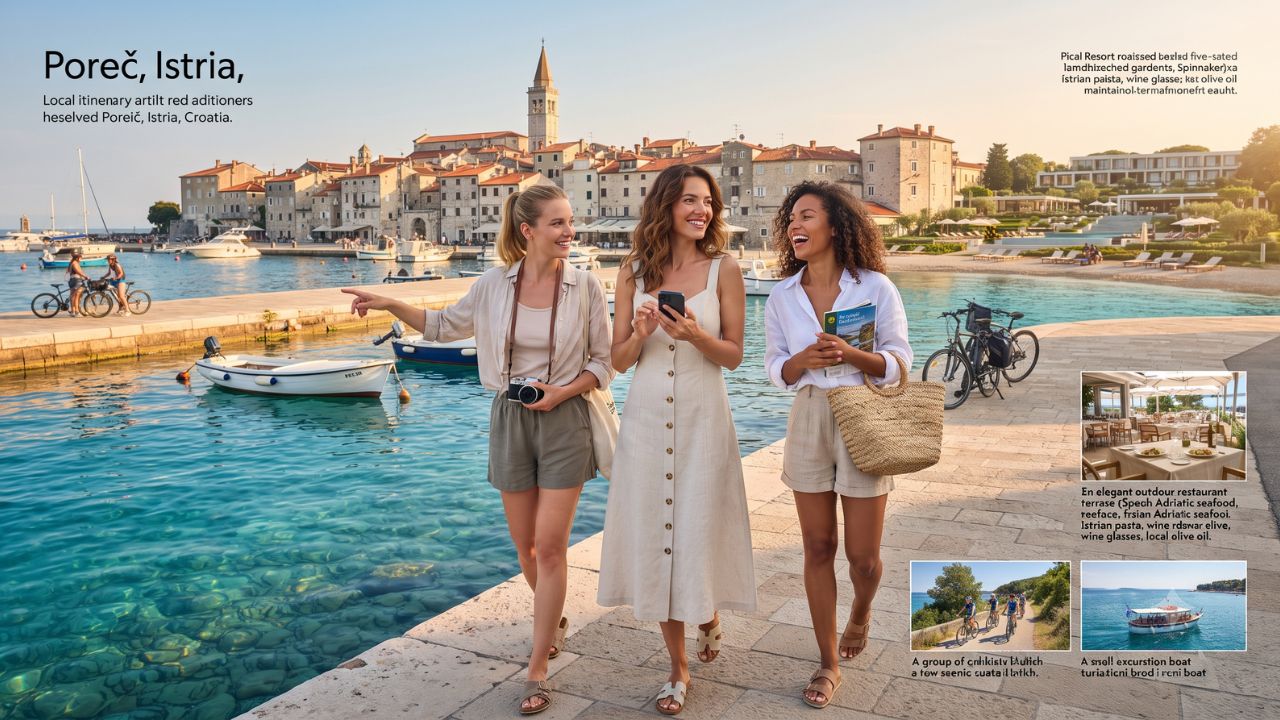
Generating 3.3 million tourist overnight stays in 2025 with over 3.1 million recorded by foreign guests, the historic Roman town of Poreč ranks as Croatia's third most visited coastal destination. Official destination intelligence from the Croatian National Tourist Board and the Poreč Tourist Board reveals that the northern Adriatic peninsula is redefining Mediterranean luxury through the debut of the €139 million, five-star Pical Resort, which introduces 514 accommodation units, eight distinctive restaurants, ten bars, and year-round thermal wellness just steps from Roman-era city ramparts.
Rather than isolating travelers within self-contained gated compounds, Istria’s coastal transformation integrates high-end hospitality directly into local olive groves, world-class cycling routes, and ancient Byzantine monuments. This balanced model allows visitors to experience the Adriatic's crystal waters alongside rich culinary heritage and living history.
The Pical Resort Milestone and Europe’s Integrated Coastal Shift
The opening of Pical Resort represents a significant €139 million capital investment that generated over 700 regional jobs during development. Positioned along pine-shaded coastal promenades, the property serves as a year-round anchor for Istria’s shoulder-season tourism strategy.
Key resort infrastructure includes:
- 514 Premium Accommodation Units: Designed to accommodate couples, multigenerational families, and sports enthusiasts without overcrowding.
- Comprehensive Gastronomy: Featuring eight restaurants and ten bars, highlighted by Harry’s Piccolo Poreč, a fine-dining concept helmed by two-Michelin-star Trieste chefs Matteo Metullio and Davide De Pra that blends Croatian, Italian, and Slovenian culinary traditions.
- Year-Round Thermal Wellness & Pools: Expansive indoor and outdoor heated saltwater pools paired with holistic spa facilities extending the destination’s appeal from March through November.
- Dedicated Active Infrastructure: Direct access to seaside cycling paths, water sports centers, and manicured pebble beaches framed by native Adriatic stone pines.
How Poreč Compares Across the Wider Mediterranean
Poreč’s 3.3 million nights in 2025 (a 2.2% increase over 2024’s 3.2 million commercial nights) places it directly behind Rovinj (4.2 million) and Dubrovnik (4.2 million), while outpacing Split (3.2 million), Medulin (2.5 million), and Umag (2.5 million).
Across the broader European travel sector—which reached a record 3.14 billion accommodation nights across the EU in 2025 (up from 1.83 billion in 2021 and 3.02 billion in 2024)—Poreč provides an intimate, culturally integrated alternative to larger Mediterranean island destinations:
- Mallorca, Spain: Welcomed 13,557,606 visitors in 2025 (up 1.35% from 2024) and logged 51.2 million international nights in 2024, operating at a vast regional scale across the Balearics.
- Algarve, Portugal: Recorded 20.8 million nights and 5.3 million guests in 2025 (with 16 million foreign nights representing 76.8% of the total), where seasonality dropped to 40.8% and RevPAR climbed to €78.50.
- Crete, Greece: Surpassed 6.2 million tourist arrivals in 2025 across its 1,040-kilometer coastline, up 5.8% year on year.
- Cyprus: Recorded 4,534,073 international arrivals and generated €3.696 billion in tourism revenue in 2025, with average expenditure per visitor reaching €815.16.
Poreč stands out by offering compact walkability: guests can step off a sun lounger and walk ten minutes along a tree-lined stone path directly into a 2,000-year-old Roman urban grid.
What Makes Istrian Coastal Living Experientially Distinct
Istria operates with a cultural rhythm distinct from southern Dalmatia. Shaped by centuries of Venetian rule and proximity to the Italian border, Poreč pairs Adriatic maritime traditions with central European epicurean refinement.
The architectural centerpiece of the town is the 6th-century Episcopal Complex of the Euphrasian Basilica, an impeccably preserved UNESCO World Heritage site renowned for its shimmering gold Byzantine mosaics depicting Christ and the Apostles. Walking along Decumanus Maximus and Cardo Maximus—the original paved Roman avenues—travelers encounter Gothic Venetian palaces, hidden wine vaults (konobas), and family-run gelaterias.
On the table, Istrian dining revolves around hyper-seasonal ingredients:
- Wild Adriatic Seafood: Grilled sea bass, brodetto fish stews, and sweet Kvarner scampi.
- Black and White Truffles: Harvested in the damp oak forests of the nearby Mirna River valley around Motovun and shaved generously over handmade fuži or pljukanci pasta.
- Award-Winning Extra Virgin Olive Oils: Pressed from indigenous Buža and Istarska Bjelica olives, consistently ranked among the world’s finest.
- Indigenous Varietal Wines: Mineral-driven white Istarska Malvazija and bold, ruby-colored Teran reds produced on terra rossa soils.
Visitor Insider Tips for Poreč & Istria
To experience Poreč with the depth of a local resident, consider these practical recommendations:
- Visit the Euphrasian Basilica at Midday for Quiet Reflections: Tour the basilica complex between 12:30 PM and 2:00 PM when cruise excursions and day-tour groups return to hotels for lunch. Climb the basilica bell tower for unobstructed views across the red-tiled roofs and surrounding Adriatic archipelago.
- Cycle the Historic Parenzana Trail: Rent a gravel bike or e-bike directly from the resort and explore the Parenzana—a converted historic narrow-gauge railway line that winds through hilltop villages, stone viaducts, and vineyards from Poreč toward Motovun and Grožnjan.
- Seek Out Traditional Inland Konobas: Venture fifteen minutes inland to family-run taverns in Tar, Višnjan, or Kaštelir for wood-fired peka (slow-roasted meat and potatoes under an iron bell) paired with house-cured pršut and aged sheep’s cheese.
- Choose May, June, or October for Wine and Truffle Harvests: While July and August offer warm 26°C waters for swimming, the shoulder months provide ideal 20°C cycling weather, uncrowded seaside promenades, and the peak of the autumn white truffle harvest.
- Pack Sturdy Water Shoes for Adriatic Pebble Coves: Istria’s coastal waters are exceptionally clear because beaches are limestone pebble and rock plateau rather than sand. Bring fitted rubber water shoes for effortless sea entries and cliffside swimming.
Cultural and Environmental Context: Sustainable Stewardship in Istria
As Istria attracts increasing international attention, balancing resort expansion with environmental preservation is paramount.
Regional authorities through Istria Tourism enforce strict marine water quality monitoring, earning Poreč dozens of international Blue Flag certifications across its coastal bays. The Pical Resort development adheres to sustainable green-building standards, featuring solar thermal arrays, native Mediterranean landscaping requiring minimal irrigation, and advanced wastewater treatment systems to safeguard local Posidonia seagrass meadows.
Preserving the tangible heritage of Poreč’s Roman and Venetian monuments remains equally prioritized. Tourism tax revenues directly fund ongoing mosaic conservation at the Euphrasian Basilica and support the restoration of medieval stone bastions across the peninsula, ensuring that the town's historical identity endures alongside modern luxury hospitality.
FAQ: Visiting Poreč & Istria 2026
What is the closest international airport to Poreč?
Pula Airport (PUY) is 55 kilometers south (roughly 45 minutes by road), while Trieste Airport (TRS) in Italy and Ljubljana Airport (LJU) in Slovenia are within a two-hour drive.
Is Poreč walkable without a rental car?
Yes. Poreč’s historic center, the Euphrasian Basilica, town beaches, and Pical Resort are all fully connected by flat, pedestrian-only coastal walking and cycling paths.
When is the best season for Istrian gastronomy and cycling?
September and October offer the best combination of warm swimming temperatures, olive and wine harvests, and fresh autumn white truffles.
Are the mosaics at the Euphrasian Basilica open to the public?
Yes. The UNESCO-listed basilica, atrium, baptistery, and bishop's palace museum are open daily for visitors outside of scheduled liturgical services.
Between the golden shimmer of sixth-century mosaics and the sunlit ripple of Adriatic waves, Poreč captures the timeless soul of the Mediterranean.
Related Travel Guides
Disclaimer
This article is for informational and educational purposes only. It does not constitute legal, financial, or professional advice. While we strive to provide accurate and up-to-date information, travel policies, regulations, and conditions change rapidly. Always verify information with official sources before making travel decisions. Nomad Lawyer makes no representations about the accuracy, reliability, completeness, or suitability of the information provided. Readers should consult qualified professionals for advice specific to their circumstances. The views expressed in this article are those of the author and do not necessarily reflect the views of Nomad Lawyer.
Naina Thakur
Contributor & Travel Specialist
Travel enthusiast and legal writer covering visa regulations, responsible tourism, and cultural journeys across global destinations.
Learn more about our team →