
Car Accident Evidence to Preserve in the First 72 Hours
A car accident in Ontario, California, requires swift action to preserve key evidence. Learn what photos, digital records, medical documents, and vehicle proof you must collect in the first 72 hours.

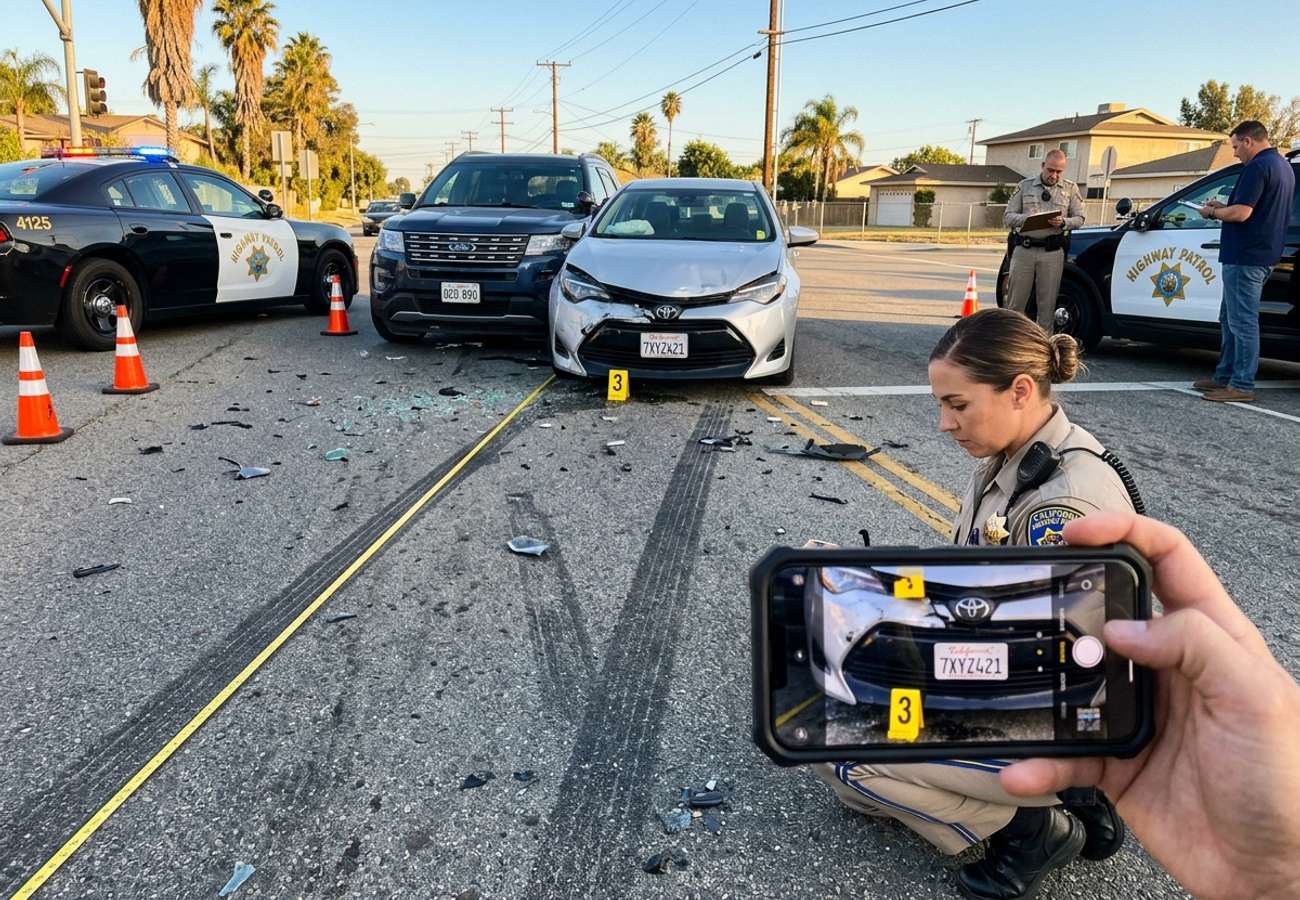
Photo by Nomad Lawyer Legal Desk / Documenting crucial car crash evidence and vehicle damage during the first 72 hours
A car accident in Ontario, California, can leave important questions unanswered once the immediate emergency has passed. The condition of the vehicles, details at the scene, witness recollections, and records connected to the collision may all become harder to establish with time. For an injured person, the first few days can therefore be important for creating a reliable account of what occurred. Taking a thoughtful approach during this period can help keep useful information available while the circumstances are still fresh.
For people dealing with the aftermath of a collision, consulting a car accident lawyer in Ontario, CA can help identify which evidence may be important to the claim. A lawyer can review the circumstances, available documentation, and potential sources of information while helping the injured person understand what to preserve. This early attention can be especially useful when questions about fault, injuries, or losses may depend on records that could become difficult to obtain later.
1. Document The Crash Scene and Gather Eyewitness Statements
If the location is safe, photographs should capture every vehicle from several distances. Include license plates, road positions, traffic signals, lane markings, skid marks, debris, damaged signs, and visible injuries. Wide images establish context, while close images show impact points and property damage.
Anyone seeking legal guidance after a collision should understand how evidence requests fit into the broader claim process. A car accident lawyer in Ontario can review available records, identify missing evidence, and explain which materials require formal preservation steps. Early review also helps protect a claim involving disputed fault, multiple vehicles, or serious injuries.
Collect witness information before people leave. Names, phone numbers, and short descriptions of what each person observed are useful. Witnesses should describe facts rather than speculate about fault.
2. Preserve Official and Digital Records
Emergency dispatch records, police reports, traffic-camera footage, and nearby business surveillance can contain time-sensitive evidence. The injured person should ask the investigating agency for the report number and learn how to request related records.
Video systems often delete recordings automatically. A written preservation request should identify the date, approximate time, location, and direction of travel. Cameras near Ontario intersections, shopping areas, parking lots, and freeway ramps may show the impact or events immediately before it.
Keep phone records, navigation history, dashcam files, and photographs in their original form. Copies can be created for sharing, but original files should not be edited, cropped, filtered, or renamed in ways that remove metadata.
3. Record Comprehensive Medical Evidence and Symptoms
Medical care should begin promptly after a crash, even when symptoms seem manageable. Adrenaline can mask neck pain, back pain, headaches, numbness, or concussion symptoms during the first hours.
Each provider should receive an accurate account of the collision and symptoms. The patient should keep discharge papers, imaging results, prescriptions, bills, work restrictions, and follow-up instructions. A private symptom log can record pain, sleep problems, mobility limits, missed work, and changes in daily activities.
Treatment gaps create questions about whether an injury came from the crash. If an appointment must be missed, the patient should reschedule promptly and keep the reason documented.
4. Protect Vehicle and Property Damage Evidence
Do not repair, sell, salvage, or discard a damaged vehicle before photographing and inspecting it. The owner should notify the insurer, request a written estimate, and preserve towing, storage, rental, and repair documents.
Personal property inside the vehicle also deserves documentation. A damaged child safety seat, phone, glasses, clothing, or work equipment should be photographed before disposal. Receipts, replacement estimates, and proof of ownership help establish the value of those losses.
Maintenance records can also matter. Tire condition, brake work, recall notices, and recent repairs may affect a dispute about vehicle failure or responsibility.
5. Preserve Financial Losses and Insurance Communications
Document lost wages during the first week, not months later. Pay stubs, scheduled shifts, employer statements, leave records, and self-employment invoices can show the income affected by the injury.
All insurer communications should be saved. Claim numbers, adjuster names, emails, letters, recorded-statement requests, and settlement proposals belong in one organized file. An injured person should avoid guessing about medical recovery or accepting a settlement before understanding future treatment needs.
Social media posts also require care. Photos, comments, check-ins, and activity videos can be taken out of context and used to challenge injury claims. Privacy settings do not guarantee that an insurer will never see public content.
Protecting Your Personal Injury Claim After an Ontario Collision
During the first 72 hours, the safest approach is simple: obtain medical care, photograph the scene, preserve original files, identify witnesses, and save every related record. The injured person should avoid repairs, recorded statements, and settlement decisions until the available evidence has been reviewed.
A practical next step is to create one dated folder for photographs, reports, medical documents, bills, and communications. That organization gives a legal representative a clearer basis for assessing liability and damages.
Related Travel Guides
Disclaimer
This article is for informational and educational purposes only. It does not constitute legal, financial, or professional advice. While we strive to provide accurate and up-to-date information, travel policies, regulations, and conditions change rapidly. Always verify information with official sources before making travel decisions. Nomad Lawyer makes no representations about the accuracy, reliability, completeness, or suitability of the information provided. Readers should consult qualified professionals for advice specific to their circumstances. The views expressed in this article are those of the author and do not necessarily reflect the views of Nomad Lawyer.
Raushan Kumar
Founder & Lead Developer
Full-stack developer with 11+ years of experience and a passionate traveller. Raushan built Nomad Lawyer from the ground up with a vision to create the best travel and law experience on the web.
Learn more about our team →