
Sudden Mid-Air Abort Triggers Travel Chaos as Cape Air Flight KAP60 Abandons Boston Route, Executing Tense Return to Rutland Amid Rising Regional Airport Disruptions: Latest Airline News
Cape Air Flight KAP60 sparks severe localized travel chaos after mysteriously abandoning its flight to Boston, executing an unexplained 57-minute airborne diversion back to Rutland.

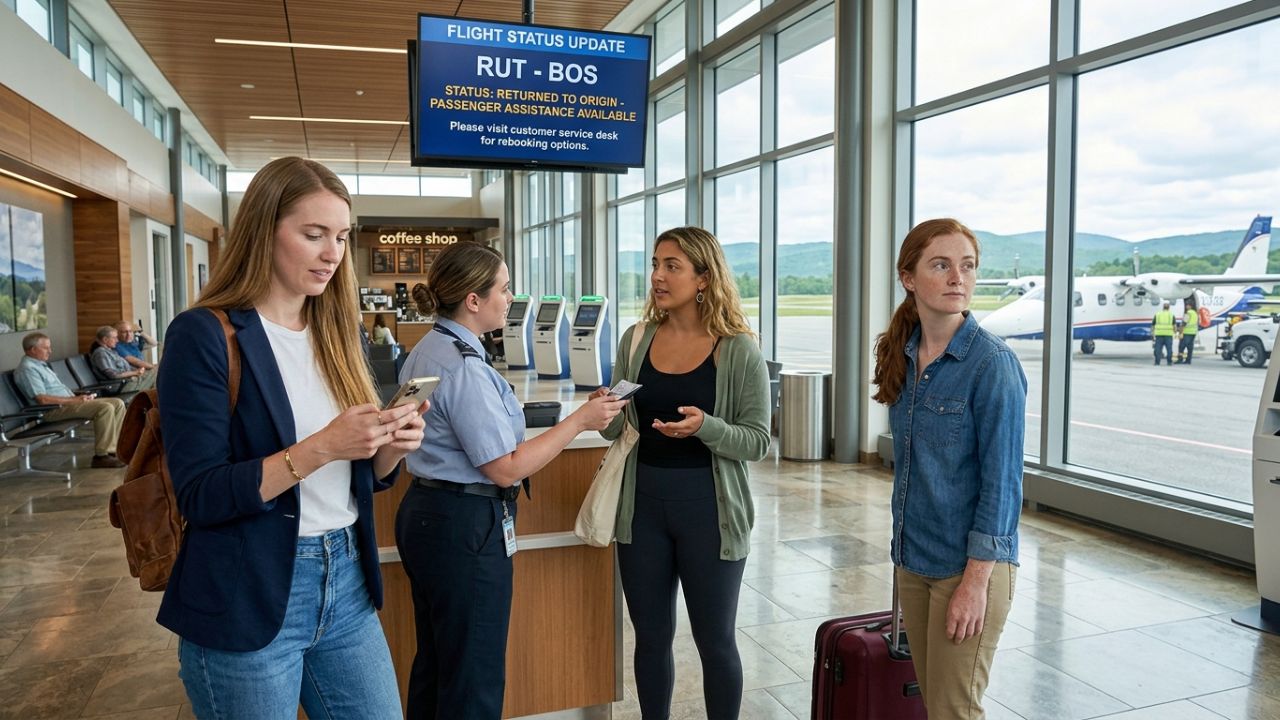
Image generated by AI
In a highly disruptive operational anomaly that instantly triggered localized travel chaos and left regional commuters stranded without answers, Cape Air Flight KAP60 executed a sudden mid-air diversion, completely abandoning its scheduled flight to Boston Logan International Airport. Operating on Thursday, June 18, 2026, the twin-engine Tecnam P2012 Traveller departed Rutland Southern Vermont Regional Airport, but inexplicably reversed course mid-flight. Instead of landing at the massive New England mega-hub, the aircraft spent nearly an hour airborne before returning directly to its origin, abruptly converting the routine passenger service into a tense "flight to nowhere." This unexplained technical abort physically trapped passengers in the air and ultimately resulted in severe localized airport disruptions, as the sudden operational failure triggered cascading flight cancellations for the passengers' vital onward connections. As safety investigators probe the exact mechanical or operational triggers behind the diversion, the incident is driving today's most scrutinized headline in breaking airline news and essential global aviation updates.
By introducing direct passenger coordination and dynamic scheduling backups, the regional aviation hubs target growing passenger demand across vital commerce sectors. The choice to coordinate flight departures in phases helps to manage gate capacity, supporting the country's broader regional transportation network.
Context: The Anatomy of a Mid-Air Abort
For the passengers strapped inside the nine-seat regional aircraft, the unexplained diversion of Flight KAP60 represents the ultimate manifestation of airborne travel chaos.
Historically, regional connections between smaller municipal fields like Rutland (RUT) and massive international gateways like Boston (BOS) are the absolute backbone of rural US domestic transit. These "essential air service" routes act as vital lifelines. However, when a flight physically departs, flies toward its destination, and then executes a U-turn to return to the origin, it violently shatters the integrity of the traveler's itinerary. While the airline has not yet confirmed whether the abort was triggered by a mechanical indicator, a system warning, or severe localized weather, the protocol is clear: if an aircraft develops a fault shortly after takeoff, returning to the origin airport is the safest tactical decision. Unfortunately, this precautionary safety maneuver guarantees absolute travel chaos for the passengers. By returning to Rutland instead of continuing to Boston, the passengers lost nearly an hour of their lives only to end up exactly where they started, facing the brutal reality of sudden flight cancellations and the immediate mathematical certainty of missing their international connections out of Boston Logan.
To view live flight schedules, verify the active delay status of your specific itinerary, or to track active regional airspace restrictions, travelers must consult official aviation directories. For direct updates regarding how this mid-air technical abort triggers sudden route abandonments affecting your specific regional connections, travelers should aggressively utilize the official Cape Air portal. To explore live flight tracking and monitor the exact severity of the cascading bottlenecks causing the flight cancellations at Boston Logan, passengers can consult the official FlightAware tracking service.
Section-Wise Breakdown of the KAP60 Diversion
The Deceptive Departure
Flight tracking records reveal that KAP60 initially executed a relatively normal dispatch. The aircraft was officially scheduled to depart Rutland Southern Vermont Regional Airport at 9:00 am EDT. The Tecnam P2012 Traveller (registered as N722CA) subsequently lifted off at 9:05 am EDT, only a negligible five minutes behind schedule. The aircraft initiated a completely routine trajectory toward the Massachusetts border, giving passengers absolutely no initial indication of the impending travel chaos or the operational failure to come.
The Unexplained Reversal
The aircraft was scheduled to operate the short regional hop directly into Boston Logan. However, shortly after departure, tracking data confirms the aircraft executed an abrupt, unplanned course reversal. Without declaring an open emergency on public trackers, the flight crew abandoned the Boston trajectory and aimed the twin-engine aircraft directly back toward Rutland, initiating an unexpected return sequence.
The Return to Origin
The aircraft ultimately touched down safely back at Rutland Southern Vermont Regional Airport at 9:52 am EDT. Because the aircraft had to execute a return pattern, the regional aircraft remained airborne for approximately 57 minutes. What was supposed to be a quick, efficient connection to a major global hub devolved into a highly frustrating flight to nowhere, completely destroying the passengers' morning schedules and severing their link to the national aviation grid.
Technical Roster: Cape Air KAP60 Incident Data
To ensure absolute factual accuracy regarding the exact parameters of this mid-air operational failure and the specific flight metrics driving the threat of sudden flight cancellations, the following matrix details the verified tracking data:
Cape Air Flight KAP60 Incident Log
| Flight Operational Metric | Strategic Verification Data |
|---|---|
| Operating Airline | Cape Air |
| Flight Designation | KAP60 |
| Aircraft Equipment | Tecnam P2012 Traveller (Twin-Engine) |
| Registration Number | N722CA |
| Scheduled Route | Rutland, VT (RUT) to Boston, MA (BOS) |
| Scheduled Departure | 9:00 am EDT |
| Actual Departure | 9:05 am EDT |
| Actual Return Landing | 9:52 am EDT at Rutland (RUT) |
| Total Airborne Duration | Approximately 57 minutes of diverted flight |
Passenger Impact: The "Flight to Nowhere"
For the business commuters and local residents relying on the vital Rutland-Boston air bridge, the diversion of KAP60 translates into an immediate, highly frustrating logistical nightmare.
The immediate passenger impact of this structural travel chaos is intense disorientation and itinerary failure. When a flight is canceled at the gate before boarding, passengers can immediately begin securing rental cars or alternative overland transport. However, when an aircraft takes off, flies for nearly an hour, and lands back at the origin, the passengers are trapped in an information vacuum. They arrive back at Rutland at 9:52 am completely exhausted and fundamentally behind schedule. Furthermore, because passengers utilizing Cape Air are almost exclusively connecting to major mainline flights out of Boston Logan (such as international departures to Europe or cross-country flights to Los Angeles), this single diversion guarantees catastrophic downstream airport disruptions. The passengers mathematically miss their Boston connections, rendering their expensive mainline tickets useless and forcing them to navigate a highly complex rebooking process from a small regional airport.
Industry Analysis: The Safety Protocol vs. Passenger Convenience
Aviation industry analysts view the precautionary return of KAP60 to Rutland as a textbook execution of modern airline safety doctrine, even if it inherently guarantees massive travel chaos for the ticketed passengers.
Analysts note that modern regional aircraft like the Tecnam P2012 are highly sophisticated. If a flight crew receives a minor technical fault indication—such as a sensor warning or a system anomaly—continuing the flight into the heavily congested airspace over Boston Logan is a massive operational risk. Boston requires absolute precision. Industry experts emphasize that turning the aircraft around and returning to the quieter, familiar airspace of Rutland is always the most tactically sound decision. It ensures the aircraft can land immediately without holding for traffic and be inspected by ground technicians. While this precautionary safety maneuver protected the aircraft, it definitively highlights the vulnerability of passengers who rely on essential air service routes; a single aircraft fault can completely sever a community's access to the national aviation network.
Actionable Advice for Surviving Mid-Air Diversions
While passengers cannot control technical faults or sudden diversions, you can execute this strategic survival checklist to actively bypass the subsequent travel chaos once you land back at your origin airport:
- Pre-Book a Backup Rental Car Immediately: If you land back at Rutland, do not wait to see if Cape Air will supply a replacement aircraft. The flight cancellations are often final for the morning. While taxiing to the gate, use your smartphone to instantly book a rental car. Reserving a car guarantees you can execute a three-hour overland drive to Boston Logan, allowing you to bypass the airport disruptions and potentially salvage your onward connection.
- Do Not Wait for Gate Agents: When you deplane back at Rutland, do not stand in line to speak to the single gate agent regarding your missed Boston connection. Immediately call your mainline carrier (Delta, JetBlue, American) to execute your own rebooking. Bypassing the physical terminal queue is the fastest way to secure a seat on the next available flight out of Boston.
- Never Check a Bag on Regional Routes: If your flight diverts back to the origin, retrieving a checked bag is a massive logistical hurdle. The baggage system will freeze as the airline attempts to inspect the aircraft. If you only travel with a carry-on, you maintain total physical agility, allowing you to walk straight out of the terminal to your rental car while other passengers are held hostage by the baggage handler.
- Monitor the Aircraft Tail Number: Use FlightAware to track the specific registration of the diverted aircraft (N722CA). If you see the aircraft is taken out of service, you know definitively that a rapid replacement flight is highly unlikely. Use this data to immediately abandon the airport and execute an alternative overland travel plan.
FAQ: Cape Air Flight KAP60 Diversion
What happened to Cape Air Flight KAP60?
The flight, operating a Tecnam P2012 Traveller from Rutland to Boston on June 18, 2026, executed a sudden mid-air diversion, returning safely to Rutland after spending approximately 57 minutes in the air.
Why did the aircraft return to Rutland?
While the airline has not confirmed the exact technical trigger, aircraft return to origin airports as a standard precautionary measure to prioritize safety and allow for immediate ground inspection during suspected technical anomalies.
How does this cause travel chaos for passengers?
The diversion trapped passengers in a "flight to nowhere" for nearly an hour, returning them to their starting point and triggering sudden flight cancellations for their vital onward mainline connections out of Boston Logan.
The Reality of Regional Aviation Volatility
The abrupt mid-air diversion of Cape Air Flight KAP60 proves definitively that regional domestic aviation remains highly susceptible to sudden, unpredictable travel chaos. By prioritizing absolute safety and executing a precautionary return to Rutland, the flight crew successfully protected the aircraft but inadvertently subjected the passengers to severe airport disruptions and ruined itineraries. As regional airlines aggressively manage complex schedules—frequently triggering sudden technical aborts, rolling flight cancellations, and intense localized terminal panic—travelers must accept a critical new reality: avoiding brutal transit anxiety requires actively refusing to check luggage, maintaining immediate access to backup overland transport, and aggressively executing self-rebooking tactics to survive the volatile North American regional skies.
Key Takeaways
- Mid-Air Route Abandonment: Cape Air Flight KAP60 executed a sudden diversion, abandoning its scheduled arrival into Boston and returning to its Rutland origin.
- 57-Minute Flight to Nowhere: The Tecnam P2012 Traveller (N722CA) spent approximately 57 minutes airborne before landing safely back at Rutland, completely destroying passenger itineraries.
- Precautionary Safety Protocol: Returning to the origin airport ensures immediate access to ground support and avoids bringing a potentially faulty aircraft into heavily congested mega-hub airspace.
- Cascading Connection Failures: The diversion inherently triggered sudden flight cancellations for the passengers' vital downstream international and domestic connections out of Boston Logan.
- Passenger Survival: Travelers must aggressively secure backup overland transport immediately upon landing to physically insulate themselves from the subsequent airport disruptions.
Related Travel Guides
Massive Travel Chaos Paralyzes Chicago O'Hare with 1,425 Disruptions
Disclaimer
This article is for informational and educational purposes only. It does not constitute legal, financial, or professional advice. While we strive to provide accurate and up-to-date information, travel policies, regulations, and conditions change rapidly. Always verify information with official sources before making travel decisions. Nomad Lawyer makes no representations about the accuracy, reliability, completeness, or suitability of the information provided. Readers should consult qualified professionals for advice specific to their circumstances. The views expressed in this article are those of the author and do not necessarily reflect the views of Nomad Lawyer.
Kunal K Choudhary
Co-Founder & Contributor
A passionate traveller and tech enthusiast. Kunal contributes to the vision and growth of Nomad Lawyer, bringing fresh perspectives and driving the community forward.
Learn more about our team →