
Canada Wildfire Smoke Crisis 2026 Triggers Air Quality Alerts for US, India and Australia Travelers in North America
Canadian wildfire smoke has crossed international borders, impacting air quality in the US Great Lakes and Northeast regions, affecting travelers from India, Australia, and North America.

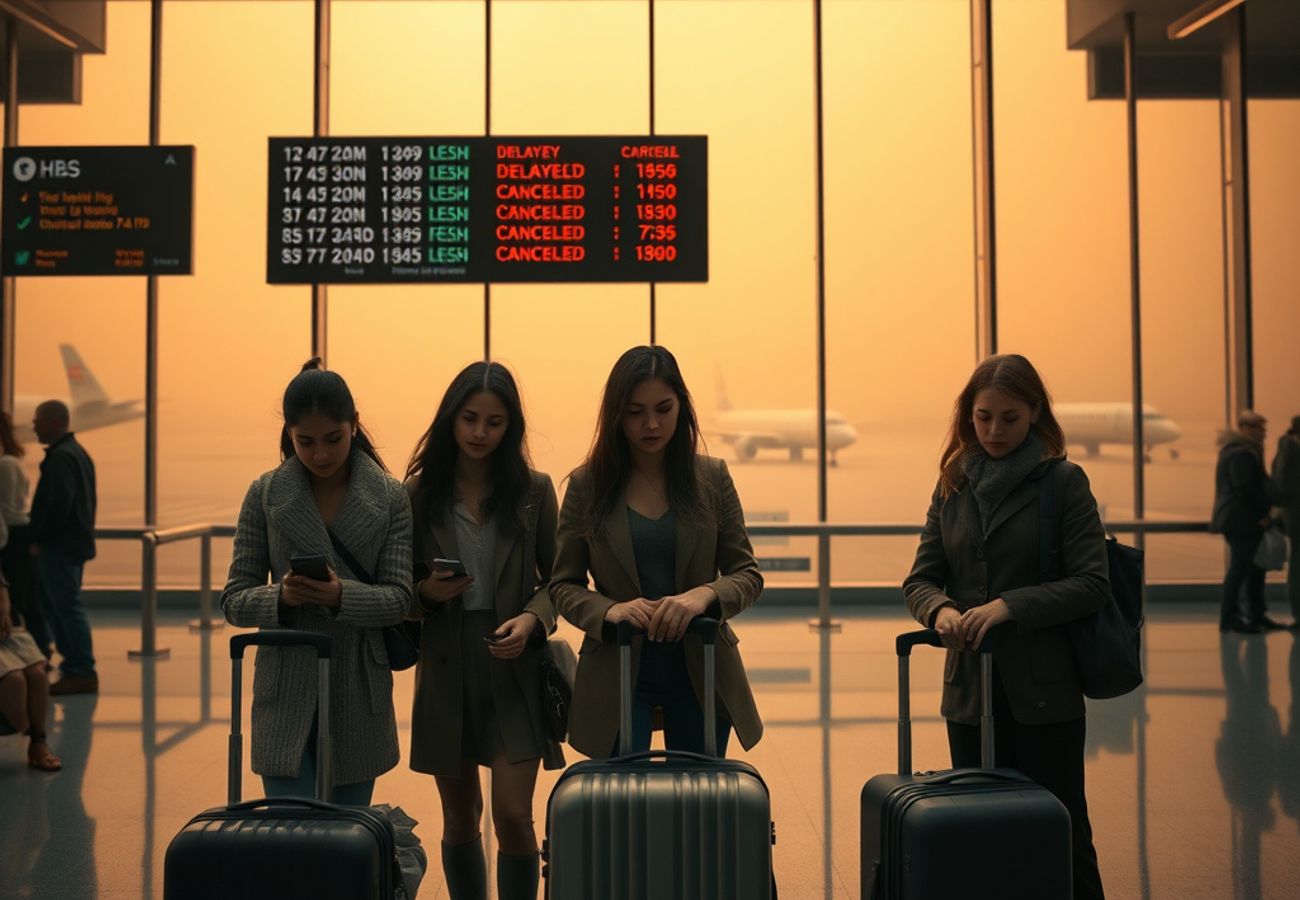
Image generated by AI
Wildfire smoke from Canada has migrated south into the United States, triggering hazardous air quality warnings across the Great Lakes and Northeast regions. Travelers from Canada, the US, India, and Australia are advised to monitor atmospheric conditions and adjust outdoor itineraries.
The Disruption Details
As of July 2026, intense wildfire activity in Canada—driven by high temperatures, dry vegetation, and strong wind patterns—has resulted in a transboundary smoke crisis. This atmospheric event has pushed high concentrations of PM2.5 (fine particulate matter) into the United States, severely reducing visibility and compromising air quality.
While the fires are centered in Canada, the smoke plume has extended hundreds of kilometers, creating health risks for vulnerable populations, including children, seniors, and those with pre-existing respiratory conditions.
Flight & Airport Impact Breakdown
Our analysis of current aviation data indicates that while widespread airport shutdowns have not occurred, operational risks remain elevated due to visibility fluctuations.
- Canadian Carriers: Monitoring visibility and ceiling heights at regional airports near active fire zones.
- US Carriers: Potential for tactical operational adjustments in the Great Lakes and Northeast corridors if smoke density impacts flight safety.
- International Routes: Passengers arriving from India and Australia into North American hubs should anticipate potential ground-level delays or revised flight paths.
- Affected Hubs: Primary concerns are concentrated in the Great Lakes region and the Northeast US, where smoke density is highest.
Regional Tourism Impact Matrix
| Region | Tourism Importance | Potential Travel Effects |
|---|---|---|
| Great Lakes Region | National parks, lake tourism | Reduced visibility, canceled outdoor recreation |
| Northeast US | Major cities, cultural events | Air quality alerts, restricted outdoor sightseeing |
| Northern US States | Road trips, nature tourism | Variable local conditions, health advisories |
Passenger Rights & Advisory (Information Gain)
Travelers facing disruptions due to environmental crises must understand their rights regarding rebooking and compensation. While "Acts of God" (force majeure) often exempt airlines from cash compensation, basic care and rerouting obligations still apply.
1. Rebooking and Refunds Under US DOT guidelines and similar international frameworks, if a flight is canceled due to weather or smoke-related visibility issues, passengers are entitled to a full refund of the unused portion of the ticket if they choose not to travel. If the airline offers a rebooking, this should be provided at the earliest opportunity.
2. Duty of Care For travelers stranded at hubs in the Northeast or Great Lakes, airlines are expected to provide assistance. While smoke is an extraordinary circumstance, passengers should request vouchers for food and communication if delays exceed standard windows.
3. Travel Insurance Claims Verify if your policy includes "Trip Interruption" or "Trip Delay" coverage for environmental hazards. Document all air quality alerts and official government warnings to support claims for modified itineraries.
4. Health Precautions
- Pre-Departure: Check real-time air quality indices (AQI) via official meteorology centers.
- On-Site: Use N95 or equivalent protective masks in high-PM2.5 zones.
- Medical: Travelers with asthma or COPD must carry sufficient medication and avoid strenuous outdoor activity.
Industry Analyst View
The 2026 wildfire season confirms a systemic shift in global tourism planning. We are moving away from a model where "weather" refers only to rain or snow, to one where atmospheric toxicity becomes a primary travel deterrent.
The fact that smoke from Canadian forests can disrupt a tourist's experience in a major US city demonstrates the interconnectedness of climate risk. For carriers and tour operators, the challenge is no longer just about flight safety, but about managing the "quality of experience." We expect to see an increase in flexible booking policies and the integration of real-time AQI data into travel booking engines to mitigate negative passenger sentiment.
Safe travel requires proactive monitoring of atmospheric conditions in the North American corridor.
Related Travel Guides
Disclaimer
This article is for informational and educational purposes only. It does not constitute legal, financial, or professional advice. While we strive to provide accurate and up-to-date information, travel policies, regulations, and conditions change rapidly. Always verify information with official sources before making travel decisions. Nomad Lawyer makes no representations about the accuracy, reliability, completeness, or suitability of the information provided. Readers should consult qualified professionals for advice specific to their circumstances. The views expressed in this article are those of the author and do not necessarily reflect the views of Nomad Lawyer.
Preeti Gunjan
Contributor & Community Manager
A passionate traveller and community builder. Preeti helps grow the Nomad Lawyer community, fostering engagement and bringing the reader experience to life.
Learn more about our team →