
The Sovereign Pivot: How Energy Megaprojects From Canada to Qatar Are Financing the World's New Tourism Frontiers
From Canada's C$20B Pacific Link to Qatar's North Field and Saudi Arabia's Jafurah gas fields, global energy powerhouses are reinvesting export revenues into world-class travel infrastructure.

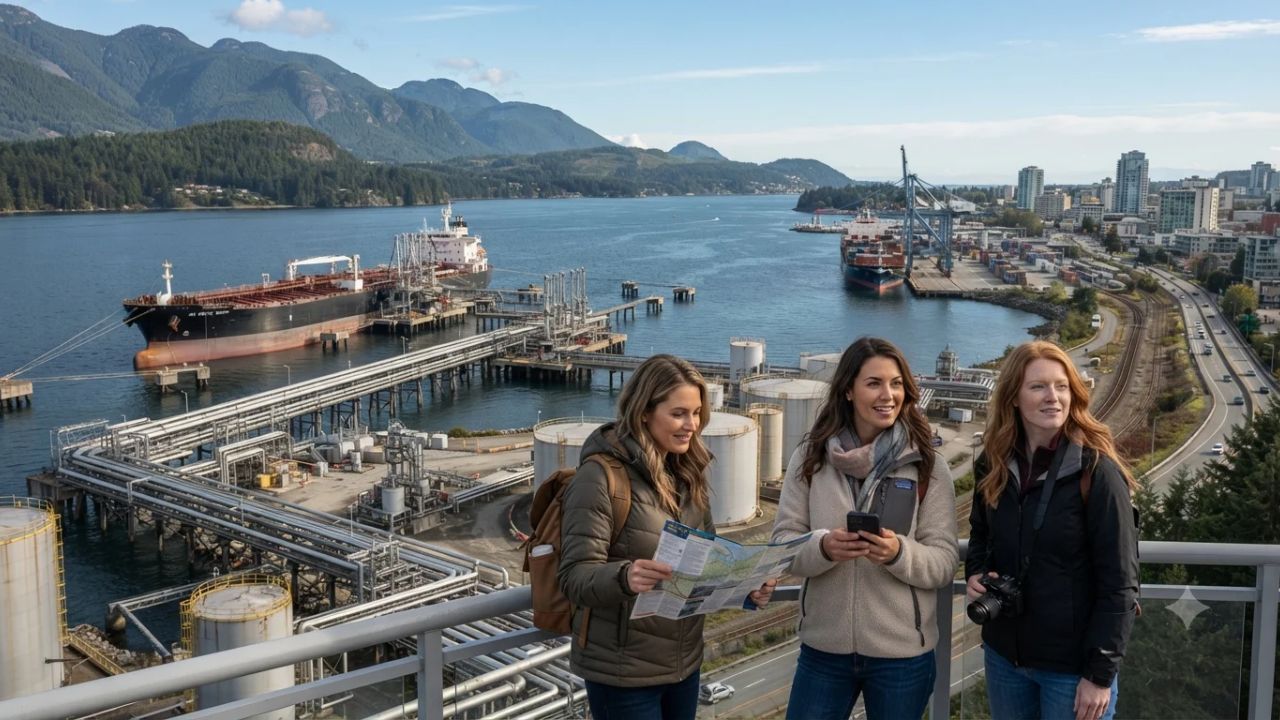
While Canada exported 4.3 million barrels of crude oil daily in 2025 with 90.1 percent flowing exclusively south to the United States, the proposed 1,250-kilometer Pacific Link pipeline from Bruderheim, Alberta, to Delta, British Columbia, represents a transformative economic pivot generating up to C$30 billion annually in national GDP. Designed to move one million barrels per day across 11 pumping stations and deepwater marine loading terminals to reach Asian markets, this capital corridor places Canada alongside global tourism powerhouses—including Qatar, Saudi Arabia, the United Arab Emirates, Guyana, Côte d’Ivoire, and Senegal—that are systematically channeling resource revenues into airport expansions, national airline networks, luxury hospitality enclaves, and wilderness conservation trusts.
Rather than remaining single-commodity economies, sovereign states are utilizing high-yield energy capital to build sustainable visitor economies. Promoted through national marketing bodies like Destination Canada, revenue generated from trade corridors directly underwrites the public transit grids, airport runway modernizations, and regional parks that allow international travelers to transition from modern metropolitan gateways to remote mountain and coastal biospheres.
Global Diversification Matrix: Energy Corridors & Tourism Ambitions
| Nation / Sovereign Entity | Key Energy Megaproject & Output | Economic & Fiscal Contribution | Tourism Expansion & Infrastructure Target |
|---|---|---|---|
| Canada | Pacific Link (1,250km, 1M bpd capacity) | C$20B–C$30B annual GDP / C$200B investment | Modernizing Pacific Rim ports, regional rail, and wilderness trail networks |
| Qatar | North Field East (LNG capacity 32M to 142M tonnes) | Foundation of state investment funds | Qatar Tourism targeting 12% GDP contribution by 2030 |
| Saudi Arabia | Jafurah Gas & Tanajib Plant (2.6B scf/day in 2026) | Powers industrial and non-oil capital | Saudi Tourism Authority targeting 10% GDP (123M visitors in 2025) |
| United Arab Emirates | Umm Shaif (US$6.2B) & SARB Gas | Unlocks 800M+ standard cubic feet daily | Tourism Strategy 2031 targeting AED 450B GDP and 40M hotel guests |
| Guyana | Offshore Oil & 5th FPSO Errea Wittu (>1M bpd) | 41.3% H1 2026 sector growth (US$15.05B) | G$3.2B Cheddi Jagan Airport terminal / G$2.2B Hospitality Institute |
| Côte d’Ivoire & Senegal | Baleine Phase 3 (US$4B) / Sangomar & GTA | 85km gas pipelines / deepwater fields | Expanding boutique coastal resorts (Côte d’Ivoire 6.7M visitors in 2025) |
How Hydrocarbon Capital Underwrites World-Class Travel Gateways
The direct correlation between sovereign energy development and visitor infrastructure is visible in the physical transformation of global travel hubs. In Qatar, export earnings from the world's largest non-associated natural gas reserve directly financed the architectural marvel of Hamad International Airport (DOH) and the cultural institutions lining Doha's Corniche, lifting travel and tourism's contribution toward 8 percent of total GDP.
In Saudi Arabia, where gas processing at the Tanajib facility reaches 2.6 billion standard cubic feet per day in 2026, the kingdom welcomed 123 million total visitors in 2025. International travelers generated SAR 176.6 billion across 29.3 million arrivals, fueling the construction of mega-destinations like the Red Sea Project and the mountain heritage retreats of AlUla.
Similarly, South America's newest energy powerhouse, Guyana, expanded its petroleum sector by 41.3 percent in the first half of 2026, generating US$15.05 billion in oil exports. The government immediately directed G$3.2 billion toward a new arrivals terminal at Cheddi Jagan International Airport (GEO) and G$2.2 billion to establish a national Hospitality and Tourism Institute to train local eco-guides as visitor numbers climb toward 500,000 annually.
In Canada, building heavy export infrastructure to Asia creates fiscal stability that supports regional transportation networks across western Canada. By expanding international maritime trade and attracting up to C$200 billion in direct capital, federal and provincial treasuries secure the revenue streams required to maintain high-capacity rail lines, national park highway corridors, and municipal transit links connecting Vancouver with Whistler and the Rocky Mountains.
Experiential Insights for the Global Traveler
For travelers on the ground, this macroeconomic shift creates unprecedented access to once-inaccessible wilderness and cultural frontiers. Long-haul routes that once required multiple regional connections now feature non-stop wide-body service on flagship carriers.
In British Columbia, travelers departing Vancouver can board the Rocky Mountaineer luxury glass-domed train through the Fraser Canyon, exploring mountain passes where industrial engineering coexists with wild salmon rivers. In the Gulf, travelers booking stopover itineraries in Doha or Riyadh can explore ancient desert oases in the morning and dine in Michelin-starred restaurants within state-of-the-art cultural districts by nightfall.
Visitor Insider Tips
- Book the Rocky Mountaineer Shoulder Season in Canada: Plan rail journeys through the Canadian Rockies during late September or October to witness gold larch needles and dusting snowcaps while avoiding mid-summer peak train fares.
- Utilize Qatar Airways Stopover Packages in Doha: Take advantage of transit hotel programs offering luxury four- and five-star resort stays in Doha for nominal rates (often under $30 per night) when connecting between North America and Southeast Asia.
- Secure Saudi Arabia eVisa and Umrah-Tourism Permits Early: Foreign tourists visiting Saudi heritage sites like Hegra in AlUla or historical Diriyah should book site access passes online through official tourism platforms at least three weeks in advance.
- Pair Guyana Bush Flights with Eco-Lodge Stays: When visiting Guyana's interior, coordinate light aircraft flights from Georgetown's Eugene F. Correia Airport (OGL) to community-run lodges in the North Rupununi to experience jaguar tracking alongside Indigenous Makushi guides.
- Ride the Sea-to-Sky Highway Midweek: If driving from Vancouver to Whistler along Highway 99, travel on Tuesday or Wednesday mornings to experience panoramic coastal fjord viewpoints without heavy weekend commuter traffic.
Cultural and Environmental Context
The intersection of large-scale resource development and tourism expansion presents profound environmental and cultural considerations. In Canada, infrastructure projects across Alberta and British Columbia require continuous consultation with First Nations communities, whose ancestral territories and salmon watersheds demand strict environmental protection and shared economic equity.
Concurrently, global travelers are increasingly conscious of environmental stewardship. Energy-rich nations are reinvesting billions into renewable energy grids, electrified airport ground vehicles, and marine conservation zones. By supporting certified Indigenous cultural tourism experiences, staying in solar-powered wilderness lodges, and patronizing locally owned restaurants, travelers help validate community-based conservation models, ensuring that natural wonders remain protected for future generations.
FAQ: Energy Infrastructure and Global Tourism 2026
How does Canada's Pacific Link project impact regional travel?
By generating an estimated C$20B to C$30B annually in national GDP, the project strengthens public revenues that fund transport infrastructure, highway corridors, and regional parks across Western Canada.
How much do international visitors spend in Saudi Arabia annually?
In 2025, international travelers generated SAR 176.6 billion across 29.3 million visits to Saudi Arabia, supporting the kingdom's Vision 2030 goal of raising tourism to 10 percent of GDP.
What is Qatar's long-term tourism goal?
Qatar is leveraging its North Field LNG expansion to grow tourism from approximately 8 percent of GDP to 12 percent by 2030 through expanded aviation, cruise, and hospitality infrastructure.
How is Guyana using oil revenues to support tourism?
Guyana has allocated G$3.2 billion to expand Cheddi Jagan International Airport's arrival facilities and G$2.2 billion to fund its national Hospitality and Tourism Institute.
Across the globe, the nations redefining modern travel understand that true wealth lies in transforming energy capital into enduring cultural and wilderness discovery.
Related Travel Guides
- The South American Tourism Shift: How Argentina Powers Brazil's Record Growth
- Canada's Middle East Travel Advisory Update: What Heightened Risk Tiers Mean for Transit Hubs
- Abu Dhabi's 37km Coastal Expressway: Al Hudayriyat to Al Dhafra Highway Guide
- Hong Kong to Hefei Direct: How HK Express Unlocks Anhui's Imperial Heritage
Disclaimer
This article is for informational and educational purposes only. It does not constitute legal, financial, or professional advice. While we strive to provide accurate and up-to-date information, travel policies, regulations, and conditions change rapidly. Always verify information with official sources before making travel decisions. Nomad Lawyer makes no representations about the accuracy, reliability, completeness, or suitability of the information provided. Readers should consult qualified professionals for advice specific to their circumstances. The views expressed in this article are those of the author and do not necessarily reflect the views of Nomad Lawyer.
Kunal K Choudhary
Co-Founder & Contributor
A passionate traveller and tech enthusiast. Kunal contributes to the vision and growth of Nomad Lawyer, bringing fresh perspectives and driving the community forward.
Learn more about our team →