
Canada Reviews Digital Air Passenger Rights for Automated Flight Rebooking and Instant Airline Compensation
Transport Canada and the CTA review automated airline rebooking and direct digital compensation payouts to modernize passenger rights and clear claim backlogs.

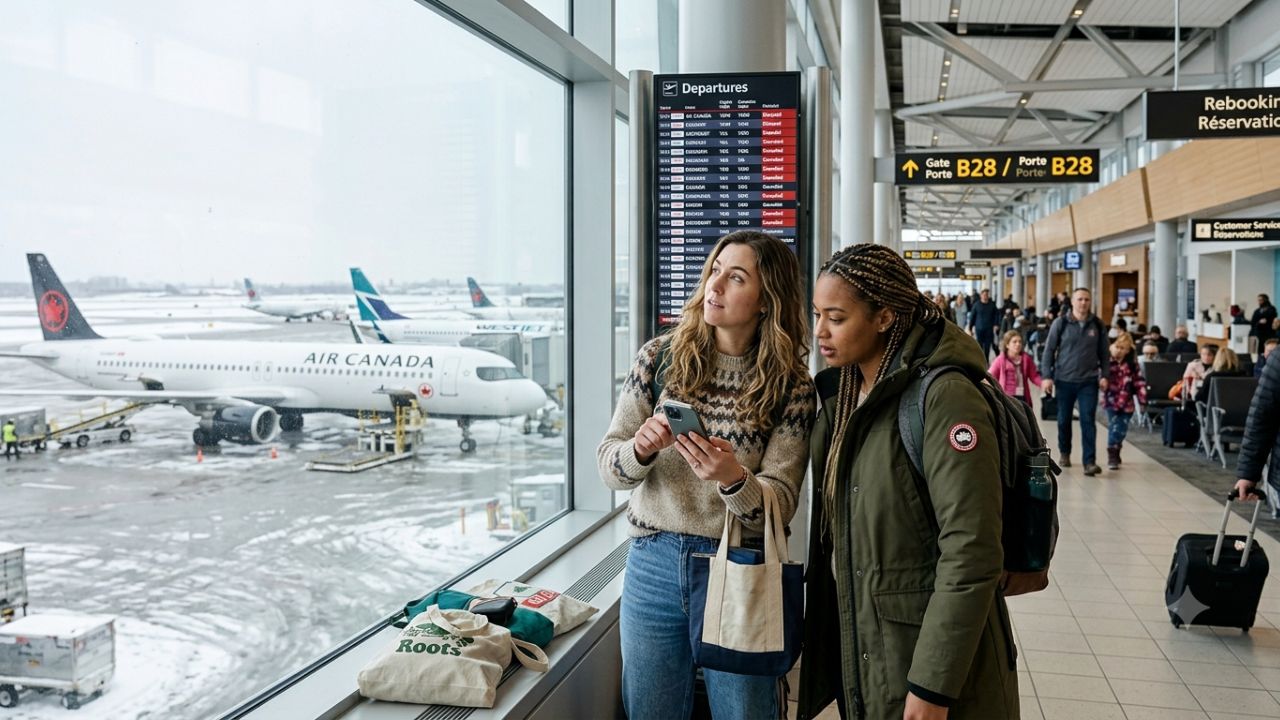
Image generated with AI
Federal transport regulators in Canada are reviewing sweeping digital reforms to the country's aviation consumer protection framework, exploring automated rebooking mandates and direct electronic compensation payouts to bank accounts and digital wallets. Spearheaded through joint evaluations by Transport Canada and the Canadian Transportation Agency (CTA), the policy review aims to overhaul the Air Passenger Protection Regulations (APPR). Under current frameworks, stranded fliers endure prolonged paperwork burdens, airline customer service queues, and multi-month tribunal backlogs. The proposed technological transition seeks to mandate real-time algorithmic seat reallocation and frictionless compensation disbursement whenever carriers trigger qualifying cancellations or long delays.
While consumer advocates have long pushed for automated payouts akin to modern fintech transfers, regulatory authorities stress that direct digital reimbursement represents a fundamental structural departure from current APPR enforcement. Transitioning to algorithmic consumer protection will require stringent legislative adjustments, verified flight-tracking telematics, secure financial data protocols, and robust administrative oversight to protect passenger privacy while holding commercial airlines accountable.
Deconstructing the Current APPR Framework and Enforcement Bottlenecks
Enacted to establish minimum statutory safeguards for domestic, transborder, and international journeys, Canada's APPR categorizes commercial flight disruptions into three distinct legal tiers:
- Within Airline Control (Not Safety-Related): Commercial cancellations, gate logistics delays, and crew scheduling shortages. These represent the only category where monetary cash compensation is legally mandated under federal law.
- Within Airline Control (Required for Safety): Unforeseen technical malfunctions, mechanical defects identified during pre-flight checks, and emergency aircraft safety inspections. Airlines must provide rebooking and duty of care, but cash compensation is exempted.
- Outside Airline Control: Extreme weather events, air traffic control metering delays, third-party airport strikes, medical diversions, and airport security lockdowns. Airlines are obligated to rebook or refund, but owe no financial compensation.
The current friction lies in the claims procedure. Passengers must manually file formal documentation with the operating carrier within one year of the disruption. Carriers possess a 30-day statutory window to respond, often relying on boilerplate "safety" exemptions to deny cash claims. Disputed rejections funnel into the CTA’s dispute resolution division, where backlogs have historically surpassed 60,000 unresolved passenger grievances, leaving travelers waiting up to two years for arbitration.
| Disruption Classification | Qualifying Root Cause Examples | Legal Airline Duty | Current APPR Compensation (Large Airlines) | Proposed Automated Digital Standard |
|---|---|---|---|---|
| Within Carrier Control | Crew scheduling, aircraft swops, commercial consolidations | Food, hotel, rebooking, cash compensation | $400 CAD (3–6 hrs) $700 CAD (6–9 hrs) $1,000 CAD (9+ hrs) |
Real-time digital payout to bank account or e-wallet within 48 hours |
| Within Control (Safety) | Mechanical repairs, equipment malfunction | Food, accommodation, free rebooking | $0 CAD (Statutory cash exemption applies) | Automated instant digital rebooking on first available seat network-wide |
| Outside Control | Severe winter blizzards, ATC metering, border closures | Alternate travel arrangements or full refund | $0 CAD (Statutory cash exemption applies) | Proactive re-routing algorithms with push notifications |
Algorithmic Rebooking: Ending Physical Gate Queues
A central pillar of the technological overhaul focuses on automating passenger rebooking. During major operational crises—such as winter snowstorms in Montreal or equipment outages in Toronto Pearson—thousands of displaced travelers currently converge on terminal service counters or jam telephone call centers.
Under automated rebooking protocols, airline passenger service systems (PSS) would immediately trigger real-time reallocation algorithms upon flight status changes. Rather than waiting for a gate agent to intervene, the system autonomously identifies downstream connection impacts, queries available inventory across internal networks and partner alliance carriers, and issues revised boarding passes directly to travelers' mobile applications.
+-------------------------------------------------------------------------+
|             PROPOSED AUTOMATED FLIGHT DISRUPTION ARCHITECTURE           |
+-------------------------------------------------------------------------+
  FLIGHT DELAY / CANCELLATION DETECTED VIA FLIGHT OPERATIONS DATA
         |
         +--> [ALGORITHMIC REBOOKING ENGINE]
         |    - Queries real-time seat inventory (Internal & Interline)
         |    - Matches passenger itineraries & mobility preferences
         |    - Pushes digital boarding passes & meal vouchers to mobile app
         |
         v
  ROOT CAUSE CLASSIFICATION VERIFIED VIA TELEMETRIC AUDIT
         |
         +--> Outside Carrier Control (Weather/ATC): Duty of Care Only
         |
         +--> Within Control (Commercial/Crew): Compensation Triggered
                     |
                     v
  [DIRECT DIGITAL PAYMENT GATEWAY]
  - Interac e-Transfer / Direct Bank Deposit / Digital Wallet
  - Statutory payout transferred within 48 hours
  - Transaction record mirrored to CTA compliance database
+-------------------------------------------------------------------------+
To function effectively, regulators emphasize that algorithmic rebooking must accommodate specialized traveler needs, including passengers requiring wheelchair assistance, families traveling with young infants who cannot be separated across cabins, and multi-carrier itineraries involving interline agreements.
Direct Digital Compensation: Feasibility, Banking Channels, and Verification
The most consequential shift under review is the introduction of direct electronic compensation. Instead of forcing passengers to navigate Byzantine claim submission portals, carriers would automatically disburse statutory compensation directly into passenger bank accounts or registered digital wallets via secure payment rails such as Interac e-Transfer.
However, automating monetary compensation presents formidable operational hurdles:
- Telemetric Root-Cause Verification: Airlines and regulators must establish verified, tamper-proof operational logs that instantly categorize delays. Without independent verification, algorithms could default to classifying operational delays under "safety exemptions," precluding automated payouts.
- Banking Data Security and Privacy: Requiring airlines to store personal banking details or e-wallet tokens creates substantial data liability under federal privacy legislation (PIPEDA). System architectures must utilize tokenized, one-time payment links to prevent financial data breaches.
- Dispute and Audit Trails: In cases where an automated calculation misinterprets a delay length or mistakenly excludes an eligible passenger, a rapid-recourse digital tribunal channel must exist within the CTA to resolve disputed payouts within days rather than years.
===========================================================================
             LEGACY CLAIMS MODEL VS. AUTOMATED DIGITAL MODEL
===========================================================================

 LEGACY APPR CLAIMS PROCESS:
  [Flight Disrupted] ---> [Manual Form Submission] ---> [30-Day Airline Wait]
                                                                |
  [Years-Long Arbitration] <--- [CTA Formal Grievance] <--- [Claim Denied]

 AUTOMATED DIGITAL FRAMEWORK:
  [Flight Disrupted] ---> [Automated Telemetry Audit] ---> [Instant Eligibility]
                                                                |
                                             [Direct Bank Deposit in 48 Hrs]
===========================================================================
The Canadian Transportation Agency's Expanding Digital Oversight Role
For the Canadian Transportation Agency, moving toward an automated passenger rights ecosystem requires transforming from a reactive complaints tribunal into a proactive regulatory auditor. Rather than investigating individual passenger claims retroactively, the agency would oversee algorithmic compliance, monitoring carrier APIs and flight telematics in real time.
Transport analysts note that airline passenger protection regulations around the globe are converging on digital enforcement. The European Union’s ongoing revisions to EU261 and emerging regulatory updates from the US Department of Transportation (DOT) regarding automatic cash refunds underscore an international shift toward eliminating administrative friction for consumers.
For Canadian carriers like Air Canada, WestJet, and Porter, compliance will necessitate capital investments in core digital infrastructure, API modernization, and customer-facing mobile platforms. Nevertheless, industry observers suggest that automated resolution could ultimately reduce corporate administrative costs by cutting customer support call volumes and legal expenditures associated with regulatory dispute hearings.
Frequently Asked Questions: Canada's Digital Passenger Rights Review
Does the current APPR require automatic compensation payments to my bank account?
No. Under current APPR rules, passengers must manually submit a formal written claim directly to the operating airline within one year of the flight disruption, and airlines have 30 days to respond.
What are the maximum compensation amounts for delays under Canadian law?
For large airlines operating in Canada, statutory compensation for disruptions within carrier control is $400 CAD for delays between 3 and 6 hours, $700 CAD for 6 to 9 hours, and $1,000 CAD for delays over 9 hours.
Can airlines avoid automated compensation during severe winter blizzards?
Yes. Disruptions caused by severe weather, airport meteorological closures, and air traffic control restrictions are classified as "outside airline control," legally exempting carriers from cash compensation while requiring rebooking.
When could mandatory automated compensation rules take effect in Canada?
The digital framework remains under regulatory review between Transport Canada and the CTA. Implementation requires formal legislative amendments, public consultation periods, and airline technology testing before becoming legally binding.
Related Travel Guides
Disclaimer
This article is for informational and educational purposes only. It does not constitute legal, financial, or professional advice. While we strive to provide accurate and up-to-date information, travel policies, regulations, and conditions change rapidly. Always verify information with official sources before making travel decisions. Nomad Lawyer makes no representations about the accuracy, reliability, completeness, or suitability of the information provided. Readers should consult qualified professionals for advice specific to their circumstances. The views expressed in this article are those of the author and do not necessarily reflect the views of Nomad Lawyer.
Preeti Gunjan
Contributor & Community Manager
A passionate traveller and community builder. Preeti helps grow the Nomad Lawyer community, fostering engagement and bringing the reader experience to life.
Learn more about our team →