
Cameroon Luxury Tourism 2029: Kempinski Unveils $384M Douala Bonanjo Hotel and Conference Hub

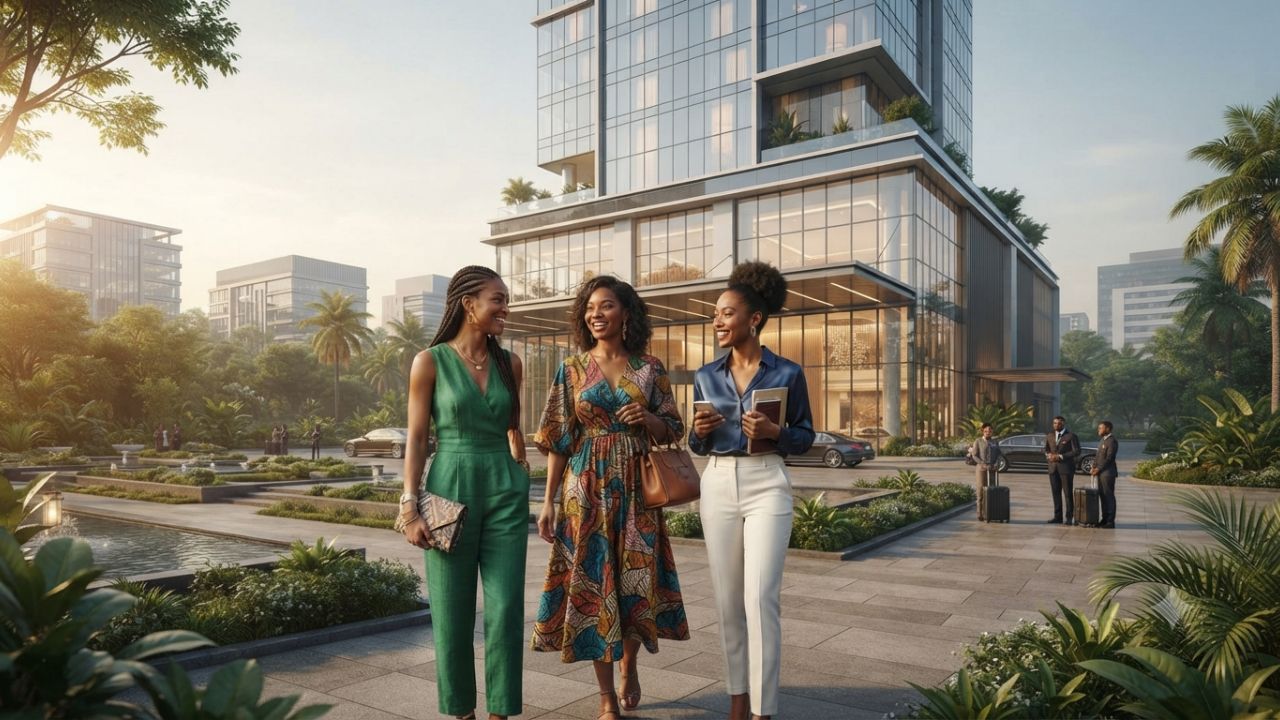
Anchored by a 220 billion CFA franc ($384 million USD) capital injection, Central Africa's largest luxury hospitality development is underway in Douala's Bonanjo administrative quarter, introducing a 27-storey tower featuring solar glass facades that reduce energy consumption by 35%. Targeted for completion in 2029, the flagship property operated in partnership with Kempinski Hotels spans nearly two hectares, integrating 214 guest rooms and suites, 35 serviced long-stay apartments, a 2,000-seat convention hall, and an international hospitality academy designed to generate approximately 7,000 direct and indirect jobs across Cameroon.
This multi-million-dollar undertaking signals a structural pivot for Central African tourism and business travel. By combining Grade A corporate offices with high-security infrastructure, wellness facilities, and sustainable water treatment, Douala is positioning itself as the primary corporate gateway and MICE hub connecting the Gulf of Guinea with the wider Central African region.
The Economic Engine: Capital Investment, Supply Chains, and Job Creation
The financial scale of this development represents one of Cameroon's largest non-commodity private capital investments. Project planners have committed to sourcing at least 60% of all raw construction materials, interior fittings, and culinary supplies directly from domestic producers, channeling over 45 billion CFA francs into Cameroonian small and medium enterprises over five years. Financial analysts project the flagship complex could unlock an additional 500 billion CFA francs in secondary commercial real estate across Douala over the next decade.
Development Matrix: Kempinski Douala Project Specifications
| Project Component | Technical Specification | Economic & Visitor Significance |
|---|---|---|
| Total Capital Investment | 220 Billion CFA Francs ($384M / €335M) | Landmark foreign direct investment in Central African non-oil hospitality |
| Architectural Structure | 27-Storey Tower across 2 Hectares | Prime Bonanjo business district footprint with sweeping Wouri River views |
| Lodging Inventory | 214 Rooms & Suites + 35 Serviced Flats | Premium accommodations tailored for short-stay diplomats and corporate assignees |
| MICE & Corporate Space | 2,000-Seat Hall + 17,000 m² Grade A Offices | Positions Douala to capture high-yield African MICE and international summits |
| Workforce & Training | 7,000 Direct & Indirect Jobs | Integrated international luxury hospitality academy for regional talent |
| Domestic Supply Commitment | 60% Local Sourcing (>45B CFA Francs) | Direct economic stimulus for Cameroonian timber, agriculture, and artisanal sectors |
| Security & IT Infrastructure | 12 Billion CFA Francs Allocation | Biometric access controls, subterranean parking, 10,000-device fiber-optic bandwidth |
| Environmental Engineering | Solar Glass (-35% Energy) & Greywater Plant | Conserves 4.5 million liters of water annually via closed-loop treatment |
| Wellness & Dining Footprint | 3,500 m² Spa, 2 Pools, 5 Dining Rooms, 5 Bars | Accommodates 1,500+ daily external diners; targets 55% higher wellness spending |
What Makes Douala's Luxury Transformation Different
Anchoring the African MICE Market
Business travelers represent the highest-yielding demographic in African hospitality, spending roughly 2.5 times more per day than standard leisure vacationers. With 17,000 square meters of Grade A corporate offices and a 2,000-capacity auditorium, the Bonanjo complex fills an acute regional deficit, enabling Cameroon to host multilateral economic summits, energy forums, and diplomatic conferences that previously bypassed Central Africa for lack of tier-one venue capacity.
Pioneering Sustainable Tropical Architecture
Designing luxury hospitality in the humid coastal environment of the Gulf of Guinea requires advanced climate engineering. The 27-storey tower utilizes specialized solar-control glass facades engineered to reflect solar thermal radiation, lowering cooling demands by 35%. Furthermore, the property's dedicated greywater and biological wastewater treatment facility will reclaim and recycle 4.5 million liters of water each year for landscaping and non-potable domestic systems.
Connecting Coastal Commerce to Wildlife Corridors
Beyond business travel, Douala serves as the springboard for exploring Cameroon's rich biodiversity. Verified conservation initiatives documented by the UNESCO World Heritage Centre—including the Dja Faunal Reserve and the cross-border Sangha Trinational park—benefit as improved international flight capacity makes Cameroon's rainforests and Atlantic beaches accessible to international ecotourists.
Resources from the Cameroon Ministry of Tourism and Leisure underscore how luxury hotel development acts as an anchor for domestic air routes and regional safari operators throughout Central Africa.
Visitor Insider Tips: Navigating Business and Travel in Douala
- Base Yourself in the Bonanjo Administrative Quarter: Bonanjo is Douala's safest and most accessible district for international executives and diplomats, housing government ministries, foreign consulates, major banking headquarters, and the maritime port authority.
- Factor in Atlantic Flight Growth by 2029: Aviation planners forecast a 25% increase in direct international flight frequencies to Douala International Airport by 2029 as major European and African carriers expand wide-body capacity to serve corporate travel demand.
- Experience Contemporary Cameroonian Gastronomy: The hotel's culinary program blends classical European techniques with indigenous ingredients. When dining in Douala, sample local delicacies such as Ndolé (stewed bitterleaf with shrimp and beef), fresh Atlantic sea bass (bar braisé), and plantain fritters paired with Penja white pepper.
- Understand Local Currency and Banking: The Central African CFA franc (XAF) is pegged to the Euro at a fixed rate. While high-end business hotels and upscale restaurants accept international credit cards, carry cash for taxis, artisanal craft markets, and regional excursions.
- Secure Health Clearances in Advance: Yellow fever vaccination is mandatory for entering Cameroon, and proof of vaccination must be presented at immigration upon arrival. Malaria prophylaxis is strongly advised year-round.
Cultural and Environmental Context: Artisanal Partnerships and Vocational Education
A central feature of the Bonanjo development is its integration of local cultural craftsmanship into the physical building design. Regional woodcarvers, textile weavers, and contemporary Cameroonian painters are commissioned to create bespoke installations across the 214 guest rooms and public galleries.
Complementing this cultural integration is the dedicated international hospitality school established on site. By delivering world-class certifications in culinary arts, hotel operations, and executive management, the institution ensures that managerial and leadership positions across Central Africa's growing hospitality sector are staffed by local professionals.
FAQ: Visiting and Doing Business in Douala 2026-2029
When is the Kempinski Douala project scheduled to open?
The 27-storey luxury hotel, commercial office, and conference complex in the Bonanjo district is targeted for its official grand opening in 2029.
What business amenities are included in the development?
The development features a 2,000-seat international convention hall, 17,000 square meters of Grade A office space, 35 serviced apartments, and redundant high-speed digital connectivity for up to 10,000 devices.
What is the expected economic impact of the project on Cameroon?
The development represents a 220 billion CFA franc ($384 million USD) capital injection, creating 7,000 direct and indirect jobs and injecting over 45 billion CFA francs into domestic small and medium enterprises.
Is Douala safe for international business and solo travelers?
The Bonanjo administrative quarter maintains tight security with continuous diplomatic patrols. Standard travel precautions apply: utilize authorized private hotel transfers and avoid unlit pedestrian areas after dark.
By uniting sustainable tropical architecture with 220 billion CFA francs of private capital, Cameroon is forging a new standard for luxury hospitality and international commerce across Central Africa.
Related Travel Guides
Disclaimer
This article is for informational and educational purposes only. It does not constitute legal, financial, or professional advice. While we strive to provide accurate and up-to-date information, travel policies, regulations, and conditions change rapidly. Always verify information with official sources before making travel decisions. Nomad Lawyer makes no representations about the accuracy, reliability, completeness, or suitability of the information provided. Readers should consult qualified professionals for advice specific to their circumstances. The views expressed in this article are those of the author and do not necessarily reflect the views of Nomad Lawyer.
Raushan Kumar
Founder & Lead Developer
Full-stack developer with 11+ years of experience and a passionate traveller. Raushan built Nomad Lawyer from the ground up with a vision to create the best travel and law experience on the web.
Learn more about our team →