
Cambodia and Myanmar Launch Historic Buddhist Heritage Tourism Partnership with Joint Pilgrimage Routes Across Southeast Asia in 2026
Cambodia and Myanmar unite Buddhist heritage tourism through joint pilgrimage packages, integrated travel routes, and regional destination marketing to attract international pilgrims and cultural travellers.

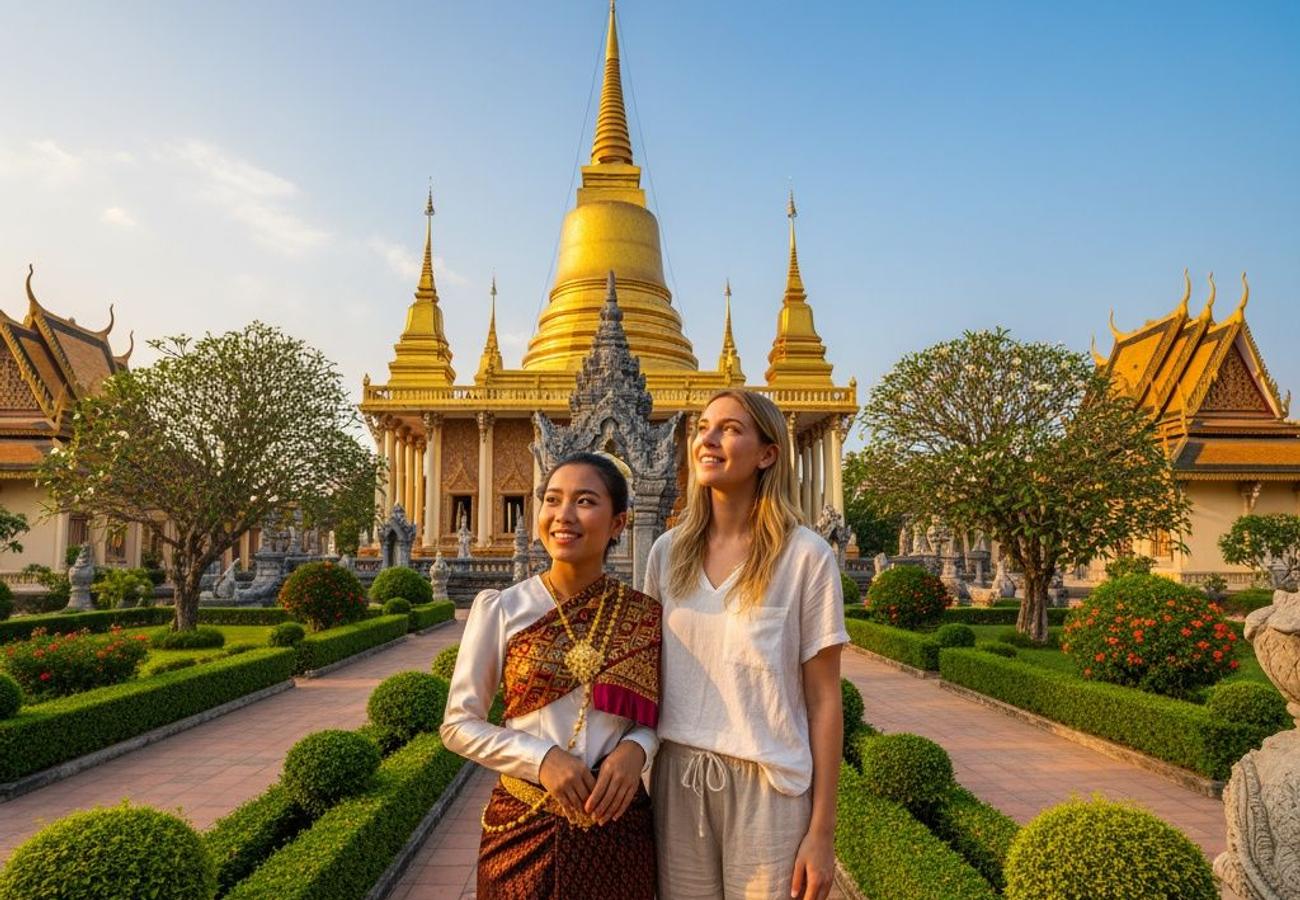
Image generated by AI
Two Nations, One Spiritual Journey: Cambodia and Myanmar Redefine Religious Tourism
Cambodia and Myanmar just made a seismic move in Southeast Asian tourism. During an official ministerial visit to Yangon, Cambodia's Minister of Tourism Huot Hak and Myanmar's Minister of Hotels, Tourism and Culture Maung Myint signed an ambitious bilateral agreement that places shared Buddhist heritage at the heart of a groundbreaking cross-border travel strategy.
This isn't just another tourism memo gathering dust in a filing cabinet. Both nations are actively developing joint pilgrimage itineraries, collaborative destination marketing campaigns, and integrated travel packages designed to capture the exploding global market for religious and spiritual tourism.
The implications? International travellers can soon experience centuries of Theravada Buddhist civilization through a single, seamlessly connected journey.
The Strategic Shift: From Competition to Collaboration
For decades, Southeast Asian nations competed fiercely for tourist dollars. Cambodia promoted Angkor Archaeological Park. Myanmar showcased the Bagan Archaeological Zone. Travellers chose one or the other.
That paradigm just shifted.
The new partnership leverages existing cooperation frameworks under ASEAN, the Greater Mekong Subregion (GMS), and the Cambodia-Laos-Myanmar-Vietnam (CLMV) initiative—but with concrete, actionable outcomes rather than symbolic gestures.
Both governments committed to expanding bilateral tourism cooperation across destination marketing, tourism workforce development, professional training, tourism investment promotion, and integrated cross-border visitor experiences.
Reddit: "Finally! I've been dreaming of hitting Angkor and Bagan on the same trip for years. If they actually coordinate packages, this could be game-changing for budget travellers like me." — r/travel
"Two Countries, One Destination": The Campaign That Could Transform Southeast Asian Travel
Meet the initiative's flagship branding: the "Two Countries, One Destination" campaign.
Rather than promoting each nation independently, Cambodia and Myanmar aim to position themselves as complementary cultural destinations. The strategy acknowledges a critical market insight: long-haul international travellers increasingly prefer multi-country itineraries over single-nation holidays.
Proposed joint tourism packages may include:
- Cross-border Buddhist pilgrimage routes connecting sacred temples and monasteries
- Integrated multi-country itineraries combining Angkor with Bagan within a single journey
- Unified destination marketing targeting pilgrims from Thailand, Sri Lanka, India, Japan, South Korea, China, and Vietnam
- Joint tourism conferences and professional development programs
- Cultural exchange initiatives promoting authentic local experiences
For travellers, the practical benefits are substantial: extended regional stays, coordinated transportation, simplified booking processes, and deeper cultural immersion within a single itinerary.
This collaborative model has proven successful across Europe—where the Schengen Area enables seamless multi-country tourism. Southeast Asia is now adopting similar strategies for religious and heritage tourism.
The Ancient Temples Worth Your Pilgrimage: A Heritage Comparison
Cambodia and Myanmar collectively house some of Asia's most architecturally stunning and spiritually significant Buddhist monuments—many still functioning as active religious centres.
Cambodia's Sacred Landmarks:
- Angkor Archaeological Park (12th-century Khmer temples)
- Phnom Penh's Silver Pagoda (royal religious sanctuary)
- Wat Phnom (founding temple of Phnom Penh)
- Oudong Sacred Hills (former capital monastery complex)
- Thousands of Theravada Buddhist monasteries throughout the kingdom
Myanmar's Revered Sites:
- Bagan Archaeological Zone (over 2,000 historic pagodas)
- Shwedagon Pagoda (Myanmar's most sacred Buddhist monument)
- Sule Pagoda (central Yangon spiritual landmark)
- Kyaiktiyo Golden Rock (precariously perched sacred site)
- Countless historic stupas and active pilgrimage temples
Combined, these destinations represent centuries of uninterrupted Theravada Buddhist civilization—offering pilgrims, scholars, and cultural tourists authentic experiences unavailable through mass tourism channels.
According to UN Tourism's religious travel analysis, hundreds of millions of travellers annually participate in religious, spiritual, or faith-inspired journeys, generating substantial economic activity while supporting heritage conservation and local communities worldwide.
Why Religious Tourism Is Southeast Asia's Hidden Growth Engine
Religious and pilgrimage tourism operates differently than conventional leisure travel—and that difference creates resilience.
Unlike beach holidays dependent on seasonal weather patterns, pilgrimage travel generates:
- Year-round visitor demand (reducing seasonality)
- Longer average stays (increasing per-visitor spending)
- Repeat visitation (supporting sustainable growth)
- Rural destination development (wider economic distribution beyond capital cities)
- Cultural preservation funding (heritage conservation through tourism revenue)
For Cambodia and Myanmar, Buddhist tourism diversifies beyond traditional leisure markets while strengthening cultural identity and generating economic benefits for rural communities surrounding major temple complexes.
According to ASEAN tourism statistics, international visitor arrivals across Southeast Asia have steadily recovered following pandemic disruptions, supported by improved air connectivity, simplified travel policies, and renewed regional cooperation initiatives exactly like this partnership.
Regional Cooperation Reflects ASEAN's Broader Integration Vision
This bilateral agreement doesn't exist in isolation. It reinforces broader ASEAN tourism integration efforts across the Greater Mekong Subregion and CLMV frameworks—regional mechanisms designed to position Southeast Asia as a unified tourism destination rather than competing individual countries.
Multi-destination holidays remain particularly attractive for long-haul visitors from Europe, Australia, North America, and Northeast Asia—demographics historically preferring extended regional itineraries combining multiple nations.
The partnership signals ASEAN's strategic pivot toward multi-country experiences. Rather than fragmented national marketing campaigns, Southeast Asian nations increasingly collaborate on integrated destination packages leveraging regional strengths.
What International Travellers Should Expect (And When)
Detailed pilgrimage packages remain under development. Both governments haven't yet announced specific routes, pricing, or launch timelines.
However, travellers interested in Buddhist heritage tourism should monitor upcoming developments for several potential advantages:
- Simplified multi-country itinerary planning eliminating coordination headaches
- Coordinated tourism promotions offering better pricing on bundled packages
- Greater availability of specialist cultural tours led by trained heritage interpretation guides
- Improved regional tourism infrastructure including enhanced accommodation and transportation
- Enhanced interpretation of religious heritage sites through upgraded visitor facilities
As regional airlines continue restoring connectivity across Southeast Asia, integrated Buddhist travel experiences will become increasingly accessible for international pilgrims and cultural travellers.
Tourism Education: Building Capacity for Excellence
Beyond marketing, both nations committed to strengthening cooperation in tourism education and professional capacity building.
Human resource development remains critical across Southeast Asia's tourism sector, particularly as destinations respond to evolving traveller expectations surrounding sustainability, digital services, heritage interpretation, and destination management.
Knowledge exchange between Cambodia and Myanmar's tourism authorities may improve service quality while building long-term competitiveness. This workforce development component ensures the partnership produces authentic, professionally managed experiences rather than rushed, commercialized offerings.
The Bigger Picture: Religious Tourism's Global Momentum
This partnership taps into a genuinely global phenomenon. Religious and spiritual tourism consistently outperforms conventional leisure travel in growth rates, repeat visitation, and economic resilience.
UN World Tourism Organization data confirms hundreds of millions of annual religious travellers worldwide, with Buddhist pilgrimage among the fastest-growing niches.
Cambodia and Myanmar possess arguably Southeast Asia's most compelling Buddhist heritage narrative. By uniting these narratives through coordinated destination marketing and integrated travel packages, both nations position themselves for substantial visitor growth across demographic segments (spiritual seekers, cultural researchers, heritage tourists, pilgrims) traditionally underserved by mass tourism.
The initiative also demonstrates how ASEAN nations can leverage shared cultural heritage as economic development strategy—generating employment, preservation funding, and cross-border understanding through sustainable religious tourism.
What's Next: Monitoring Developments
Travellers planning Southeast Asia holidays should track announcements from both nations' tourism ministries regarding specific pilgrimage package details, launch dates, and promotional offers.
The partnership's success depends on practical execution: coordinated accommodation availability, simplified visa processes, integrated transportation, and professional heritage interpretation. When these elements align, expect transformative changes to how international travellers experience Buddhist Southeast Asia.
For now, the foundation is set. Two nations with extraordinary Buddhist heritage have chosen collaboration over competition—and international pilgrims and cultural travellers stand to benefit immensely.
Religious tourism just entered a new chapter across Southeast Asia.
Related Travel Guides
Disclaimer
This article is for informational and educational purposes only. It does not constitute legal, financial, or professional advice. While we strive to provide accurate and up-to-date information, travel policies, regulations, and conditions change rapidly. Always verify information with official sources before making travel decisions. Nomad Lawyer makes no representations about the accuracy, reliability, completeness, or suitability of the information provided. Readers should consult qualified professionals for advice specific to their circumstances. The views expressed in this article are those of the author and do not necessarily reflect the views of Nomad Lawyer.
Kunal K Choudhary
Co-Founder & Contributor
A passionate traveller and tech enthusiast. Kunal contributes to the vision and growth of Nomad Lawyer, bringing fresh perspectives and driving the community forward.
Learn more about our team →