
BTS World Tour Transforms Busan Into Asia's Entertainment Tourism Hub—31,583 Visitors Flock to City in June 2026
South Korea's Busan records unprecedented tourism surge as BTS concerts drive 24,004 international visitors to extend stays across the coastal city, reshaping K-pop travel economics in 2026.

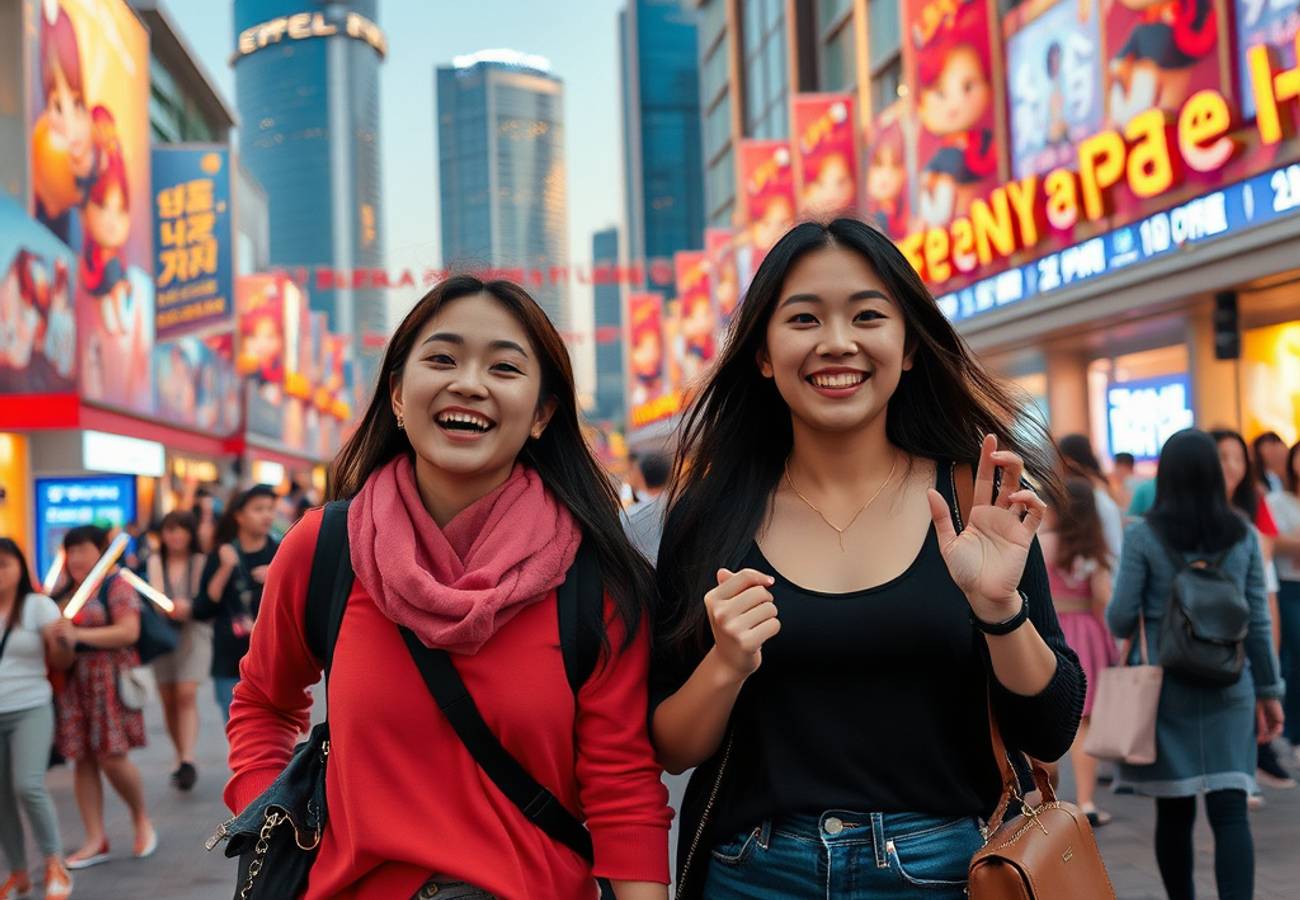
Image generated by AI
The BTS Effect: How One Concert Series Rewired Busan's Tourism Engine
When HYBE and the Busan Metropolitan City orchestrated the BTS Arirang IN Busan world tour concerts in June 2026, nobody predicted it would become a masterclass in destination marketing. Yet the numbers tell a story far more compelling than any press release: 31,583 total visitors flooded the newly established BTS THE CITY Arirang Busan Welcome Center, with 24,004 international travellers representing 76 percent of all foot traffic.
This wasn't simply a concert event. This was a calculated transformation of a global entertainment phenomenon into measurable, sustained tourism revenue.
Record International Arrivals Signal Shift in Entertainment Travel
The sheer volume of overseas fans converging on Busan's coastal districts revealed something pivotal about post-pandemic travel behaviour: international audiences will extend vacations significantly if the destination delivers beyond the headline event.
Among foreign visitors surveyed, 88.1 percent cited BTS concert attendance as their primary travel motivation. But here's where the strategy proved brilliant: 78.3 percent of all respondents remained in Busan for three days and two nights or longer, abandoning the typical hit-and-run concert tourism model.
This extended engagement transformed momentary demand into distributed economic impact. Instead of concentrating spending at the stadium, international visitors scattered across Haeundae Beach, Gwangalli, Nampo-dong's bustling commercial districts, the historic Jagalchi Market, and the increasingly popular Gamcheon Culture Village.
Reddit: "Finally a city that understands you want more than just a concert. Busan gave us culture, food, and actual reasons to stay." — r/travel
The Welcome Center Strategy: Transforming Information Desks Into Experience Hubs
The Busan Eurasia Platform—strategically positioned adjacent to Busan Station—became ground zero for the hospitality offensive. The Welcome Center wasn't designed as a passive information booth. It functioned as an integrated tourism command centre.
Arriving visitors encountered AI-powered travel recommendations powered by Google Gemini, luggage storage and delivery logistics, K-beauty experience zones, music-themed installations, and dedicated photo spaces. The facility essentially reduced travel friction while simultaneously deepening destination engagement.
Beyond the Welcome Center, the city deployed a network-wide activation strategy. Busan Station Plaza hosted live cultural performances including traditional Miryang Arirang whilst promoting local specialities. Gimhae International Airport—the primary entry point—welcomed international arrivals with branded hospitality programming and pop-up promotions before visitors even cleared customs.
This represents a fundamental shift in destination marketing: treating transportation infrastructure not as administrative necessities, but as active tourism stages.
Why 90.8% of Local Residents Embraced the Initiative
Perhaps most revealing was resident sentiment. 90.8 percent of surveyed Busan citizens believed the concert-linked hospitality events positively contributed to tourism growth, whilst 92.0 percent approved of the Busan Eurasia Platform functioning as a dedicated tourist hospitality space.
This local buy-in matters enormously. It signals that entertainment tourism doesn't require citizens to resent their city's transformation—when implemented strategically, residents recognize the economic benefit and feel genuine pride in welcoming global audiences.
The 94.6% Satisfaction Metric That Changes Everything
Here's the number that should fascinate tourism professionals globally: 94.6 percent of visitors rated their Busan experience favourably and indicated likelihood to recommend the destination to others.
That satisfaction ratio doesn't emerge accidentally. It's the product of coordinated infrastructure investments, hospitality training, multilingual digital support, and—critically—ensuring the destination itself delivered compelling reasons to extend stays beyond the concert itself.
According to research from the Korea Tourism Organization, entertainment-linked tourism now represents the fastest-growing segment of international arrivals in South Korea, with K-pop events specifically driving an estimated 23 percent increase in secondary city visitation across 2025-2026.
What This Model Reveals About Future Tourism Economics
The Busan case study exposes a fundamental reality of 2026 travel: globally recognized entertainment properties command unprecedented leverage in destination positioning. BTS fans arrived with predetermined emotional investment. The city's role was amplifying that investment across multiple experiences and extended timeframes.
The strategic integration of transportation hubs, cultural performances, digital assistance, and destination-wide activation demonstrates what consultants call the "entertainment tourism multiplier." One headline event, properly structured, generates secondary spending across accommodation, dining, attractions, retail, and local services.
Hospitality leaders increasingly recognize this model, evidenced by competing Asian cities now bidding aggressively for major concert tours, knowing the downstream tourism revenue extends years beyond the event itself.
Why Busan Positioned Itself Ahead of Regional Competitors
While other South Korean cities hosted entertainment events, Busan distinguished itself through comprehensive infrastructure thinking. The Welcome Center wasn't an afterthought—it was the centrepiece of a citywide hospitality ecosystem.
The Busan Metropolitan City and Busan Tourism Organization explicitly designed the initiative to convert concert attendance into extended destination exploration. By embedding tourism support directly into transportation nodes and deploying activation across multiple districts, they ensured visitors couldn't ignore the broader city even if they wanted to.
This represents evolved destination marketing. Rather than hoping visitors stumble upon attractions, Busan constructed pathways ensuring engagement across its full tourism portfolio.
The Sustainability Question: Can This Model Scale?
The obvious next question: Was June 2026's success repeatable, or was it a BTS-specific anomaly?
The Busan Metropolitan City has publicly committed to integrating entertainment-linked hospitality into its long-term development strategy, suggesting confidence in replicating this model for future international concerts, exhibitions, and global events.
The Busan Eurasia Platform's performance during the BTS tourism programme reinforced its viability as a permanent hospitality infrastructure capable of supporting recurring international events. Existing transportation facilities were successfully transformed into multifunctional tourism assets—a blueprint increasingly relevant as cities compete for entertainment tourism revenue.
What International Visitors Actually Experienced
Beyond statistics, international concertgoers encountered a destination genuinely optimized for their convenience and enjoyment. Travel information accessibility, cultural programming, photography opportunities, and local experience curation created frictionless tourism.
The integration of K-beauty experiences and music-themed attractions within the Welcome Center directly resonated with the demographic: fans of global pop culture seeking immersive destination experiences beyond the concert itself.
This represents a deliberate segmentation strategy. Busan recognized that BTS enthusiasts weren't generic tourists—they constituted a highly engaged audience with specific cultural interests and elevated expectations for experiential authenticity.
The Broader Implication for South Korea's Tourism Future
Busan's success positions South Korea as increasingly sophisticated in leveraging cultural soft power for tourism development. The nation's global entertainment influence—already formidable through film, television, and music—now translates into deliberate destination strategy.
Where previous generations of tourism marketing emphasized cultural heritage and natural scenery, 21st-century South Korea weaponizes contemporary cultural production itself as a tourism driver. BTS becomes geography. K-pop becomes destination. Entertainment becomes infrastructure.
This shift has profound implications for how emerging destinations position themselves globally. Rather than competing solely on climate, beaches, or historical attractions, cities increasingly recognize that cultural relevance—particularly in entertainment—commands unprecedented leverage in international travel decision-making.
The real story isn't that a concert drew crowds—it's that one city transformed temporary cultural enthusiasm into sustained tourism infrastructure.
Related Travel Guides
Disclaimer
This article is for informational and educational purposes only. It does not constitute legal, financial, or professional advice. While we strive to provide accurate and up-to-date information, travel policies, regulations, and conditions change rapidly. Always verify information with official sources before making travel decisions. Nomad Lawyer makes no representations about the accuracy, reliability, completeness, or suitability of the information provided. Readers should consult qualified professionals for advice specific to their circumstances. The views expressed in this article are those of the author and do not necessarily reflect the views of Nomad Lawyer.
Preeti Gunjan
Contributor & Community Manager
A passionate traveller and community builder. Preeti helps grow the Nomad Lawyer community, fostering engagement and bringing the reader experience to life.
Learn more about our team →