
British Airways and Virgin Atlantic Lead 19 Heathrow Flight Cancellations Disrupting US and EU Routes in 2026
Nineteen outbound flights from London Heathrow were cancelled, severely impacting transatlantic capacity to Chicago and New York and disrupting key European hubs.

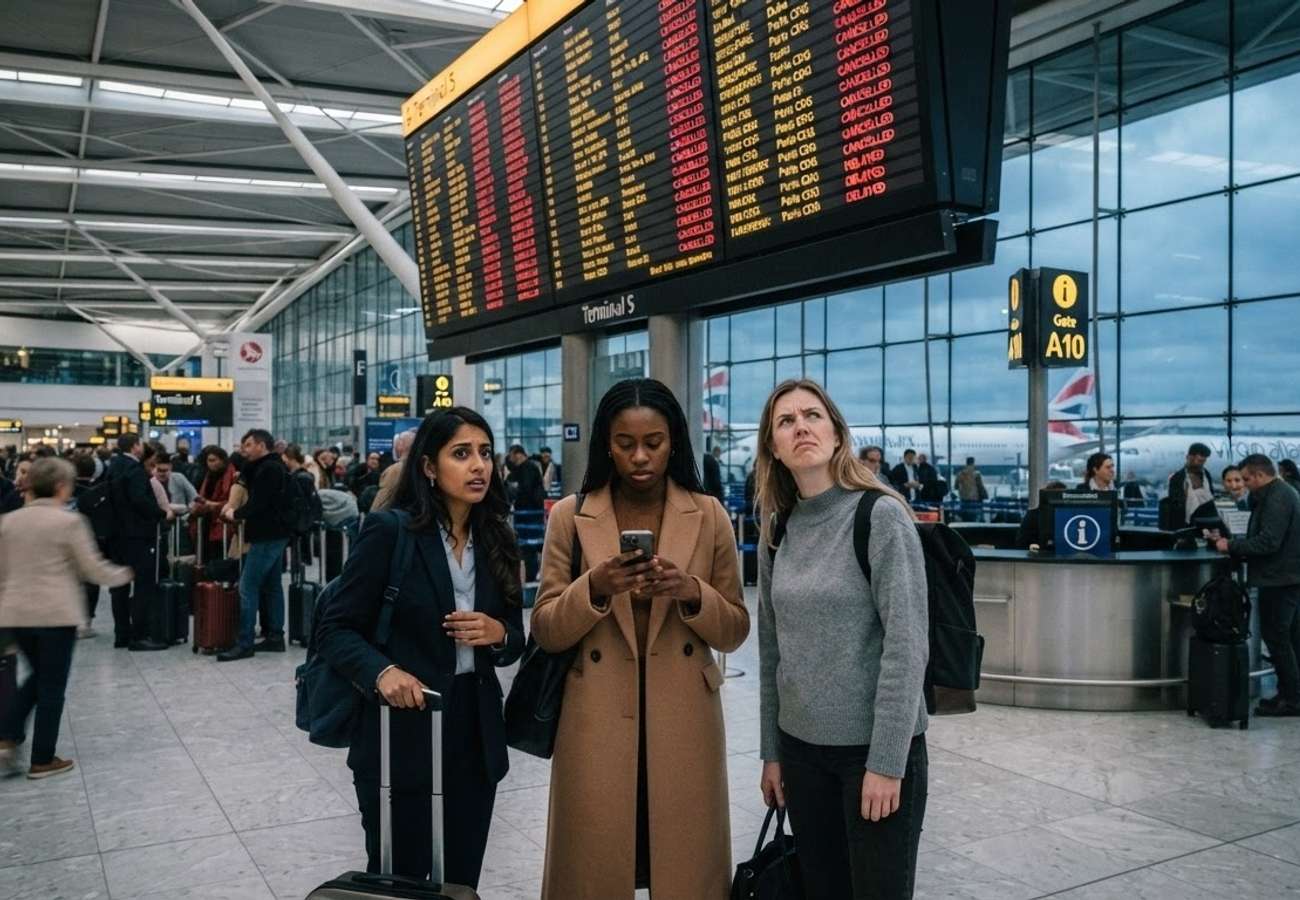
Image generated by AI
Major operational failures at London Heathrow resulted in the cancellation of 19 outbound flights, stripping capacity from critical transatlantic and European corridors.
Operational instability across several major carriers triggered a wave of cancellations affecting routes to North America and the European Union. The disruptions spanned multiple days, indicating systemic scheduling challenges rather than a localized, single-event failure.
British Airways emerged as the most impacted carrier, recording the highest volume of cancelled services. The fallout extended to Virgin Atlantic, KLM, Air France, Aer Lingus, American Airlines, United Airlines, and Vueling.
Breakdown of Operational Disruptions
The cancellations targeted high-density routes, creating a bottleneck for both business and leisure travelers.
- Transatlantic Impact: Significant capacity loss to the US, specifically targeting Chicago, New York, Boston, and Austin.
- European Hub Disruptions: Suspensions of services to Amsterdam Schiphol and Paris Charles de Gaulle, compromising onward connectivity for international passengers.
- Regional Short-Haul: Cancellations to Dublin, Barcelona, and Munich added to existing regional volatility.
Flight Cancellation Data: London Heathrow
| Flight | Airline | Destination |
|---|---|---|
| KLM1000 | KLM | Amsterdam Schiphol |
| AFR1681 | Air France | Paris Charles de Gaulle |
| VIR11 | Virgin Atlantic | Boston Logan International Airport |
| EIN173 | Aer Lingus | Dublin International Airport |
| BAW938 | British Airways | Munich International Airport |
| BAW299 | British Airways | Chicago O’Hare International Airport |
| VIR45 | Virgin Atlantic | New York John F. Kennedy International Airport |
| BAW295 | British Airways | Chicago O’Hare International Airport |
| BAW572 | British Airways | Milan Linate |
| BAW175 | British Airways | New York John F. Kennedy International Airport |
| BAW584 | British Airways | Milan Malpensa |
| BAW582 | British Airways | Milan Malpensa |
| BAW570 | British Airways | Milan Linate |
| BAW568 | British Airways | Milan Linate |
| VLG6653 | Vueling | Barcelona International Airport |
| BAW187 | British Airways | Austin-Bergstrom International Airport |
| AAL91 | American Airlines | Chicago O’Hare International Airport |
| UAL928 | United Airlines | Chicago O’Hare International Airport |
| EIN159 | Aer Lingus | Dublin International Airport |
The Chicago Corridor Collapse
Industry data reveals that the London-to-Chicago route suffered the most severe degradation. Four separate departures to Chicago O’Hare International Airport were scrubbed from the schedule:
- British Airways (BAW299, BAW295)
- American Airlines (AAL91)
- United Airlines (UAL928)
This concentrated loss of service on a single route suggests a specific operational or aircraft rotation failure affecting the transatlantic fleet.
Why This Matters: Industry Analysis
This event highlights a fragile recovery in aviation logistics. When 19 flights are removed from a hub as tightly slotted as Heathrow, the "ripple effect" is exponential.
Industry observers note that the simultaneous cancellation of flights across competing carriers (e.g., United, American, and BA all cutting Chicago routes) suggests a broader air traffic management restriction or a systemic failure in ground handling rather than individual airline mechanical issues.
For the passenger, this creates a "capacity trap." As flights are cancelled, demand for the remaining services spikes, driving up last-minute fares and making rebooking nearly impossible without significant delays. The disruption of hub-and-spoke connections at Schiphol and Charles de Gaulle further amplifies the chaos, turning a simple flight cancellation into a multi-day travel derailment for connecting passengers.
Forward Outlook
Market trends suggest that aircraft rotation issues and crew scheduling constraints remain the primary vulnerabilities for UK-based carriers. Passengers should expect continued volatility at Heathrow as airlines attempt to stabilize schedules.
Immediate recommendations for affected travelers include:
- Prioritizing digital rebooking tools over airport queues.
- Maintaining rigorous records of all boarding passes and expense receipts for insurance claims.
- Monitoring flight status via direct carrier notifications rather than third-party aggregators.
Operational fragility at the world's premier hubs continues to pose a significant risk to global transit stability.
Related Travel Guides
Disclaimer
This article is for informational and educational purposes only. It does not constitute legal, financial, or professional advice. While we strive to provide accurate and up-to-date information, travel policies, regulations, and conditions change rapidly. Always verify information with official sources before making travel decisions. Nomad Lawyer makes no representations about the accuracy, reliability, completeness, or suitability of the information provided. Readers should consult qualified professionals for advice specific to their circumstances. The views expressed in this article are those of the author and do not necessarily reflect the views of Nomad Lawyer.
Preeti Gunjan
Contributor & Community Manager
A passionate traveller and community builder. Preeti helps grow the Nomad Lawyer community, fostering engagement and bringing the reader experience to life.
Learn more about our team →